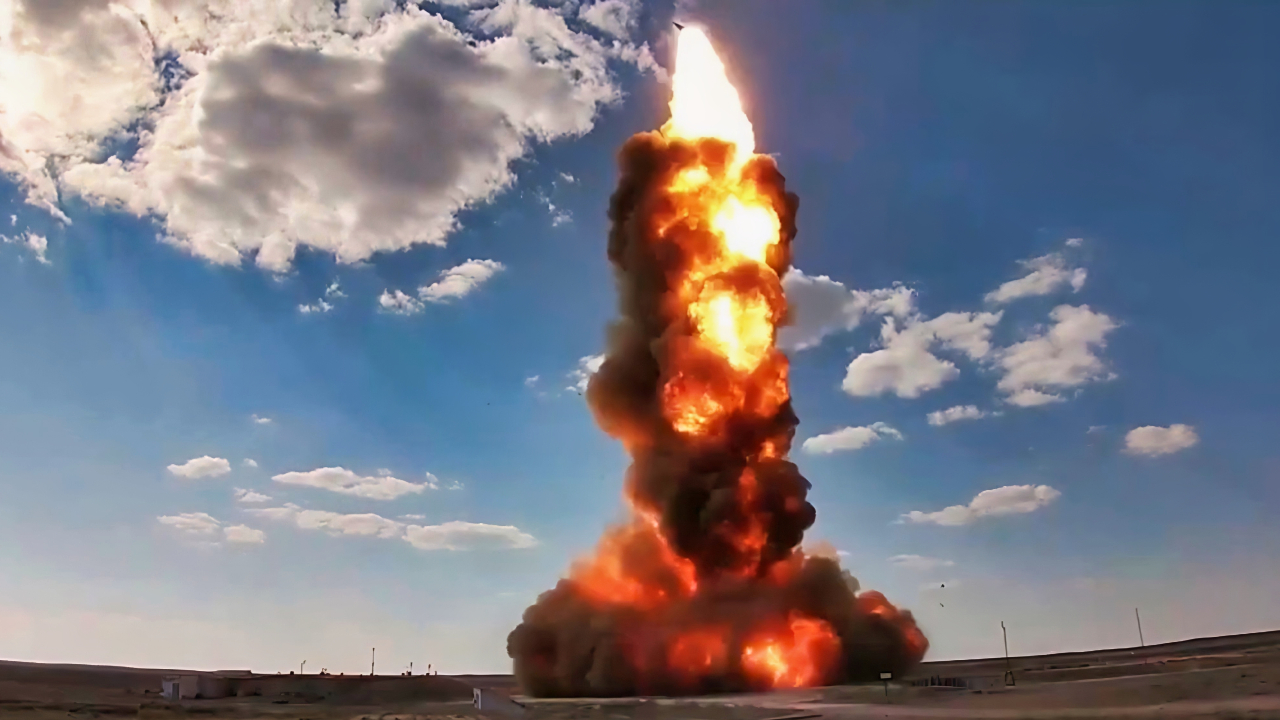
Russia’s most powerful new intercontinental ballistic missile, the RS-28 Sarmat, has become a symbol not of technological breakthrough but of mounting failure after a series of disastrous test launches, the most recent ending in a major explosion near its silo in late November 2024. Once promoted as a showcase of Moscow’s nuclear modernization and a key tool to outflank Western missile defenses, the program is now under intense scrutiny at home and abroad.
Broken Promise of a “Super Weapon”
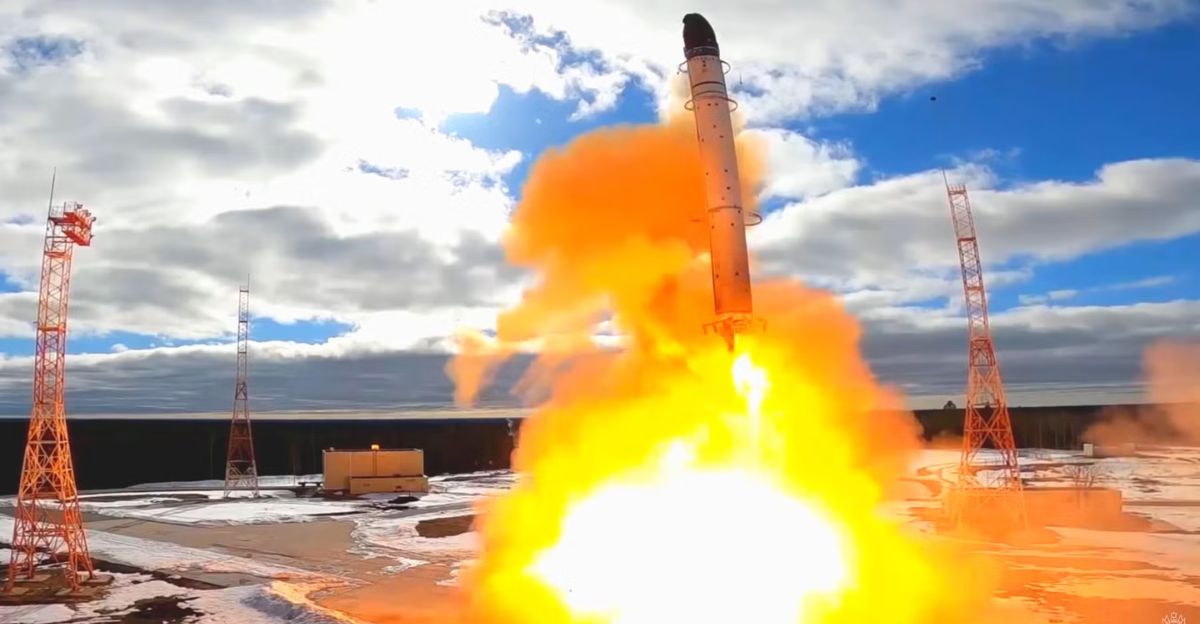
Developed to replace aging Soviet-era heavy missiles, the Sarmat is designed to carry an estimated 10 to 16 nuclear warheads across intercontinental ranges, forming a central pillar of Russia’s long-term strategic deterrent. Russian officials presented it as a system “unmatched” worldwide and repeatedly claimed it was nearly ready for deployment.
In practice, the program has been beset by engineering problems, schedule slips, and cost overruns. Originally slated to enter service in 2018, Sarmat has yet to be fielded. The November 2024 mishap followed four earlier test failures since the missile’s only acknowledged successful test in April 2022. The growing gap between official assurances and technical reality has raised doubts about the true state of Russia’s nuclear delivery systems.
Catastrophic Test and Damage on the Ground
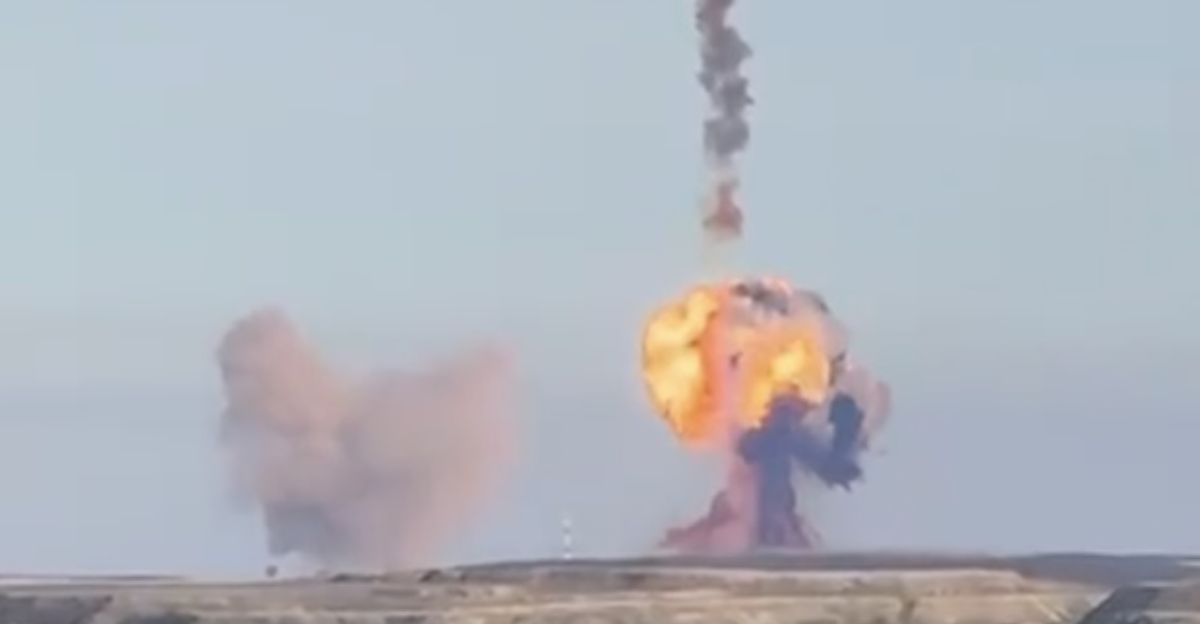
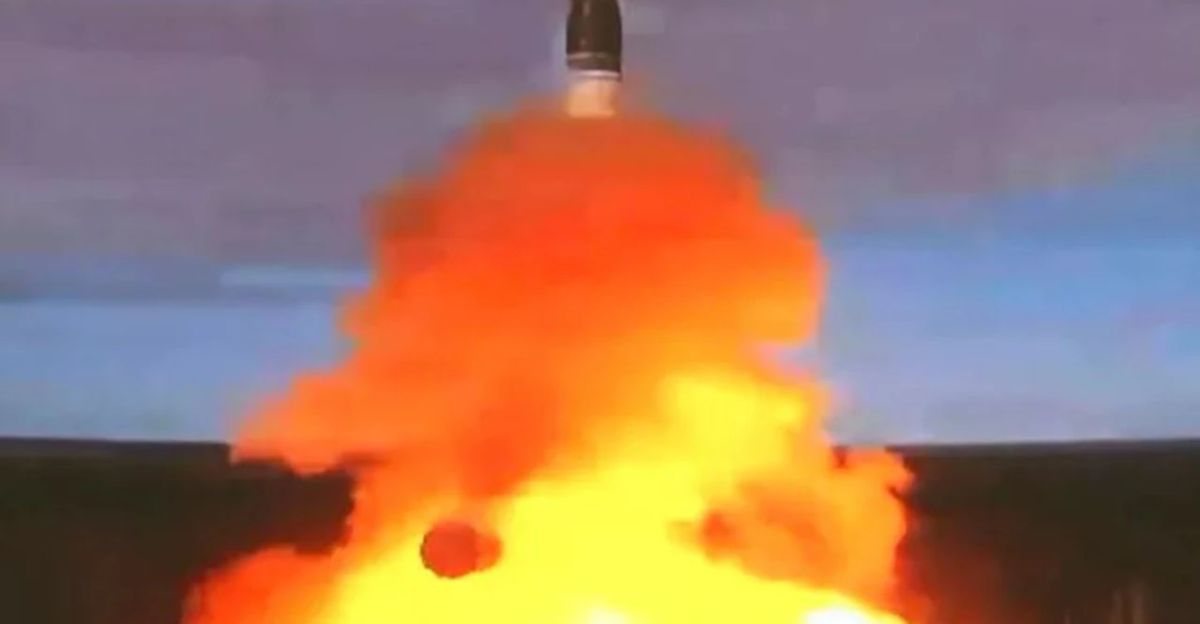
The latest failure occurred on November 28, 2024, during a test from the Yasny launch site in Russia’s Orenburg region. Witness video showed the missile lifting from its silo only to veer off course within seconds, trailing dense black and purple smoke before detonating roughly half a mile from the launch shaft.
Satellite images released afterward by Maxar Technologies revealed extensive damage in and around the launch complex, including a large crater at the impact point and visible destruction of supporting infrastructure. Independent specialists described the event as a complete system breakdown at the most critical stage of flight, pointing to possible issues in propulsion, guidance, or both.
Pavel Podvig, director of the Russian Nuclear Forces project at the UN Institute for Disarmament Research, assessed the evidence and concluded that “by all indications, it was a failed test” and that there was “a big hole in the ground” at Yasny. The visible damage suggests that future trials from the site will require significant repairs, adding further delay to an already troubled schedule.
Test Infrastructure Under Strain
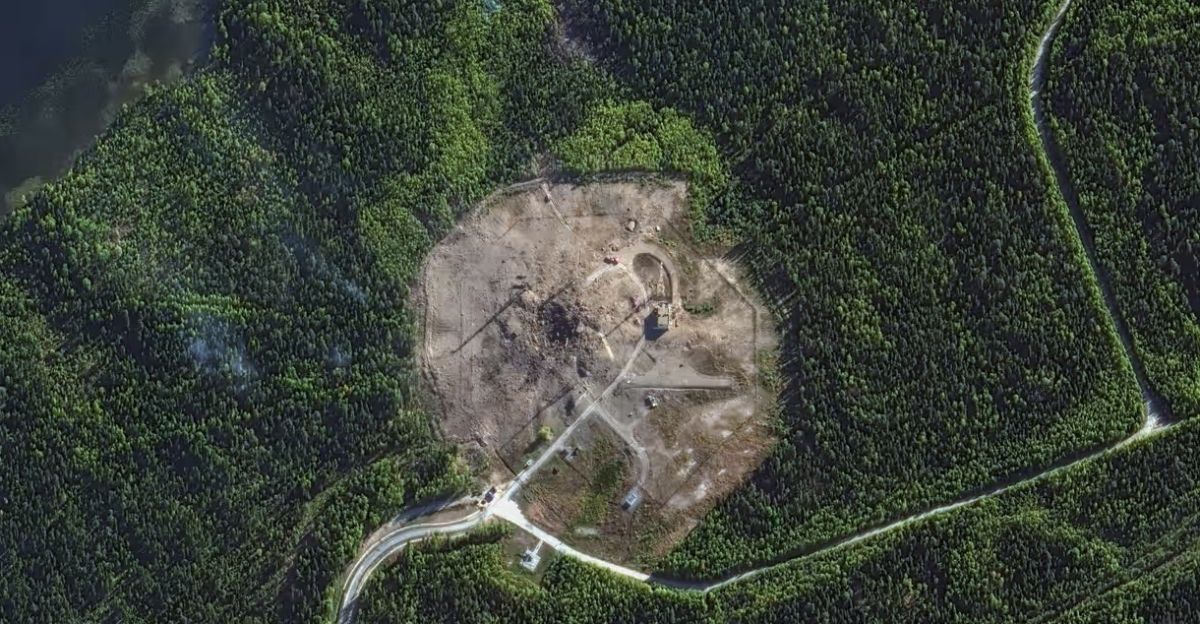
The blow at Yasny followed another serious accident in September 2024 at Plesetsk Cosmodrome, one of Russia’s principal long-range missile test centers. That earlier incident, also involving a Sarmat test, destroyed the main launch silo and left a crater approximately 60 meters across, forcing a rapid shift of operations from Plesetsk to Yasny.
With both key sites now heavily compromised within a short period, Russia’s capacity to conduct full-scale flight trials of the missile has been sharply reduced. Repairing or rebuilding launch infrastructure of this complexity is expensive and time-consuming, particularly during a period of intense military demand linked to the war in Ukraine. Analysts say the double setback may push Sarmat’s entry into service further into the future and complicate efforts to prove the system’s reliability.
Cost, Credibility, and Wider Military Strains
The Sarmat program also poses a major budget burden. Russia has poured billions of rubles into upgrading silos and support facilities. By 2019, approximately 16 billion rubles—roughly $274 million at the time—had reportedly been allocated to infrastructure alone, and Russia’s annual spending on its nuclear weapons complex exceeds 50 billion rubles.
Four consecutive test failures against that financial backdrop have fueled questions over cost-effectiveness and management inside the defense industry. The Sarmat’s difficulties mirror problems seen in other strategic systems, including Russia’s Bulava submarine-launched missiles, which have also experienced repeated test failures. Together, these troubles add to a perception that Russia’s nuclear modernization is struggling to deliver dependable hardware at scale.
The setbacks come as the Ukraine conflict exposes weaknesses in Russian production capacity and its reliance on Soviet-era technology. Analysts argue that the high-profile Sarmat problems now threaten broader confidence in Moscow’s nuclear posture, both among military personnel and the wider public, for whom the system has been portrayed as a guarantor of national security and prestige.
Strategic and Global Implications
Internationally, the repeated failures of a weapon billed as a cornerstone of Russia’s future deterrent are prompting reassessment among other nuclear powers and defense alliances. For NATO members and the United States, the Sarmat’s difficulties could influence decisions on investments in missile defenses and strategic planning, even as Russia continues to field other long-established intercontinental missiles.
Some specialists warn that persistent technical problems in such a prominent program may complicate the strategic balance in less obvious ways. If Moscow’s confidence in one leg of its nuclear forces erodes, it might adjust deployment patterns, testing schedules, or declaratory policy to compensate, moves that could add uncertainty in times of crisis. Others note that visible limits to Russia’s modernization drive could also shape future negotiations on arms control and nuclear risk reduction, as partners reassess both Russian capabilities and intentions.
For now, Russian authorities have offered no detailed public explanation of the November failure, a sharp contrast with the celebratory coverage that followed the missile’s only acknowledged successful test in April 2022. That silence, combined with satellite evidence of heavy damage and the record of prior mishaps, has turned Sarmat from a symbol of technological ambition into a test case for the state of Russia’s strategic weapons complex. How the Kremlin responds—whether through reforms, renewed testing, or shifts in doctrine—will influence not only its own deterrent posture but also the broader landscape of global nuclear security in the years ahead.
Sources:
Reuters – “Images show Russia’s new Sarmat missile suffered major test failure, researchers say”
CNN – “Images show Russia’s new Sarmat missile suffered major test failure, researchers say”
Al Jazeera – “Russia’s new Sarmat missile suffered ‘catastrophic failure’: Researchers”
CSIS Missile Threat – “RS-28 Sarmat”
Jamestown Foundation – “Russia’s Sarmat ICBM Faces Development Problems”
Pavel Podvig (Russian Nuclear Forces Project) – Expert analysis and commentary
Maxar Technologies – Satellite imagery and analysis of Plesetsk and Yasny test sites
Defense Express – “Russia’s Sarmat missile tests fail: second accident in a year”