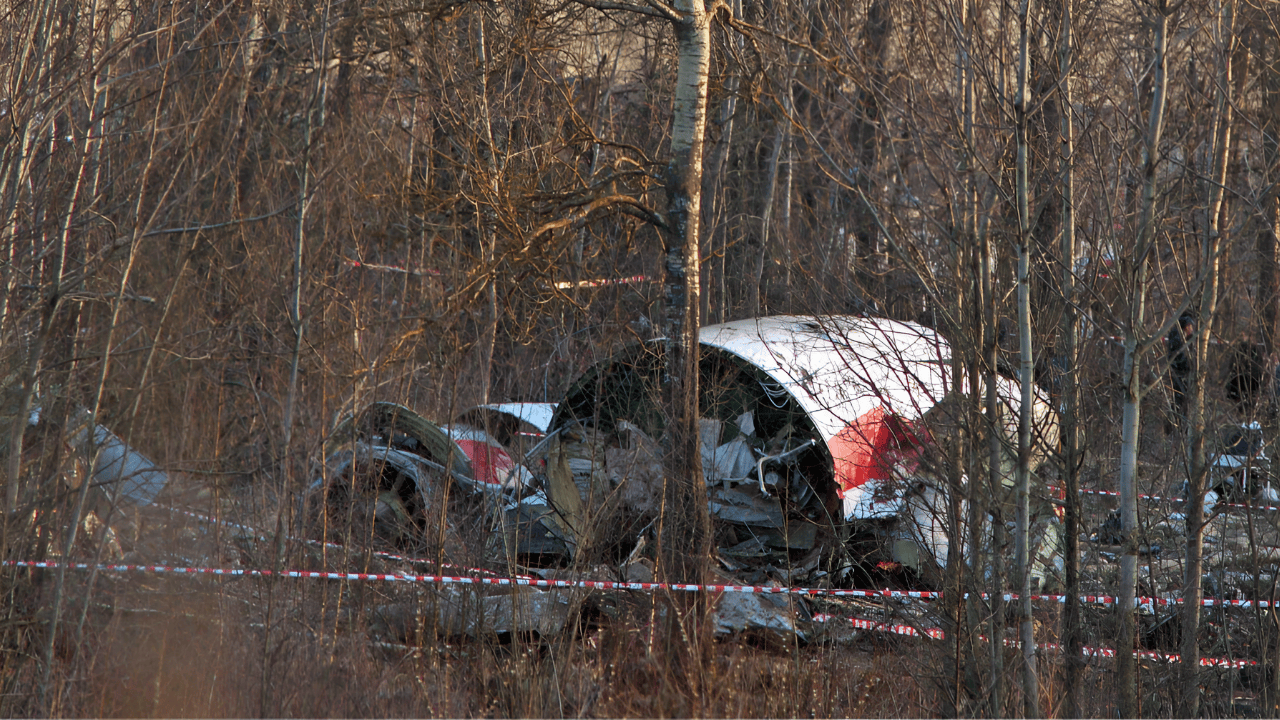
On December 9, 2025, Russia’s last operational Antonov An-22, the world’s largest turboprop aircraft, broke apart in mid-air over the Uvodskoye Reservoir near Ivankovo in the Ivanovo region, about 125 miles northeast of Moscow. All seven crew members were killed as search teams recovered wreckage from the icy water. The aircraft, built in 1974 and registered as RF-09309, had been sent on a post-repair inspection flight. Its destruction did more than end a mission: it removed Russia’s only remaining heavy-lift turboprop capable of landing on rough or improvised airstrips, erasing a niche capability at a time of intense logistical pressure from the war in Ukraine.
A Soviet Giant at the Edge of Its Life
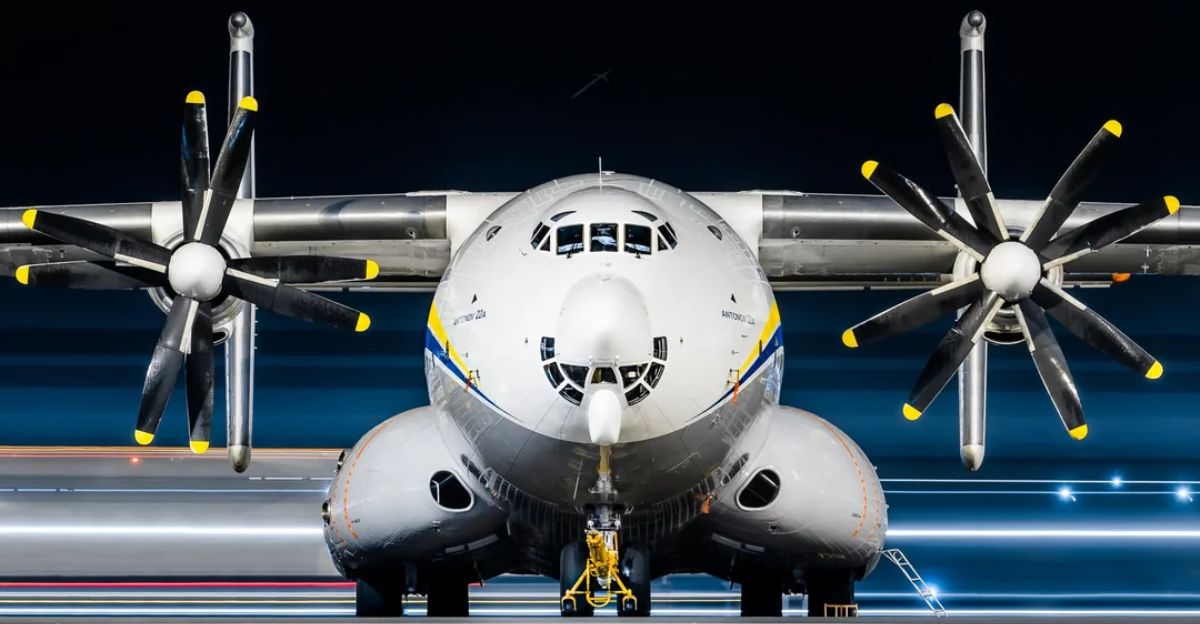
The Antonov An-22 “Antei” was conceived in the 1960s by the Ukrainian design bureau Antonov as a strategic airlifter for oversized cargo. First flown on February 27, 1965, it went on to set forty-one world records for payload and altitude, underscoring its role as a flagship of Soviet heavy transport aviation. Its four Kuznetsov NK-12MA turboprop engines, each generating about 14,805 horsepower, turned enormous eight-blade contra-rotating propellers more than six meters across, giving the aircraft both high power and long range.
The An-22’s pressurized cargo hold, roughly 26.4 meters long and 4.4 meters wide, could accommodate loads that would not fit inside more common transports. It could carry more than 132,000 pounds of freight, including complete missile systems and large armored vehicles. In volume, it surpassed the widely used Il-76, yet remained cheaper to operate per flight hour than the even larger An-124 “Ruslan.” Crucially, it could operate from unprepared or damaged runways, a feature that made it especially valuable for military operations in remote or contested areas.
Retirement Announced, Then Reversed

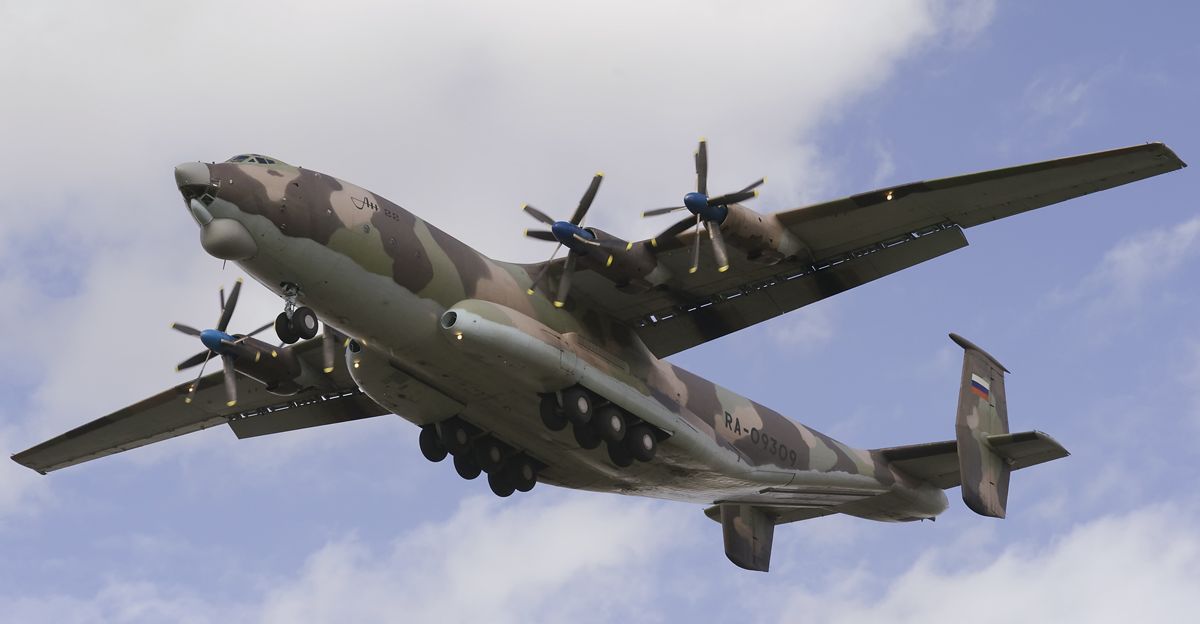
By mid-2024, Russia appeared ready to close the book on the An-22. In June, Lieutenant General Vladimir Venediktov announced that the fleet would be withdrawn immediately because of prohibitive maintenance costs and the difficulty of supporting aging Soviet-era systems. The last flyable aircraft, RF-09309, was reportedly bound for static display in Yekaterinburg by August 2024.
That plan was overtaken by events. As the war in Ukraine dragged on, Russia’s transport fleet came under growing strain. Western sanctions cut off access to many imported components, and the military struggled to move men and materiel across vast distances. Facing a shortage of lift capacity, the Ministry of Defense reversed course. Officials confirmed that RF-09309 had been taken back from museum transfer and placed in repair, with the goal of returning it to service despite its age.
The fatal flight on December 9 was part of that effort: a standard post-maintenance test to confirm that work had been completed correctly before resuming full operations.
Sanctions, Aging Fleets, and a Pattern of Risk
Russian media, quoting unnamed sources, reported that technical malfunctions likely contributed to the mid-air breakup over the reservoir. Eyewitness accounts described the aircraft disintegrating and scattering debris over a wide area. The Investigative Committee opened a criminal case into possible aviation safety violations, highlighting official concern about the circumstances of the crash.
This was not the first time an An-22 had been lost after maintenance. On December 28, 2010, another aircraft of the same type crashed in the Tula region during a test flight, reportedly after exceeding its maximum design speed, killing all twelve on board. Both accidents occurred on post-repair sorties, reinforcing questions about the challenges of maintaining aging platforms with limited access to original parts and specialized expertise.
Of the sixty-eight An-22s built in the Soviet era, only about three were still considered flight-capable by 2024, with roughly ten more in storage of uncertain condition. Modernization programs had stalled years earlier, leaving a small number of aircraft to soldier on long past their intended service lives. The loss near Ivankovo effectively ends operational use of the type in Russia.
Logistics Under Strain and No Clear Successor
The An-22’s demise deepens an already serious transport shortage. Russia’s military airlift is now heavily dependent on around 130 Ilyushin Il-76 aircraft, many themselves approaching or exceeding their design lifetimes. The An-124 “Ruslan” offers greater payload capacity, up to about 300,000 pounds, but only a limited number remain in service. Production and support of their engines were long tied to Ukraine’s Motor Sich, complicating any expansion.
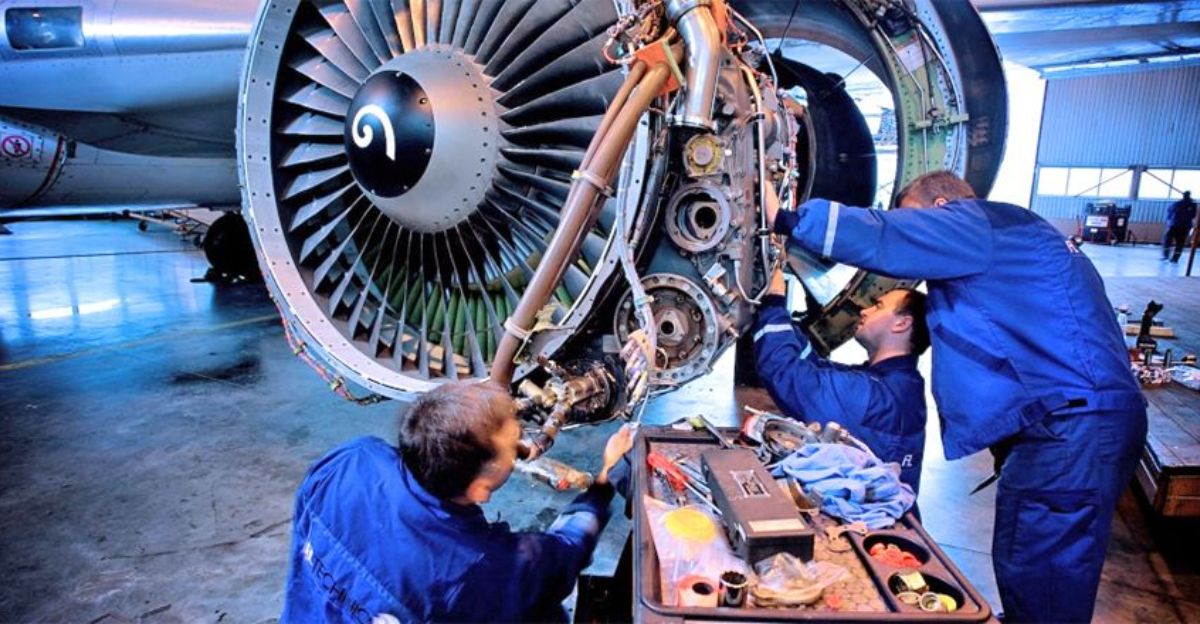
Sanctions imposed after the 2022 invasion have cut Russia off from many Western-origin avionics, hydraulics, electronics, and propulsion components. Domestic industry has struggled to replace these systems, often relying on improvisation that can erode reliability and safety. The An-22, with its complex and unique systems, was especially dependent on foreign or legacy supply chains that no longer function as designed.
At the same time, the conflict in Ukraine has increased demand for heavy-lift capacity. Russian forces require regular resupply, troop movements, and medical evacuation across multiple fronts. Ukrainian drone and missile strikes on air bases and aircraft have further reduced available assets, raising the stakes for every remaining transport. The An-22’s ability to use rough or damaged runways had made it particularly useful under these conditions.
Prospects for a replacement are remote. Planned indigenous successors, such as the Il-276 and other proposed designs, have not advanced beyond early stages, hampered by funding gaps and technological limits. With sanctions blocking the import of foreign heavy-lift aircraft and critical components, Russia’s aerospace sector faces a long, uncertain path to fielding a comparable new platform.
A Turning Point for Russian Aviation
The crash of RF-09309 comes against a broader backdrop of aviation safety concerns. Russian military and civilian incidents reportedly multiplied in 2025, with hundreds of recorded equipment malfunctions leading to cancellations and emergency landings, and several deadly regional airline crashes. Analysts link these trends to aging fleets, shortages of certified parts, and mounting maintenance backlogs.
The destruction of the An-22 removes a distinctive capability from Russia’s arsenal and underscores how far its transport aviation has diverged from modernization goals. Strategic missions that once relied on heavy turboprop aircraft able to reach remote or austere locations now face tighter constraints. Together with the loss of Ukraine’s one-of-a-kind An-225 “Mriya” in 2022, the accident marks a broader decline in the heavy-lift dominance once associated with Soviet and post-Soviet aviation.
As the war in Ukraine continues and sanctions remain in place, Russia’s ability to sustain operations will increasingly depend on how it manages an overworked, aging fleet with limited options for renewal. The end of An-22 operations is both a symbolic and practical milestone, highlighting the long-term logistical and industrial challenges that lie ahead.
Sources:
“Russian An-22 Down in Central Russia — Seven Crew Feared Dead.” English Pravda, December 8, 2025.
“There’s Likely No Way Back For Russia’s An-22 Turboprop Heavy Transports After Fatal Crash.” The War Zone, December 8, 2025.
“Putin Reels as Russian Military Transport Plane Crashes.” The Express, December 9, 2025.
“Another Big Loss for Putin as Russian An-22 Military Plane Crashes.” MSN, December 9, 2025.
“Russia to Retire its Fleet of the World’s Largest Turboprop.” The Aviationist, June 5, 2024.
“Crew Killed in Crash of Russian An-22 Military Plane.” Reuters, December 9, 2025.
“Antonov An-22.” Antonov official aircraft history and specifications, 1965–1976.
“Aviation Safety Network Accident Database — An-22 Tula Region.” December 28, 2010.