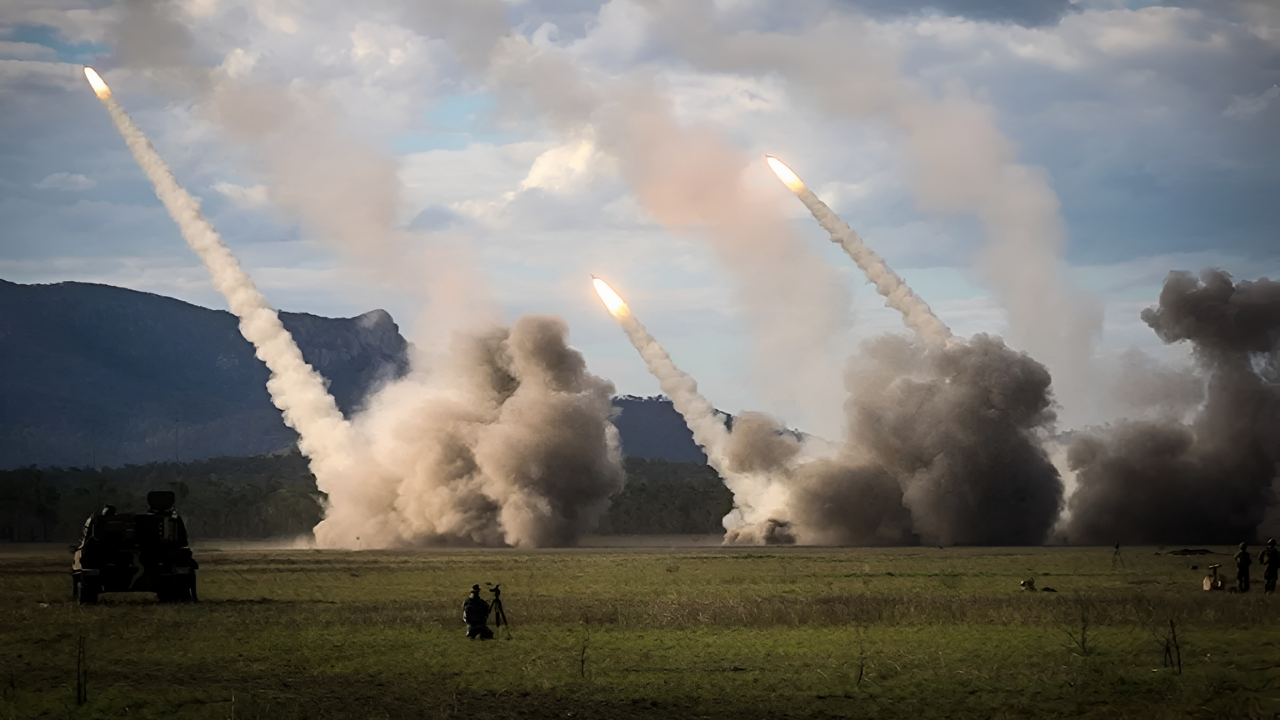
In the early hours of October 17, 2023, Ukraine launched a surprise missile assault deep into Russian-occupied territory, striking airbases at Berdyansk and Luhansk. The operation, codenamed “DRAGONFLY,” marked the first confirmed use of American-supplied ATACMS missiles by Ukrainian forces. The attack delivered a significant blow to Russian military aviation, destroying or damaging dozens of helicopters and exposing vulnerabilities in Russia’s air defense systems.
Precision Strike with American Technology
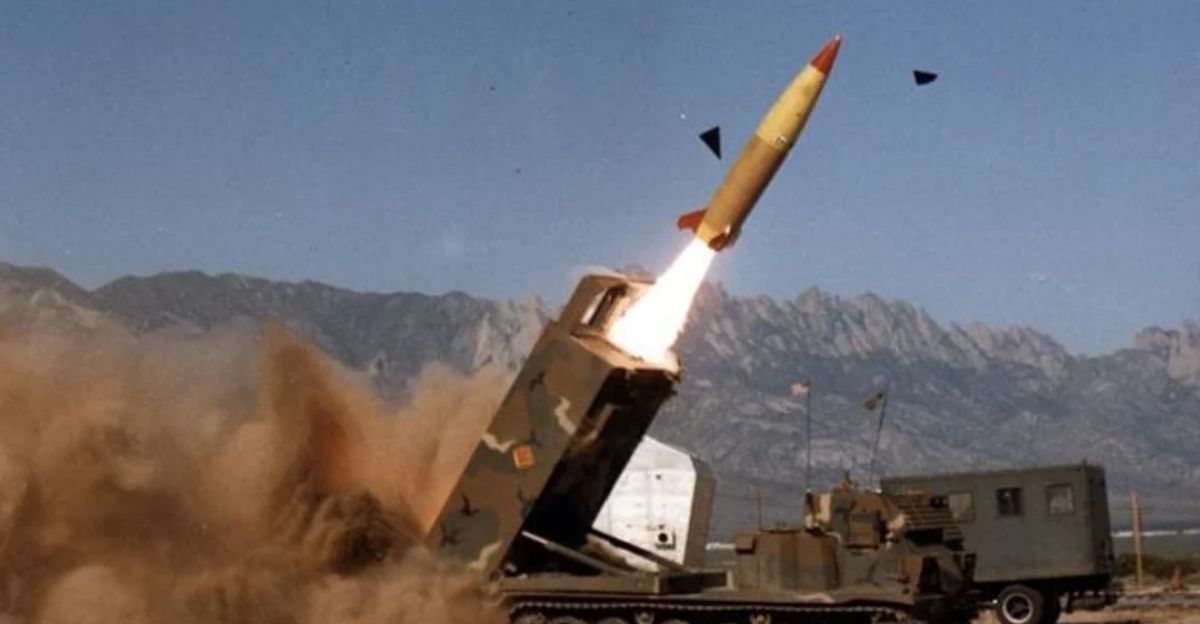
The Army Tactical Missile System (ATACMS), manufactured by Lockheed Martin, is the United States’ premier long-range surface-to-surface missile. The Block 1 variant used in the October strikes has a range of up to 100 miles (165 kilometers), while later Block 1A models can reach 190 miles (300 kilometers). Both versions are equipped with either a single 500-pound unitary warhead or a cluster payload containing 950 M74 submunitions. For the October operation, Ukraine deployed the M39 variant, which disperses hundreds of bomblets over a wide area, maximizing damage against aircraft, vehicles, and exposed personnel.
The cluster warhead’s effectiveness was evident in the aftermath. The missiles saturated the airfields, targeting helicopters parked in tight formations without protective shelters. Satellite imagery and open-source analysis confirmed widespread destruction, with secondary explosions from ammunition stores amplifying the impact.
Berdyansk and Luhansk: Strategic Targets
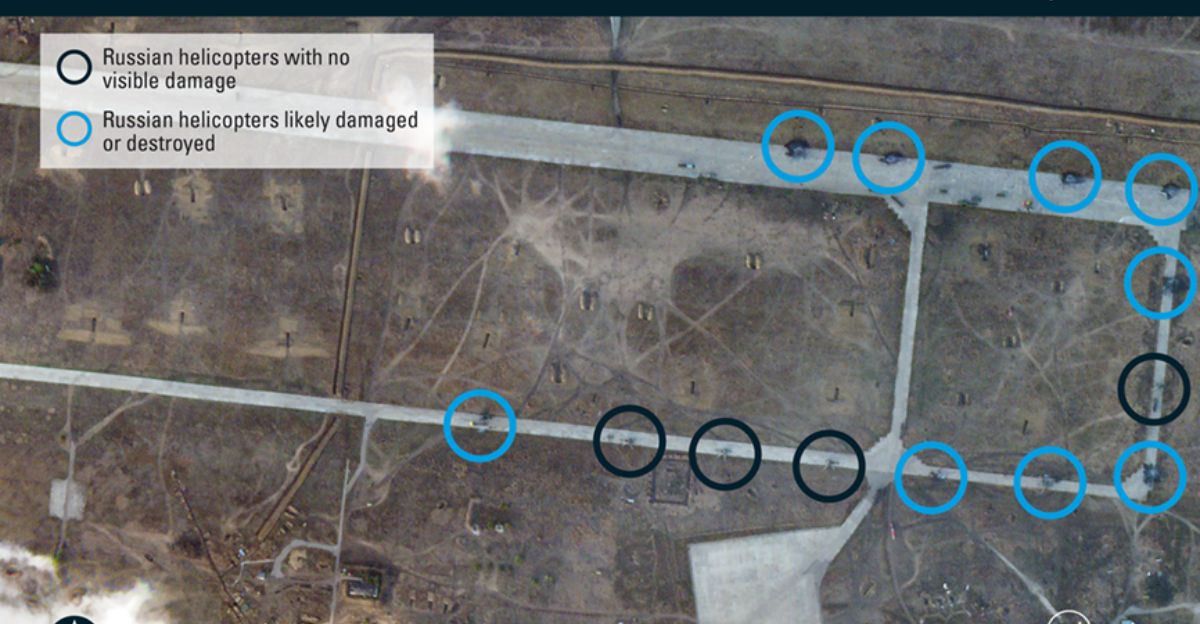
Berdyansk airbase, located near the Azov Sea, served as a critical hub for Russian helicopter operations supporting front-line troops. The base was within striking distance—about 70 miles—from Ukrainian positions. The ATACMS barrage destroyed or damaged multiple helicopter types, with Ukrainian Special Operations Forces and satellite images confirming direct hits and subsequent fires.
Simultaneously, Luhansk airfield in eastern Ukraine came under attack. This base functioned as a staging ground for Russian helicopter sorties against Ukrainian forces. The strike left visible craters, scorched tarmac, and wrecked aircraft scattered across the apron. Ukrainian officials reported the destruction of helicopter staging areas and support infrastructure, further degrading Russia’s ability to launch air operations from the region.
Toll on Russian Helicopter Fleet
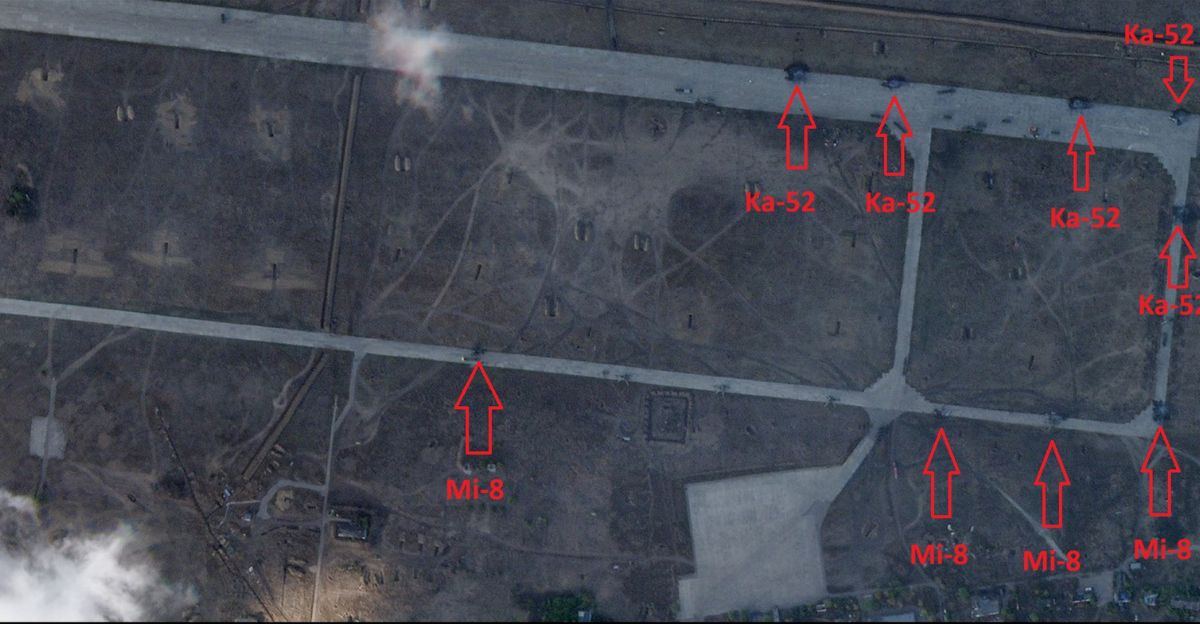
Independent verification by open-source analysts confirmed the destruction of nine helicopters: seven Ka-52 “Alligator” attack helicopters and two Mi-8 transport helicopters. An additional 15 helicopters sustained damage, much of it likely irreparable due to structural compromise. While Ukraine’s military initially reported nine destroyed, U.S. assessments suggested up to 14 helicopters lost across both airbases.
The Ka-52 “Alligator” is Russia’s most advanced attack helicopter, valued at $15–16 million per unit and equipped with precision-guided missiles and advanced targeting systems. Before the October strikes, Russia’s pre-war Ka-52 fleet numbered around 130, with 40 already lost in combat. The destruction of seven more in a single night represented a loss of approximately 11.5% of the pre-war fleet, severely impacting Russia’s close air support capabilities.
Beyond Aircraft: Broader Damage and Tactical Shifts
The missile strikes inflicted damage beyond the helicopter fleet. A Pantsir-S1 air defense system was destroyed, and ammunition depots erupted in secondary explosions visible for miles. Runways, fuel storage, maintenance facilities, and support vehicles were also hit, rendering both airbases partially inoperable for weeks. The cluster munitions’ wide dispersal pattern caused additional casualties among personnel and further disrupted Russian logistics.
The operation forced Russian commanders to reassess the safety of their aviation assets. Helicopter bases, once considered secure beyond the reach of Ukrainian artillery, were now vulnerable to precision strikes. In response, Russia began relocating high-value aircraft to bases deeper within occupied territory or inside Russia itself, reducing their ability to provide rapid support to front-line units.
Intelligence and Execution

Ukraine’s success hinged on meticulous intelligence gathering. Satellite imagery, drone reconnaissance, and human intelligence identified concentrations of helicopters and support equipment at both airbases. Special Operations Forces coordinated closely with missile units, timing the strikes to exploit gaps in Russian surveillance and air defense readiness. The nighttime assault maximized surprise and destruction before Russian forces could mount an effective response.
A New Phase in the Conflict
Operation DRAGONFLY demonstrated Ukraine’s ability to strike deep behind enemy lines with precision and lethality. The attack not only degraded Russia’s helicopter fleet but also exposed weaknesses in its air defense and base protection strategies. The use of ATACMS missiles shifted perceptions among Western allies, prompting renewed discussions about expanding long-range missile support for Ukraine.
One year after the operation, U.S. policy evolved further, with President Biden authorizing the use of ATACMS for strikes inside Russian territory for the first time. The October 2023 strikes thus marked a turning point, both tactically and strategically, in the ongoing conflict—reshaping the calculus for both sides and setting new precedents for the use of advanced Western weaponry in Ukraine’s defense.