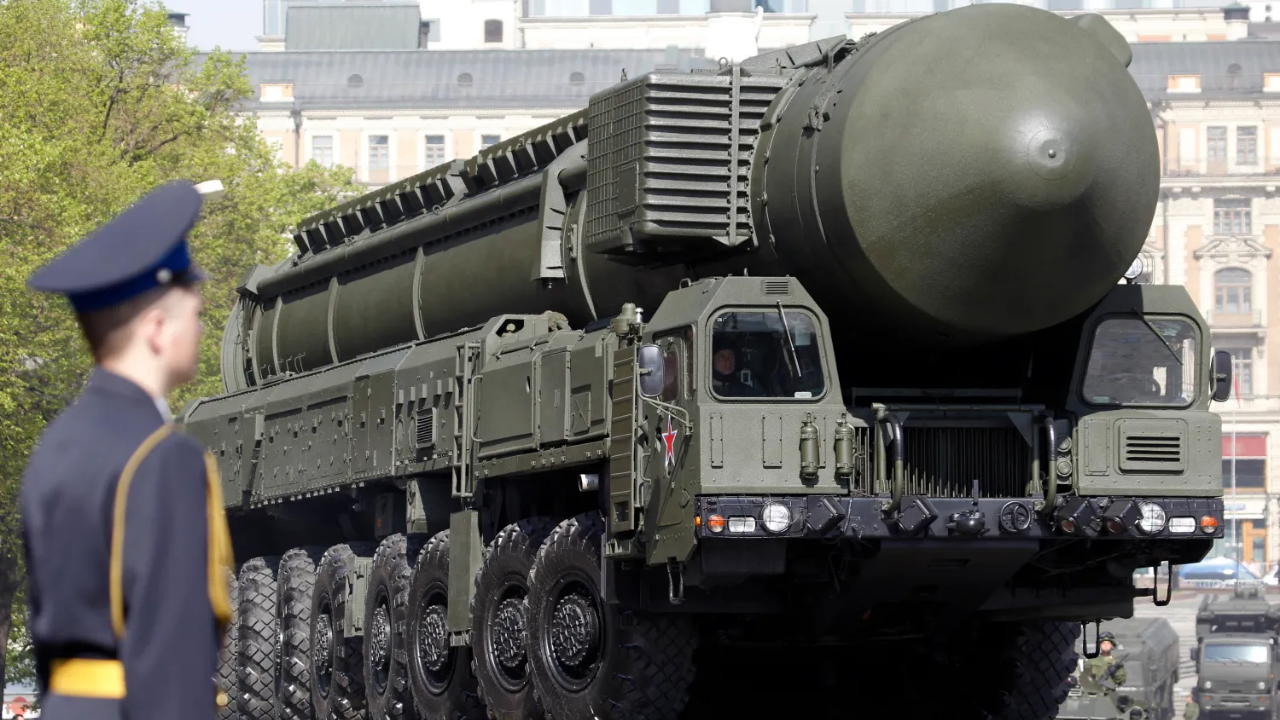
Russia’s Oreshnik hypersonic missile deployment to Belarus has thrust over 80 million Europeans into a new security calculus, with weapons capable of striking NATO capitals in minutes now on combat alert just kilometers from alliance borders.
Russia’s Strategic Missile Move
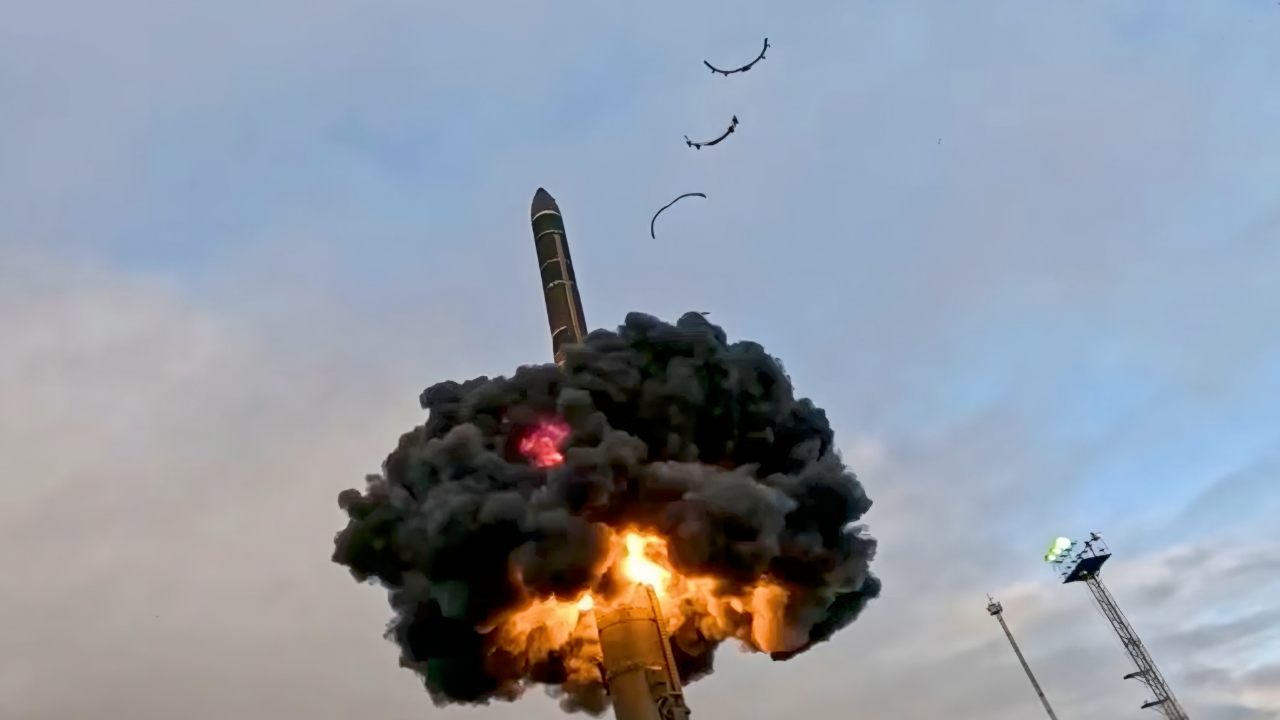
On December 17, Russian President Vladimir Putin announced that the Oreshnik hypersonic ballistic missile system, traveling at speeds exceeding Mach 10, would enter combat duty before year’s end. The next day, Belarusian President Alexander Lukashenko confirmed the nuclear-capable weapons had arrived on Belarusian soil and were placed on combat alert. Russian officials described the missile as uninterceptable, sending ripples through NATO capitals. The rapid sequence—from Putin’s televised statement to deployment—underscored Moscow’s intent to project power amid escalating tensions.
Weapon Origins and First Strike
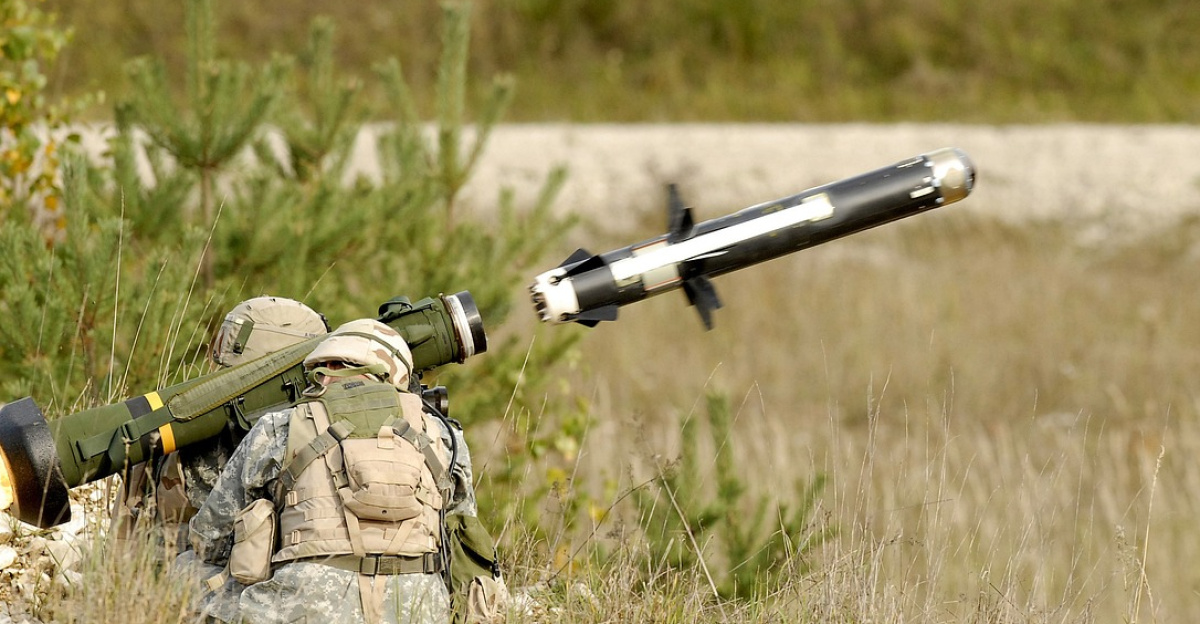
Russia first tested the Oreshnik on November 21, launching it against a Ukrainian factory in Dnipro. Putin highlighted the strike as a warning to the West, achieving devastating impact at extreme velocity. Satellite imagery later revealed preparations at the long-dormant Krychev-6 airfield in eastern Belarus, just 5 kilometers from Russia. Abandoned since 1993, the site showed new rail transfer points, security fencing, and disguised concrete pads, indicating rushed reactivation for permanent basing.
Technical Edge and Defensive Gaps
The Oreshnik reaches speeds of about 12,300 kilometers per hour, or over 3,400 meters per second—far surpassing a rifle bullet’s 900 meters per second. It ascends beyond the atmosphere before descending, evading traditional interceptors. Unlike single-warhead missiles, it deploys six independently targetable warheads, each splitting into six submunitions for 36 potential impact points. NATO defense officials have noted that the system’s flight profile presents challenges for existing defenses like Patriot and SAMP/T, which were not designed for such threats.
Regional Reach and Immediate Responses
From Belarusian sites, the missile’s 5,500-kilometer range encompasses Warsaw, Vilnius, Riga, Berlin, and Brussels. Poland, with 38 million residents, faces direct exposure; Vilnius sits merely 30 kilometers from the border, compressing warning times to minutes. Russian projections claimed strikes on Polish air bases in 11 minutes and Brussels headquarters in 17, amplifying deterrence messaging. Poland had previously deployed 40,000 troops to the Belarusian frontier in September 2025 during the Zapad exercises and invoked NATO Article 4 consultations following Russian drone incursions into Polish airspace.
Broader Ramifications and Preparations
The deployment followed September’s Zapad-2025 exercises, where Russia and Belarus rehearsed Oreshnik scenarios alongside nuclear planning—their largest joint drills since 2021. It coincided with Belarus freeing 123 political prisoners, including Nobel laureate Ales Bialiatski, on December 13 after 4.5 years in harsh conditions. Bialiatski warned the move militarizes Belarus, turning it into a target. Germany activated its first Arrow 3 battery on December 3, offering exoatmospheric interception, but scaling defenses across Europe will take years. Ukrainian President Volodymyr Zelenskyy called for sanctions on Oreshnik component suppliers, citing intelligence on sites. As the New START treaty nears expiration in February 2026 without extension, verification gaps allow unchecked expansions, leaving NATO to balance deterrence against psychological pressure and potential escalation.
Sources
Russian President Vladimir Putin’s Address to Defence Ministry Board Meeting. Kremlin Official Statements, December 17, 2025
Belarusian President Alexander Lukashenko’s Address to the 7th All-Belarusian People’s Assembly. BelTA News Agency, December 18, 2025
Belarusian Oreshnik Deployment Planned for December. Jamestown Foundation, October 31, 2025
Implications of the Oreshnik for NATO’s Missile Defense Posture. Missile Matters Substack, December 2025
U.S. Department of Defense Official Statements on Russian Military Capabilities. U.S. Department of Defense, December 2025