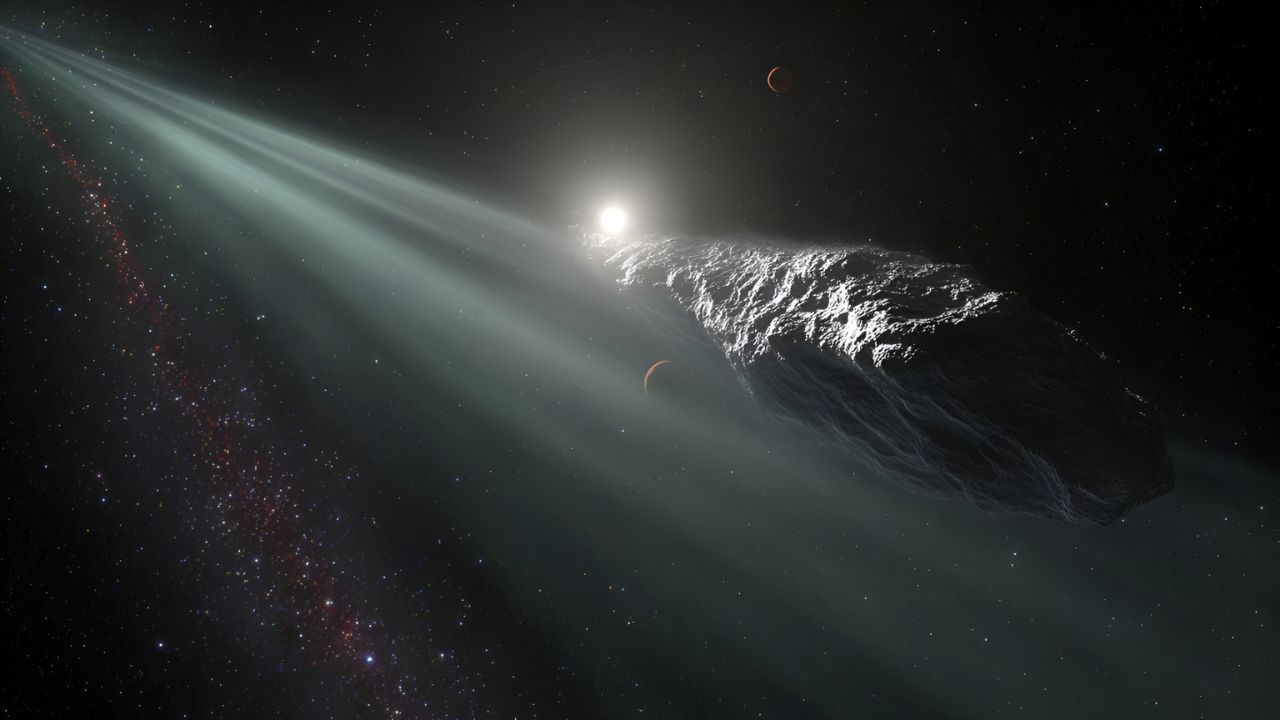
In July 2025, astronomers spotted a strange object from deep space that is now flying through our solar system. Called 3I/ATLAS, it is only the third confirmed visitor from another star system, and it has sparked a heated debate about what it is and how it moves. Most scientists think it is a natural comet, but some researchers suggest its motion could hint at something more unusual, which keeps the discussion active.
Traveling for Billions of Years
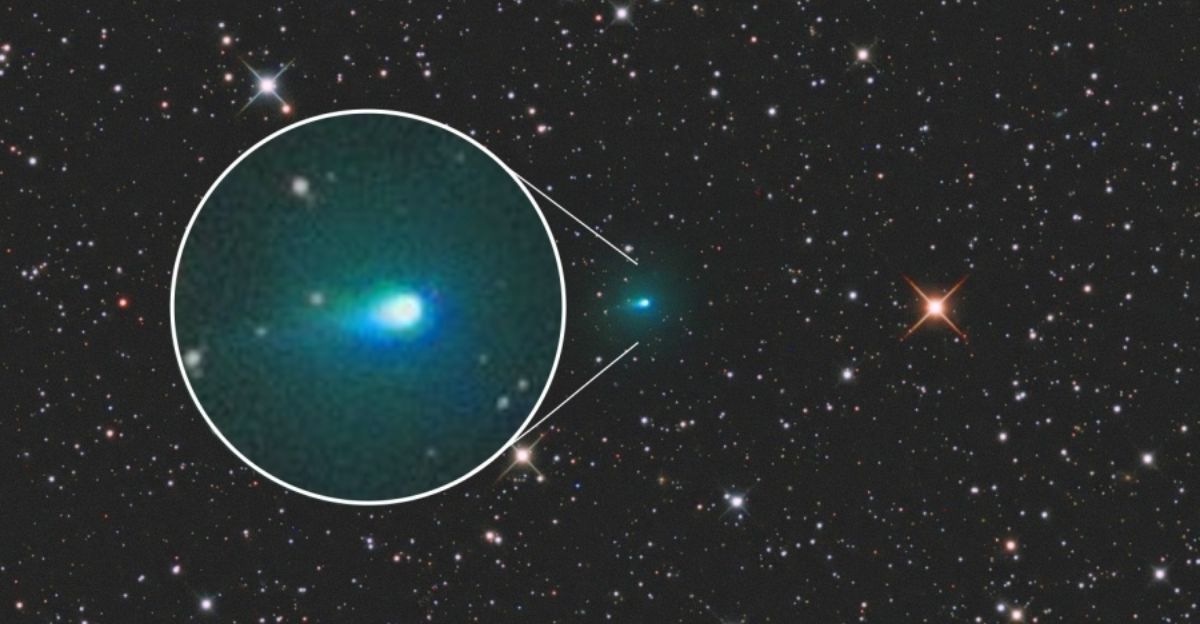
3I/ATLAS was first seen on July 1, 2025, by the ATLAS survey telescope in Chile, and older data later showed it had already been captured in images weeks earlier. Its path through space is hyperbolic, meaning it is not trapped by the Sun’s gravity and will pass through our solar system once before heading back into interstellar space.
By tracing its journey, astronomers think it may have been traveling for around seven billion years, possibly coming from a region of the Milky Way where stars and planets formed under different conditions than in our own neighborhood.
Because it comes from so far away and is so old, 3I/ATLAS acts like a time capsule from an earlier era in the galaxy’s history. Its ices and dust preserve information about how and where it formed, offering clues about star systems that existed long before the Sun and planets were born. Studying it helps scientists compare our solar system with others and refine ideas about how planets and comets form across the galaxy.
How It Was Found And Studied
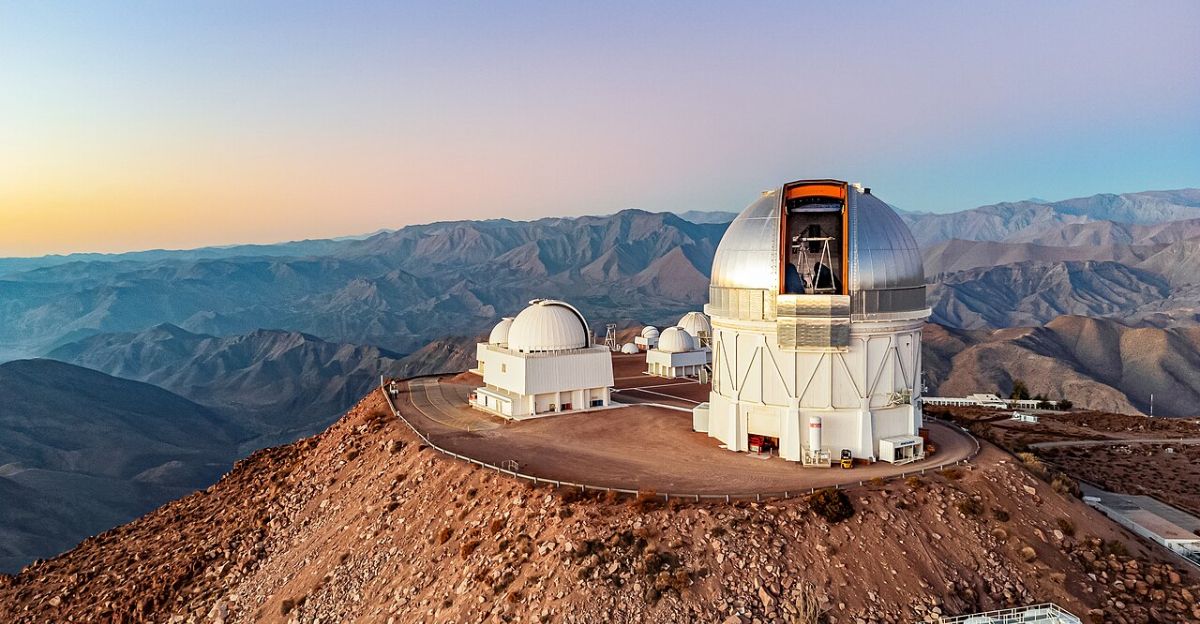
Once ATLAS in Chile flagged the object, astronomers quickly checked data from ATLAS telescopes in Hawaii and South Africa, as well as from the Zwicky Transient Facility in California. These combined observations allowed them to pin down its orbit precisely and confirm it was moving too fast to have originated in our solar system. After its path was confirmed, observatories around the world and in space, including Hubble and the James Webb Space Telescope, began monitoring its brightness, structure, and composition.
NASA and its partners classify 3I/ATLAS as an interstellar comet, meaning it has an icy core surrounded by a cloud of gas and dust like other comets. Observations suggest that its nucleus contains water ice and carbon dioxide ice, which are common ingredients in comets and support the idea that it is a natural object. The U.S. Department of Defense and international space agencies have also tracked its path and confirmed that it does not pose any impact threat to Earth.
Debate Over Its Motion And Origin

The main mystery around 3I/ATLAS is its slight non-gravitational acceleration, meaning its motion does not match what gravity alone would predict, especially near the Sun. For normal comets, this kind of behavior usually comes from jets of gas and dust blasting out when sunlight heats the surface, giving the comet small pushes like tiny natural rocket engines. Many researchers think the acceleration of 3I/ATLAS can be explained in this standard way, using known comet physics and modest outgassing.
However, some scientists argue that the pattern and strength of this acceleration might be hard to fully explain with simple outgassing. A few, including Harvard astrophysicist Avi Loeb, have suggested that its motion could resemble controlled propulsion, possibly similar to a light sail or a spacecraft using a highly efficient thrust maneuver near the Sun.
They also note that its trajectory passes relatively close to Venus, Mars, and Jupiter in ways that could, in theory, be useful for gravity assists or observations, which they view as statistically interesting but not yet proven to be meaningful.
Where Most Scientists Stand
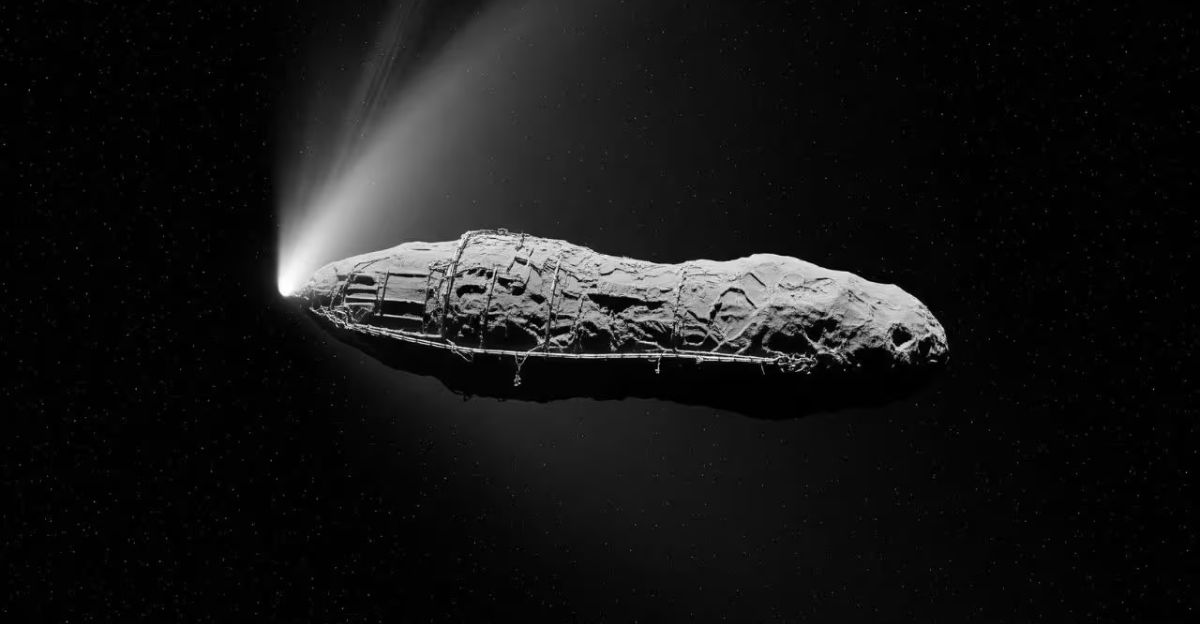
Despite these unusual features, the majority of planetary scientists and space agencies say the evidence best fits a natural interstellar comet. NASA officials have publicly rejected the idea that 3I/ATLAS is alien technology, stating that extraordinary claims require very strong proof that is not available at this time. So far, all observed properties can be modeled by existing comet theory, together with some extra acceleration from gas and dust leaving the surface.
Still, the case of 3I/ATLAS captures public attention because it touches on big questions about life beyond Earth and humanity’s place in the universe. Its odd combination of interstellar origin, long history, non-gravitational motion, and carefully watched path gives just enough room for speculation while falling short of any firm conclusion about anything artificial.
As more data arrive from ongoing observations, scientists hope to better understand this visitor, even if it ultimately turns out to be a strange but natural chunk of ice and rock from another star system.
Sources:
- NASA Science Portal. (2025). Comet 3I/ATLAS facts and FAQs.
- Minor Planet Center. (2025). Discovery announcement 3I/ATLAS.
- International Astronomical Union.
- U.S. Department of Defense. (2025). Space object assessment protocols. Pentagon Space Operations Command.
- Astrometric Research Collaborative. (2025). Non-gravitational acceleration analysis of 3I/ATLAS. Journal of Planetary Science, 47(3), 234-256.