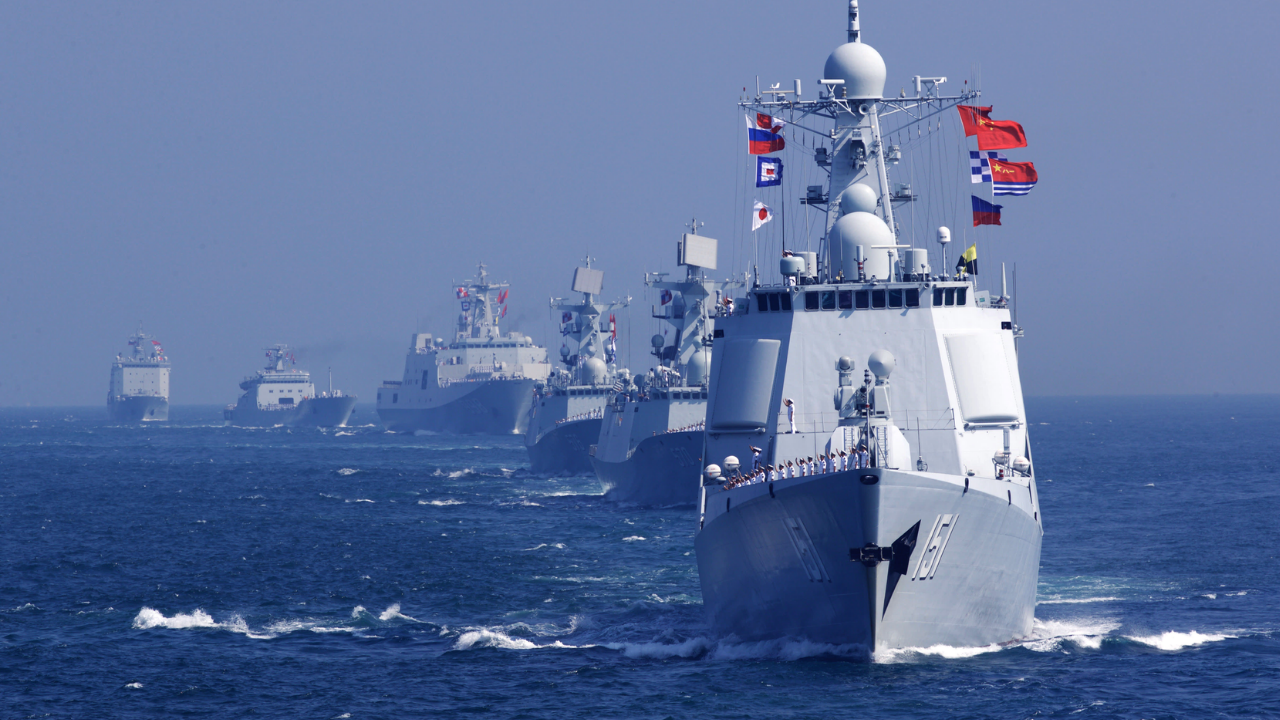
Early December 2025 saw China’s navy and coast guard unleash a stunning show of force, flooding key waters from the Yellow Sea to the South China Sea and Taiwan Strait. Over 100 state-run ships moved in tight, overlapping groups, an unmatched peacetime flex that stunned neighbors.
It shrank reaction windows for Japan, South Korea, Taiwan, and others, sparking urgent questions about America’s next play. Regional experts call it a bold test of limits, with ships darting like predators in a high-stakes game.
Why These Waters Matter Big Time
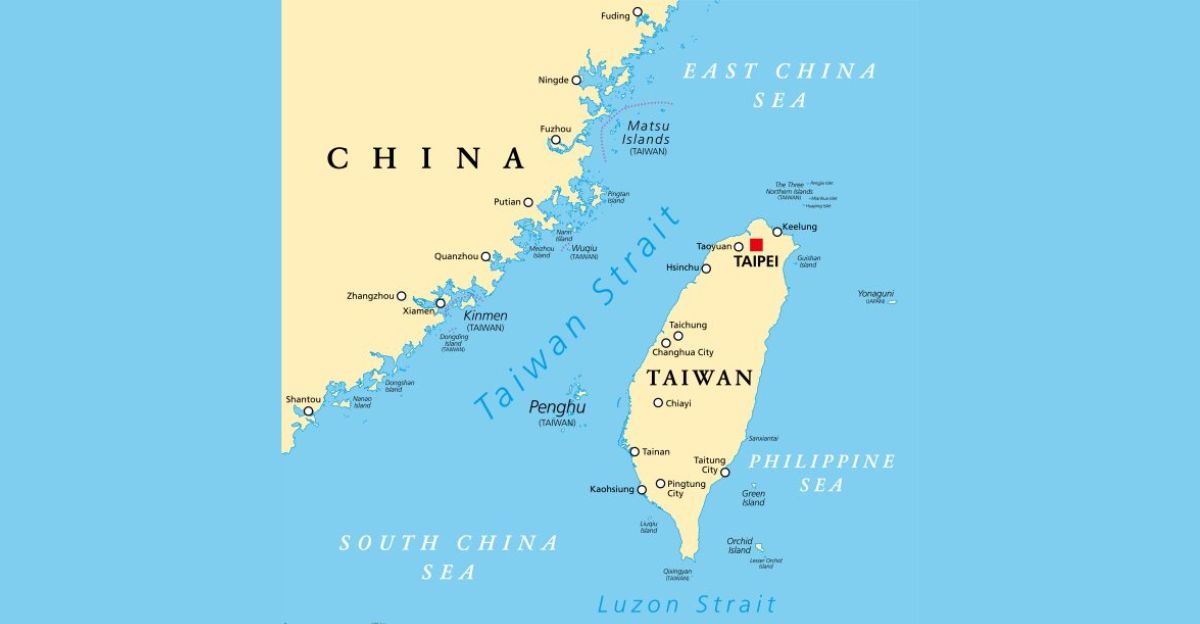
These aren’t just local hot spots, they’re the world’s trade superhighways, hauling one-third of global shipping, from oil tankers to tech parts. Block the South China Sea, East China Sea, or Taiwan Strait, and chaos hits supply chains from Asia to Europe.
Insurance costs are already spiking on geopolitical fears, with experts warning prolonged Chinese patrols could turn these chokepoints into armed standoffs. China’s surge flirted dangerously close to that edge, jacking up freight rates and rattling markets.
How China Built Its Sea Monster Fleet
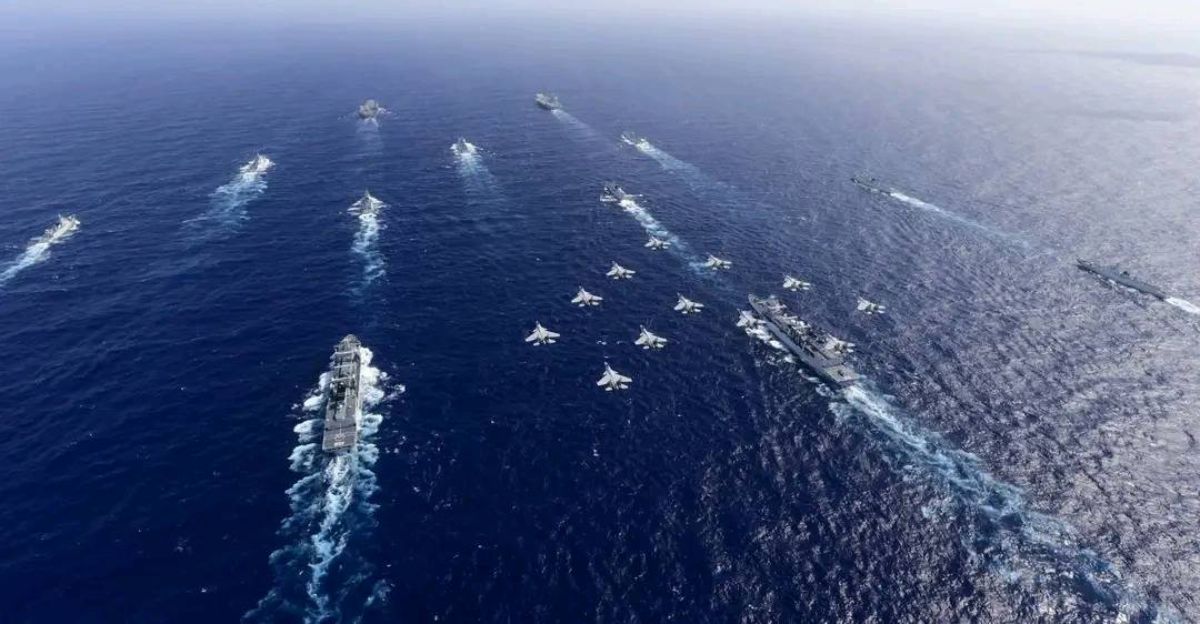
China’s December blitz didn’t pop up overnight, it’s the payoff from decades of turbocharged shipbuilding. By 2025, its navy boasts over 370 warships and subs, the planet’s biggest by raw numbers.
This armada fuels constant pushes into the Yellow Sea, East China Sea, South China Sea, and more, backed by fortified islands and far-flung supply bases. No longer stuck near home, these vessels prowl longer and bolder. It’s a quiet revolution turning regional waters into China’s playground, forcing rivals to scramble and rethink defenses.
Legal Fights Fuel the Fire
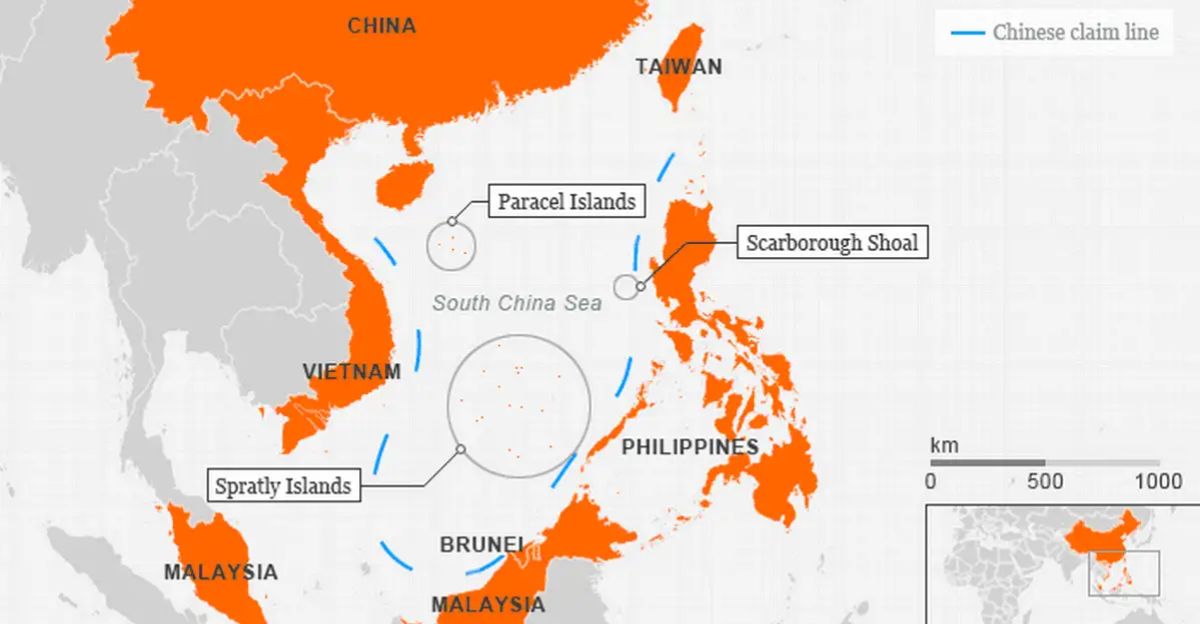
China’s sea power boom clashes head-on with bitter disputes over its vast claims. A landmark 2016 ruling by the Permanent Court of Arbitration shredded the “nine-dash line” basis for much of Beijing’s South China Sea grip.
China ignores it, while the U.S. ramps up “Freedom of Navigation” patrols to poke holes in excessive demands. Each new Chinese sortie feels like a dare, pulling in coast guard chases of fishing boats and escalating diplomatic barbs.
The Epic 100-Ship Storm
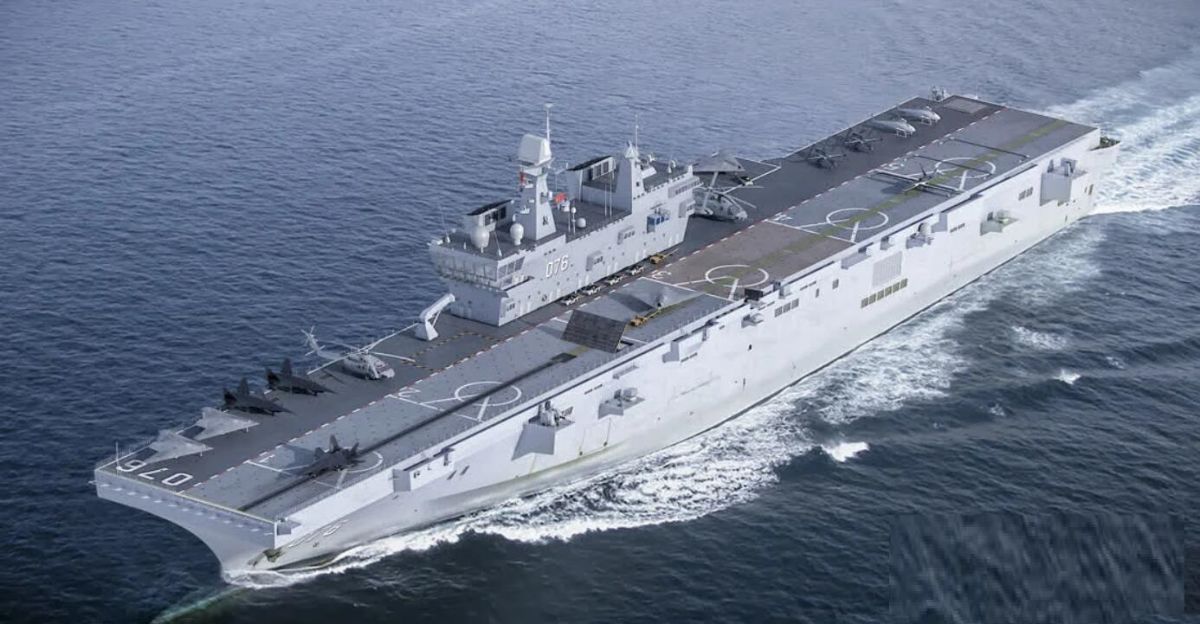
This wasn’t random patrolling, satellite imagery and intelligence reports captured dense formations of elite assets like Type 055 destroyers (advanced missile cruisers), Type 052D frigates, amphibious assault ships such as the Type 075, replenishment oilers for sustained ops, and the coast guard’s hulking 12,000-ton cutters.
Peak activity hit around December 4, with more than 90 ships still active days later, per Defense Forces analysis, far exceeding typical drills. The operation’s genius lay in its multi-theater coordination, stretching from northern Yellow Sea patrols to southern Spratly Island shadows, compressing response times for Taiwan, Japan, the Philippines, and U.S. forces.
Neighbors Hit Panic Button
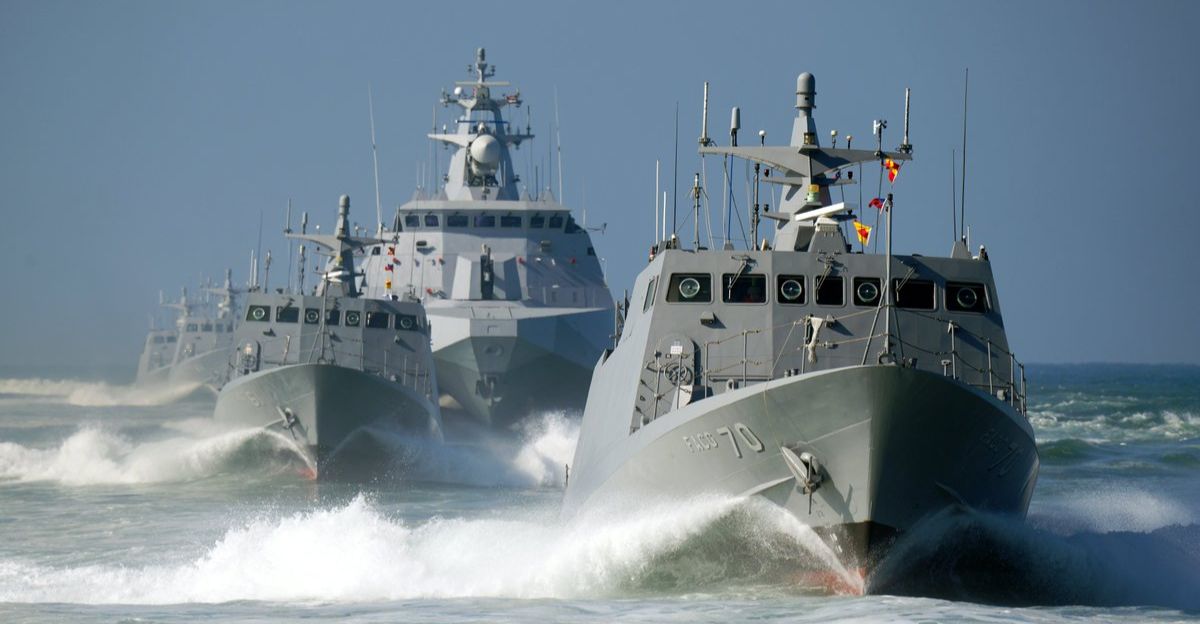
Taiwan’s defense ministry reported 25 PLA aircraft and 15 ships encircling the island on December 5, intensifying fears of a multi-domain squeeze on its vital air and sea approaches, echoing last year’s alert-level hikes during similar ops.
“China is in its most active phase for military drills,” warned Taiwan National Security Bureau Director-General Tsai Ming-yen on December 3, noting four naval formations in the Western Pacific and urging comprehensive vigilance against potential Taiwan-targeted escalations.
Millions in the Danger Zone
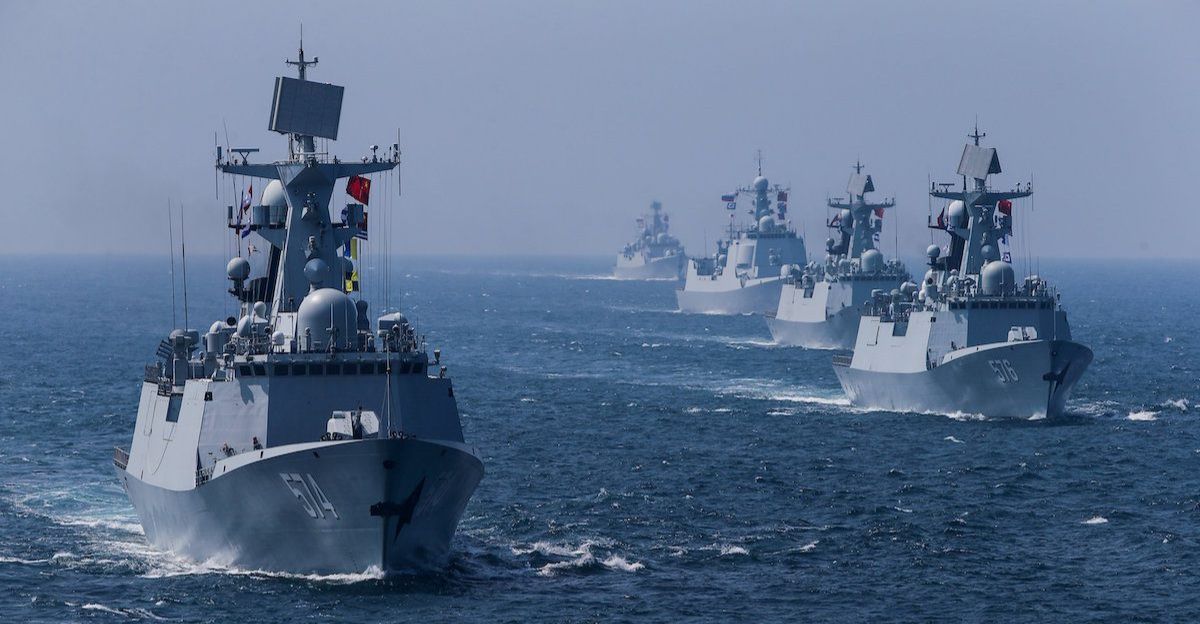
China’s December 2025 naval surge didn’t just rattle militaries, it put millions of ordinary lives squarely in the line of fire, turning bustling coastal cities into potential flashpoints. Analysts peg the at-risk population at 150-200 million across Japan, Taiwan, the Philippines, and South Korea, all within striking distance of the flotillas’ operational reach.
One miscalculation, a collision, a shadowed fishing boat, or an errant missile, could cascade into chaos, evacuations, and blackouts far beyond the waves.
Markets Freak Out Fast

China’s naval surge in early December 2025 sent financial markets into a tailspin almost overnight, as traders grappled with the specter of disrupted global trade lanes. Asia-Pacific freight rates surged 10-15% within days, driven by skyrocketing insurance premiums and hasty rerouting around the Yellow Sea, East China Sea, South China Sea, and Taiwan Strait, chokepoints handling one-third of world shipping, from oil to semiconductors.
Brent crude oil prices ticked up about 2%, reflecting bets on delays in energy shipments through these hotspots, while shipping indices like the Baltic Dry Index jumped amid panic over potential blockades
U.S. vs. China Power Clash
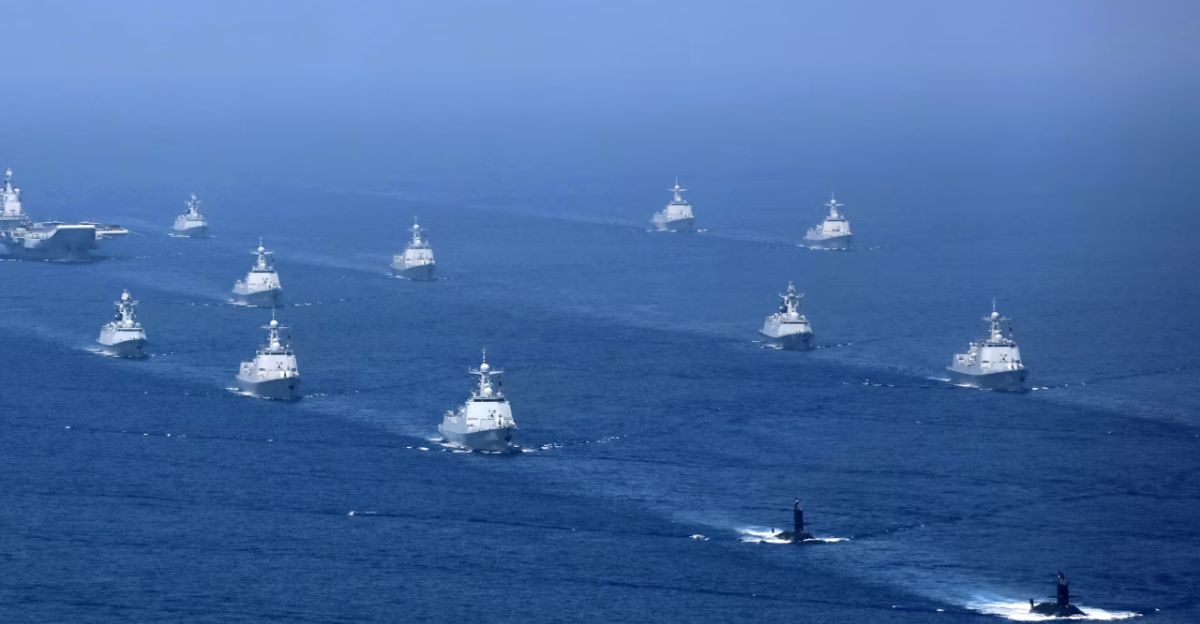
China’s naval surge spotlights a high-stakes tug-of-war for dominance over vital Pacific waters, where Beijing’s raw numbers clash with Washington’s technological and alliance edges. By late 2025, the People’s Liberation Army Navy (PLAN) commands over 370 warships and submarines, the world’s largest fleet by count, fueled by breakneck shipbuilding that outpaces global rivals.
U.S. Indo-Pacific Command chief Adm. Sam Paparo called this pace impressive in Defense News, yet stresses America’s qualitative leads in superior combat experience from decades of operations, unmatched global surveillance via satellites and subs, and carrier-launched F-35 stealth fighters that pierce contested skies.
America’s Pricey Counterpunch
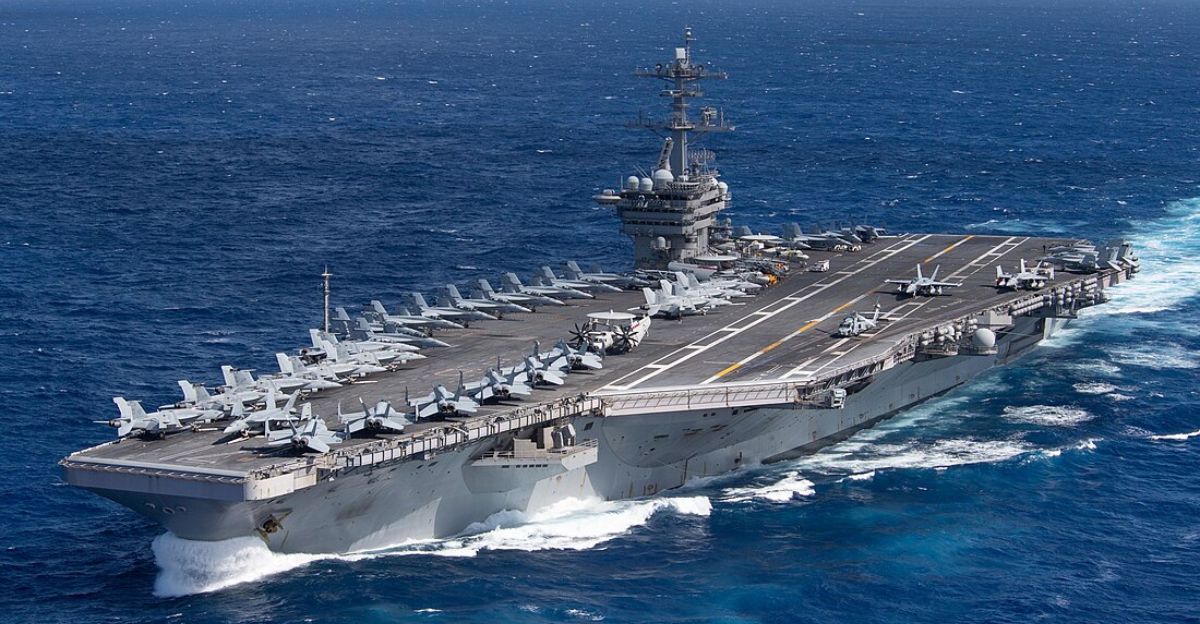
The U.S. response to China’s massive naval surge was swift and symbolic by repositioning the USS Theodore Roosevelt (CVN-71) carrier strike group into the Western Pacific under Indo-Pacific Command. This Nimitz-class behemoth, flagship of Carrier Strike Group 9, steamed in with its full entourage of cruisers, destroyers, submarines, and over 70 aircraft, to visibly counter Beijing’s multi-sea flex.
Operating at high tempo far from U.S. bases demands a fortune and analysts peg daily costs at over $6 million, covering fuel (millions of gallons monthly), 5,000+ crew provisions, jet sorties, munitions, and logistics chains spanning continents.
F-35s Bring Stealth Heat Expanded
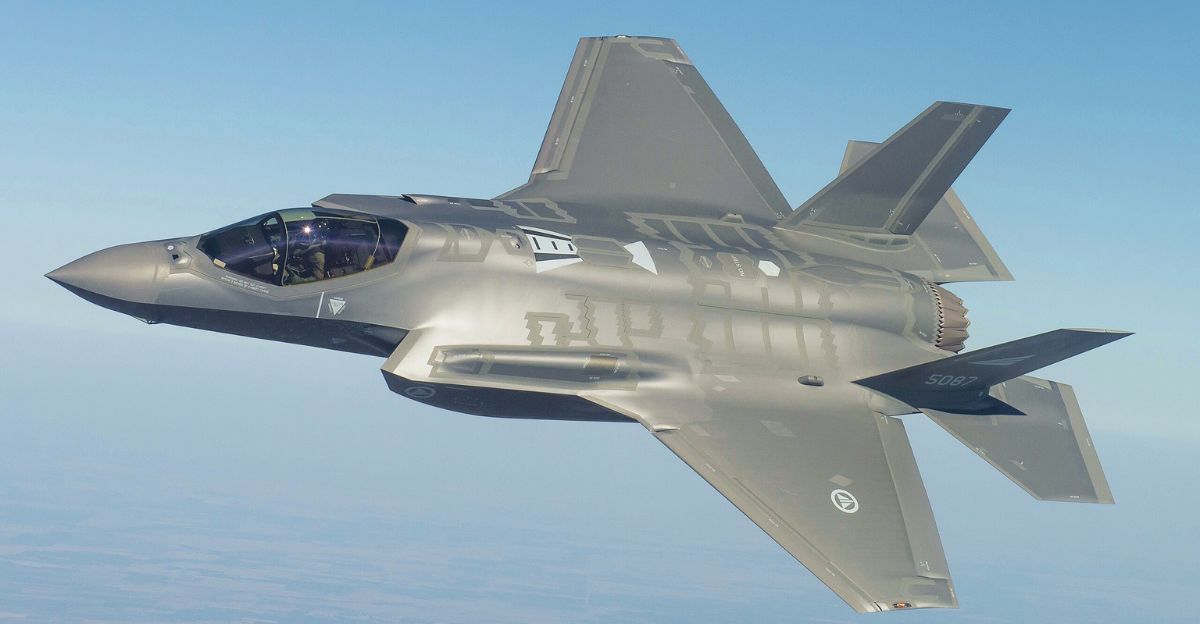
The USS Theodore Roosevelt’s deployment packs a stealth punch with its F-35C Lightning II fighters, the Navy’s carrier-based variant of the fifth-generation jet designed for high-threat skies like the Western Pacific. These radar-evading workhorses launch from the carrier’s deck, blending supersonic speed, sensor fusion, and precision strikes to penetrate defended airspace.
Roosevelt carries up to 20-24 F-35Cs alongside F/A-18s, enabling networked ops where pilots share real-time data for beyond-visual-range kills.
U.S. Blitz to Match the Surge
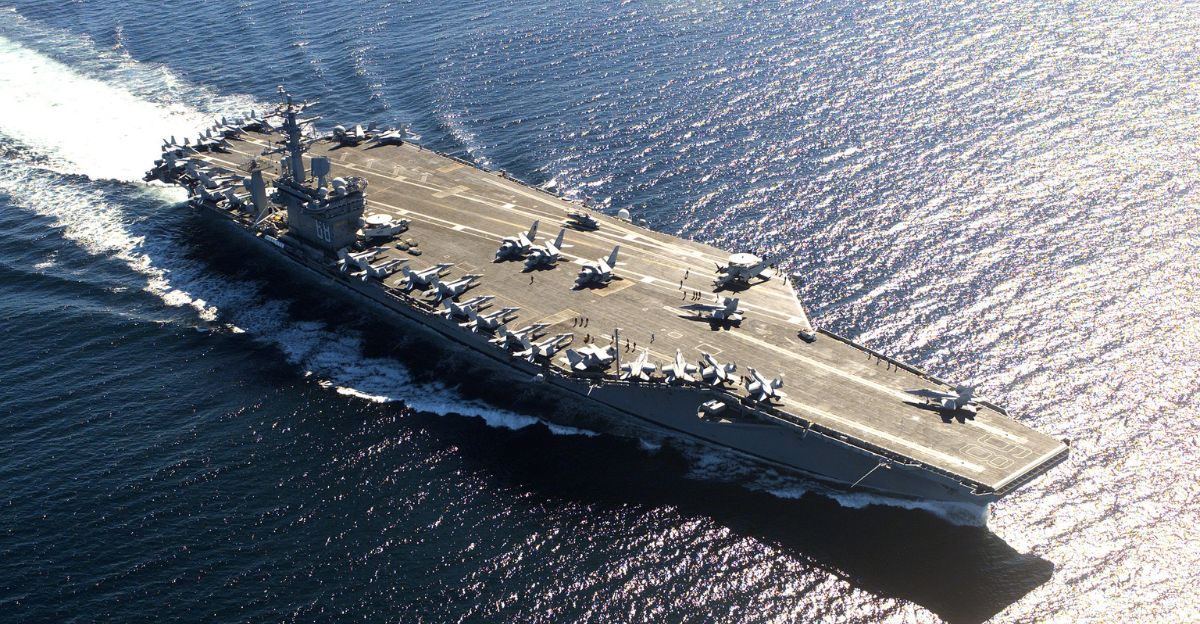
Timed to coincide with Beijing’s peak deployments across four seas, the move positioned the Nimitz-class carrier, packing up to 75 aircraft including F-35C stealth fighters, alongside escorts like Arleigh Burke-class destroyers (e.g., USS Russell, USS Paul Hamilton) and Ticonderoga-class cruisers for layered air, surface, and subsurface defense.
Court Rulings vs. Gunboats

The clash between legal verdicts and naval muscle defines the South China Sea standoff, where a pivotal 2016 ruling by the Permanent Court of Arbitration (PCA) dismantled China’s expansive “nine-dash line” claims.
Beijing dismissed it outright as “null and void,” refusing participation while ramping up island-building on features like Mischief Reef, low-tide elevations in the Philippines’ exclusive economic zone (EEZ). The decision affirmed Philippine sovereign rights over these areas, declaring China’s interference with fishing and oil exploration a violation of UNCLOS.
China’s High-Tech Trap
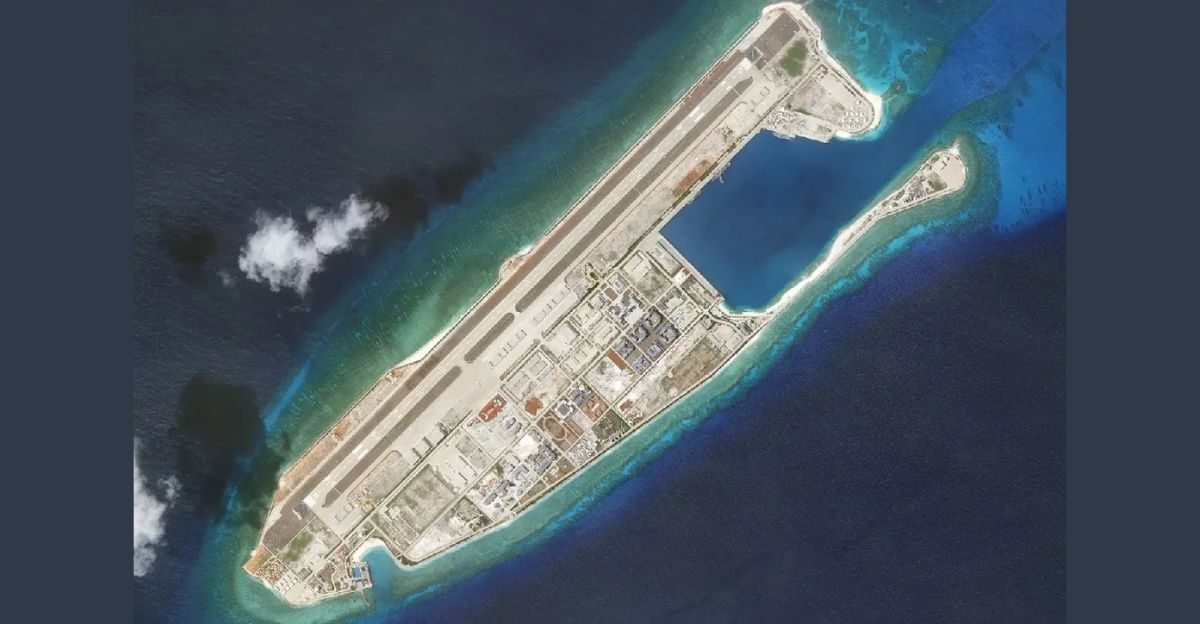
China is transforming the South China Sea into a sophisticated electromagnetic kill zone, layering artificial islands with advanced radars, jammers, and sensors to dominate the battlespace. Between 2023 and 2025, upgrades on outposts like Mischief Reef, Subi Reef, and Fiery Cross added radomes for overlapping surveillance, circular platforms for quick antenna setups, and fortified coastal sites for mobile weapons.
These systems fuse data from ship networks and island bases, enabling triangulation of enemy targets while resisting jamming themselves.
Crisis on the Horizon?
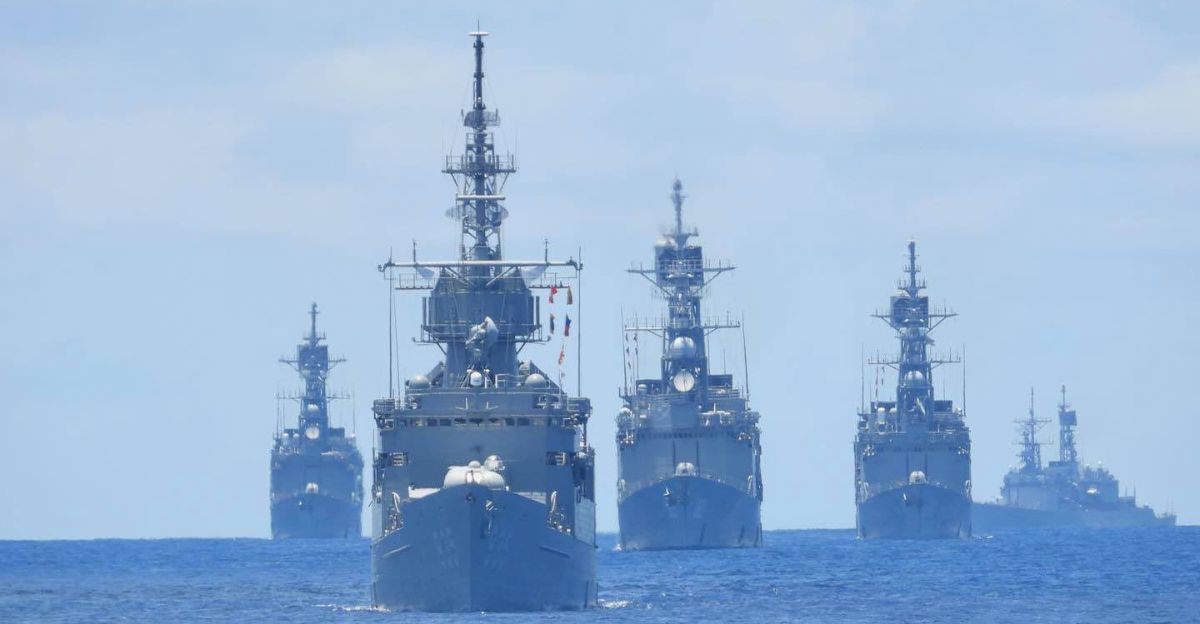
China’s dramatic naval surge in December 2025, deploying over 100 warships across four key East Asian seas, has thrust the region into a powder keg moment, with the U.S. countering via the USS Theodore Roosevelt carrier group.
As President Donald Trump’s administration navigates reelection-era dynamics, questions come up more often. Analysts warn of cascading risks, from Taiwan Strait blockades to South China Sea clashes disrupting one-third of global trade.
Sources:
DefenceSecurityAsia, China’s Naval Buildup in East Asian Waters, Dec 2025;
Politico, China’s New Military Muscle
Permanent Court of Arbitration, South China Sea Arbitration Ruling
USNI News, USNI News Fleet Tracker