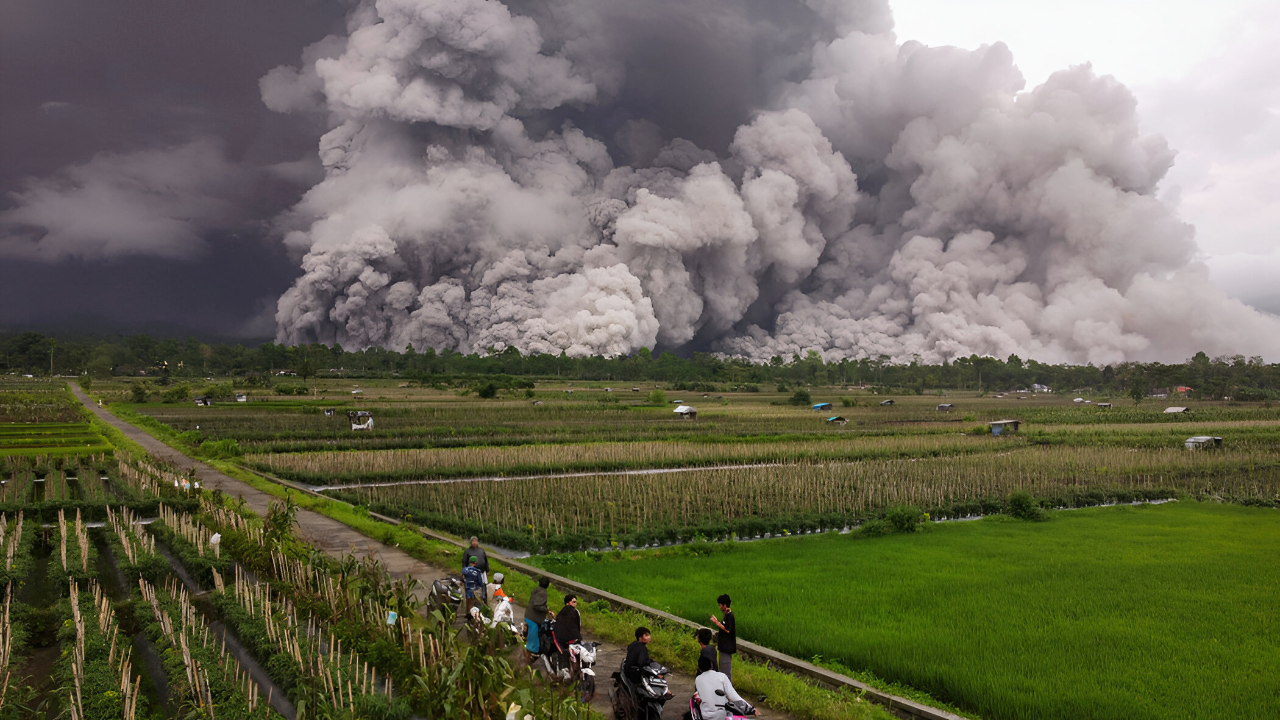
On November 19, 2025, Mount Semeru, the tallest volcano in Java, erupted violently at 4:00 PM local time.
The eruption sent a massive column of ash shooting two kilometers into the sky and created dangerous pyroclastic flows—superheated clouds of rock and gas—that raced 13 kilometers down the mountain’s southeastern slopes.
The ash was so thick and dark that it transformed the afternoon daylight into twilight across the Lumajang district, covering farms, roads, and villages in a gray, volcanic dust.
This was Semeru’s most intense eruption since a devastating explosion in December 2021 that killed 69 people and destroyed over 5,200 homes. Within one hour of the eruption, Indonesia’s Geology Agency raised the alert status to Level 4, the highest possible warning.
Officials expanded the evacuation zone from 5 kilometers to 8 kilometers around the summit to protect nearby communities. Mount Semeru stands at 3,676 meters and has erupted more than 80 times since monitoring began in 1967.
Located on the Pacific Ring of Fire—where tectonic plates collide beneath Indonesia—Semeru is one of the country’s most dangerous volcanoes.
Indonesia has approximately 130 active volcanoes, more than any other nation on Earth, and these account for around 75 percent of the world’s active volcanic eruptions.
The country’s dense population inhabits these hazardous zones because the volcanic soil is exceptionally fertile for farming.
Evacuation and Rescue Efforts
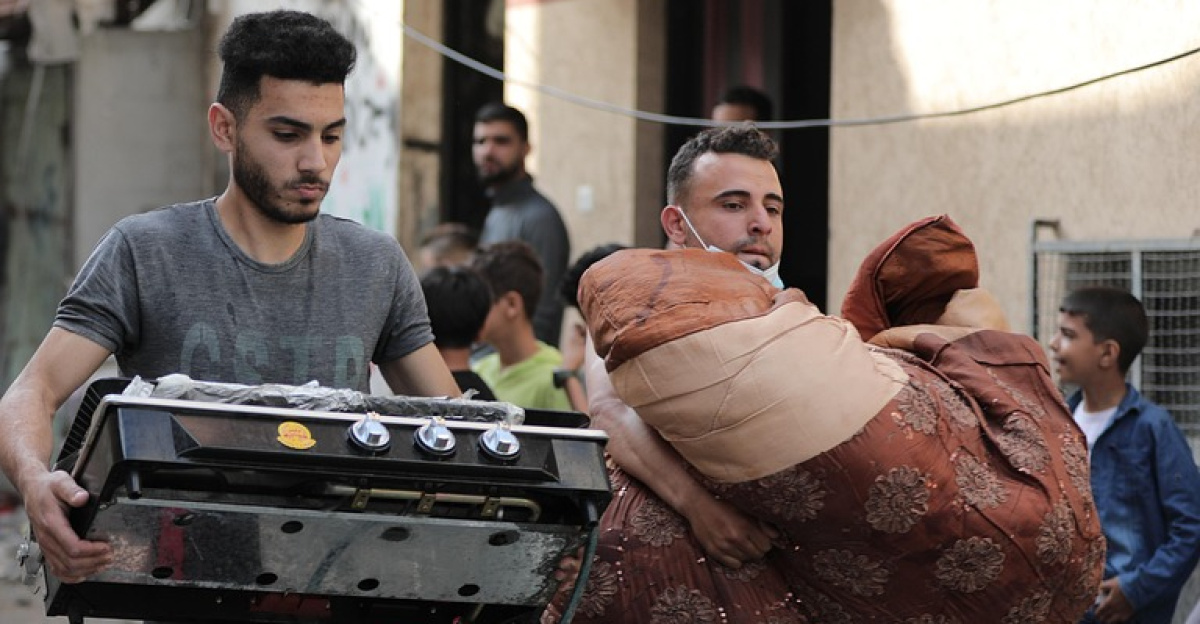
The eruption forced emergency evacuations across three villages—Oro-oro Ombo, Supiturang, and Penanggal—which were buried under thick layers of ash.
Between 956 and 1,116 residents were evacuated from high-risk areas to emergency shelters, with nearly 1,000 people fleeing as pyroclastic activity intensified.
The rapid evacuation prevented deaths on the ground, though at least three people were hospitalized with burn injuries, including two motorcyclists who crashed on the ash-covered Gladak Perak Bridge.
A particular danger zone is the Besuk Kobokan River drainage on Semeru’s southeastern flank, which acts as a corridor for pyroclastic flows. On November 19, these superheated currents traveled the full 13-kilometer length of this drainage, destroying at least two dozen structures along the path.
This devastation exceeded the destructive range of the 2021 eruption. Additionally, the volcanic eruption stranded 187 people—climbers, guides, porters, and national park personnel—at the Ranu Kumbolo camping area, located 6.4 kilometers from the crater.
Fog, rain, and darkness made it impossible to descend the mountain on Wednesday night, but rescue teams confirmed everyone was safe. By Thursday morning, Indonesia’s National Search and Rescue Agency had successfully evacuated all 187 people from the mountain.
The eruption killed no one, largely because the slow escalation of the volcanic activity allowed residents approximately 2.5 hours to evacuate.
Lumajang Regent Indah Amperawati declared a one-week state of emergency through November 26, 2025, and East Java Governor Khofifah Indar Parawansa issued urgent evacuation directives.
Government Aid and Ongoing Danger

The Indonesian government mobilized extensive resources to help evacuees. The Social Affairs Ministry set up a field kitchen at Sumberurip Village Hall, which could serve 1,300 meals daily to people displaced by the eruption.
The Indonesian government distributed respirator masks, safety goggles, fire-resistant gloves, thermal blankets, ready-to-eat meals, and communication equipment to residents to help them stay safe and informed.
In the 48 hours following the initial eruption, monitoring instruments recorded 157 separate volcanic eruptions and 17 avalanche earthquakes at Mount Semeru, showing the volcano remained highly active.
Authorities maintained an 8-kilometer exclusion zone around the summit and a 20-kilometer restriction in the southeast sector. Luminous avalanches of volcanic debris continued flowing down the Besuk Kobokan River valley.
Indonesia faces a persistent challenge: millions of people live in areas near 130 active volcanoes, drawn by the fertile soil necessary for agriculture. Semeru has erupted continuously since 1967, yet tens of thousands of people still live on its slopes.
With seismic monitoring indicating that Semeru’s eruptive phase may continue indefinitely, the big question remains: how long will it take for people to feel safe enough to return to their homes?
The volcano’s history of catastrophic eruptions, combined with its continuous activity, means residents in nearby communities face an ongoing threat from this powerful natural disaster.