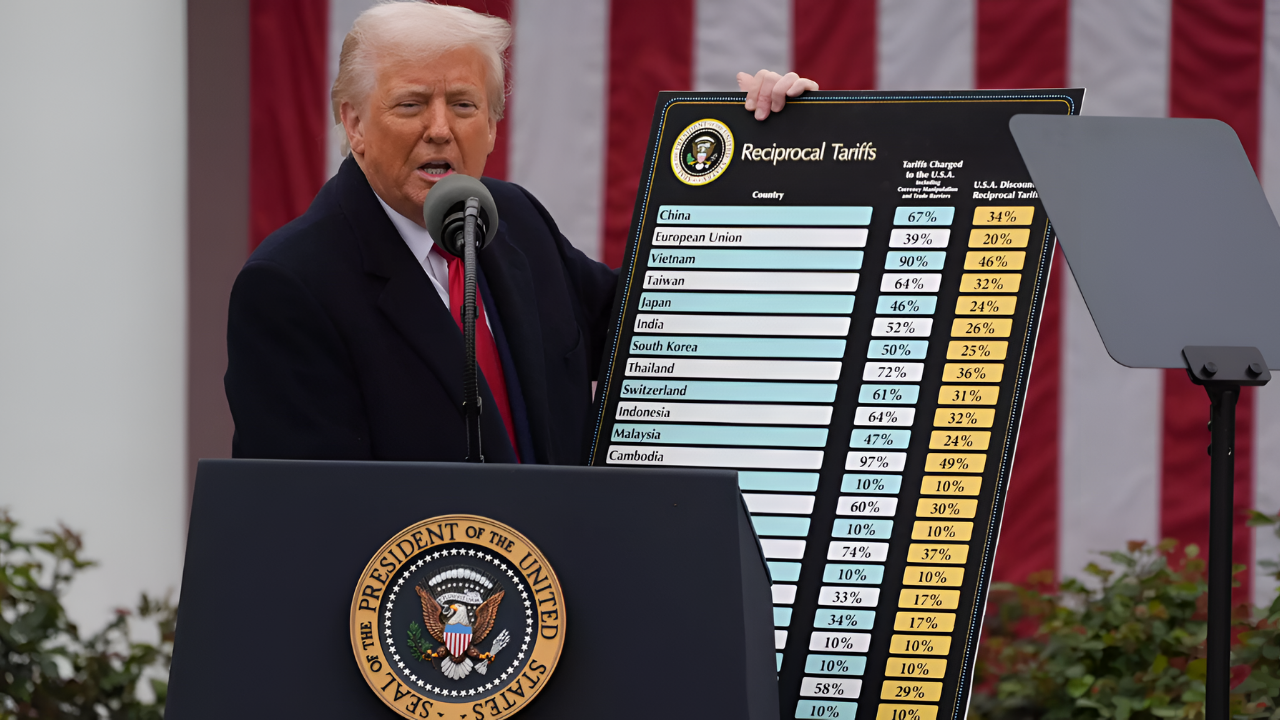
Company executives and customs brokers are tracking tariff liabilities already totaling about $133.5 billion under President Donald Trump’s IEEPA tariffs, with potential exposure approaching $150 billion if collections continue and the Supreme Court ultimately rules against the government.
These figures come from U.S. Customs and Border Protection data analyzed by independent outlets, underscoring the scale of the financial stakes tied to the pending case.
Texas Brands Join Federal Tariff Lawsuits

In Texas, consumer brands such as Yeti, jewelry company Kendra Scott and a marketing subsidiary of Valero Energy have filed lawsuits against the U.S. government over the emergency tariffs imposed under the International Emergency Economic Powers Act.
Their challenges contribute to the broader national push by import‑reliant companies seeking to contest the legal basis of the duties and protect their ability to pursue future refunds.
More Than A Dozen Texas Firms Sue

Court filings and regional reporting indicate that more than a dozen Texas‑based companies, spanning retail, energy and manufacturing sectors, have lodged suits contesting Trump’s IEEPA‑based tariffs.
These plaintiffs include well‑known consumer brands as well as less prominent importers that rely heavily on cross‑border supply chains. Collectively, their actions show how deeply the tariffs are intertwined with the state’s trade‑linked economy and operational costs.
Part Of A Wave In Trade Court

The Texas lawsuits form only a small part of a much larger wave of litigation concentrated in the U.S. Court of International Trade, the federal court with jurisdiction over customs and trade disputes.
Hundreds of cases have been filed in that venue by companies of varying sizes. Together, they challenge the legality of the IEEPA tariffs and seek to preserve potential refund rights if the policy is struck down.
How The $133.5 Billion At Risk Accumulated
U.S. Customs and Border Protection data show that tariffs imposed under IEEPA since early 2025 have generated about $133.5 billion in duties as of mid‑December 2025.
Those figures reflect charges on a wide range of imports, including industrial components, consumer goods and energy‑related shipments. If the Supreme Court later rules the tariffs unauthorized, a substantial portion of these collected duties could face refund claims.
Why Analysts Refer To $150 Billion Stakes

Although official figures currently document $133.5 billion in assessed IEEPA tariffs, analysts and reporters often cite a round figure of about $150 billion when describing potential stakes in the Supreme Court case.
That higher estimate reflects both continued tariff collections after December and scenarios in which courts order broader refunds. It provides a shorthand for conveying the rough magnitude of possible financial exposure.
Trump’s Use Of IEEPA For Broad Tariffs
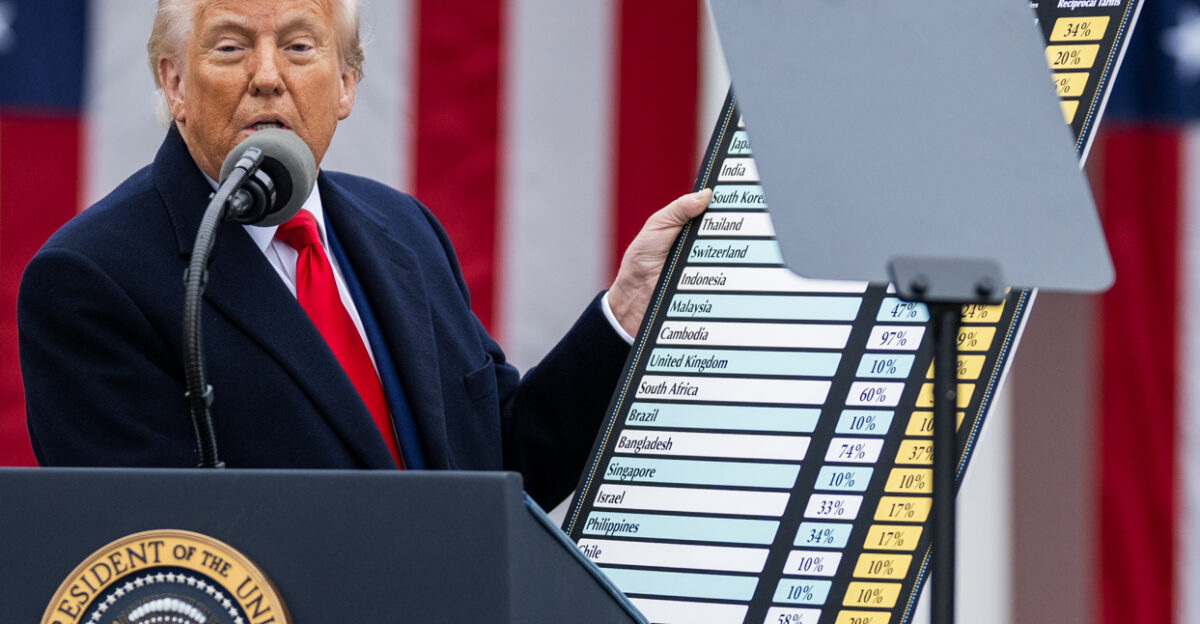
President Trump imposed these tariffs under the International Emergency Economic Powers Act, a 1977 statute originally crafted to address national emergency situations involving external threats.
Historically, administrations have used IEEPA mainly to block transactions or freeze assets, especially in sanctions contexts. Applying it to levy broad tariffs on goods from multiple countries represents a significant extension of its traditional role into the trade and customs sphere.
Traditional IEEPA Practice Focused On Sanctions

Legal analyses and policy reviews consistently describe IEEPA as the cornerstone of modern U.S. sanctions practice. Over several decades, presidents have invoked it to restrict financial flows, halt specific transactions and immobilize foreign assets, usually in targeted ways.
By contrast, prior to these IEEPA tariffs, broad, across‑the‑board import duties were generally carried out using other trade statutes, underscoring how unusual the current approach appears.
At Least 1,000 Companies Have Sued

An analysis of federal court dockets cited by business media found that at least 1,000 companies, including hundreds that filed suits in a single recent month, have taken legal action over the IEEPA tariffs. Many of the complaints were lodged in the U.S. Court of International Trade.
Plaintiffs span multiple sectors, from consumer goods and food to industrial manufacturing and energy‑related businesses heavily exposed to import duties.
Big Brands File Preemptive Refund Lawsuits
Major brands such as Costco, Bumble Bee Foods, Revlon and other familiar names have filed lawsuits before the Supreme Court issues its decision, seeking to keep refund options open. T
heir complaints often argue that Trump exceeded his authority under IEEPA by imposing broad tariffs. Filing early helps ensure they are positioned to claim refunds on previously paid duties if the tariffs are eventually ruled unlawful or curtailed.
Court Of International Trade’s Central Function

The U.S. Court of International Trade is a specialized Article III court handling customs classifications, valuations, antidumping matters and other trade remedies.
It serves as the main judicial forum for importers and the government to resolve disputes about tariff legality and administration. In the current controversy, this court has become the primary venue where companies contest the IEEPA tariffs and seek judicial remedies affecting their import costs.
Texas Economy’s Reliance On Cross‑Border Trade

Business groups highlight that Texas’ economy depends heavily on cross‑border trade with Mexico and Canada, particularly in energy, manufacturing, agriculture and consumer goods sectors. The state’s network of ports, pipelines and highways channels large volumes of imports and exports.
Because of that integration, changes in tariff policy can significantly affect both large corporations and smaller firms operating within Texas’ extensive regional and international supply chains.
Tariffs At Century‑High Levels For Texas Firms
The Texas Association of Business has warned that overall U.S. tariff levels are at their highest in roughly a century, citing historical comparisons. That environment, combined with targeted duties on key imports, has raised costs for many Texas companies that rely on foreign components and finished goods.
The association has expressed concern that these tariffs add uncertainty, complicate planning and may reduce competitiveness for firms across the state.
Texas Companies’ Public Silence On Lawsuits

Reporters who reached out to Texas companies involved in the IEEPA tariff litigation found that most either declined to comment or did not respond to interview requests about their lawsuits.
Coverage described a notable silence from the business sector despite the high financial stakes. This pattern indicates that many firms prefer to pursue their legal challenges through the courts rather than engage in public debates over the administration’s tariff decisions.
Supreme Court’s November 2025 Arguments
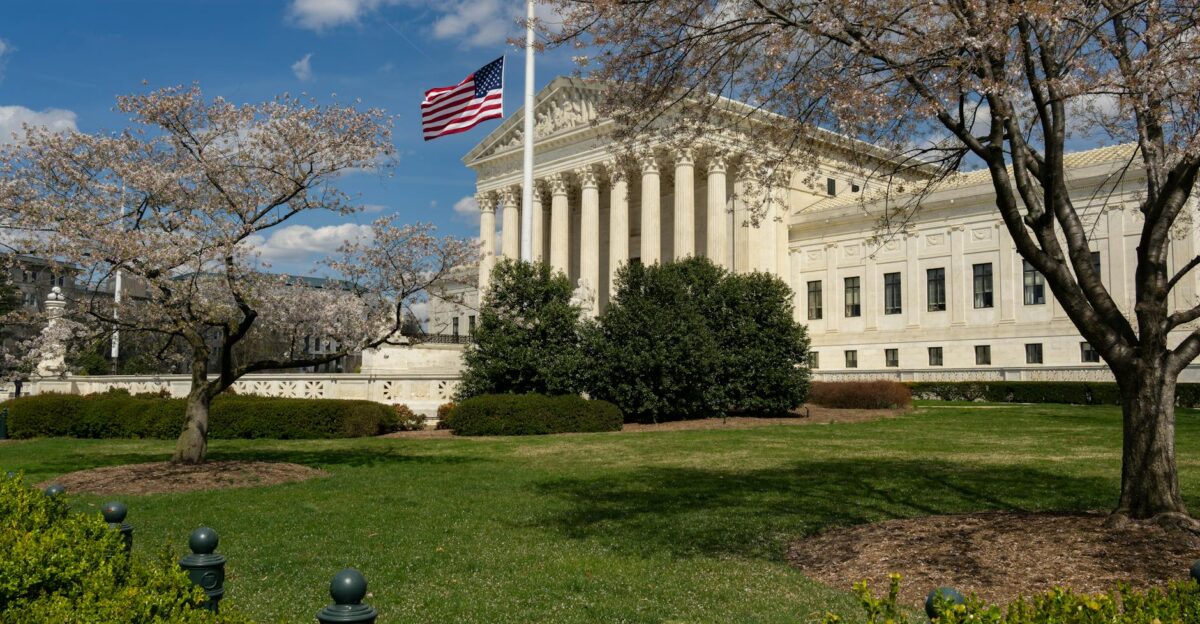
The U.S. Supreme Court heard oral arguments on the IEEPA tariff case in November 2025, focusing on whether the statute authorizes sweeping tariffs or whether those powers remain primarily with Congress.
Transcripts and expert summaries indicate that justices from across the ideological spectrum pressed government lawyers about the breadth of the claimed authority, signaling substantial interest in clarifying limits on emergency economic actions.
Skepticism Across Ideological Lines

According to analyses by law firms and policy organizations, justices associated with both conservative and liberal wings of the Court expressed questions or skepticism about the government’s reading of IEEPA.
Several probed whether allowing broad tariffs under emergency powers would effectively bypass Congress’s role in setting trade policy. These exchanges have led many observers to expect at least some clarification, or possible narrowing, of presidential tariff authority.
Uncertain Refund Mechanics If Government Loses
If the Supreme Court ultimately rules against the government’s position, legal experts say it remains unclear exactly how tariff refunds would work in practice.
Commentators note that the Court could order certain remedies directly or instead leave implementation to lower courts, agencies and existing customs procedures. In any scenario, importers are not guaranteed automatic refunds and would likely need to follow specific administrative or judicial processes.
Liquidation Deadlines Limit Simple Refund Routes

Under customs rules now in focus, importers usually have 314 days from entry to amend their import paperwork before shipments are considered “liquidated.”
After liquidation, straightforward administrative refunds typically are no longer available. For some imports, including certain Chinese goods that began facing IEEPA tariffs in early February 2025, that deadline has already passed, narrowing the most direct refund paths for those particular entries.
Businesses Filing Lawsuits Before Entries Liquidate

Because of these liquidation rules, many companies are filing lawsuits in advance of the Supreme Court’s decision to preserve their ability to seek refunds later. Reports describe firms such as Costco and Kids2 rushing to court before entries lock in.
By initiating litigation while entries remain unliquidated, importers aim to keep their claims alive regardless of how customs deadlines and subsequent judicial rulings ultimately interact.
Ongoing Stakes For Texas And National Firms
As of January 2026, the Supreme Court has not yet issued its decision on the IEEPA tariffs, leaving companies in Texas and across the country awaiting clarity on both legal authority and refund prospects.
Texas brands like Yeti, Kendra Scott and Valero’s marketing unit remain listed as plaintiffs in pending cases. Their litigation, alongside hundreds of other suits, underscores how central this ruling has become for long‑term cost planning.
Sources:
“US tariffs that are at risk of court-ordered refunds exceed $133.5 billion.” Reuters, 6 Jan 2026.
“Importers brace for $150 billion tariff refund fight if Trump loses Supreme Court case.” Reuters, 8 Jan 2026.
“Kendra Scott, Yeti, Valero and other Texas firms sue U.S. over tariffs.” Yahoo Finance, 20 Jan 2026.
“Supreme Court Oral Arguments Signal Skepticism Toward IEEPA Tariffs.” Holland & Knight, 6 Nov 2025.
“Supreme Court appears skeptical of Trump’s sweeping tariff powers.” Associated Press, 5 Nov 2025.