Oregon’s economy is showing troubling signs. In July 2025, the unemployment rate rose to 5.0% – the highest since the pandemic recovery and well above the U.S. average (4.2%).
Over the past year, the state has lost roughly 25,000 jobs across multiple sectors. In particular, high-tech companies, transportation firms, and retailers have announced large cutbacks.
For example, manufacturing alone shed over 9,400 jobs (a 5.0% decline) year-over-year. Economists warn that these broad layoffs point to sustained economic pressure.
Mounting Pressure

Job losses in 2025 have accelerated sharply. Oregon lost 2,700 nonfarm jobs in July and nearly 11,000 in June (after revision). The declines are widespread. Professional and business services are down nearly 15,000 jobs (5.5% since early 2023).
Financial activities lost over 2,700 jobs in July alone. As one official noted, “manufacturing still had the steepest declines” over the year.
Oregon shed almost 25,000 jobs in a year. Construction, healthcare, education, hospitality, and trade are all contracting. This breadth suggests deeper weakness than a single-industry slump.
Historical Context

Oregon’s current downturn echoes past shocks. During the 2007–2010 Great Recession, the state lost roughly 147,000 jobs by 2010, and unemployment hit nearly 12%.
Construction and manufacturing suffered hardest: for example, housing starts plunged, causing construction employment to fall by roughly a third.
Recovery took years; unemployment did not return to pre-recession levels until well into the 2010s. Those lessons underscore how today’s massive layoffs — though smaller in scale — could slow a full economic recovery.
Industry Weaknesses

Leading indicators now point to sustained stress. Business and professional services have been shedding jobs since early 2023; by July, they were down 5.5% from their peak.
Construction employment has dipped below its two-year average, hinting at a stalled building boom.
Even the once-booming semiconductor sector is contracting. State economists report the semiconductor industry lost nearly 3,000 jobs year-over-year (an 8% drop). Financial services have retracted as well. These declines across core industries suggest Oregon’s long “good times” may be pausing, rather than short-term hiccups.
Layoff Notices Surge

Employers have filed an unusually high number of WARN (layoff) notices. On average, over 600 Oregon workers per month have been notified of mass layoffs in 2025, a rate not seen since the Great Recession.
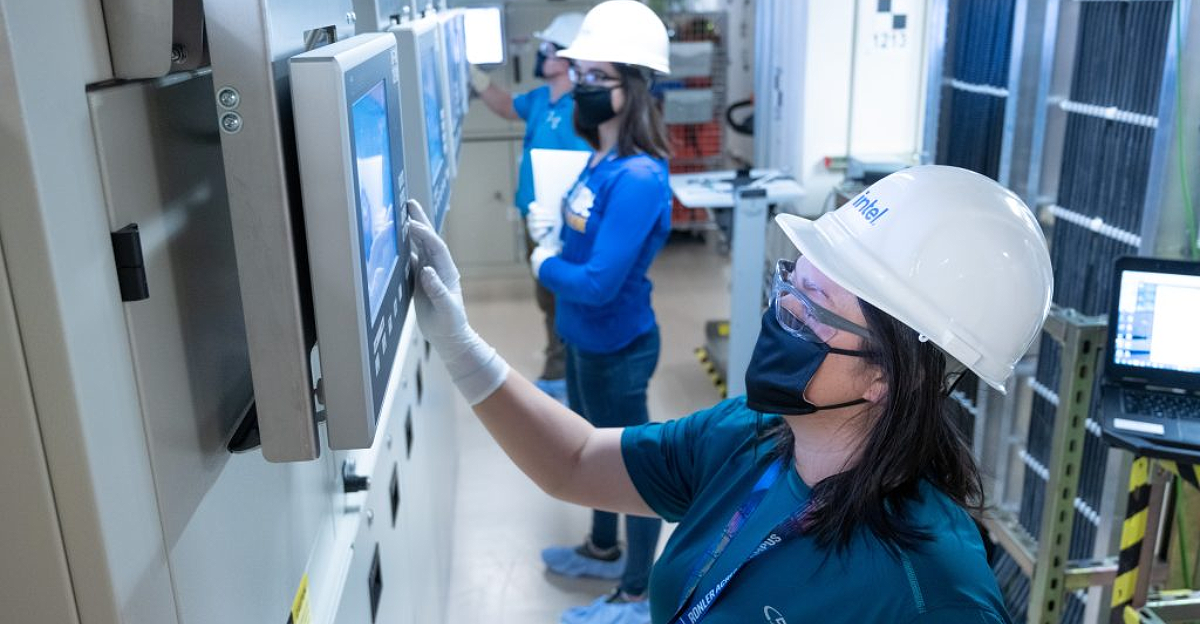
This sustained pace signals systemic pressure on businesses, not one-off shutdowns. For example, Intel’s recent WARN notice warned of 2,392 job cuts in Oregon, making it one of the largest layoff events in state history.
Meanwhile, Portland-area retailers and manufacturers have also submitted multi-hundred-person WARN filings. Analysts caution that an unusually high WARN count often foreshadows higher unemployment.
Regional Impact

The layoffs are heavily clustered. Washington County is bearing the brunt: Intel is eliminating 2,392 jobs across its Aloha and Hillsboro campuses. In greater Portland, Fred Meyer’s upcoming Gateway store closure will eliminate roughly 250 jobs.
Public-sector cuts add to the hit: Portland and Salem transportation bureaus face dozens of planned layoffs. Washington County Commission Chair Kathryn Harrington stressed the local stakes: “We definitely have a lot of skin in the game” as these cutbacks reduce tax revenues and ripple through the community.
In rural areas, too, construction and transit contractors are trimming crews. The concentration of cuts in the tech corridor and the Portland region is straining both metro and suburban economies.
Human Stories

Families and frontline workers are feeling the pain. At the Oregon Department of Transportation, laid-off road crews face uncertainty. Governor Kotek warned that these cuts “constitute an emergency in Oregon’s transportation system”.
Their director added that stopping snow-plowing and delayed road repairs will “hurt every part of Oregon”. Retail employees are also anxious. A Fred Meyer official said the company “will offer each impacted store associate the opportunity to transfer to a new location”, reflecting union efforts to relocate displaced workers.
But one union leader called these store closures “sad”, noting that staff from the 70-year-old Gateway store have been working side by side with neighbors for generations.
Economic Domino Effect

The upheaval is not limited to chip plants and highways. Oregon’s green-energy sector is reeling, too. Wilsonville battery-maker ESS announced its plant would close without emergency funding – a stopgap investment arrived just in time to save about 195 jobs.
Tualatin-based Powin warned it must cut 245 workers by July or cease operations. In both cases, costly imports and tariff uncertainties have squeezed margins.
Across the state, local governments are already anticipating lower tax receipts as corporate profits and payrolls shrink. In communities dependent on semiconductors or clean-tech factories, even school and retailer revenues could slump.
Economic Headwinds

Oregon’s weak hiring contrasts sharply with a still-growing national market. In June, the U.S. added 147,000 jobs, while Oregon lost over 4,300. State analysts point to several headwinds: declining gas-tax revenue as cars go electric, ongoing inflation squeezing consumer demand, and a global tech shakeout.
Today, Oregon’s unemployment (around 4.9%) is about 0.8 percentage points above the national rate.
Normally, job growth in health care and leisure sectors would pull more people into work; Oregon has seen gains in healthcare (+9,800 jobs past year) and hospitality (+2,000). But these sectors cannot fully offset losses in manufacturing and construction. The result is a cooling job market that economists fear could persist without new stimulus.
Budget Crunch

One immediate consequence has been a state budget crisis. The Oregon Department of Transportation faces an unprecedented $354 million shortfall.
To plug the gap, ODOT officials have laid off 483 employees (nearly 10% of its workforce) and are closing 12 maintenance yards statewide.
Leaders warn that pothole repairs, snow plowing, and road-striping will be curtailed, straining travel and commerce in the coming months. Governor Kotek has called this an “emergency” for Oregon. Without swift legislative action, a second round of roughly 400–700 layoffs is slated for 2026, potentially making it the largest ever mass layoff in state government.
Political Tensions

Budget shortfalls have become a political flashpoint. In the 2025 session, Democrats (with supermajorities) proposed hefty gas-tax and fee hikes to fix roads, but Republicans balked, refusing even to fast-track a smaller $2 billion fix.
With that deal dead, Governor Kotek has convened a special session (Aug 29) to debate new taxes and fees. Transportation stakeholders are lobbying hard. Some rural and freight groups want a restructured weight-mile fee so heavy trucks pay more.
Many local officials worry time is short: Portland officials warn their budgets already have a $11 million hole from the failed transportation package. The political gridlock leaves Oregon’s infrastructure funding and public payrolls in limbo.
Corporate Restructuring

Even industry giants are reworking their Oregon operations. Intel’s new CEO, Lip-Bu Tan, is slashing costs. The company aims for $1.5 billion in expense reductions by 2026 (about $500 million in 2025 and $1 billion more in 2026).
Those cuts are coming partly from jobs. Intel’s Oregon payroll has shrunk from roughly 23,000 to about 18,000 employees in recent years. The company has offered voluntary transfers and extended benefits for those leaving, but also eliminated tens of millions in local capital investments.
State economic development officials are discussing federal assistance: Congress is considering semiconductor incentives and even direct Intel investments under national security programs.
Recovery Efforts

State and local agencies are scrambling to help displaced workers. Oregon’s Rapid Response teams (through community colleges and workforce boards) are coordinating unemployment benefits, job fairs, and retraining for affected employees.
For example, Fred Meyer is assisting workers by offering transfers to other stores, and union representatives have been on site to explain options. Intel is reportedly giving extra severance pay and expanded placement help for laid-off engineers.
Community colleges in the Portland area are repurposing classes toward in-demand fields (from software development to renewable-energy installation). In agriculture and lumbering towns, which rely more on local retailers than tech, displaced workers are being connected with temp jobs.
Expert Analysis

Most economists emphasize that Oregon’s situation, while severe, is not yet a repeat of 2009. At 5%, unemployment remains far below the Great Recession peak (~12%). Many experts call the current period a recalibration.
“It’s just the overall picture looks weaker,” noted Oregon’s chief employment economist, Gail Krumenauer, who points out that job losses in manufacturing and professional services are partially offset by gains in health care.
Still, the clustering of cuts is worrisome. One analyst observed that every chip job (often a six-figure job) lost means less consumer spending and tax revenue in the region. Others highlight Oregon’s innovation ecosystem: recent history shows tech booms can resume with the right investments.
Future Outlook

All eyes now turn to incoming data and policy decisions. On September 17, the Oregon Employment Department will release August jobs figures – it will be telling if unemployment climbs again or stabilizes. In the Legislature, deliberations continue.
Governor Kotek’s special session on August 29 will test whether lawmakers can enact new fees or taxes to fill that $354 million gap. If they succeed, the second round of ODOT layoffs (slated for early 2026) might be averted.
At the same time, Intel’s next moves matter greatly: will it slow further cuts or invest in new fabrication lines if supported by federal subsidies? And the fate of battery storage firms like ESS and Powin – whether they secure funding or collapse – will influence whether Oregon can lead in clean-energy manufacturing.
Policy Implications

Policymakers are under pressure to act. Transportation officials warn that without new revenue sources, road and bridge maintenance will deteriorate further. Long-term trends loom: as more Oregonians drive electric or telework, gasoline tax receipts will continue declining.
State leaders are now considering alternatives – such as higher registration fees, tolls, or a broader transportation utility fee – to fund highways and transit. Economists also note Oregon’s heavy reliance on volatile tech employment.
Some argue for diversifying: supporting smaller “secondary” tech hubs and bolstering clean-energy manufacturing, which has promise despite its current struggles. The cuts have spurred debates over economic development: should the state lean even more on private R&D incentives, or focus on retraining and local-business growth?
National Context
Oregon’s experience parallels broader U.S. trends. Manufacturing statewide is shrinking in many regions, and semiconductor consolidation is a national story. Federal policies could help or hurt here: the 2022 CHIPS Act and infrastructure laws may channel billions into chip plants and EV charging stations, potentially aiding Oregon.
On trade, past tariffs on Chinese electric-grid batteries have boosted U.S. producers, but those same policies have introduced volatility (as seen in the Powin/ESS troubles). International supply-chain shifts mean that recovery for Oregon’s tech and green-energy firms depends partly on Washington, D.C. decisions.
Oregon’s losses aren’t isolated – they’re part of a national reordering of industry – but the state’s particular mix of industries (chips, software, ag, etc.) will shape how closely its trajectory follows other regions’.
Legal Considerations

Layoff notices also triggered legal scrutiny. Under the federal WARN Act, companies with 100+ employees must give 60 days’ notice before large-scale closures. State regulators have reviewed hundreds of WARN filings to ensure firms complied.
Class-action inquiries have surfaced in a few cases (especially when notices were not properly timed). Meanwhile, Oregon’s unemployment insurance agency is processing a flood of claims. Worker protection agencies are reminding affected individuals of their rights to benefits and retraining assistance.
Some advocates argue for expanding WARN protections (for example, to cover more “gig” and contract workers), given the rapid pace of these layoffs.
Community Impact

The cuts are hitting localities hard and unevenly. In Portland, officials estimate roughly 50 public works employees will be laid off unless new funding arrives. PBOT Director Millicent Williams warned that deferred maintenance already leaves city streets “unpaved” and sidewalks crumbling.
She called losing those workers “irreplaceable” and noted the repeated budget patches still leave a $38 million gap. Union spokesman Ryan Sotomayor described the cuts as a “gut punch” to crews who just completed a hard budget process.
Beyond transportation, smaller towns face similar pain: an Oregon Department of Forestry contractor laid off 40 workers in one rural county after state fire budgets shrank. Housing markets could strain too – mass layoffs may force some workers to move or default on mortgages, pressuring rental vacancy rates.
Economic Transition

Many observers see this moment as another phase of Oregon’s long economic evolution. In the late 20th century, the state shifted from a timber-based economy to a tech hub; today those foundations are being tested. Some argue the 2025 layoffs are a painful but necessary adjustment – clearing out excess in overheated sectors so the state can pursue new growth (for example, in clean energy and advanced manufacturing).
Others worry it’s the start of a deeper structural change, given how much revenue depends on chips and gasoline.
How Oregon navigates the fallout – whether through retraining programs, tax incentives for new industries, or infrastructure investment – will determine if the downturn is short-lived or signals a long-term pivot.