Australia’s museums hold a treasure trove of fossils – millions of specimens spanning life’s long history – yet most sit hidden in drawers and archives. Only a fraction of these artifacts have been studied, leaving a hidden chronicle of prehistoric life waiting to be uncovered.
As one curator puts it, the paleontology collection “covers the history of life” on this continent, from tiny microfossils to dinosaurs.
These dormant collections conceal stories: ordinary rocks may hold creatures that no one has seen for 240 million years.
This untapped wealth reminds us that sometimes science’s greatest discoveries have already been collected – they just haven’t been read yet. —Source: Australian Museum, 2023
Preservation Crisis

Unfortunately, most of those stories are locked away. Worldwide museum collections face a digitization bottleneck: less than half of fossils are catalogued online, let alone studied in detail. In Australia only about 34% of the Australian Museum’s fossil collection has been digitized or made accessible.
That means countless specimens remain essentially invisible to scientists.
For example, a spectacular fossil may lie in storage for decades simply because no one knows it’s there.
This “preservation gap” has real consequences: key finds sit unstudied while global science marches on. Bridging this gap is urgent, but it’s a monumental task that requires new resources and public engagement.
Triassic Foundations
To understand why this fossil held such intrigue, we must step back 252 million years to the dawn of the Triassic. The Permian–Triassic mass extinction had just wiped out 90–96% of marine species and 70% of terrestrial vertebrates – the greatest die-off in Earth’s history.
Into this harsh aftermath emerged a new world of survivors: hardy amphibians and reptile-like ancestors scrambled into niches left empty by the catastrophe.
The Triassic period (252–201 Ma) was when early dinosaurs and mammal ancestors first appeared, setting up the ecosystems of the Mesozoic.
In these stressed environments, life experimented wildly – and some lineages began to diversify in ways that would echo through time.
Survival Strategies
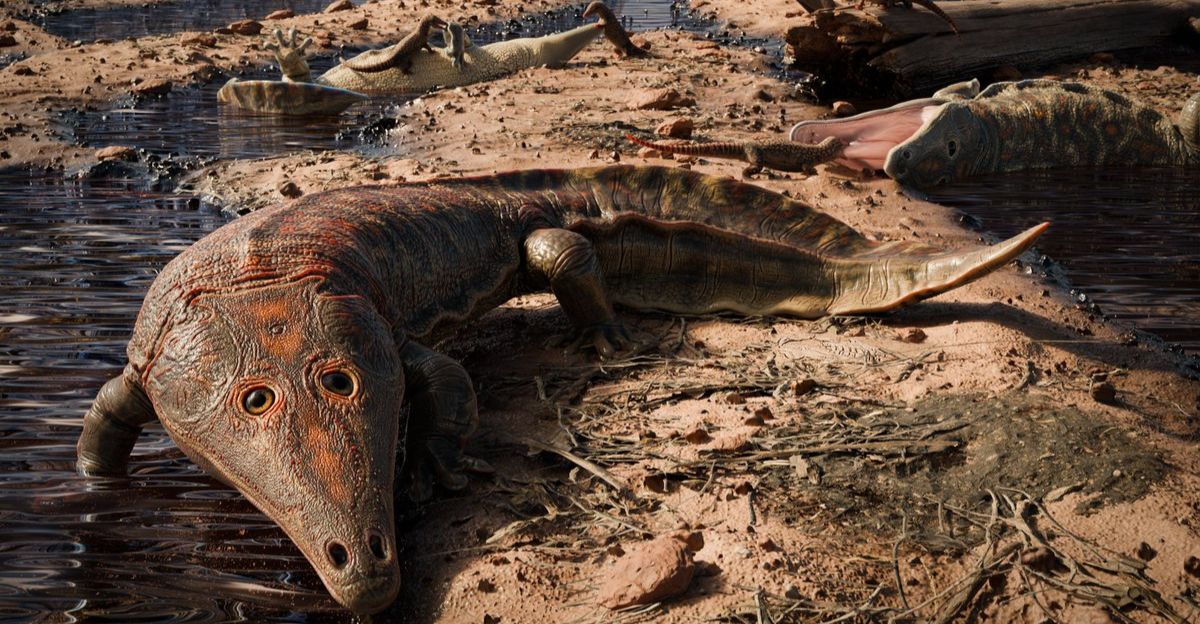
One of the great Triassic success stories was the temnospondyl amphibians. These were large, salamander-like creatures that thrived when most others perished. At the end of the Permian, pools and rivers became refuges as terrestrial ecosystems collapsed.
The generalist temnospondyls could swim and scavenge the last freshwater fish and invertebrates in those shrinking habitats.
Their secret was flexibility: when forests turned to scrub and arid plains, they were already semi-aquatic and ready to feed on what remained.
Temnospondyls jumped from risk to opportunity, exploiting niches that many land-bound predators could no longer reach.
Retaining Wall Revelation
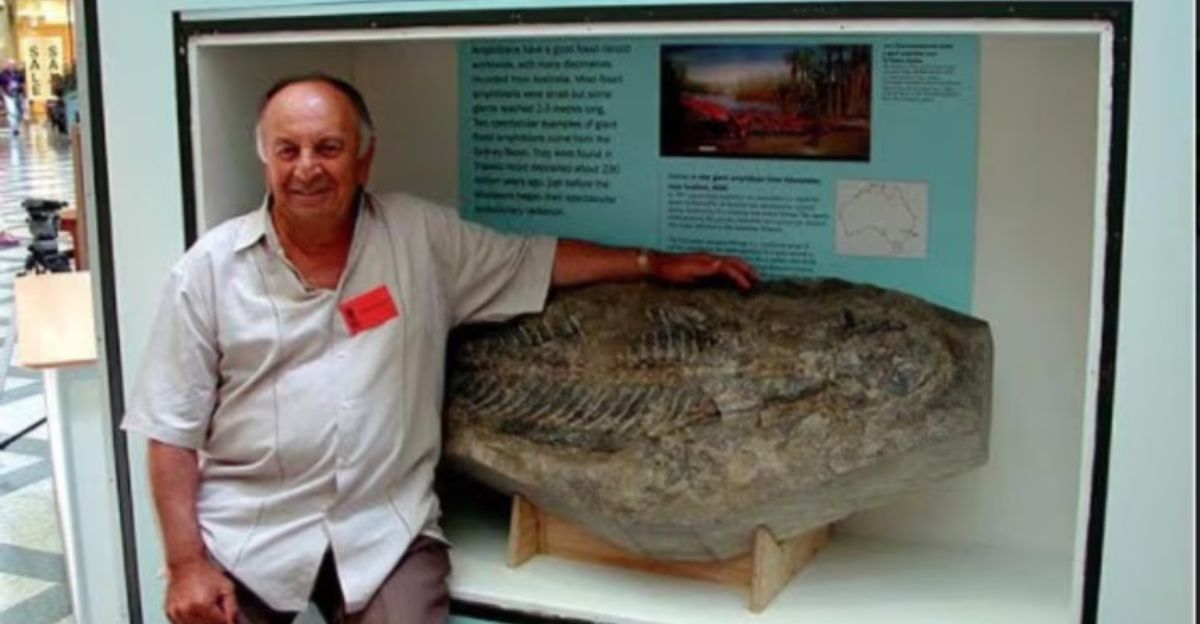
The real journey begins in the 1990s with a surprising twist of fate. Retired chicken farmer Mihail Mihailidis was laying sandstone blocks for a garden wall on his Central Coast property. After the work, he hosed one block clean – and there, staring back at him, was an unmistakable fossil imprint.
A nearly complete amphibian skeleton, preserved with impressions of skin, was hiding right in his backyard. “It’s an incredibly rare find,” says paleontologist Lachlan Hart, who later studied it.
No one had expected a relic from the Triassic to emerge in a gardener’s pile. Mihailidis did the right thing and donated the stone to science, sending the slab to the Australian Museum in Sydney in 1997.
And there it waited, archived alongside 23 million other items, until a future researcher could unlock its secrets.
Sydney Basin Significance
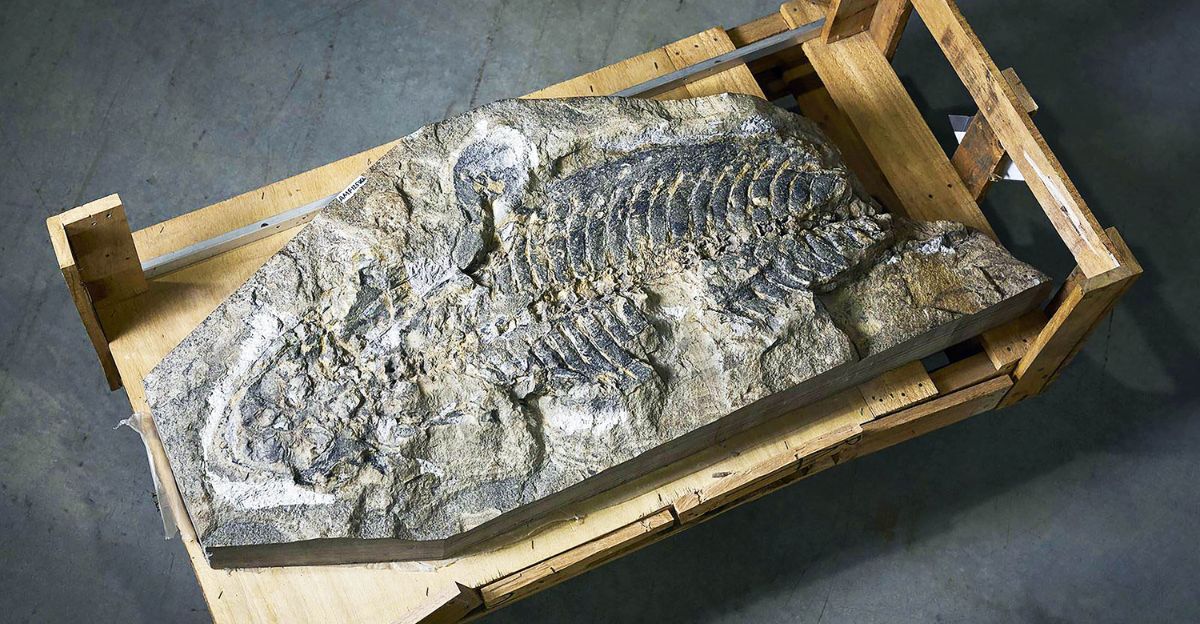
Where did this fossil originate? Its matrix came from the Terrigal Formation on the NSW Central Coast. Geologically, that’s the Lower-Middle Triassic sandstone of the Sydney Basin – sediments laid down when a slow, meandering river system flowed across a newly recovered Pangea.
These rocks capture an early chapter of Australia’s freshwater past. As the fossil’s find-spot suggests, central-coast sites were wetland rich after the Permian extinction.
The Terrigal Formation acts as a natural time capsule, preserving puddles, fish, and the occasional hungry amphibian in fine-grained sandstone.
Mihailidis’ wall stone was itself a window into a 240-million-year-old Australian marsh.
Farmer’s Legacy
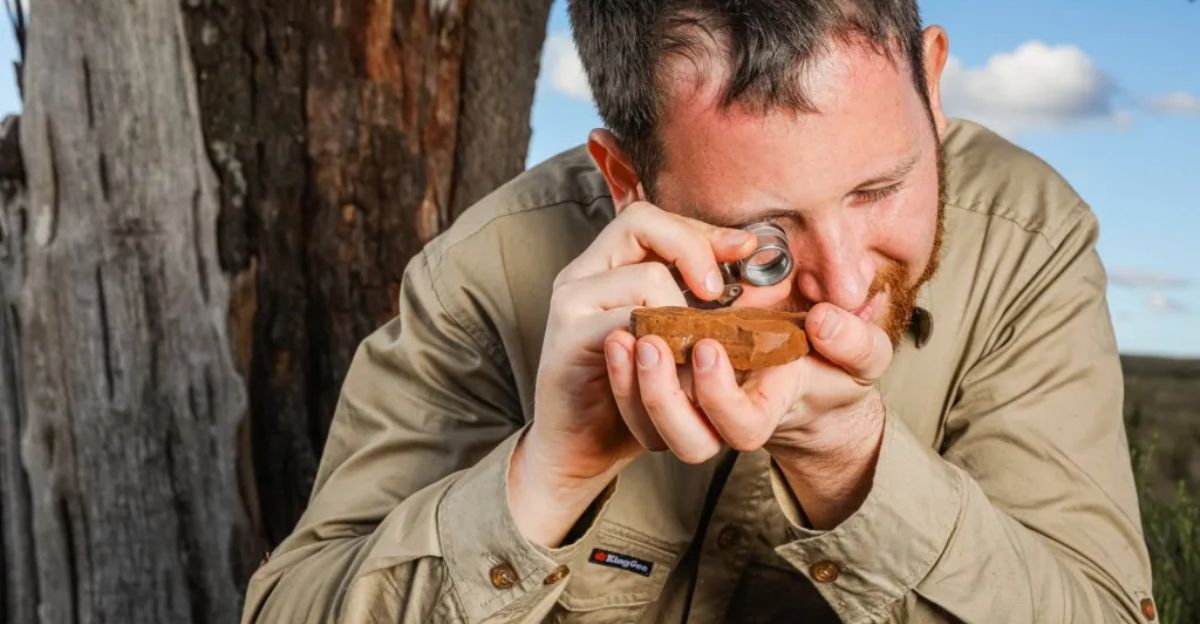
Scientists quickly recognized the find’s importance. Dr. Matthew McCurry, curator of Australian fossils, pronounced it “one of the most important fossils found in New South Wales in the past 30 years.”
His emphasis is no exaggeration: an intact Triassic vertebrate from an understudied region is a blockbuster event.
The fact that a backyard find yielded such a prize also illustrates the power of citizen science. Amateur collectors like Mihailidis have shaped our knowledge more than once: from opal miners uncovering dinosaurs to hikers reporting megafauna tracks.
In this case, a simple act of curiosity – flipping a rock – passed the relic into expert hands.
And McCurry’s quote underscores the point: science thrives when passionate individuals, professional or not, collaborate on natural history.
Museum Infrastructure

The Australian Museum, with its network of sites, became the new home for this slab. In fact, the museum’s paleontology collections are the largest in the country – roughly 164,000 fossil specimens in total, including over 26,000 type and figured materials.
These are housed from Sydney’s main center to regional facilities like Castle Hill and the Bathurst and Canowindra museums. Yet despite this vast archive, only about a third of the fossils are fully catalogued in the database.
In practice, that means many boxes sit quietly on shelves, visited only when a researcher seeks out something specific.
Researchers now use these collections to study everything from ancient climates to giant mosasaurs.
But the backlog of unprocessed specimens shows why a discovery like Mihailidis’ could stay mystery-shrouded for decades.
Global Perspective
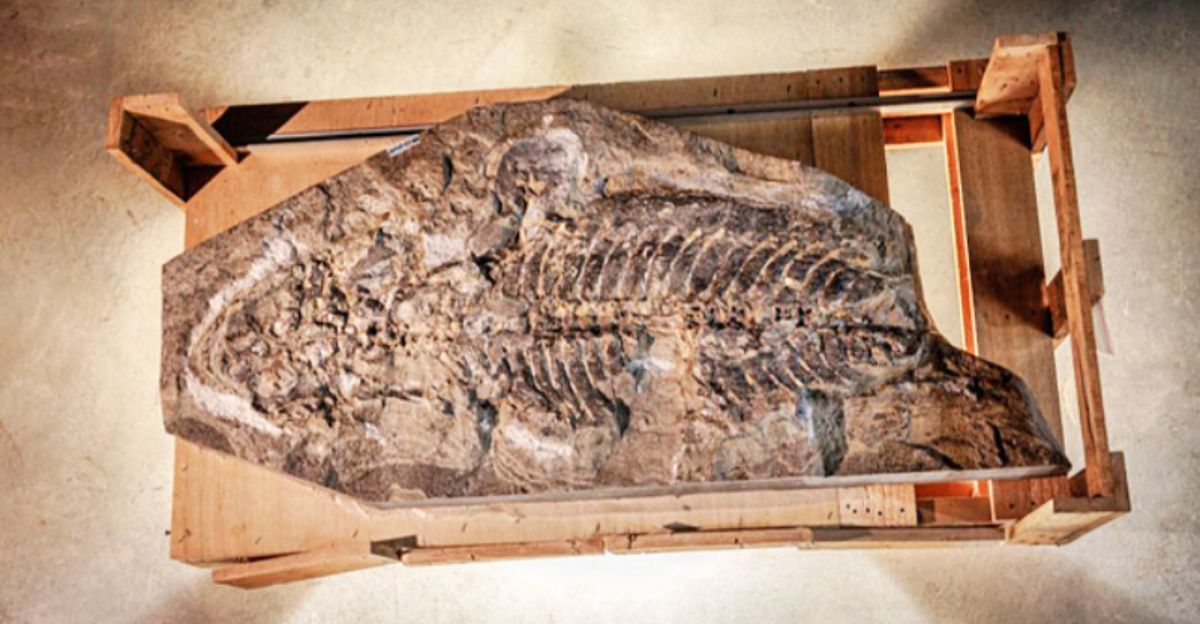
The surprise finding near Sydney fits into a much larger pattern. After mass extinction events, specialized groups like temnospondyls often left behind similar survivors across the ancient world. In fact, the Chigutisauridae family – to which our fossil belongs – is known only from the southern supercontinent Gondwana.
Comparable fossils have turned up in Argentina, South Africa, India and Brazil.
This suggests that life in the Triassic found convergent solutions: large aquatic amphibians were thriving in distant parts of the world at the same time.
By the time Arenaerpeton lived in Australia, its cousins were filling comparable freshwater niches on other continents.
Thus, this discovery is not just local news; it completes a global puzzle of how amphibians bounced back after extinction.
Species Identification
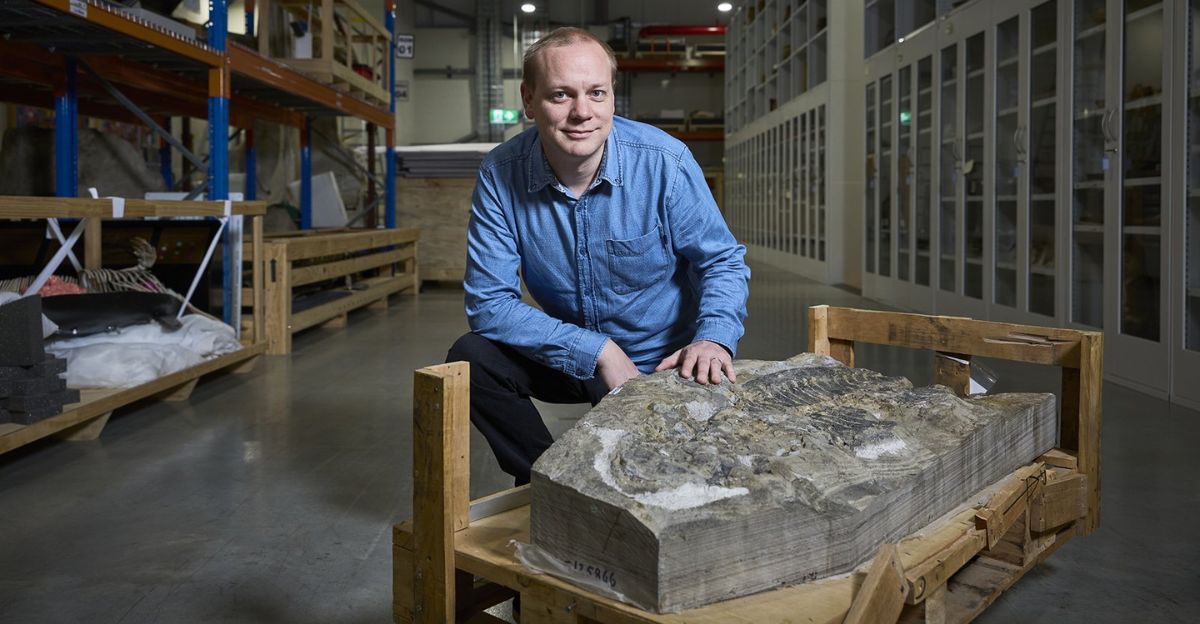
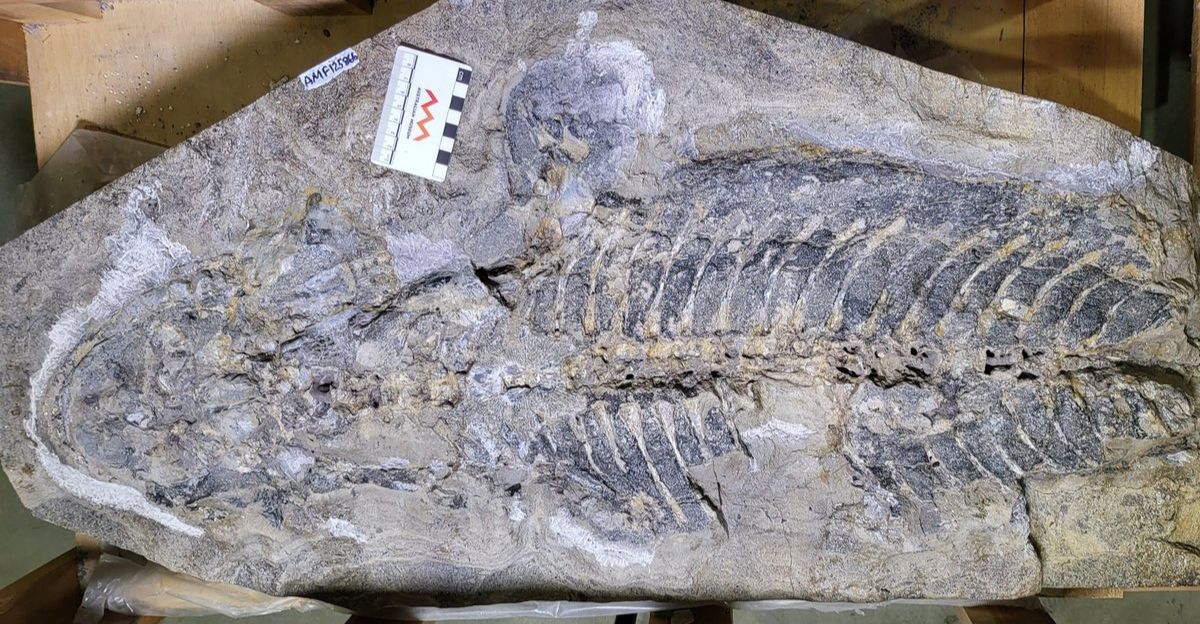
Finally, after almost 30 years of detective work, the fossil received a formal name. Palaeontologists described it as a new genus and species, Arenaerpeton supinatus, meaning “supine sand creeper.”
The name pays tribute to both the block of sandstone it was found in (“arena-” = sand) and the odd belly-up posture of the specimen (“-supinatus”).
Measuring about 1.2–1.5 meters long, this big amphibian hunted fish in Triassic streams. Importantly, Arenaerpeton is the fourth chigutisaurid known from Australia, and the first from the Sydney Basin.
“This fossil is a unique example of a group of extinct animals known as temnospondyls,” explains Lachlan Hart, who led the analysis. In other words, it adds a critical new branch to Australia’s prehistoric family tree and fills a gap in the continent’s fossil record.
Research Challenges
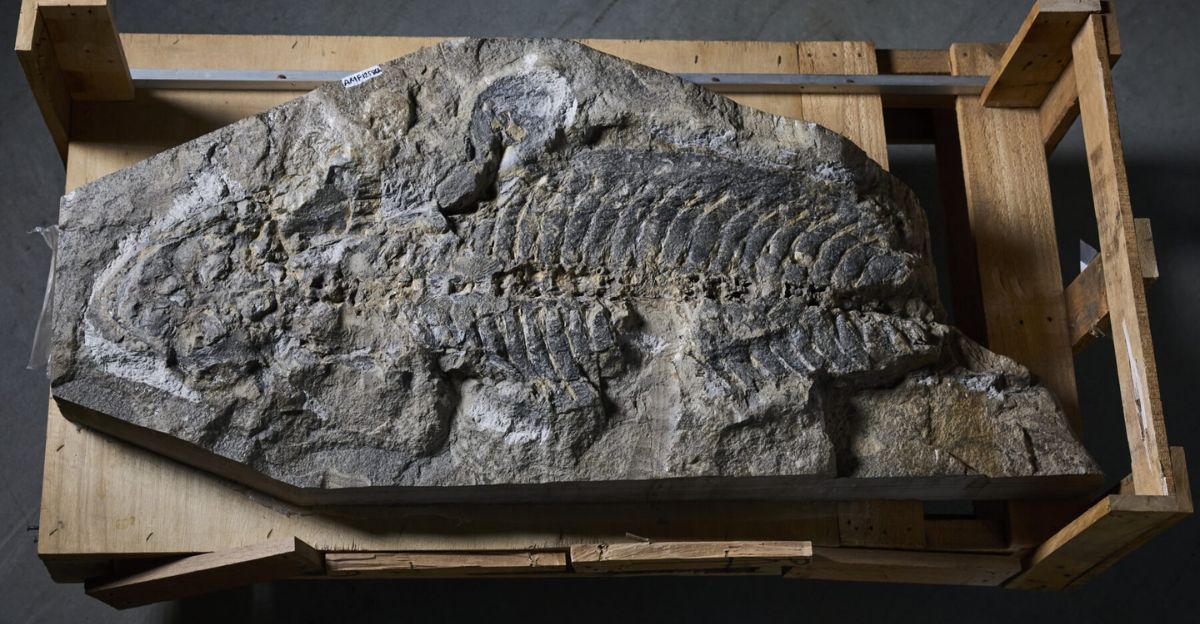
Why did it take so long to name this beast? Two decades in the archives weren’t for lack of interest but because identification wasn’t straightforward. The skull is preserved belly-up, so key top-of-head features (like eye sockets) are hidden.
Moreover, the skin outline is visible – an extraordinary preservation – but that also made it tricky, as the soft tissues alter the fossil’s usual appearance.
Temnospondyl taxonomy itself is notoriously complex, with subtle bone differences separating genera.
Scientists had to compare Arenaerpeton to dozens of other amphibian fossils. As Hart joked, the puzzle was easier to look at than to solve! Only after thorough comparisons did it become clear this was a new genus.
Technology Solutions

Modern technology came to the rescue. Geologists and paleontologists teamed up with Australia’s Border Force to scan the fossil using cargo X-ray machines. Normally, these powerful scanners peer inside shipping containers for contraband.
In this case, they let scientists see the fossil’s internal bone structure without chiseling further into the rock. The high-energy X-ray images revealed details of the skull and vertebrae, including those hidden belly-up sections.
This innovative approach – borrowing from airport security – exemplifies how interdisciplinary tools can solve scientific mysteries.
Even a 240-million-year-old fossil benefited from 21st-century technology.
Academic Collaboration

The formal description of Arenaerpeton was led by a team at UNSW and the Australian Museum. Amazingly, one of those researchers had a personal history with the find: Lachlan Hart first saw this fossil as a 12-year-old at a museum exhibit.
He later became a PhD student working on ancient amphibians – and this fossil landed right in his lap.
Hart collaborated with senior curators and students to compare bones, confirm unique traits, and write the description.
The process underscores the collaborative nature of modern paleontology: field collectors, museum curators, students and even customs inspectors all played a part.
Hart’s own journey from wide-eyed child to publishing author brings the story full circle.
Evolutionary Context
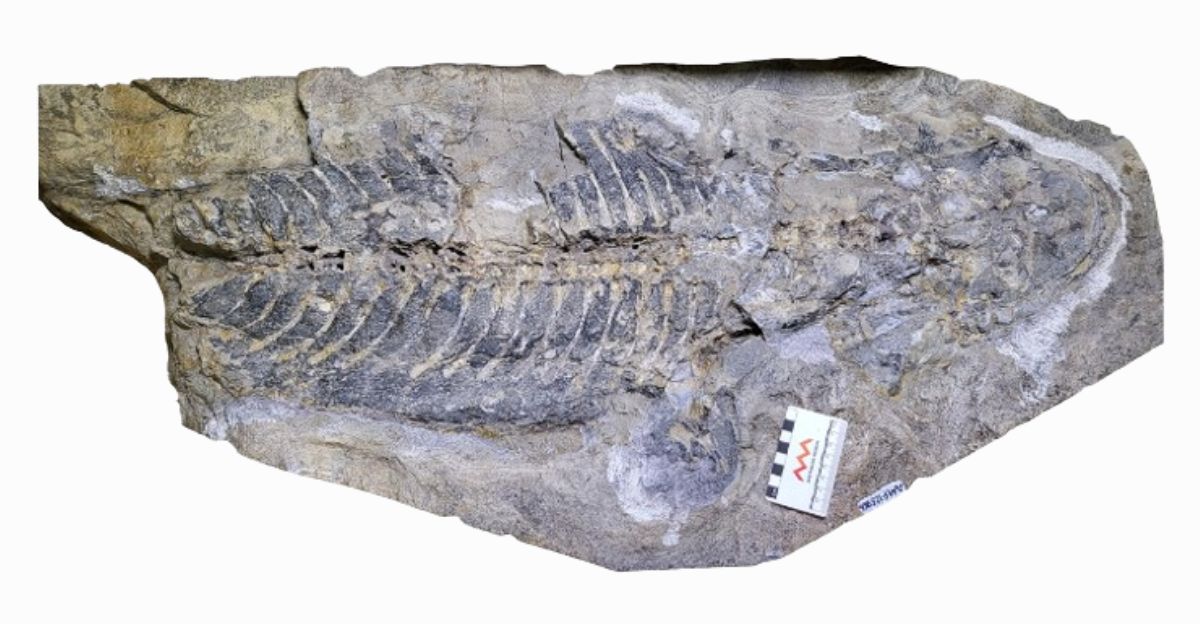
Arenaerpeton belongs to the Chigutisauridae, a remarkable family of temnospondyls. They had the longest temporal range of any temnospondyl family, spanning from the Early Triassic to the Early Cretaceous.
In simple terms, they survived far longer than most amphibian lineages. In Australia, they persisted for an astounding extra 50 million years beyond their disappearance elsewhere.
For context, the last chigutisaurid in Australia was Koolasuchus (up to 5 m long) from 120 Ma Victoria.
Arenaerpeton, at roughly 1.2–1.5 m long, shows these survivors started getting big soon after the Permian die-off.
This suggests a gradual trend: in post-apocalyptic Triassic waters, some amphibians grew large, a strategy that may have helped them endure through later extinctions. —Source: Sci.news Paleontology, August 2023
Future Discoveries
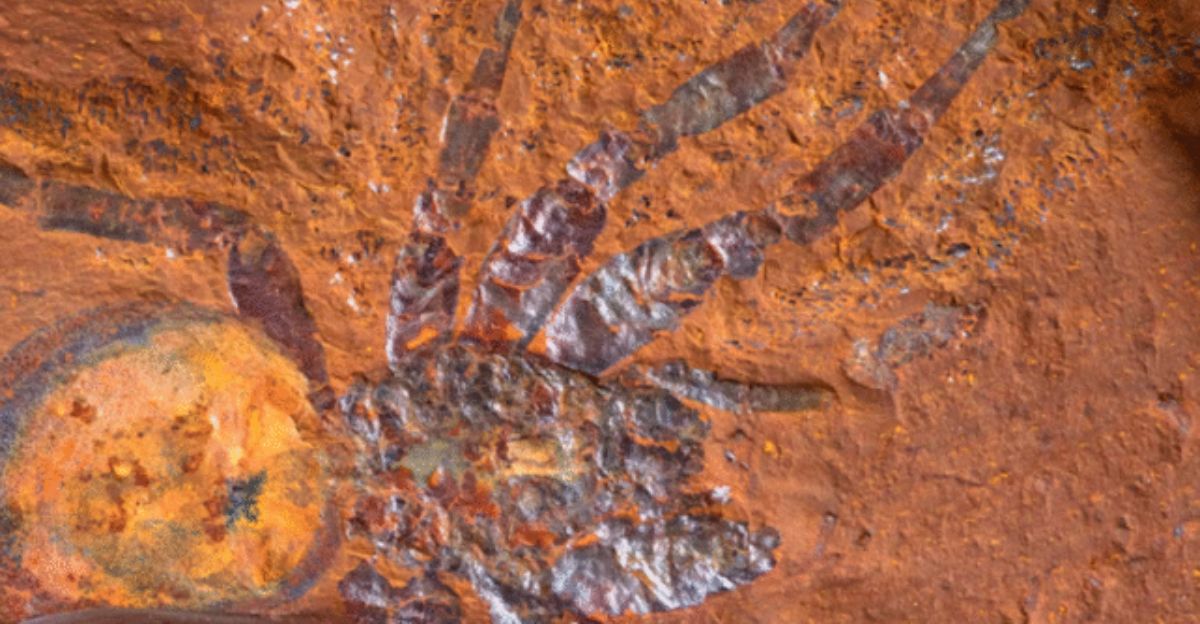
The story doesn’t end in the Triassic. Australia’s geology continues to surprise. New Lagerstätten (fossil sites) like Miocene McGraths Flat (15 Ma rainforests in central NSW) have yielded exquisitely preserved plants, insects and freshwater fish.
Cretaceous rock in Queensland and New South Wales keeps revealing dinosaur remains, some even opalized.
Every new find reminds scientists that we have only scratched the surface.
The existence of Arenaerpetonimplies more big discoveries lie in overlooked sediments or museum boxes. As one paleontologist notes, we need systematic exploration – and citizen help – to unearth our deep past. The next time a rock is overturned or donated, it could change our history books again.
Climate Implications
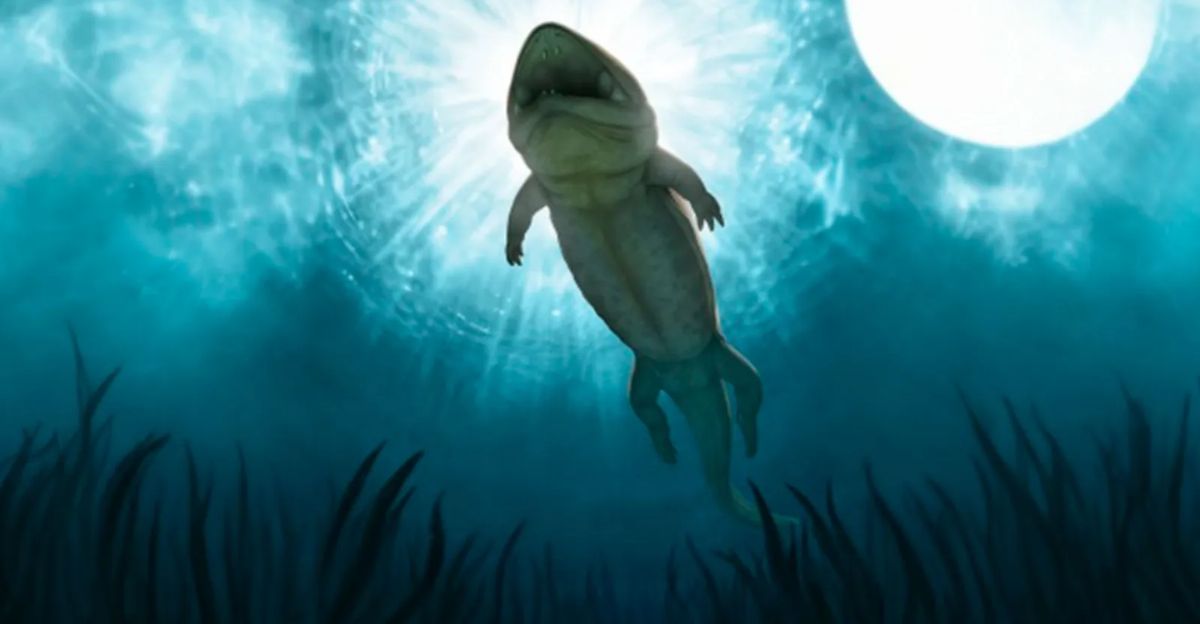
Why did these amphibians thrive in Triassic Australia? The answer may lie partly in climate. At that time, Australia was farther south (high latitude) and therefore cooler and wetter than much of northern Pangea.
These high-latitude refuges avoided competition from emerging crocodile-relatives and other predators that dominated warmer zones.
Triassic Australia acted like a safe haven for temnospondyls.
Many researchers hypothesize that regional climate isolation allowed unique evolutionary paths – for instance, the lineages that produced Arenaerpeton.
Where the rest of Gondwana was blazing hot and dry, Australasia might have been oddly hospitable, giving these giant salamanders a home turf advantage for millions of years.
Gondwana Connections
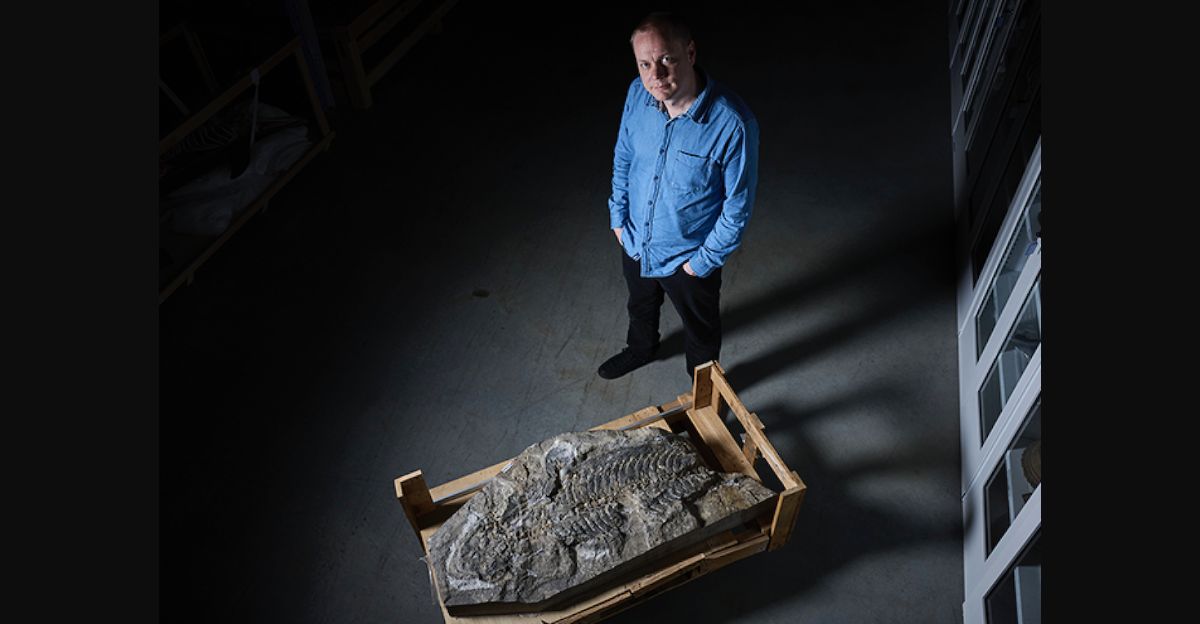
The Arenaerpeton find also illuminates Gondwana’s big picture. During the Triassic, all modern southern continents were joined. Chigutisaurid fossils in South America, India and South Africa turn up similar genera.
As Hart points out, “Chigutisaurids are only known from Gondwana, with fossils recorded from Argentina, Australia, Brazil, India, and South Africa”.
This global distribution suggests these amphibians were once common throughout the southern landmass.
Continental drift later tore habitats apart, isolating populations. The Arenaerpeton discovery adds an Australian data point to these ancient migration patterns.
It shows that, even though Australia eventually drifted away, it carried with it a part of the Triassic’s original cast of characters.
Conservation Ethics
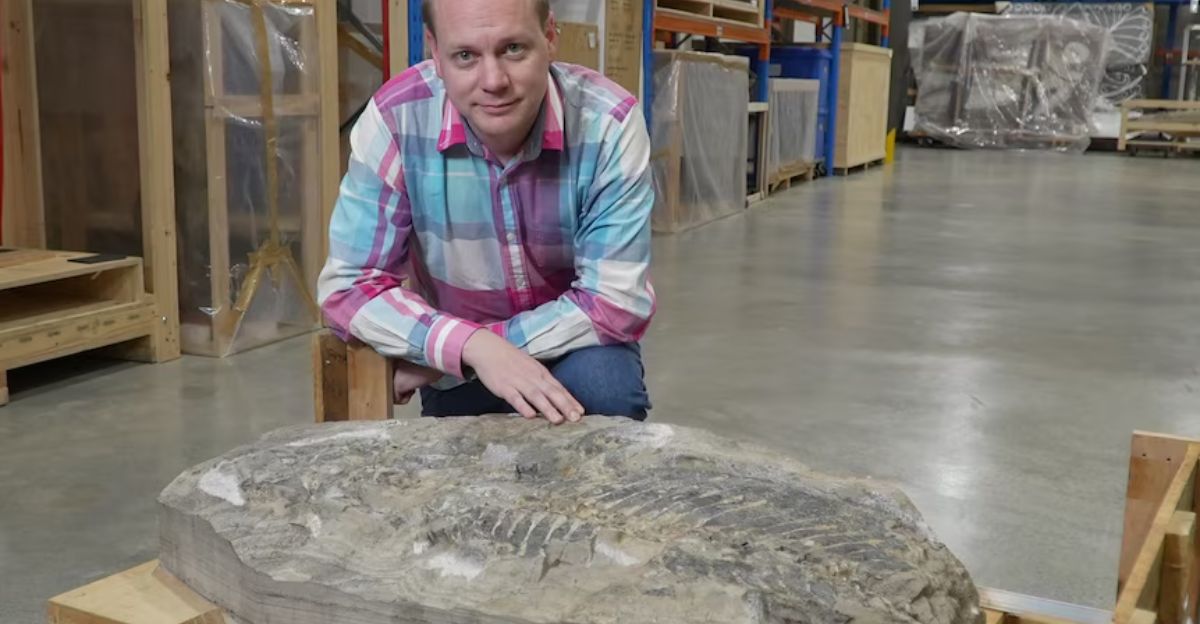
The Arenaerpeton tale also raises questions about how fossils are handled today. Amateur finds like this one can generate headline-making discoveries but also spark legal and ethical debates.
In Australia, unearthing heritage fossils without permission is technically illegal, but enforcement is mixed. Initiatives like the “Found a Fossil” website encourage the public to report and donate significant finds rather than sell them.
The Mihailidis case exemplifies best practice: the farmer’s donation ensured scientists could study the fossil fully, instead of it ending up in a private collection.
This collaborative model – finder reports, museum science verifies – is considered a win-win.
It balances scientific access with individual enthusiasm, reminding us that stewardship is as important as discovery in preserving our heritage.
Cultural Impact
Stories like Arenaerpeton capture the public imagination. News of a “giant salamander” found in a backyard makes headlines, inspiring students and amateur fossil hunters alike. It even changed Hart’s life: “Perhaps one day another kid like me will see it at the Australian Museum and be as inspired as I was,” he writes.
Such discoveries help bridge the gap between professional science and community engagement.
Museums have used Arenaerpeton in education programs, sparking paleontology clubs and classroom projects. It shows that science isn’t just for academics – a backyard spark can kindle a lifelong passion.
The narrative of a chicken farmer and a tenacious researcher working together sends a powerful message: anyone can contribute to understanding our planet’s past.
Deeper Meaning
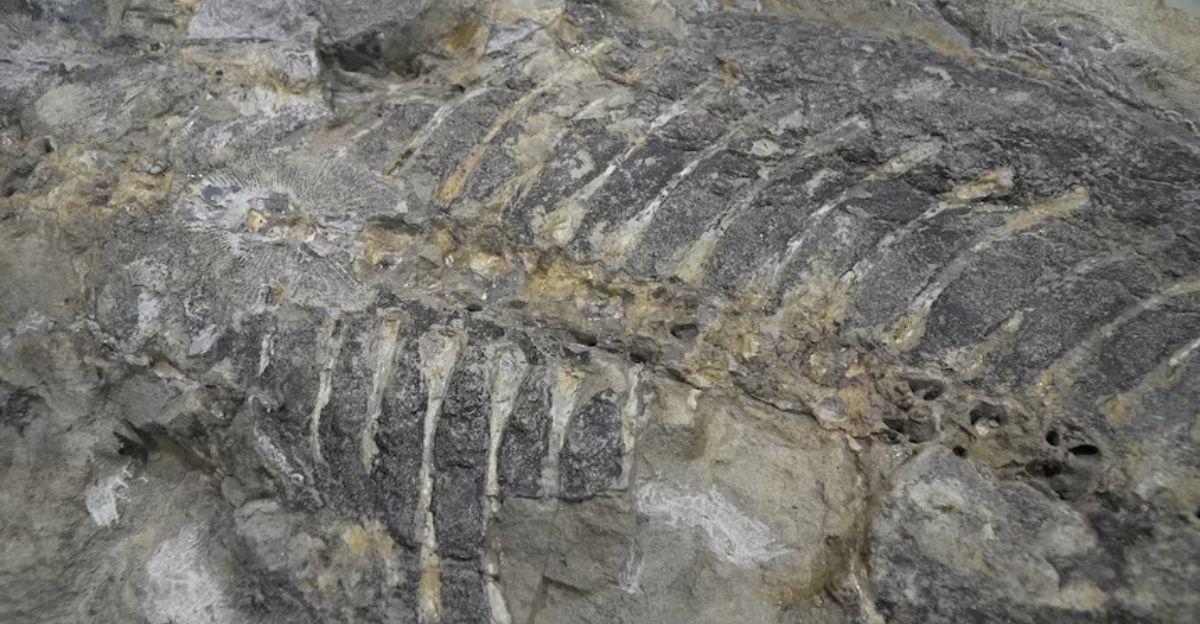
In the end, the significance of this fossil goes beyond bones and rock. It’s a reminder that extraordinary knowledge can come from ordinary people. A retired farmer’s curiosity and generosity played a crucial role in a major scientific breakthrough.
In a time of rapid environmental change, learning how creatures like Arenaerpeton survived past cataclysms is ever more relevant. Scientists today study these ancient survival strategies for clues about resilience.
If early amphibians could weather successive mass extinctions by finding refuges and broadening diets, perhaps there are lessons for conserving species now.
As one researcher notes, understanding deep-time adaptations can illuminate how life endures adversity. Ultimately, Arenaerpeton supinatus embodies a hopeful truth: by studying the past – hand-in-hand with the public – we gain insights that help protect the future.