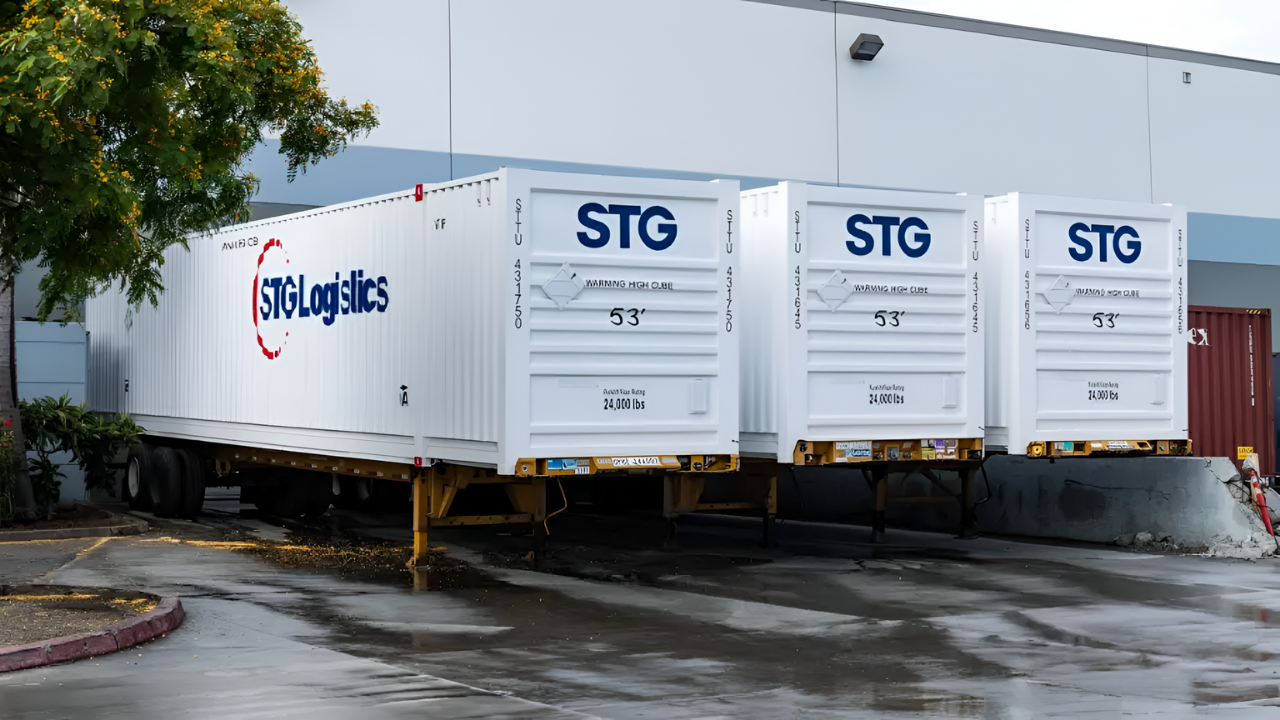
The freight recession that began in 2022 has now claimed one of America’s oldest logistics operators. STG Logistics, a 41-year-old Dublin, Ohio, company with 15,000 intermodal containers and more than 2,150 drivers, filed for Chapter 11 bankruptcy on January 12, 2026, carrying roughly $1.2 billion in debt. The filing underscores how weak freight demand, rising costs, and volatile trade policy have converged into a prolonged industry crisis. Court records reveal pressures that built for years before the collapse. Here’s what’s happening beneath the surface.
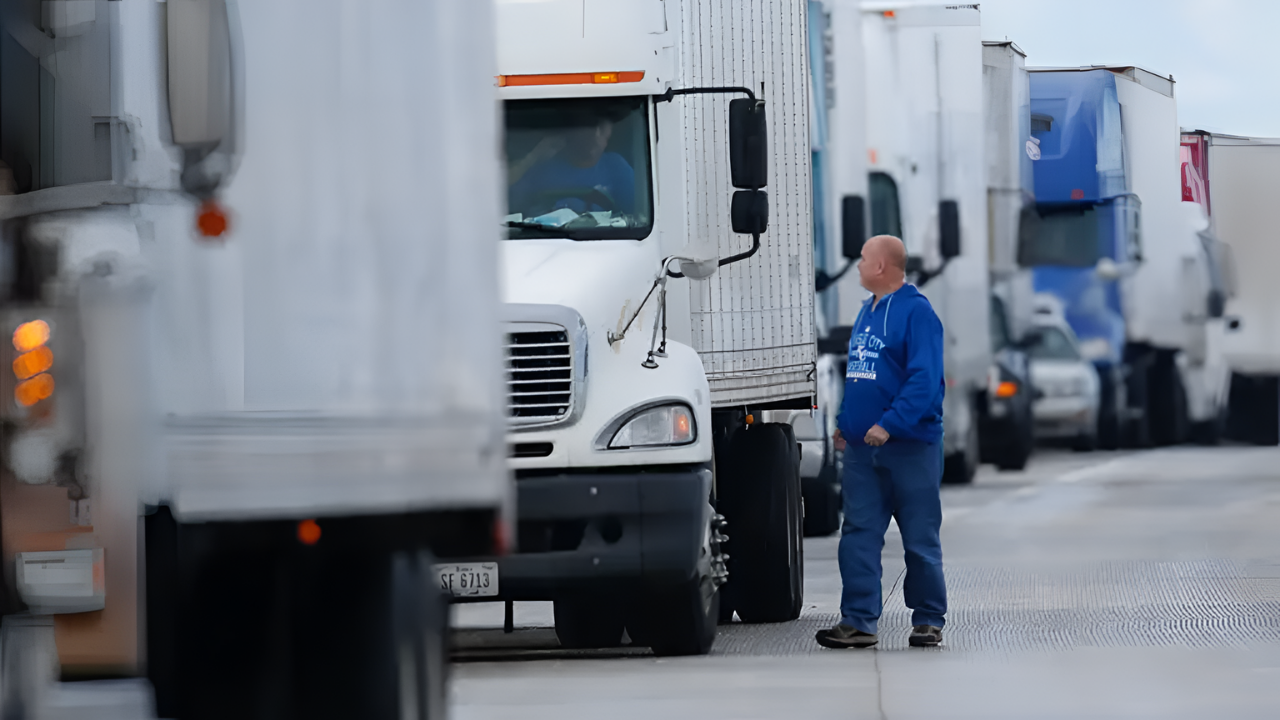
STG Logistics operated for 41 years before seeking Chapter 11 protection on January 12, 2026, in New Jersey federal court, according to court records. The company managed 15,000 domestic intermodal containers, 3,300 chassis, and approximately 4.5 million square feet of warehouse space nationwide. Its footprint stretched across trucking, rail-linked intermodal, and warehousing operations designed to smooth volatility.
That scale also magnified risk when conditions deteriorated. STG and 64 affiliates entered court with approximately $1.2 billion in debt as freight demand weakened and costs climbed. While the filing marked a sudden public break, financial stress had been building well before legal action, leaving little room to absorb another prolonged downturn.
A Freight Slump That Refused To End

The Great Freight Recession began in March 2022 and persisted into January 2026, lasting nearly 4 years. Long-haul truckload demand fell 25% in the first half of 2025 alone, according to FreightWaves data, while freight rates dropped roughly 30% from prior peaks. Insurance, labor, and compliance costs moved in the opposite direction, compressing already thin margins.
At the same time, private fleets expanded aggressively. Private operations handled 70.4% of U.S. outbound shipments, the highest level on record, according to the National Private Truck Council’s 2025 Benchmarking Survey. As shippers pulled freight in-house to control costs and reliability, for-hire carriers like STG lost volume, pricing power, and leverage just as the downturn deepened.
Revenue Slides And Debt Holds Firm
STG’s financial erosion accelerated as the cycle dragged on. Consolidated revenues fell $65 million between 2023 and 2024, with another projected $162 million decline between 2024 and 2025, totaling a $227 million drop over 2 years. Fixed debt levels left little flexibility to absorb that shock.
Chief Financial Officer Tyler Holtgreven summarized the bind in January 12, 2026, court filings: “Softening freight demand, along with lingering excess capacity in the market, has led to a declining rate environment and further strained STG’s performance for the past 3 years.” With revenue shrinking and obligations unchanged, liquidity tightened quickly as external pressures intensified.
Tariffs And Cash Pressures Collide

Trade policy delivered another blow in early 2025. New tariffs ranging from 10% to 145% were imposed with little notice, according to Holtgreven’s bankruptcy declaration. Import volumes in the second half of 2025 were forecast to fall about 14% year over year, and STG’s own volume declined 7% compared with 2024, per court filings.
By the time STG filed, unrestricted cash stood at just $34 million, insufficient to fund operations through Chapter 11. The company sought $294 million in debtor-in-possession financing, including $150 million in new capital and a $144 million roll-up of existing debt. Entering court with such a thin cushion raised alarms across its rail, staffing, and shipping partners.
Workers And Creditors Feel The Shock
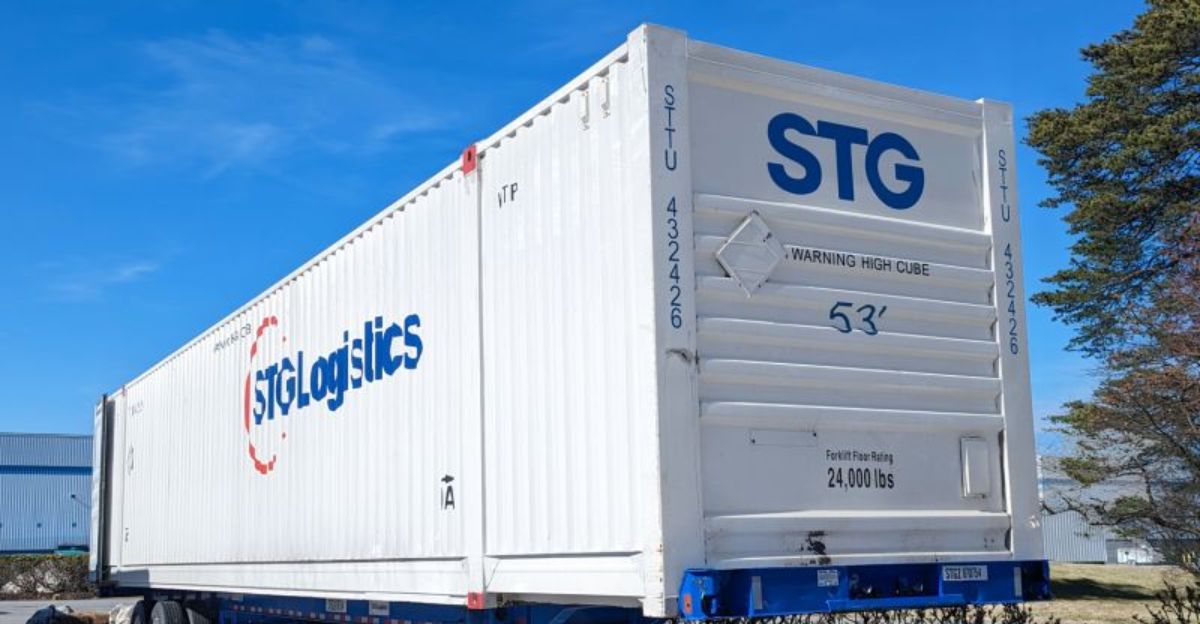
STG’s largest unsecured creditor was Union Pacific Railroad, owed more than $13.4 million, followed by CSX International at over $1.4 million and Kansas City Southern de Mexico at more than $1.3 million, according to court filings. The claims highlighted how intermodal logistics ties trucking, rail, and labor providers into a single risk chain.
The human impact was equally stark. STG directly employed about 2,150 drivers, alongside warehouse staff, coordinators, and administrative workers across 64 affiliated entities. The filing created widespread job uncertainty, reviving memories of Yellow Corporation’s July 2023 collapse, which eliminated 30,000 jobs and produced a $5 billion economic hit, according to Fortune.
An Industry Still Searching For Bottom
Bankruptcies across U.S. trucking rose more than 35% year over year in 2025, according to Transportation Tax Consulting analysis, signaling the downturn was far from over. Some analysts remain cautiously optimistic. Doug Waggoner said, “I’m pretty bullish that 2026 is going to be better,” during an October 2025 industry briefing, citing typical seasonal improvement after winter.
Yet risks remain. Consumer spending growth is expected to slow in 2026 despite projected GDP growth of 2.2%, according to the Congressional Budget Office’s January 2026 outlook. Intermodal volumes also softened late in 2025, with December traffic down 3.4% year over year, according to the Association of American Railroads, suggesting demand remained fragile.
A Bet On Survival, Not Certainty
STG Logistics now enters 2026 under Chapter 11 protection, aiming to restructure debt and streamline assets during one of the industry’s longest slumps. The company’s $294 million financing package is designed to keep operations running while leaders weigh asset sales, mergers, or a leaner operating model. Whether STG becomes a consolidation target or a survivor depends largely on timing.
Capacity reductions are accelerating as carriers exit and Class 8 truck orders collapse, with November 2025 orders down 44% year over year, according to FTR Transportation Intelligence. If demand stabilizes, rates could finally recover. For STG and its workers, however, the next 12 to 18 months will determine whether restructuring delivers renewal or merely delays the end.
Sources:
STG Logistics Chapter 11 Bankruptcy Filing. U.S. Bankruptcy Court for the District of New Jersey, January 12, 2026
CBO’s Current View of the Economy From 2026 to 2028. Congressional Budget Office, January 2026
Rail Industry Overview. Association of American Railroads (AAR), January 2026
Private Fleets Eye More Growth / NPTC Benchmarking Survey. National Private Truck Council, August 2025
Yellow Corp.: 99-year-old trucking company shuts down. CNN, July 31, 2023
Current State of the U.S. Industrial Real Estate Market – Q3 2025. MMCG Invest, October 23, 2025