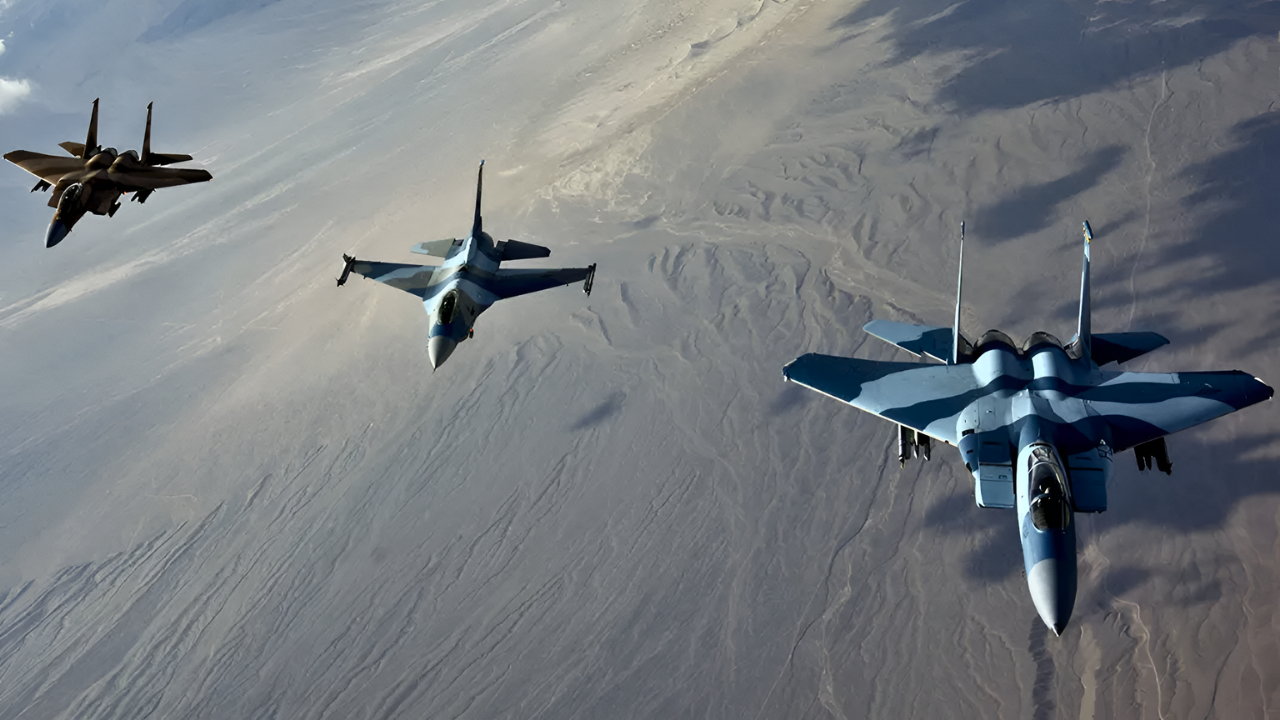
A Russian fighter jet’s daring maneuver across the nose of a U.S. F-16 over Alaska’s remote skies marked one of the closest brushes in decades, underscoring a surge in provocative flights testing North American defenses.
Russia’s military aircraft incursions into Alaska’s Air Defense Identification Zone hit levels not seen since the Soviet Union’s fall, with NORAD intercepts reaching the highest tempo in over 30 years. In 2024, these operations escalated, blending routine probes with riskier tactics amid growing Sino-Russian coordination.
A Zone of Calculated Risks
Alaska’s ADIZ stretches 200 miles from the U.S. coastline into international airspace, governed by Federal Aviation Regulation 14 CFR 99 to identify and monitor aircraft for national security. Foreign military planes can enter legally but trigger automatic scrambles for visual identification. Established since 1950, the zone has long served as a frontline for superpower posturing without crossing into sovereign territory.
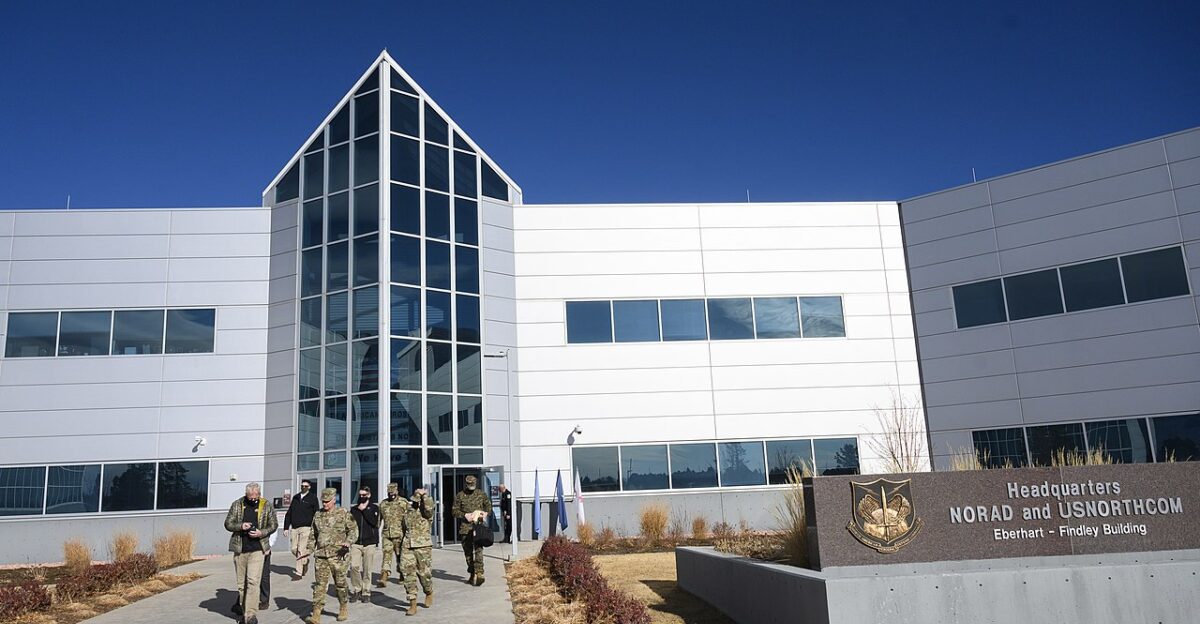
NORAD, the U.S.-Canadian command formed in 1958 amid Arctic bomber threats, oversees it. During the Cold War, Russian Tu-95 Bear bombers routinely approached without flight plans or transponders, probing response times in a scripted dance of deterrence.
Escalation in the Far North
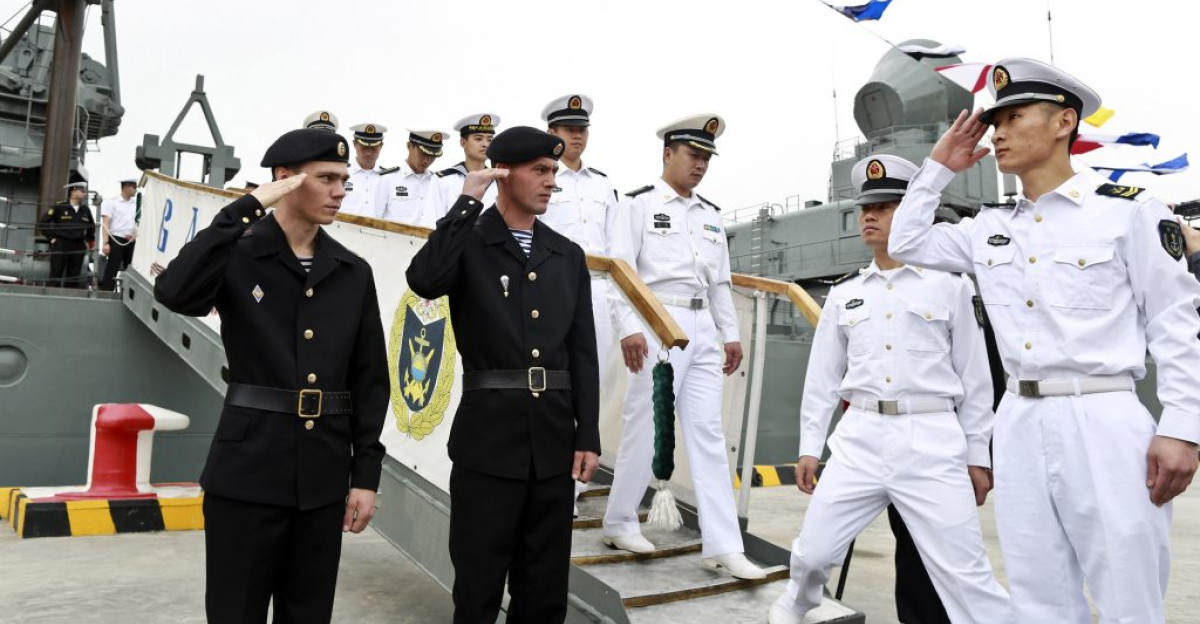
By 2024, NORAD scrambled fighters 25 times in Alaska’s ADIZ in 2023 alone, with even higher numbers projected. July brought a milestone: two Russian Tu-95s and two Chinese Xian H-6K nuclear-capable bombers flew jointly near Alaska for the first time—the eighth such patrol since 2019, but the initial one so close to U.S. soil. U.S. Senator Dan Sullivan labeled it an escalation, signaling a new phase of partnership.
General Gregory Guillot, NORAD commander since February 2024, prepared for intensified activity from this bi-national hub.
The Near-Miss Encounter
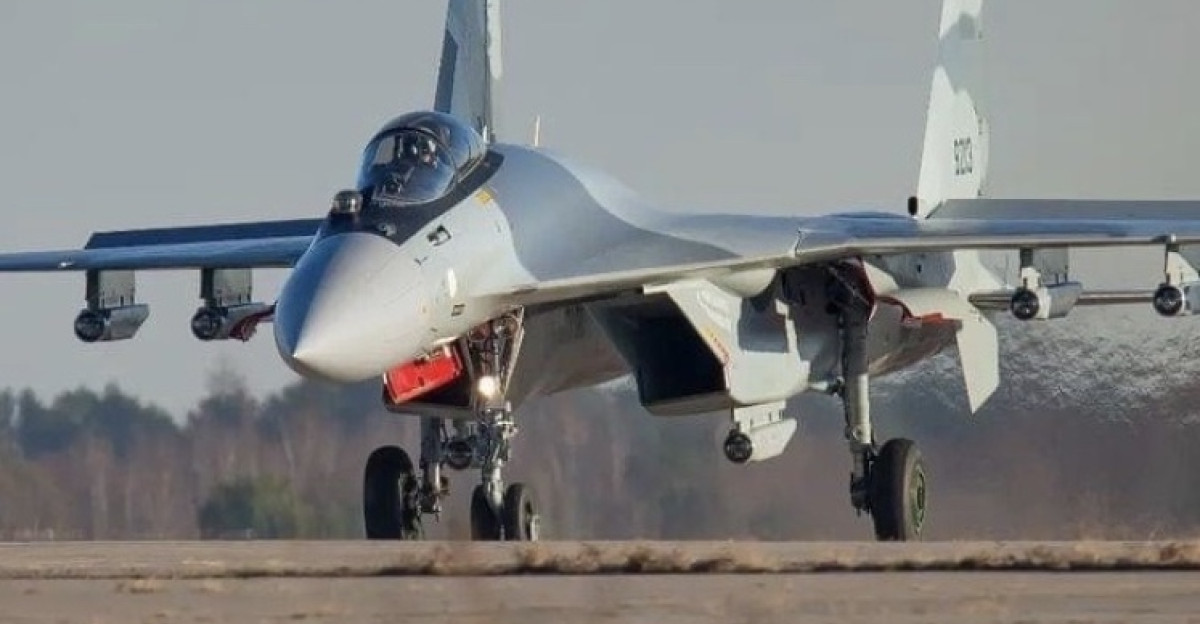
On September 23, 2024, at 8:30 a.m. local time, two Russian Tu-95 bombers entered the ADIZ with two Su-35 Flanker escorts. NORAD launched two F-16s from the 18th Fighter Interceptor Squadron at Joint Base Elmendorf-Richardson for a standard intercept.
One F-16 trailed a Tu-95 safely below when a Su-35 executed a sudden 90-degree bank across its nose, closing to mere meters. NORAD’s 14-second cockpit video, released September 30, captured the Su-35 blasting into frame, prompting the U.S. pilot’s evasive pull-right. No collision occurred, but officials deemed it unsafe and unprofessional.
Guillot stated: “NORAD aircraft flew a safe and disciplined intercept of Russian military aircraft in the Alaskan ADIZ. The conduct of one Russian Su-35 was unsafe, unprofessional, and endangered all, not what you’d see in a professional air force.”
Aircraft Clash: Design and Intent
The Su-35, a 18-ton upgrade of the Su-27 with 72-foot fuselage, 50-foot wings, thrust-vectoring for 9-G supermaneuverability, and Irbis-E radar tracking 30 targets at 200 miles, dwarfs the 9-ton, 50-foot F-16. The American jet relies on advanced electronics, datalinks, and energy efficiency. This was no dogfight but a display of intimidation in peacetime airspace.
NORAD’s Broader Vigilance
NATO scrambled jets over 400 times in 2024 against Russian approaches in Europe, matching 2023 levels—mostly professional but deliberately provocative without transponders or plans. Alaska’s 18th Squadron, with 60 F-16s, faced 15-30 monthly launches, straining fuel, maintenance, and pilots amid fatigue risks.
Politicians reacted sharply. Senator Sullivan said the maneuver put Airmen at risk, urging more Alaska defenses. Senator Lisa Murkowski highlighted Sino-Russian ties as unprecedented provocation, fueling calls for budget hikes.
Strategic Ripples and Readiness
The July joint patrol, within 200 miles of Alaska, reflected Beijing and Moscow’s 2022 “no limits” pact, challenging U.S. homeland defenses. The Pentagon reassessed Cold War deconfliction protocols, as Russia weaponized proximity. Guillot greenlit $40 million in radar upgrades and new systems post-review, exposing detection gaps.
These events raise enduring questions: isolated pilot error or rewritten rules? As tensions simmer over Arctic claims, Taiwan, or Ukraine, routine patrols risk tipping into crisis, demanding NORAD evolve its 66-year mission to safeguard skies where miscalculation carries global stakes.
Sources:
NORAD Press Releases (September 23, 2024 – Detection Announcement; September 30, 2024 – Official Statement; July 24, 2024 – Joint Russian-Chinese Detection)
FlightGlobal (Russian Su-35 Nearly Collides with US F-16, September 29, 2024)
Air & Space Forces Magazine (Russian Fighter Cuts Off US F-16, September 29, 2024; NORAD Intercepts Russian Bombers and Fighters, July 23, 2025)
CSIS Analysis (Why Did China and Russia Stage Joint Bomber Exercise Near Alaska, July 29, 2024)
Defense News (NATO Intercepts Stable in 2024, January 12, 2025)
General Gregory M. Guillot Biography (USAF Official Record)