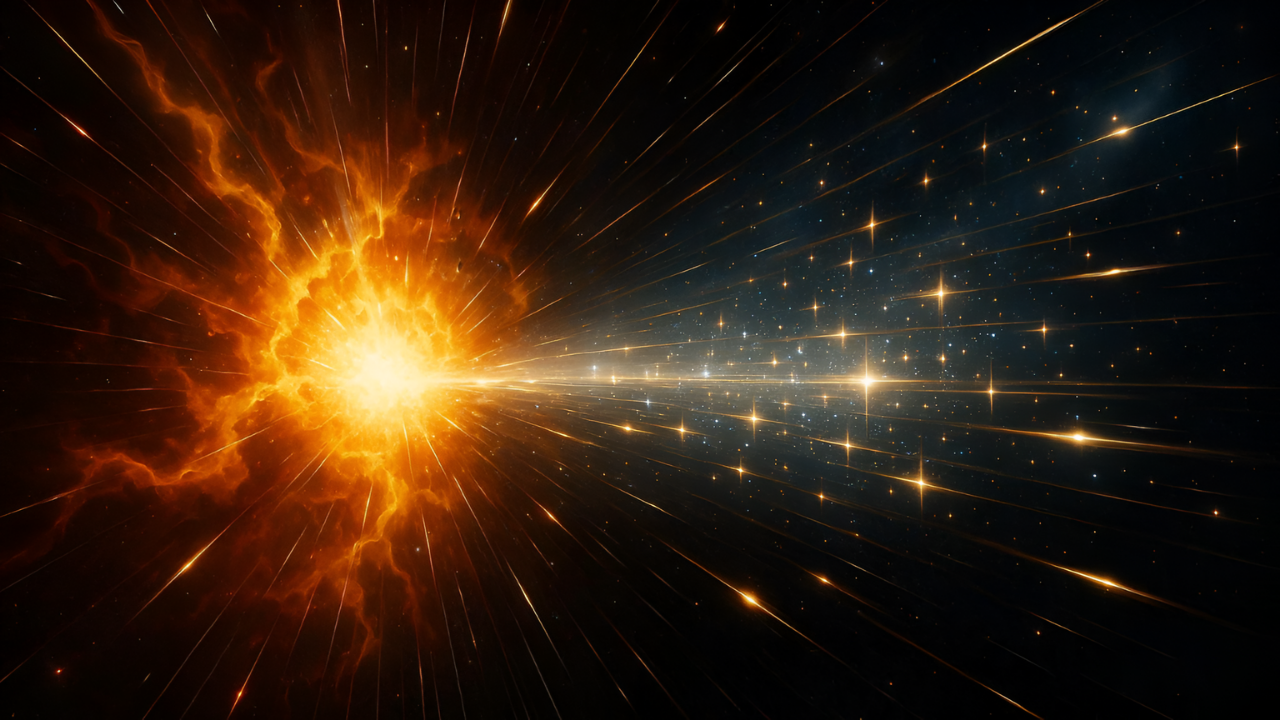
Between the end of cosmic inflation and the formation of the first atoms, the universe experienced a fleeting but pivotal era that remains largely unexplored. While standard cosmology traces the universe’s evolution from about ten seconds after the Big Bang, the crucial milliseconds and microseconds immediately following inflation are still shrouded in mystery. Recent research now suggests that this hidden epoch may have given rise to some of the most exotic and short-lived stellar objects ever to exist.
A Universe Briefly Ruled by Matter
Conventional wisdom holds that, after inflation, the universe was dominated by radiation. However, some theoretical models propose an alternative: a brief Early Matter-Dominated Era (EMDE), during which matter temporarily outweighed radiation. In this scenario, primordial particles could have clustered into dense halos under the influence of gravity alone. If these particles possessed self-interactions—a property not yet observed but theoretically possible—these halos would behave in ways unlike any known form of dark matter.
The concept of self-interacting dark matter introduces the possibility of gravothermal collapse, a process where particles within a dense halo collide and transfer energy. As these interactions generate heat, the core of the halo becomes denser and more pressurized, potentially leading to the formation of radically different cosmic objects. The fate of these halos depends on the interplay between gravitational forces pulling inward and internal pressures pushing outward.
Exotic Stars in the Early Cosmos
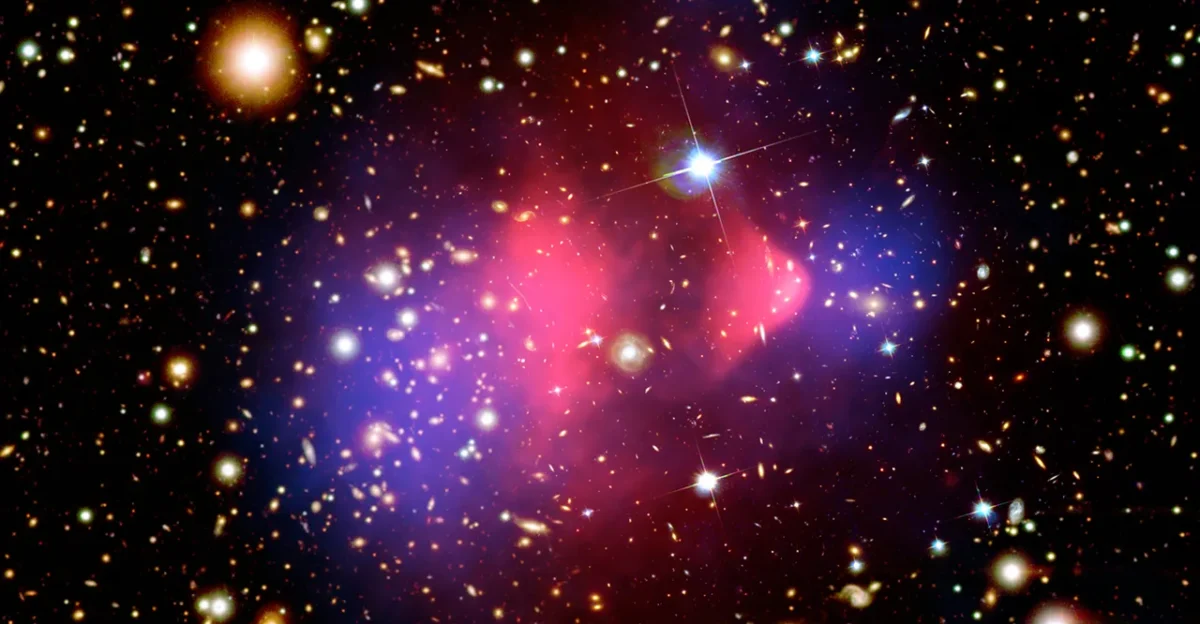
Research into gravothermal collapse reveals a spectrum of possible outcomes. Under certain conditions, collapsing matter halos could form primordial black holes—compact objects that are both tiny and massive by cosmic standards. In other scenarios, the universe might have briefly hosted exotic stellar types. Scientists at SISSA (International School for Advanced Studies) explored whether self-interacting particles could create temporary stellar structures before ultimately collapsing into black holes. Their findings point to a universe far more dynamic and varied in its early stages than previously thought.
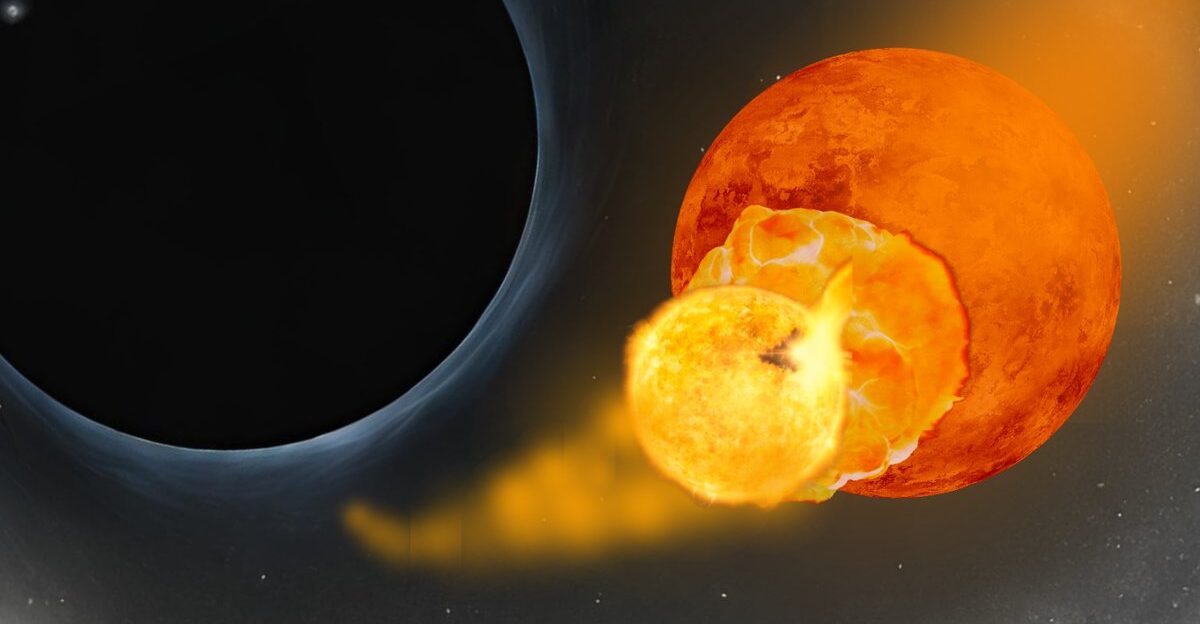
Among the exotic objects theorized are “cannibal stars,” which derive their energy not from nuclear fusion, like ordinary stars, but from matter-antimatter annihilation reactions. The SISSA team, working with collaborators from INFN, IFPU, and the University of Warsaw, demonstrated that certain particle interactions within collapsing halos could generate enough heat to temporarily halt gravitational collapse, resulting in a brief-lived star powered entirely by particle annihilation.
Another possibility is the formation of boson stars—hypothetical objects stabilized not by heat but by quantum pressure arising from the repulsive self-interactions of their constituent bosonic particles. This quantum pressure could allow boson stars to persist slightly longer than cannibal stars, provided the early universe’s conditions were just right.
The Fate of Early-Universe Oddities
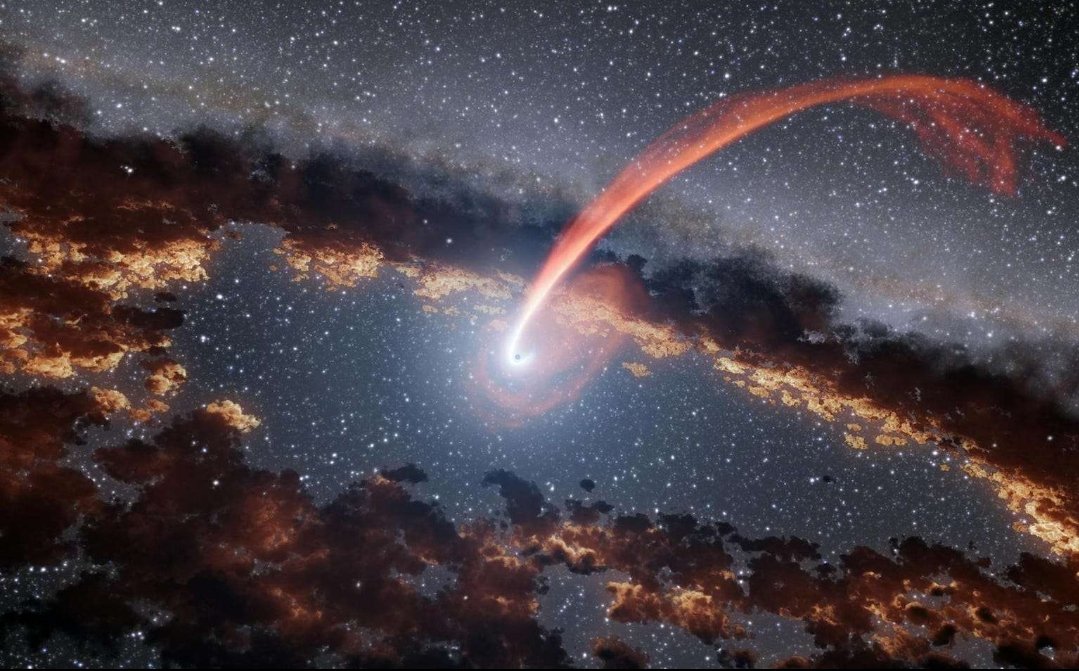
Despite their intriguing properties, both cannibal and boson stars would have been profoundly short-lived. Cannibal stars, fueled by annihilation, would shine for only seconds before the surrounding matter halo became too massive, triggering collapse into a black hole. Boson stars, stabilized by quantum effects, might have survived a bit longer, potentially influencing the earliest stages of cosmic structure formation, but they too would eventually succumb to gravity.
As these exotic stars exhausted their internal support mechanisms, the halos feeding them would continue to accrete mass. Ultimately, the infalling matter would overwhelm any stabilizing force, leading to gravitational collapse and the formation of primordial black holes. The SISSA model predicts a cascade of cosmic objects: some black holes formed directly from collapsing halos, others from the demise of cannibal and boson stars.
A New Frontier: Asteroid-Mass Black Holes
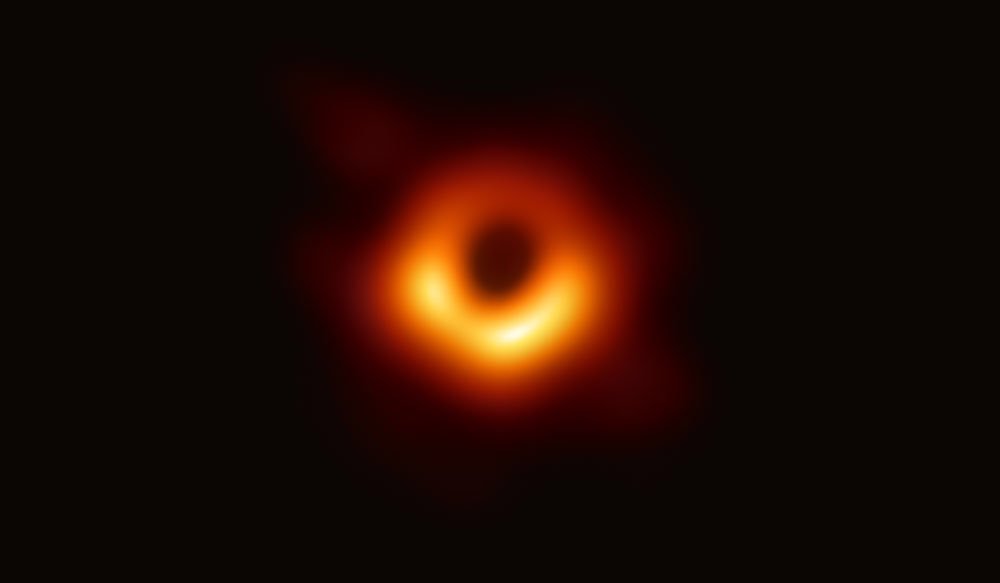
One of the study’s most striking predictions is the creation of primordial black holes with masses comparable to small asteroids—about \(10^{28}\) grams. These objects occupy a unique niche between stellar-mass and supermassive black holes, representing a previously unexplored frontier in black hole physics and dark matter research.
The implications are profound. If the EMDE scenario is accurate, it offers a new pathway for the formation of primordial black holes, which could make up a significant fraction of the universe’s dark matter. Dark matter remains one of the greatest mysteries in physics: it is invisible, its composition unknown, and its origins obscure. Recent gravitational wave detections of black hole mergers with unexpected masses have raised questions about their origins, and the SISSA research provides a framework for testing whether some of these mergers involve primordial black holes born from early-universe gravothermal collapse.
Unanswered Questions and Future Directions
The study opens new avenues for understanding both the early universe and the nature of dark matter, but it also raises important questions. The precise conditions required for an EMDE remain uncertain, and the theoretical properties of cannibal and boson stars need further refinement. Detecting asteroid-mass primordial black holes through gravitational waves is a challenge that future observatories may help address.
While direct detection of these primordial exotic stars is impossible—they vanished billions of years ago—indirect evidence may be found in the mass distribution and merger rates of black holes observed today. Advanced gravitational wave experiments could provide the clues needed to confirm or refute this new vision of the universe’s first moments.
If validated, this research would fundamentally reshape our understanding of cosmic origins, suggesting that the universe’s earliest era was not a barren interval, but a stage for complex and fleeting phenomena that set the stage for everything that followed.