The year is 2025. A mysterious object, 2025 PN7, has been detected in orbit around Earth, sparking heated debate worldwide. But this isn’t just any asteroid. Could it be a piece of long-forgotten Soviet technology, lost in space for over six decades?
As astronomers track its enigmatic orbit, theories range from it being a Cold War relic to something far more extraordinary. What is this object, and could it redefine our understanding of space history?
A Breakthrough Discovery
2025 PN7’s discovery has ignited a firestorm of debate within the scientific community worldwide. This isn’t the first time Earth has encountered strange objects in space, but the origin of this particular object raises unprecedented stakes.
Could it fundamentally challenge our understanding of space debris classification and our own cosmic history? The implications extend far beyond astronomy, touching questions of planetary inventory and Cold War legacies orbiting above us.
The Soviet Space Race Connection

To understand the theories surrounding 2025 PN7, we must look back to 1964. That year, the Soviet Union launched Zond 1 on April 2, marking its first attempt at sending a Venus lander to space.
However, due to technical failures in the spacecraft’s systems, the mission failed before reaching its destination, and contact was lost. This failure set the stage for a 61-year mystery that may now be resolved.
61 Years Lost in Space
For over six decades, the whereabouts of Zond 1 remained completely unknown, classified as a lost spacecraft. But new research by Harvard astronomers suggests that the spacecraft may have been orbiting the Sun all along, traveling in a silent, undetected orbit.
Now, it’s theorized that 2025 PN7 could be the very same spacecraft, finally rediscovered after 61 years adrift in the cosmos. The implications of such longevity in space are staggering.
The Surprising Discovery
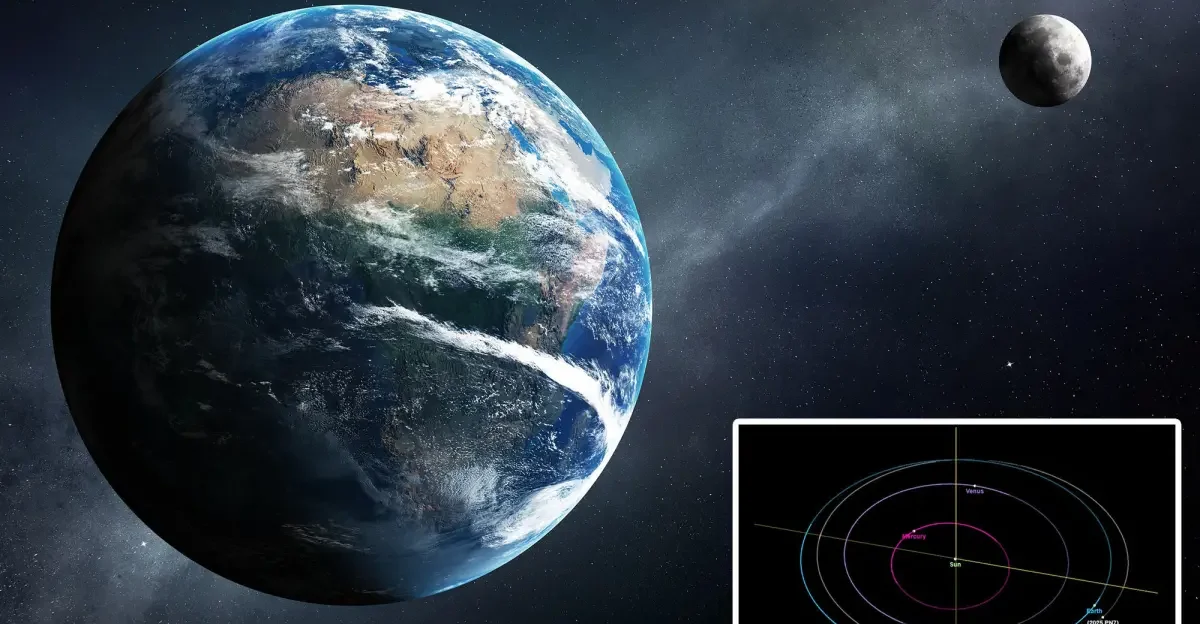
The real breakthrough came in August 2025, when Pan-STARRS Observatory in Hawaii confirmed the object’s existence near Earth. What’s startling is that 2025 PN7’s orbital path closely matches Zond 1’s predicted trajectory based on calculations from its launch parameters.
This striking correlation raises the strong possibility that this object is not an asteroid, but an old piece of human technology from the Cold War era, orbiting undetected for decades.
A Global Investigation
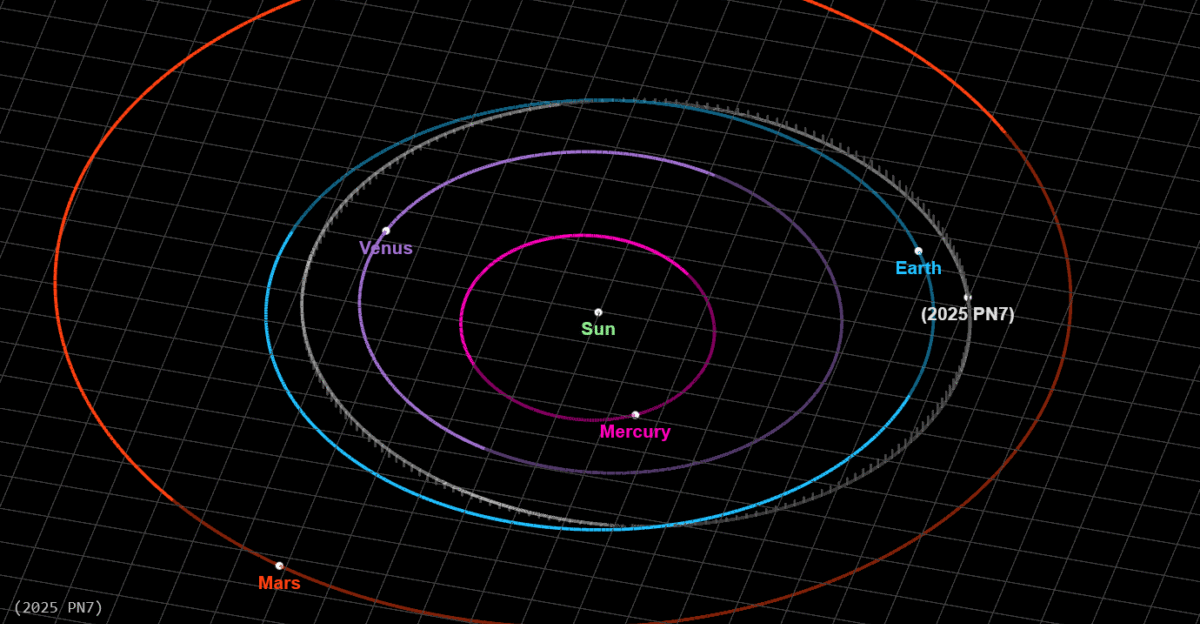
The discovery of 2025 PN7 has captured the intense attention of astronomers worldwide. NASA, the European Space Agency, and researchers from Asia, Australia, and other continents have come together to track the object’s precise path and debate its true origins.
Experts are taking markedly different stances on what this enigmatic object could represent, from Soviet hardware to natural phenomena, creating a truly international scientific dialogue.
A Harvard Astronomer’s Bold Claim

Avi Loeb, a prominent Harvard astronomer and director of the Institute for Theory and Computation, has emerged as a key figure in this ongoing debate.
Loeb has suggested that 2025 PN7 could be the upper stage of the Zond 1 mission’s rocket, the stage that launched the spacecraft toward Venus.
However, he hasn’t ruled out the possibility that the object could be extraterrestrial in origin, adding another compelling layer of intrigue and scientific possibility.
The Alien Hypothesis: Pattern Recognition
Loeb’s pattern of scrutinizing interstellar and near-Earth objects stems from a broader theoretical framework: advanced civilizations might place monitoring devices in our cosmic neighborhood to observe emerging species, such as humanity.
In 2017, he proposed that ‘Oumuamua—the first confirmed interstellar visitor—might be an extraterrestrial probe.
His reasoning: unusual trajectories, anomalous physical properties, and orbital characteristics inconsistent with natural random ejection patterns warrant serious scientific investigation.
Not everyone agrees with Loeb’s view on the object’s identity and provenance. Some scientists, including Adam Hibberd of the Initiative for Interstellar Studies, have proposed alternative theories suggesting that 2025 PN7 could be a natural asteroid with unusual orbital characteristics.
A Pattern Emerges

2025 PN7 is not the first mysterious object to be linked to failed space missions from the early space age. In 2020, astronomers discovered that 2020 SO, initially believed to be an asteroid, was actually the upper stage rocket of NASA’s Surveyor 2 lunar mission, launched in 1966.
This object had also been rediscovered after 54 years of undetected orbiting, establishing a clear historical precedent for such remarkable discoveries.
Could There Be More?
The discovery of 2025 PN7 has led many scientific experts to speculate intensely: how many other lost space relics are still orbiting silently in our solar system undetected? If confirmed as Soviet-era debris, this could mark the beginning of a significant pattern emerging.
Multiple Cold War-era objects from both American and Soviet missions could be returning to near-Earth space, fundamentally changing our understanding of orbital debris populations and space history.
Caution and Skepticism

Despite the growing body of circumstantial evidence supporting artificial origin, some scientists urge considerable caution about premature conclusions.
There’s a documented history of misidentifications in space exploration, where objects initially thought to be artificial relics later proved to be natural asteroids.
The limited direct evidence currently available for 2025 PN7 suggests that the scientific community should exercise caution in drawing definitive conclusions too quickly without a comprehensive analysis.
The Ownership Dilemma
With the potential return of Cold War-era space debris, complex questions about ownership and salvage rights inevitably arise in international space law.
Neither the Soviet Union, which no longer exists as a state, nor its successor states have officially claimed or sought Zond 1 debris.
This legal ambiguity complicates international efforts to recover, study, or dispose of the object. Who owns the remnants of lost space missions that predate modern international agreements?
New Tools for a New Challenge
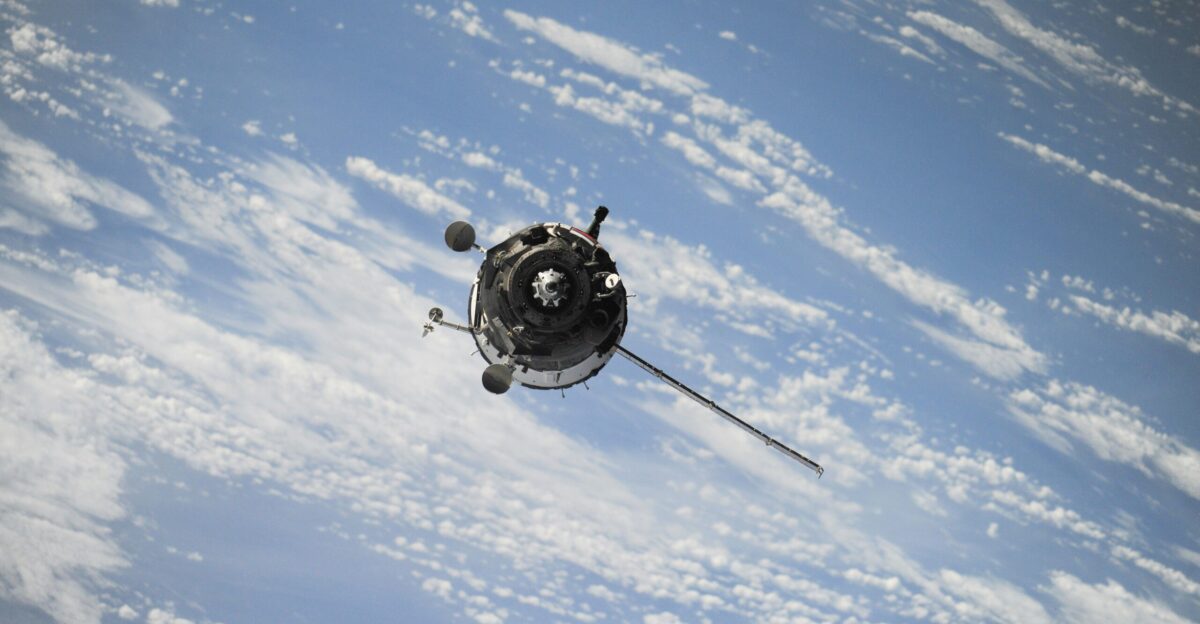
Modern technology is helping astronomers solve old mysteries from the space race era with unprecedented precision and capability.
Spectrum measurements and machine learning algorithms are now being deployed to analyze the surface composition and orbital dynamics of 2025 PN7 with remarkable accuracy.
These advanced analytical techniques and computational tools offer genuine hope for solving space’s oldest puzzles and definitively determining whether objects are natural or technological in origin.
Still Some Doubts
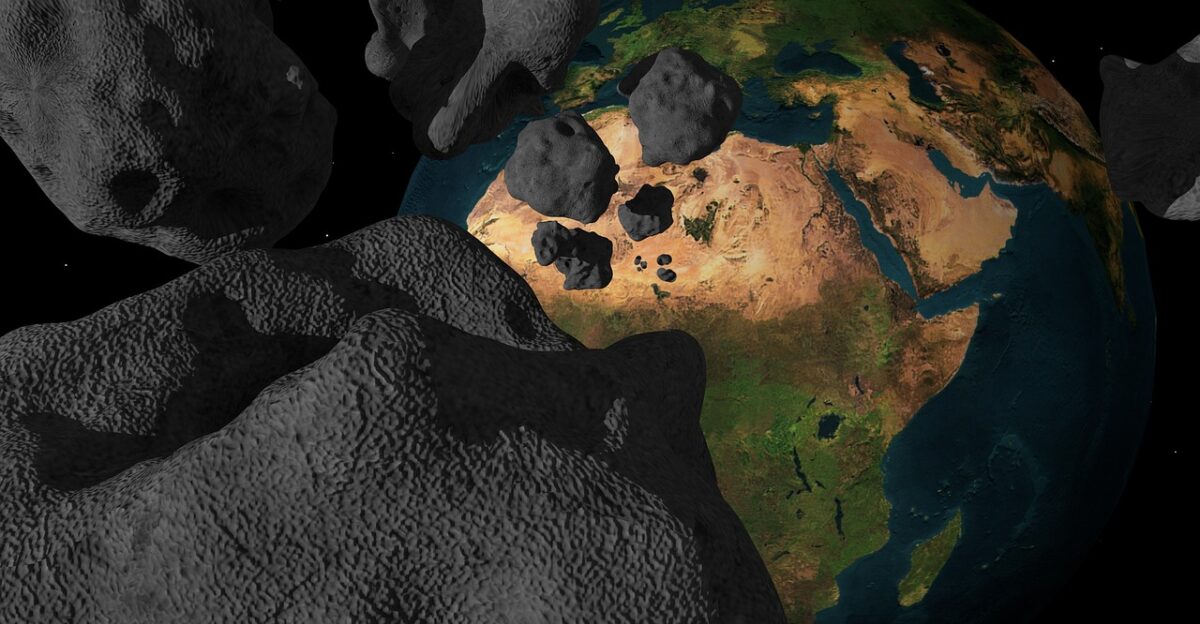
While evidence continues to accumulate in favor of the artificial relic hypothesis, some experts remain appropriately skeptical about final conclusions.
Many objects initially thought to be artificial spacecraft components have later been proven, through rigorous analysis, to be natural space rocks.
Further intensive study using multiple observation methods is needed before any definitive conclusions can be drawn scientifically and responsibly about the true nature and origin of 2025 PN7.
Urgent Action Required
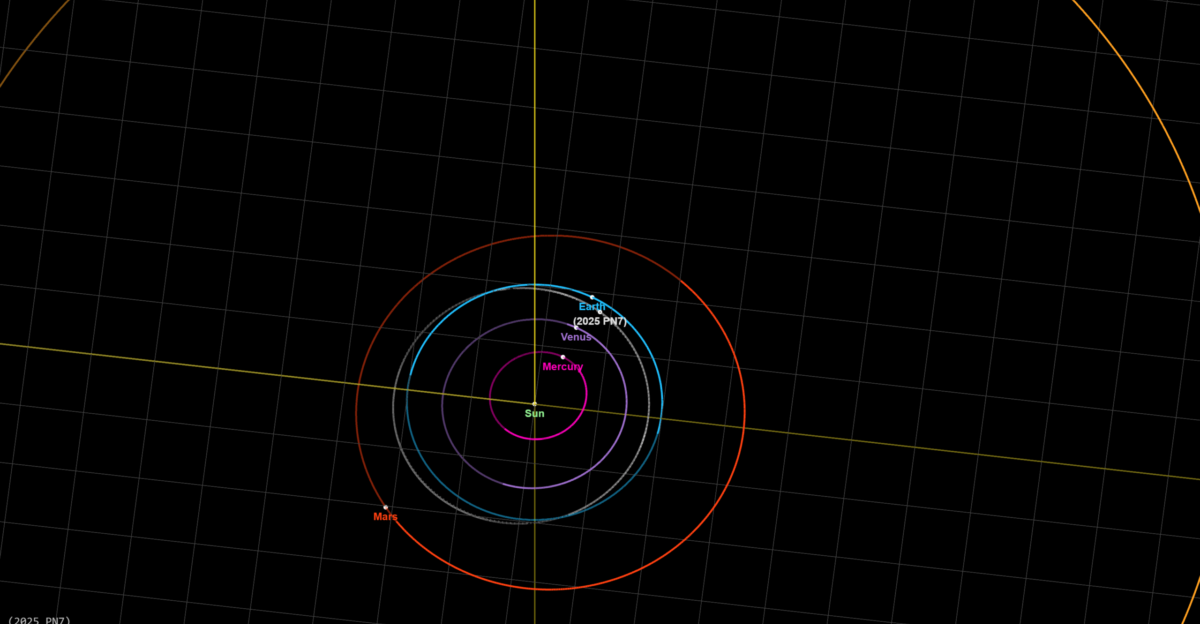
The clock is ticking relentlessly for the scientific community studying 2025 PN7. As the object’s orbital path gradually shifts and evolves over time, its observational window for detailed study is rapidly closing and shrinking.
Leading astronomers are calling for immediate action and funding to conduct comprehensive spectrum analysis before the object drifts out of the optimal range for Earth-based observation, which could result in the permanent loss of crucial scientific data.
Cold War Echoes in Space
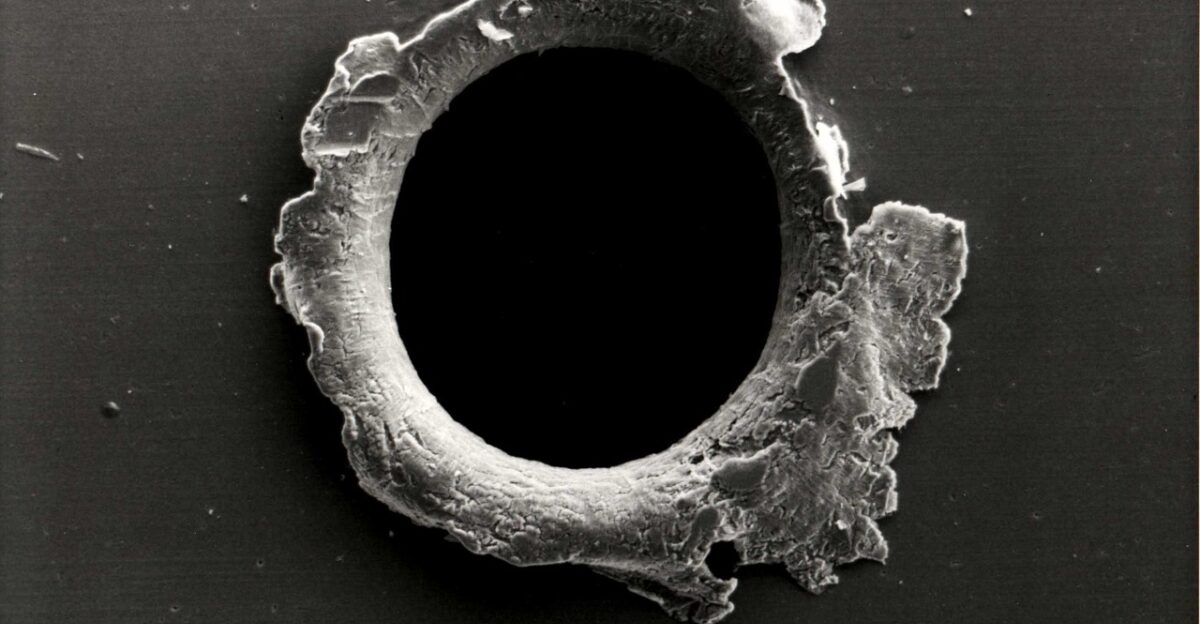
The possible discovery of Cold War-era debris now orbiting near Earth raises significant questions about humanity’s long-term environmental impact on space itself.
What are the lasting consequences of leaving a sprawling graveyard of failed missions and abandoned hardware scattered across our solar system?
The legacy of 20th-century space exploration increasingly looks like littering on a cosmic scale, leaving technological artifacts that will persist for millennia.
A Global Phenomenon
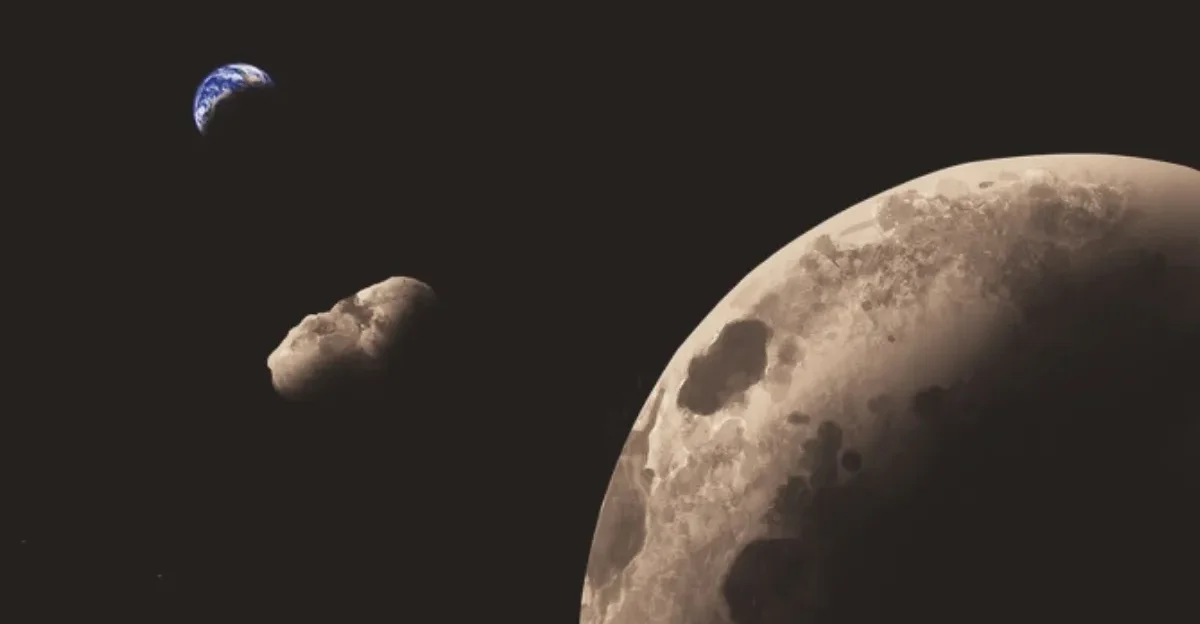
The renewed international interest in 2025 PN7 isn’t merely a localized scientific curiosity or regional phenomenon. Extensive coverage and active research from around the world underscore the genuine global significance of this discovery.
Countries including the United Kingdom, Australia, Israel and the United States have been actively and enthusiastically involved in studying the object’s characteristics and implications. This truly represents planetary collaboration in exploring space mysteries.
Policy Repercussions

As more Cold War-era space debris potentially returns to Earth’s orbital vicinity, international regulators and space agencies may urgently need to implement entirely new safety protocols and tracking systems.
These protocols must address the proper identification, cataloging, tracking, and eventual disposal of ancient space hardware.
As commercial space exploration rapidly expands and private companies launch missions globally, these regulatory frameworks and safety measures will become increasingly crucial for managing orbital traffic.
Changing Views of Space

The discovery of objects like 2025 PN7 is fundamentally reshaping humanity’s view of space exploration and the cosmic frontier.
Instead of seeing the cosmos purely as a vast, untamed frontier awaiting exploration and conquest, we increasingly see it as a haunted, cluttered space densely littered with failed missions and abandoned technology from the past. This shift in perspective reflects a more mature, realistic understanding of our species’ actual footprint.
Stakes Are High
As the scientific and public debate around 2025 PN7 intensifies, the stakes continue to rise significantly for our understanding of space.
Will it prove definitively to be a Cold War relic from the Soviet Union’s ambitious but failed Venus mission, or will it prove to be something far more mysterious and scientifically surprising?
The coming months of intensive observation and analysis could reveal groundbreaking insights about humanity’s past, present, and future cosmic ambitions.