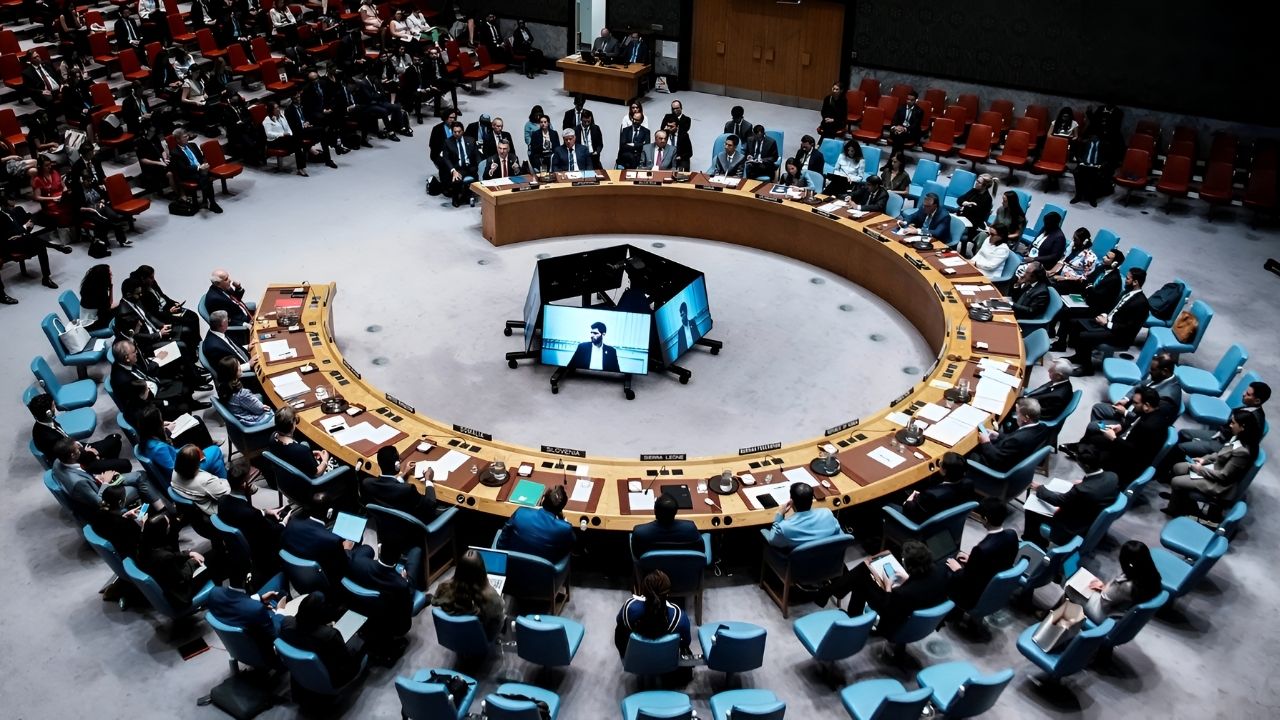
As winter 2025 approaches, Europe’s security landscape is shifting rapidly. Ukrainian President Volodymyr Zelenskyy has issued a stark warning to NATO: Russian President Vladimir Putin may target NATO members even as the war in Ukraine continues. This message, delivered in November 2025, challenges long-held Western assumptions that Russia would not risk a broader conflict while still engaged in Ukraine. Zelenskyy’s statement has prompted urgent reassessment of defense strategies across the alliance.
Drone Warfare and NATO’s Vulnerabilities
Russia’s rapid advances in drone technology have exposed a critical weakness in NATO’s defenses. Russian factories now produce thousands of drones each month, far outpacing the alliance’s manufacturing capacity. These drones are increasingly sophisticated, designed to evade Western air defense systems. NATO military planners acknowledge drones represent an escalating threat requiring accelerated adaptation.
NATO Secretary-General Mark Rutte has warned that Russia could be capable of launching an attack on a NATO member within three to five years. This has triggered calls for a dramatic overhaul of air defense capabilities. The technological gap in drone warfare is now seen as NATO’s most urgent vulnerability, with military planners racing to adapt.
A New Era of Civil and Military Preparedness
In response to the escalating threat, European nations are taking unprecedented steps to bolster security. Airports and borders are subject to heightened screenings, and civil defense protocols are being revived across the continent. Poland, Estonia, Latvia, and Lithuania announced in March 2025 their intention to withdraw from the Anti-Personnel Mines Convention to strengthen their defenses along their borders with Russia and Belarus.
Construction of emergency shelters and bunkers is accelerating across Europe, with Germany planning to expand shelter capacity to 1 million spaces. Citizens across Europe are preparing for scenarios not seen since the Cold War, with emergency drills and contingency planning becoming part of daily life. This shift marks a generational change in attitudes toward security and preparedness.
Industry and Infrastructure: Racing to Adapt

Defense contractors in Europe and the United States are ramping up production of air defense systems, missiles, and anti-drone technologies. However, the pace of adoption varies widely among NATO members, with some countries moving faster than others to modernize their arsenals. Cybersecurity firms are also seeing increased demand from critical sectors such as energy, finance, and telecommunications.
The economic impact is significant. Stock markets are rallying on defense sector gains, while European manufacturers are relocating operations from Eastern Europe to safer regions. This shift, aimed at reducing geopolitical risk, is expected to raise consumer prices as supply chains are restructured. Meanwhile, telecommunications companies are rerouting undersea cables away from Russian-controlled waters, and critical infrastructure is being reinforced to guard against sabotage.
Border Communities on Edge
For residents of Poland, Estonia, and Lithuania, the threat of conflict is an immediate concern. Border communities are implementing enhanced surveillance and defense preparations. Schools near borders now conduct regular civil defense drills. The sense of stability that followed the Cold War has given way to active preparation for potential hostilities.
Civil defense enrollment is surging, particularly in border regions. Countries are constructing emergency shelters as part of government defense initiatives, and urban planners are incorporating air raid shelters into new infrastructure developments. Families in border communities are stockpiling emergency supplies, reflecting a normalization of preparedness for conflict.
Strategic Realignment and Economic Consequences

The European Union adopted its 19th sanctions package against Russia on October 23, 2025, implementing comprehensive financial and economic measures against Russia’s energy sector, military-industrial complex, and financial infrastructure. NATO has launched new initiatives to protect critical infrastructure and counter hybrid threats. Russian diplomats are being subjected to tightened controls throughout the EU, signaling a comprehensive strategic realignment.
This security overhaul comes at a cost. European defense spending has reached its highest level since the Cold War, with billions being redirected from social and infrastructure programs. Government debt is rising as military investments take priority. Environmental and public health experts have raised concerns about the resource demands of increased defense production and the mental toll from prolonged security anxiety.
Looking Ahead: The Stakes for Europe
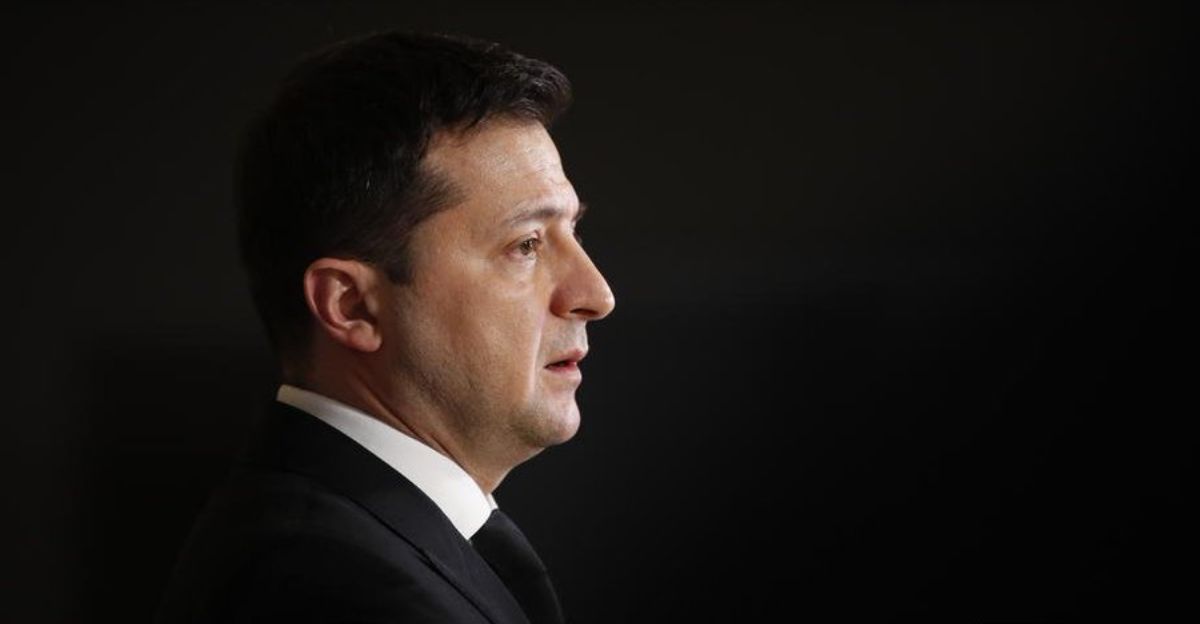
Zelenskyy’s warning has challenged the assumption that Russia would focus solely on Ukraine before threatening NATO territories. The alliance now faces a critical test: Can it modernize its defenses quickly enough to counter Russia’s evolving capabilities? The cohesion, integration, and strategic foresight of NATO will determine whether Europe can navigate this unprecedented threat environment. Decisions made in the coming years will shape the continent’s security for generations to come