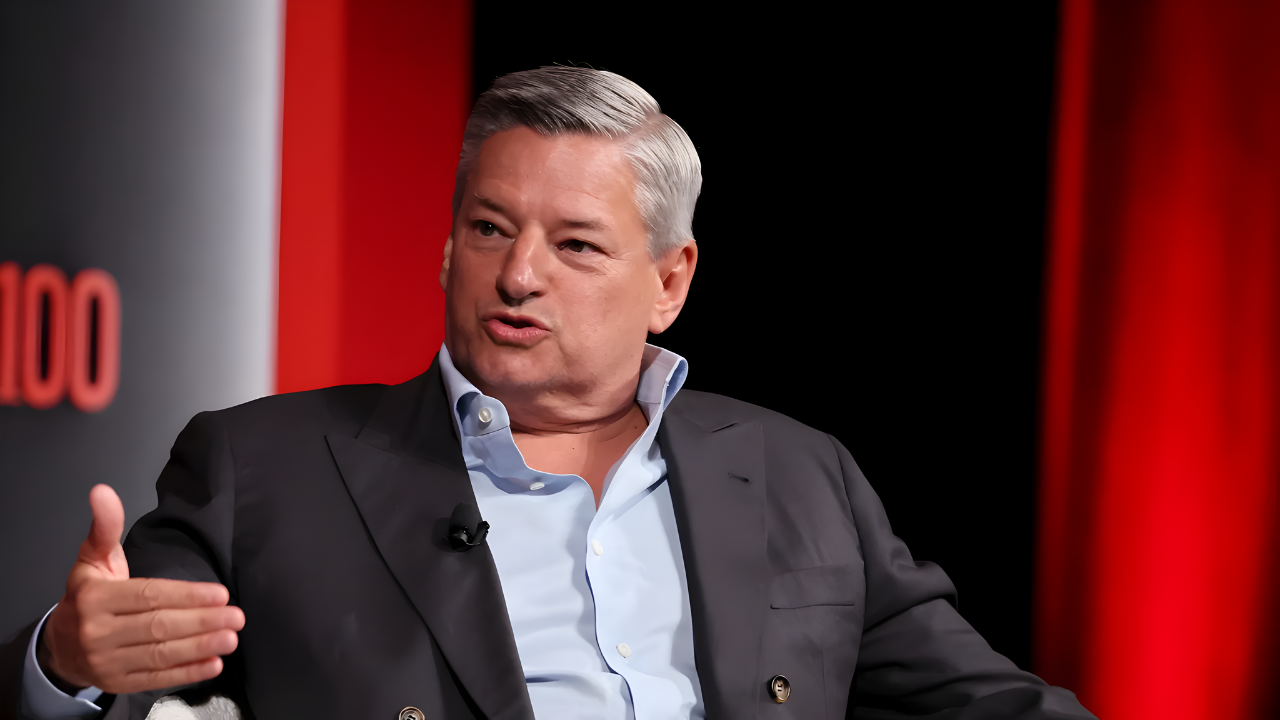
Netflix made a move that sent shockwaves across Hollywood: it spent $82.7 billion to acquire Warner Bros. in its entirety. Not just the streaming service. Everything—the 102-year-old studio that created Superman, Harry Potter, and Game of Thrones now belongs to a company that started mailing DVDs from a garage.
On Friday, December 6, 2025, the entertainment world underwent a significant transformation. What happens next will determine whether your favorite movies reach theaters, whether 50,000 theaters worldwide survive, and how much you’ll pay to watch anything ever again.
The Moment Hollywood Lost Its Independence
The equity value of Netflix’s acquisition stands at $72 billion, with Netflix paying $27.75 per share in a cash-and-stock arrangement. Netflix is no longer competing with Hollywood. Netflix is Hollywood now. As co-CEO, Greg Peters declared, “This acquisition will improve our offering and accelerate our business for decades to come.”
Netflix expects to extract $2 billion to $3 billion in annual cost savings by eliminating redundancy. But here’s what keeps executives awake: if Netflix controls the content pipeline, who actually pays the price?
One Company, Zero Competition

Netflix’s more than 300 million streaming subscribers just absorbed HBO Max’s approximately 120 million more, creating a force of 420 million watching one corporation’s decisions. That’s more people than live in the United States.
According to industry analysts, this merged entity will command roughly 21 percent of all U.S. streaming time—a concentration of cultural power unmatched in the history of entertainment.
The Crown Jewels Now Belong to Netflix
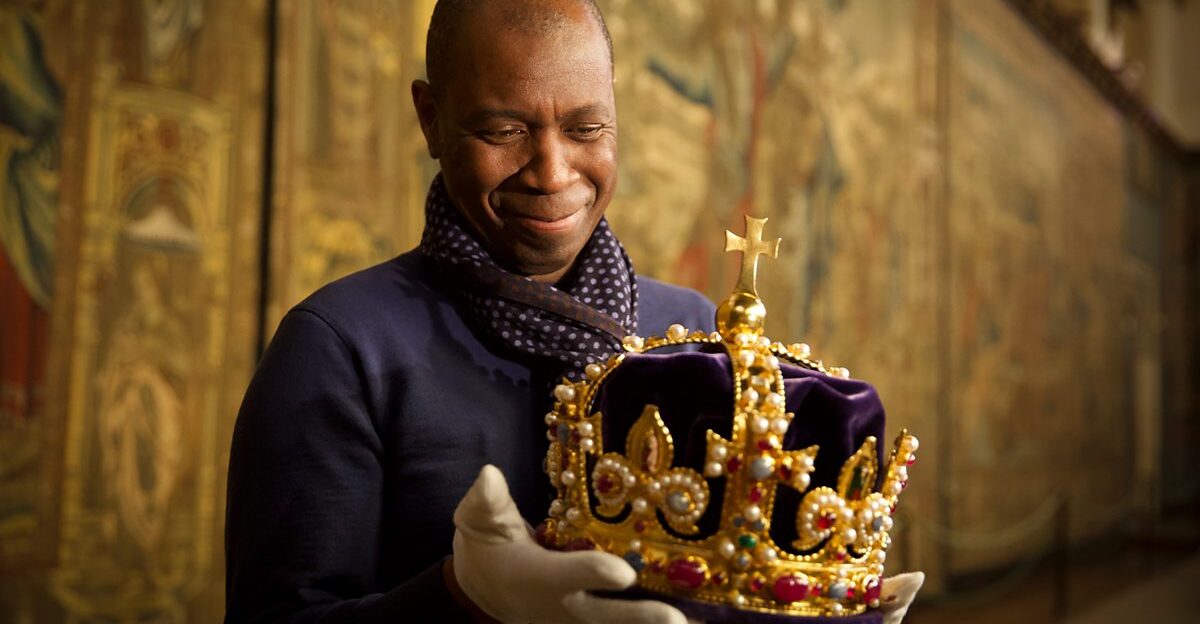
Netflix has acquired the entire Harry Potter cinematic universe, as well as the forthcoming HBO television series. The complete DC Universe—Superman, Batman, Wonder Woman. Every episode of Game of Thrones and spin-offs, including House of the Dragon. Cultural bedrock shows include Friends and The Big Bang Theory. Plus legendary films: Casablanca, The Wizard of Oz, and thousands more.
This isn’t an acquisition. It’s a consolidation of cultural memory itself into a single algorithm-driven engine.
How a DVD Rental Company Absorbed a 102-Year Empire

Warner Bros. was founded in 1923 by four brothers. It survived the Great Depression, engineered the studio system that built Hollywood, and endured television’s rise that nearly killed it. Now, a company that started in 1997, mailing red-envelope rentals, has absorbed the titan.
Ted Sarandos, co-CEO of Netflix, said that merging “Warner Bros.’ extraordinary collection—from Casablanca to Harry Potter—with our culture-shaping titles” creates something “never before possible.”
The Moment Theater Owners Realized the Game Was Over

When Cinema United, representing owners of more than 50,000 movie screens worldwide, woke up to this news, they issued a battle cry. Cinema United President Michael O’Leary called the deal “an unprecedented threat” to theatrical exhibition. Why? Because 25 percent of the annual domestic box office comes from Warner Bros. films.
If Netflix diverts those films exclusively to streaming—which their business model incentivizes—50,000 screens could go dark. Cinema United immediately mobilized regulators internationally, vowing to “leverage every possible resource” to scrutinize this deal.
The Regulatory Reckoning Begins
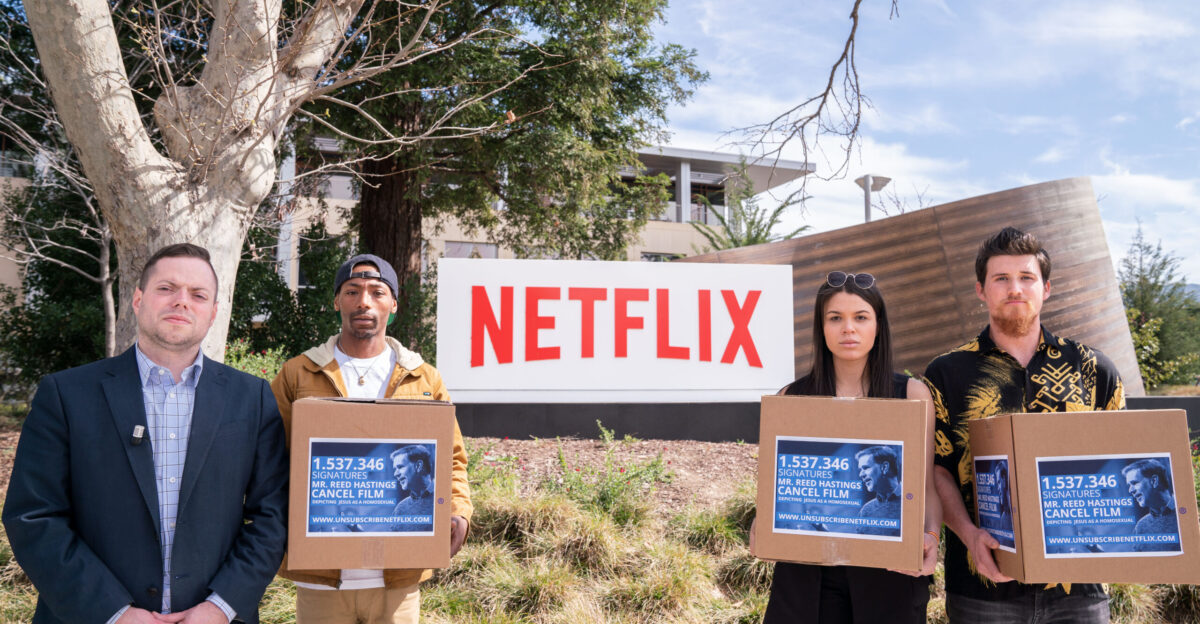
Netflix paid a staggering $5.8 billion breakup fee—one of the largest in M&A history, representing 8 percent of the entire equity value—betting on confidence against federal approval. Then, President Trump signaled skepticism. “Netflix holds substantial market share,” he said. “Acquiring Warner Bros. will significantly increase that share. That could be a problem.”
The Justice Department’s antitrust division will now conduct a thorough scrutiny. This deal might not close. That $5.8 billion fee? Netflix might have to pay it.
Hollywood’s Labor Unions
The Writers Guild of America—East and West divisions united—declared this merger “is precisely what antitrust legislation aims to avert.” The Directors Guild followed. The creative community Netflix depends on is publicly opposing the deal. The WGA warned consolidation could trigger “job losses, reduced salaries, deteriorating conditions, increased prices for consumers, and a decline in both quantity and variety of content.”
These are the people Netflix needs to create shows for. They’re saying this concentration threatens their livelihoods and the creative ecosystem itself.
A Hostile $108.4 Billion Counter-Offer
Just when Netflix thought the deal was locked, Paramount Skydance launched a devastating counter-punch. On December 8, they announced a hostile tender offer valued at $108.4 billion—$18 billion more in cash—to acquire the entire Warner Bros. Discovery company.
CEO David Ellison argued his offer provides “greater regulatory certainty” because it includes assets Netflix declined (CNN, TNT, HGTV), creating a separate company called Discovery Global.
The Netflix Executives Aren’t Sweating Yet
Ted Sarandos and Greg Peters delivered a message to analysts: Paramount’s bid was “completely anticipated.” Netflix would “collaborate closely with all relevant governments and regulators.” Translation: we’ve got this.
However, beneath their confidence lies a harsher truth: Netflix is betting that regulators will view consolidation as inevitable and approve the deal.
Scared Warner Bros. Employees
Warner Bros. CEO David Zaslav faced the obvious fear: massive layoffs. During a company town hall, he told staff something unexpected—that Netflix actually needs to keep most people. “Their goal is to keep the majority of the team since they lack a motion picture studio and substantial gaming division,” Zaslav explained.
He emphasized that both boards unanimously approved the deal, calling it “the most solid long-term foundation for both businesses” in a transforming industry.
HBO Max Isn’t Disappearing—Yet
Netflix promised to preserve Warner Bros.’ theatrical distribution model and maintain HBO Max as a distinct branded service. Co-CEO Peters stated Netflix remains “fully committed” to releasing Warner Bros. films in theaters “in the same way they currently do.” Minecraft, Super, and Sinners would have gone to theaters regardless, Peters noted.
Analysts foresee a different endgame: HBO Max will likely be bundled with Netflix at discounted rates, with exclusive HBO content gradually migrating to the central Netflix platform.
The Cost-Cutting Math
Netflix projects $2 billion to $3 billion in annual cost savings by year three, primarily through eliminating duplicated technology and overlapping operations. Executives haven’t promised that these savings will translate to lower subscription prices. They won’t. Instead, savings will balloon operating margins and shareholder returns.
The merged entity is expected to generate approximately $2.3 billion in U.S. advertising revenue alone.
A Year of Waiting and Fighting
Netflix announced the transaction is expected to close within 12 to 18 months—likely Q3 2026. But that timeline assumes regulatory approval and shareholder votes. First, Warner Bros. must separate its Global Networks division (CNN, TNT, HGTV, Discovery+) into an independent publicly traded company called Discovery Global by Q3 2026.
Only then can the Netflix-Warner Bros. merger finalize. That’s assuming the FTC doesn’t block it. Assuming Trump officials don’t poison the well. This deal faces multiple chokepoints.
What Discovery Global Actually Represents
Warner Bros.’ traditional cable operations won’t follow Netflix into the streaming future. CNN, TNT, TBS, and entertainment networks will spin off into Discovery Global—a separate public company operating under the current leadership. This carve-out reveals a brutal industry truth: legacy cable is in hospice. Netflix, streaming, and digital distribution are the future.
Discovery Global shareholders will determine whether a cable-focused company can survive in a post-cable world. It’s a Hail Mary pass disguised as strategic separation.
Antitrust Experts Are Deeply Divided

Legal specialists studying the merger are fundamentally split on approval odds. Optimists point to Amazon Prime Video and Disney+ as remaining competitors. Pessimists contend that Netflix controlling 30 percent of streaming, combined with Warner Bros.’ irreplaceable content library, crosses critical antitrust thresholds.
European Union regulators are likely to launch Phase II investigations, demanding extensive remedies. Trump’s public skepticism introduces political uncertainty absent from traditional regulatory analysis. Nobody actually knows how this ends.
The Breakup Fee Reveals Netflix’s Confidence
By agreeing to an $5.8 billion breakup fee—among the largest penalties in M&A history—Netflix signaled extraordinary confidence despite regulatory uncertainty. This fee dwarfs typical deal costs. Meanwhile, Warner Bros. must pay Netflix $2.8 billion if shareholders reject the deal or the board accepts Paramount’s bid.
This asymmetric structure suggests that Netflix expects a regulatory victory and that Paramount’s financing faces greater uncertainty than Netflix’s financial position. Netflix is betting everything on approval.
Your Streaming Future Just Got More Complicated
If approved, expect bundled Netflix and HBO Max tiers at discounted rates within the next few months. Expect HBO Max content to migrate onto Netflix proper gradually. Expect theatrical commitments to loosen as streaming economics dominate. Expect subscription prices to hold steady or increase—those $2-3 billion savings won’t benefit you.
For viewers, consolidation reduces the number of streaming options while expanding the available content. For creators, it means one master. For theaters, it means existential questions. For Netflix, it means total victory.
Consolidation Over Competition
This $82.7 billion transaction marks the transition of the entertainment industry from fragmented competition to monopolistic consolidation. Smaller studios without Netflix, Disney, or Amazon backing face extinction pressures. Theatrical exhibition confronts an uncertain future as streaming dominates production budgets.
Although regulatory approval remains uncertain through 2026, this merger crystallizes an inescapable shift: Netflix has transcended streaming to become Hollywood’s singular dominant force, commanding franchises, subscribers, and cultural influence that were once distributed across independent competitors.
Sources:
Netflix–Warner Bros. joint acquisition announcement (Dec. 5, 2025, official press release, SEC/IR filings)
Cinema United formal statement opposing the Warner Bros. acquisition (Dec. 5, 2025 trade association release)
U.S. President Donald Trump remarks on Netflix–Warner antitrust concerns (AP/CNBC White House pool coverage, Dec. 7–8, 2025)
Writers Guild of America statements on streaming consolidation and the Netflix–Warner deal (WGA public releases, Dec. 5–8, 2025)