The towering 70-meter dish at the Goldstone Deep Space Communications Complex stood locked on a single coordinate in the Martian sky, waiting for a pulse of radio waves that never arrived. It was December 6, 2025, and inside the control room at NASA’s Jet Propulsion Laboratory, screens monitoring the MAVEN orbiter displayed only the flat, static line of background cosmic noise.
The spacecraft had slipped behind the Red Planet for a routine 45-minute occultation, but as the clock ticked past the moment of expected reacquisition, the carrier signal failed to pierce the silence, leaving mission controllers staring at empty data streams and sparking an international search for the lost explorer.
A Clean Disappearance
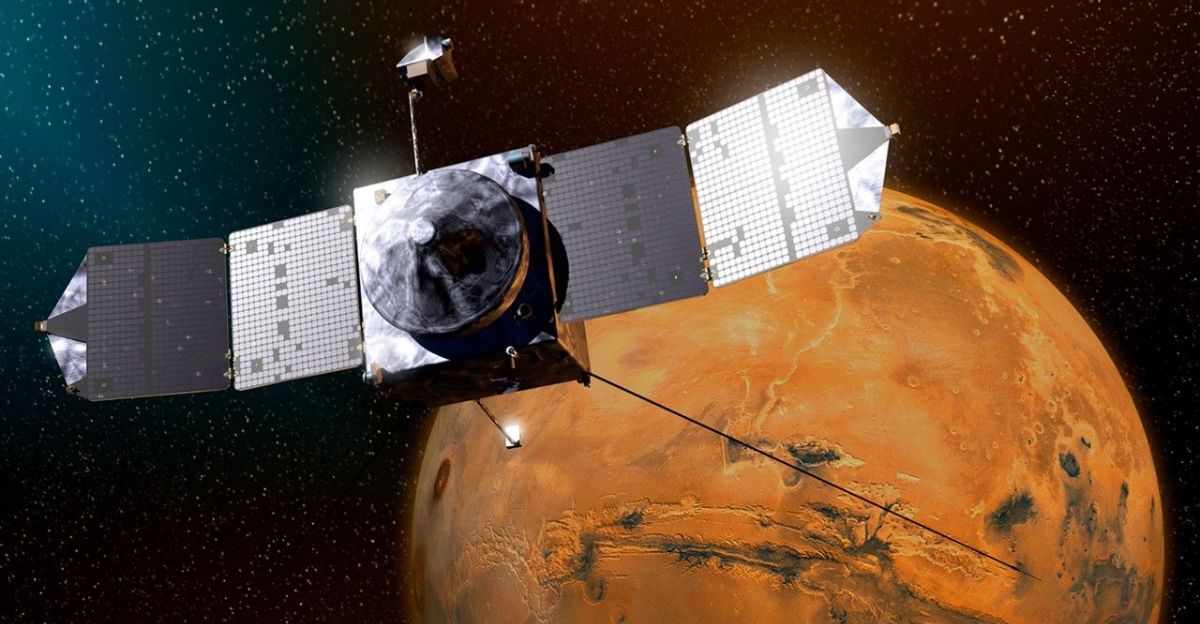
The sudden loss of contact has sent shockwaves through the planetary science community, primarily because the spacecraft gave no warning before it vanished. Telemetry data received just seconds before MAVEN disappeared behind the Martian limb showed a healthy spacecraft with all subsystems nominal.
Voltage levels were steady, temperatures were optimal, and the high-gain antenna was pointed precisely at Earth.
Emergency Status Declared
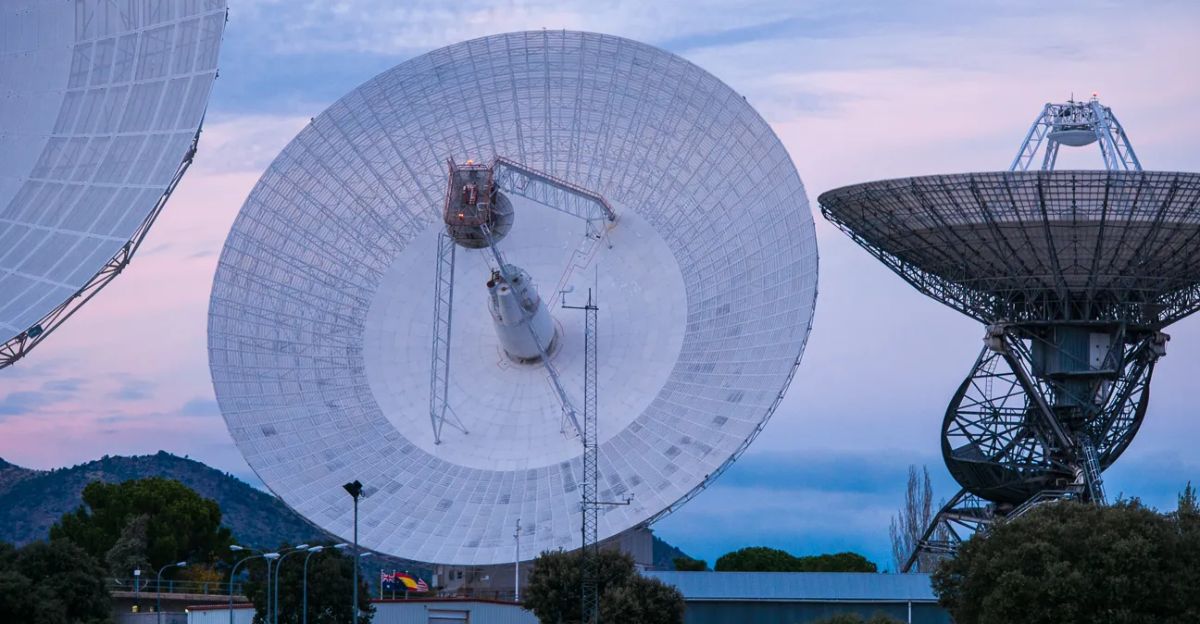
For over a week now, NASA’s Deep Space Network has been sweeping the frequencies around Mars, listening for the distinctive “beep” of MAVEN’s emergency low-gain antenna.
Mission engineers have declared a spacecraft emergency, a formal status that allows them to commandeer the largest antennas in California, Spain, and Australia to prioritize the search. Yet, as of December 15, the $671 million explorer remains mute, drifting in the void without a voice as controllers work around the clock.
A Mission Extended
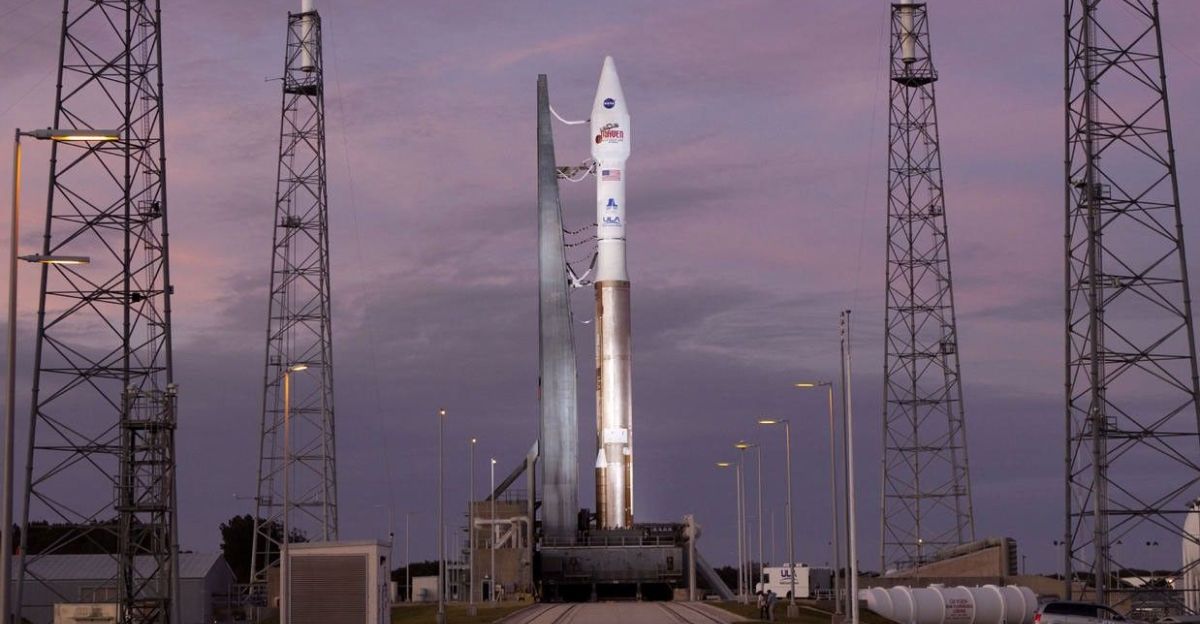
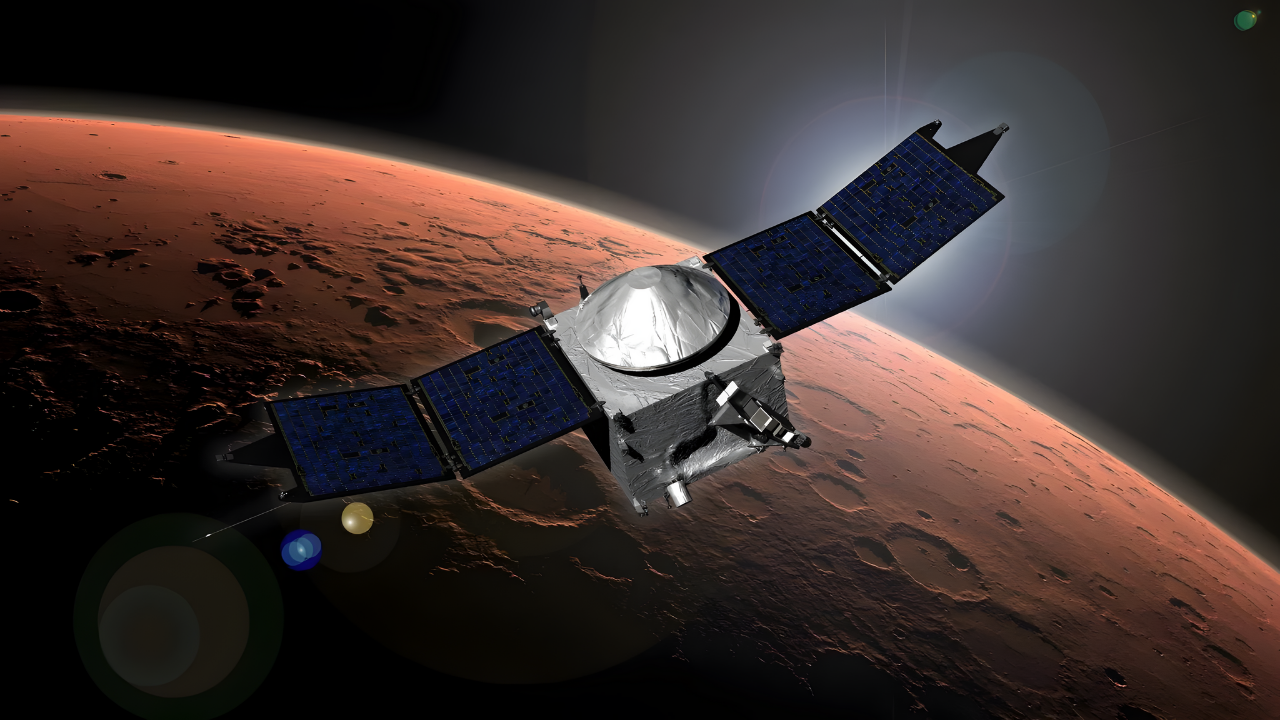
Launched in November 2013 atop an Atlas V rocket, MAVEN was designed to solve a specific planetary puzzle: determining exactly how Mars lost its atmosphere. The spacecraft arrived in September 2014 with a primary mission timeline of just one Earth year, but its robust Lockheed Martin design allowed it to endure for more than eleven years.
In that time, it has fundamentally rewritten the textbooks on Martian history, far exceeding its original warranty and becoming a pillar of NASA’s infrastructure.
Solving the Climate Puzzle
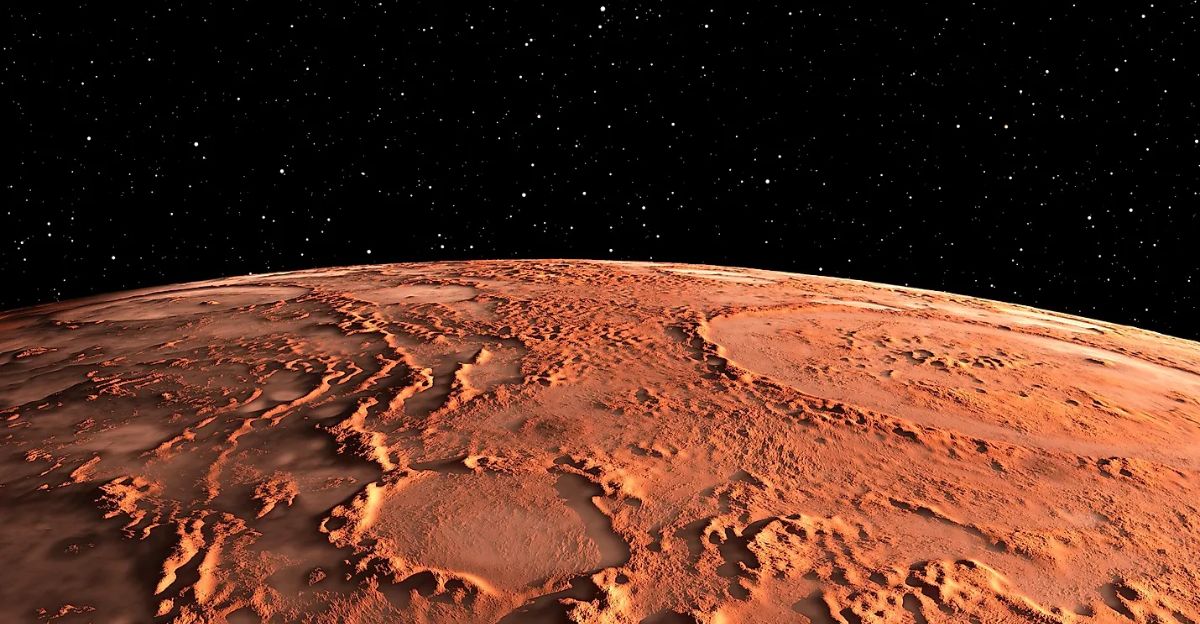
The orbiter’s primary scientific goal was to understand how Mars transformed from a wet, potentially habitable world into a frozen desert. By measuring the upper atmosphere, MAVEN has provided the first concrete evidence of how solar wind strips away gas from the planet.
Its instruments have meticulously tracked the rate of atmospheric loss, helping scientists rewind the clock billions of years to model the ancient Martian climate with unprecedented accuracy and detail.
The Sputtering Gun
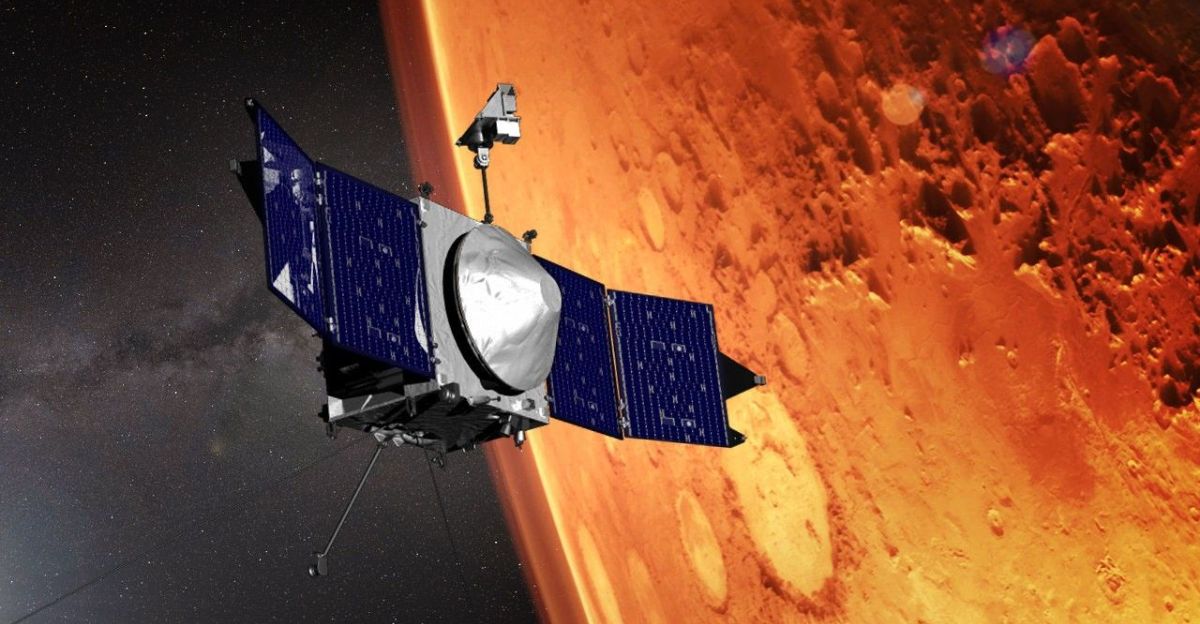
One of MAVEN’s most significant contributions was the discovery of “sputtering,” a process where energetic solar particles physically knock atoms out of the Martian upper atmosphere. Just months before this silence, Principal Investigator Shannon Curry and her team published definitive observations of this phenomenon, comparing it to “doing a cannonball in a pool.”
The spacecraft measured the impact of heavy ions crashing into the atmosphere, splashing neutral atoms out into space—a crucial finding that explained the planet’s dramatic climate shift.
Where the Water Went

The orbiter also revealed the complex relationship between Martian dust storms and water loss, solving a decades-old mystery. Its instruments showed that during global dust events, water vapor is lofted high into the upper atmosphere, where it is broken down by solar radiation and swept away forever.
This mechanism finally explained how Mars lost its oceans, providing a grim but vital lesson in planetary evolution that has implications for studying exoplanets across the galaxy.
The Interplanetary Bridge
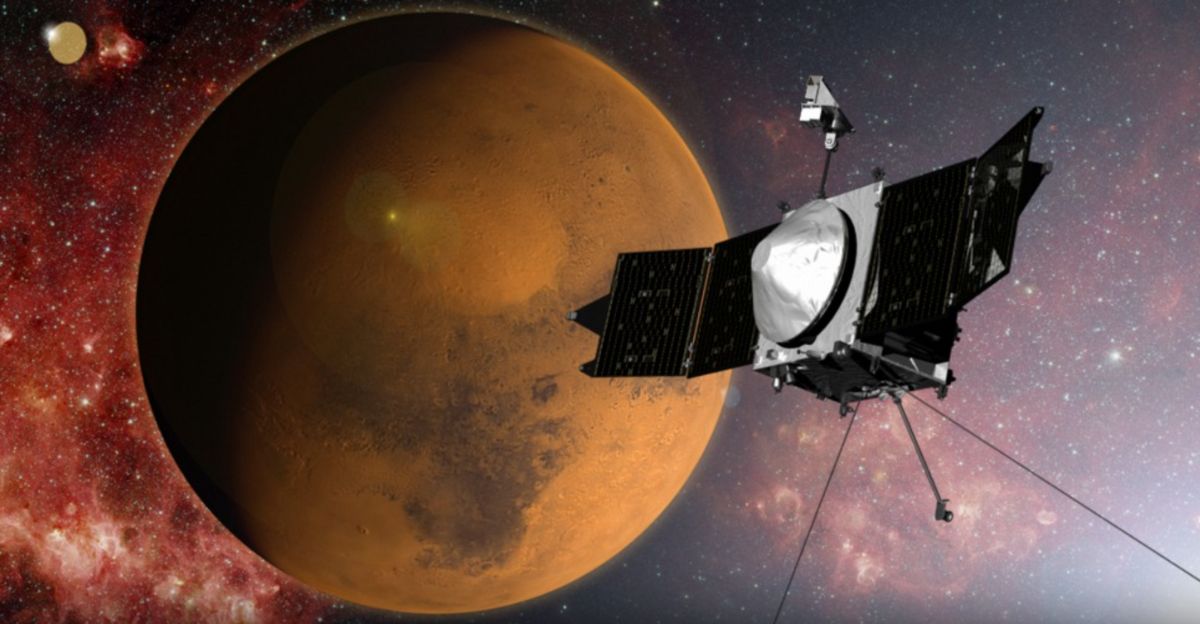
Beyond its scientific instruments, MAVEN serves as a critical node in the “interplanetary internet” that connects Earth to the Martian surface. It acts as a high-speed data relay for NASA’s Perseverance and Curiosity rovers, which lack the power to transmit large volumes of data directly to Earth.
On a typical day, MAVEN receives gigabytes of high-resolution images and geological data from the surface via UHF radio and transmits them back to the Deep Space Network at speeds of up to 2 megabits per second.
Surface Operations Impact
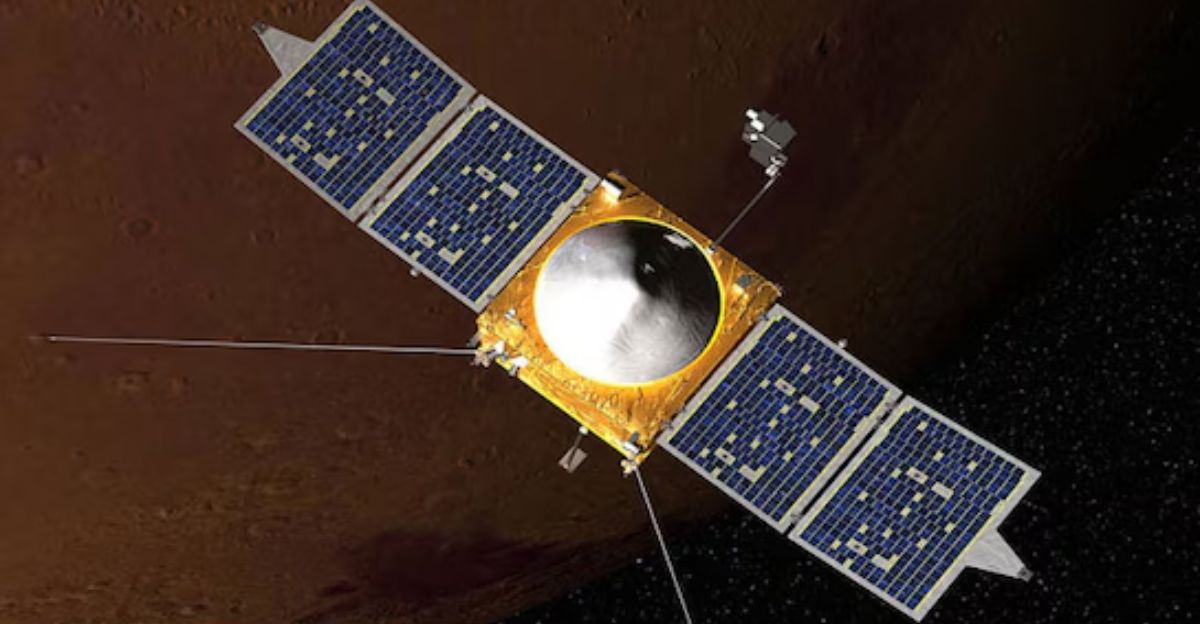
With MAVEN offline, the pressure on the Mars Relay Network has intensified immediately, forcing rover teams to adjust their daily schedules. The Perseverance rover team, currently exploring the Jezero Crater delta, must now rely more heavily on the Mars Reconnaissance Orbiter (MRO) and the European Space Agency’s Trace Gas Orbiter.
While these backup systems are capable, the total bandwidth available for daily science returns has dropped, potentially slowing down the pace of discovery on the surface.
Redundant Assets
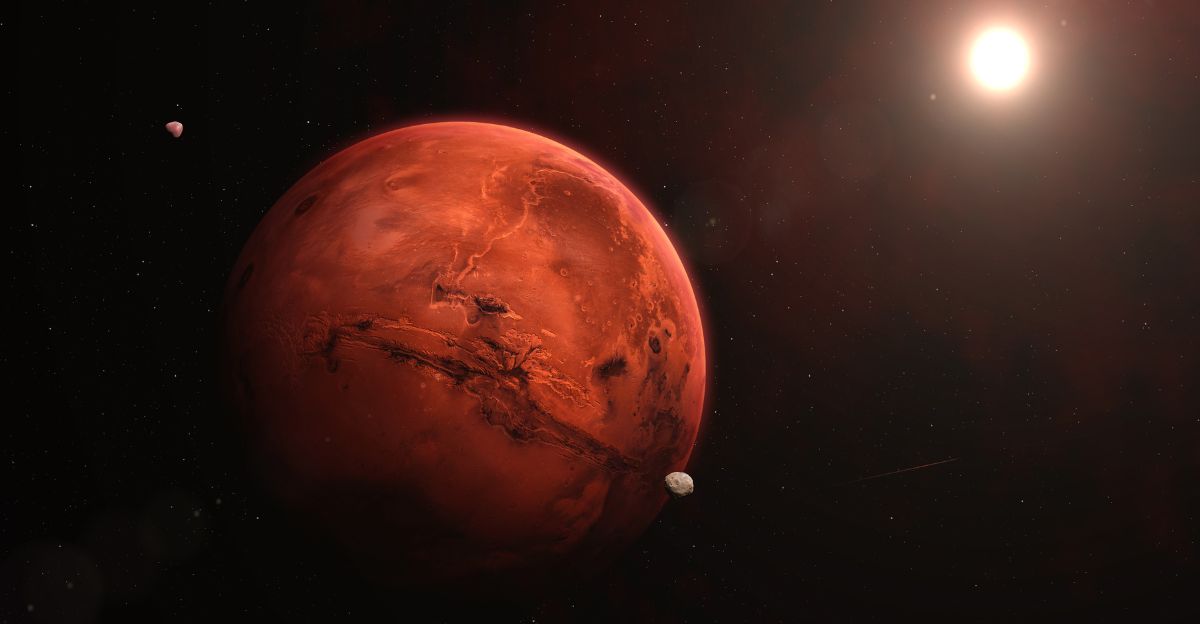
Fortunately, NASA has built significant redundancy into its Martian infrastructure to handle exactly this kind of scenario, ensuring no data is permanently lost. The agency can still rely on the Mars Reconnaissance Orbiter and the Odyssey spacecraft, as well as European partners, to fill the gap.
These assets are capable of maintaining the connection, ensuring that the valuable data collected by surface rovers is eventually returned to Earth, though the pipeline is now significantly narrower.
An Aging Fleet
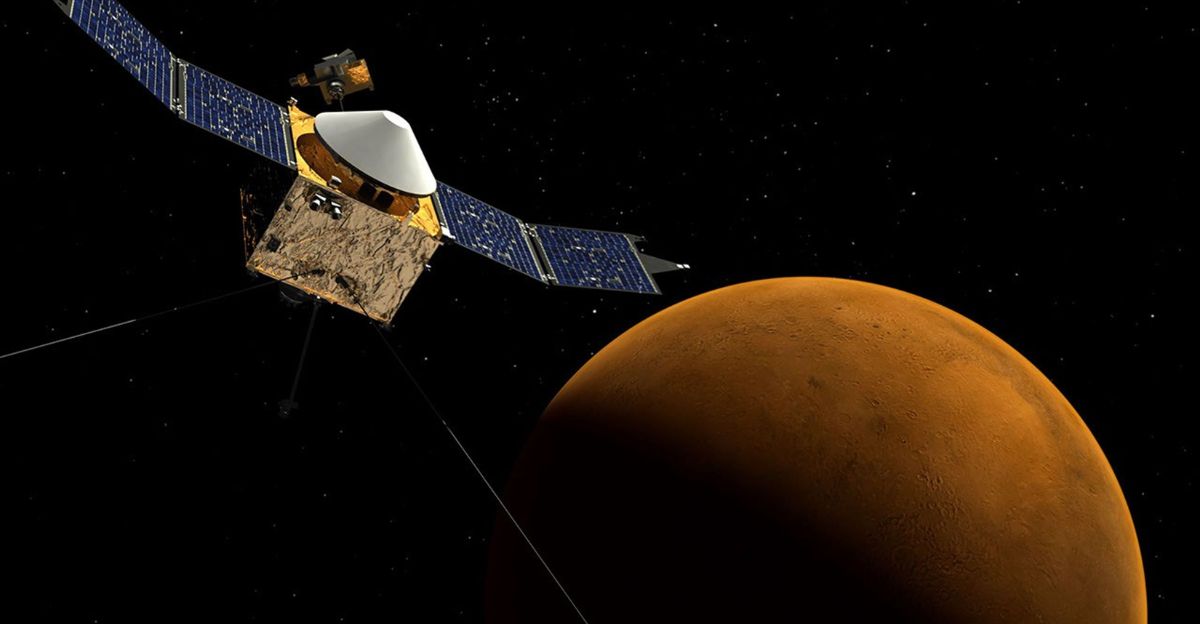
The silence of MAVEN highlights a growing vulnerability in humanity’s infrastructure at the Red Planet, as the remaining orbiters are well past their design lives. The Mars Odyssey orbiter, the oldest active spacecraft at Mars, has been operating since 2001, while the Mars Reconnaissance Orbiter launched in 2005.
MAVEN was the “young” workhorse of the fleet, and its potential loss leaves the network reliant on hardware that has survived the harsh radiation of deep space for decades longer than intended.
The Official Response
“The spacecraft and operations teams are investigating the anomaly to address the situation,” NASA stated in its brief December 9 update regarding the crisis. Behind the scenes, engineers are running fault-tree analyses, simulating every possible failure mode from a computer logic lockup to a micrometeoroid impact.
The team is methodically ruling out variables, looking for any explanation that matches the sudden, clean cut in communications that occurred behind the planet.
A History of Survival
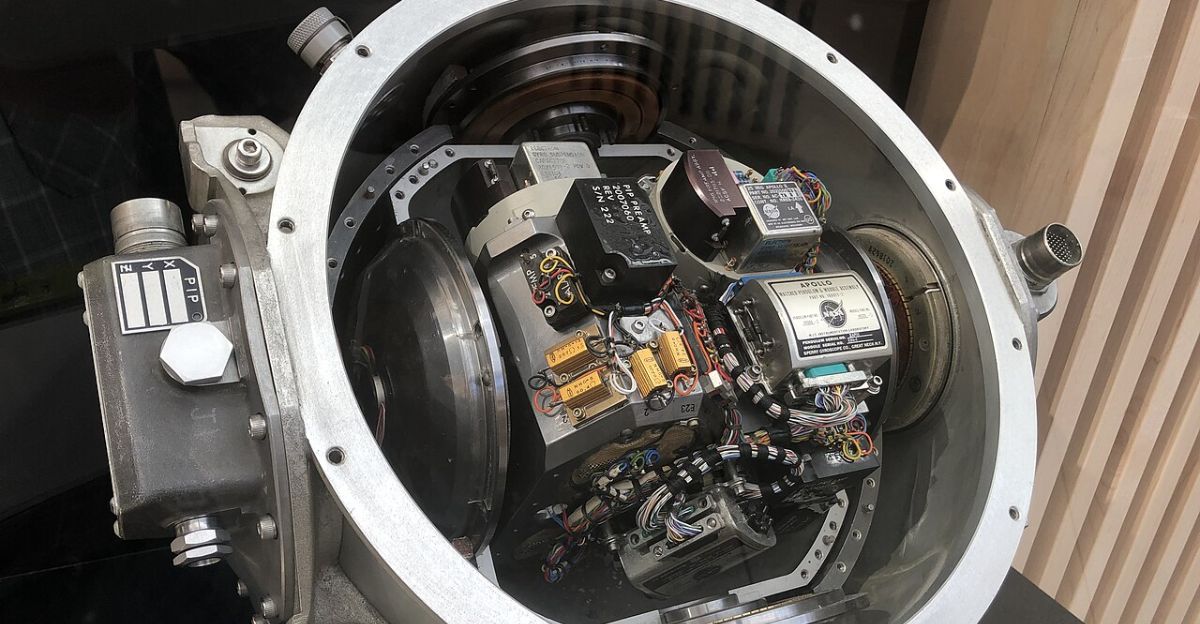
This is not the first time the aging MAVEN spacecraft has faced a life-threatening technical crisis during its tenure at Mars. In February 2022, the orbiter suffered a critical failure of its Inertial Measurement Units (IMUs), the navigation sensors responsible for telling the spacecraft which way it is pointing.
The primary unit failed, and the backup unit began showing signs of imminent collapse, forcing the spacecraft into a protective safe mode for three agonizing months.
Engineering Ingenuity
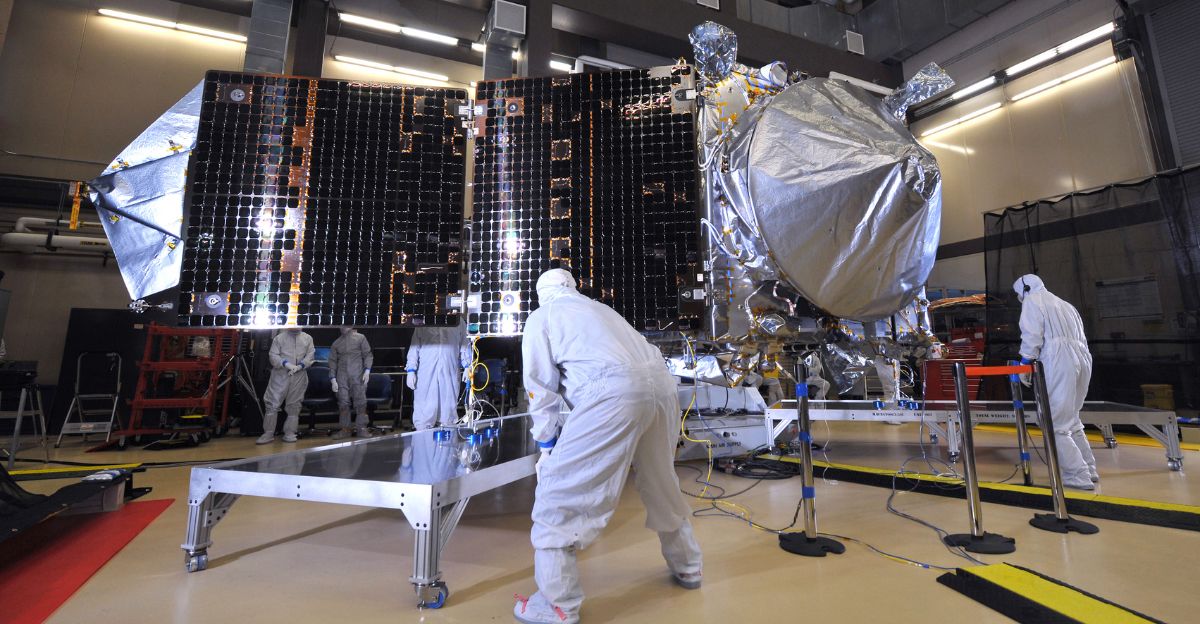
During that previous crisis, the engineering team at Lockheed Martin pulled off a remarkable feat of remote repairs to save the mission. They rapidly developed and uploaded a completely new software patch that allowed MAVEN to navigate using only its star trackers, bypassing the failing gyroscopes entirely.
This “all-stellar” mode was never part of the original design, yet it saved the mission and allowed MAVEN to return to full science and relay operations by May 2022.
Tumbling in the Dark
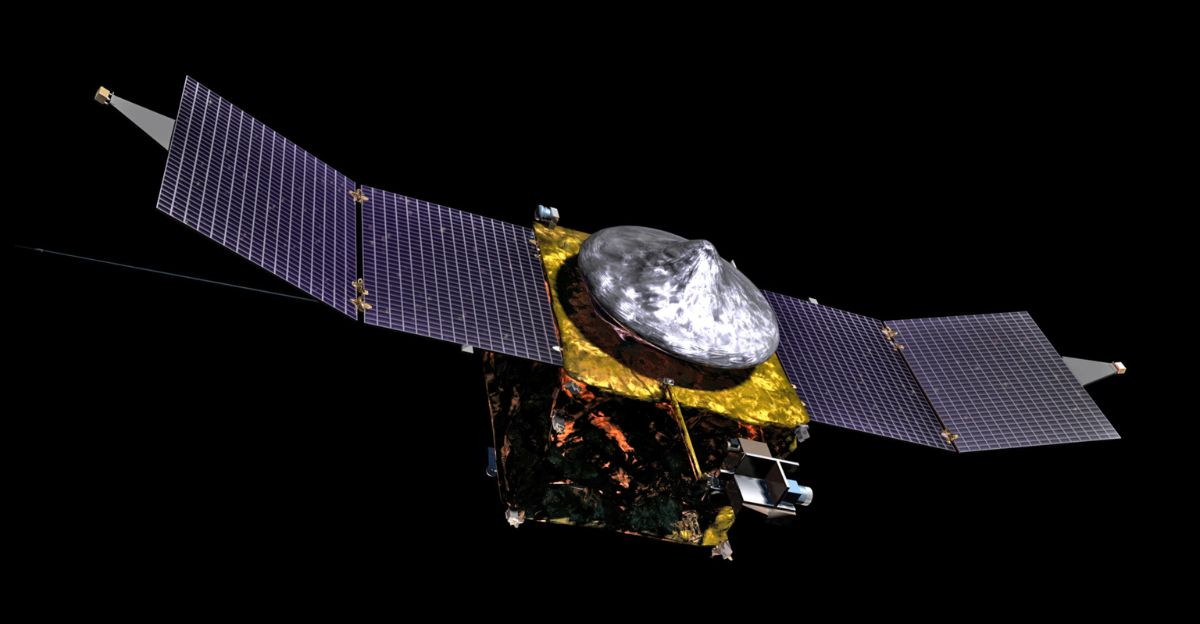
If the current issue is related to those previous navigation system failures, the spacecraft might be slowly tumbling in the dark. If the orbiter cannot lock onto the Sun, its solar panels may not be generating sufficient power, meaning its batteries could be slowly draining.
However, MAVEN is programmed to prioritize power and communications in such an event, shedding non-essential loads, such as science instruments, to keep its brain alive.
The Reboot Hope
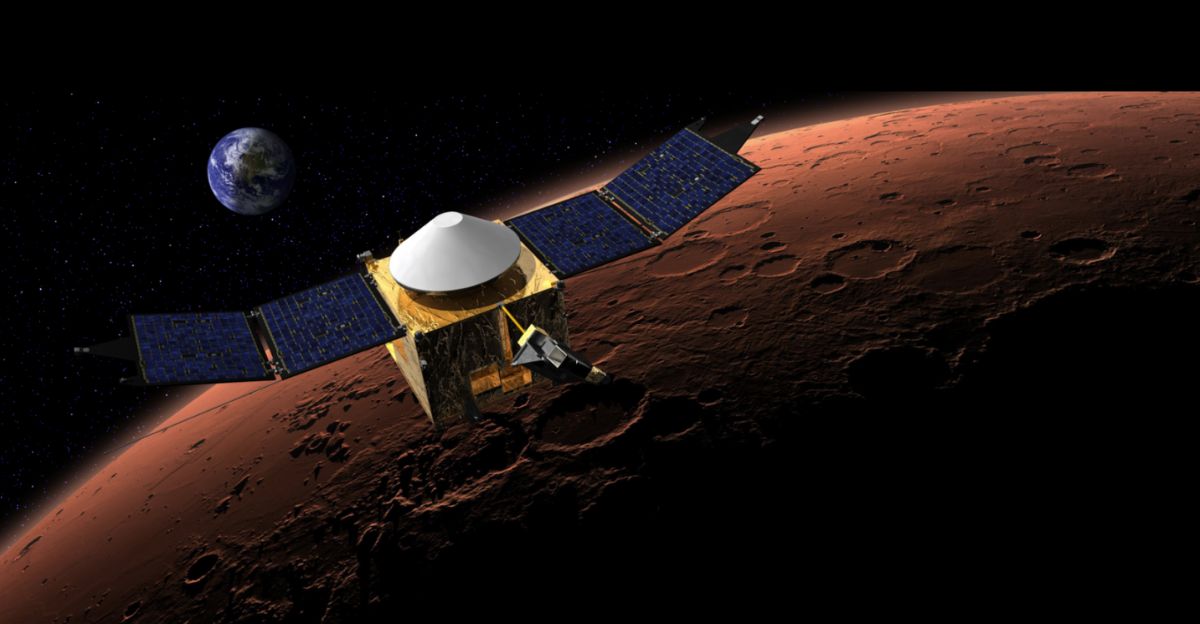
The current best-case scenario is that the spacecraft’s computer has frozen or entered a “logic lock,” which would eventually trigger a specialized watchdog timer. This automated failsafe is designed to force a hard reboot if the main computer becomes unresponsive for a set period.
This reset process could take several weeks to execute, depending on how the fault protection logic was programmed, meaning the silence could theoretically break as suddenly as it began.
Reinforcing the Network
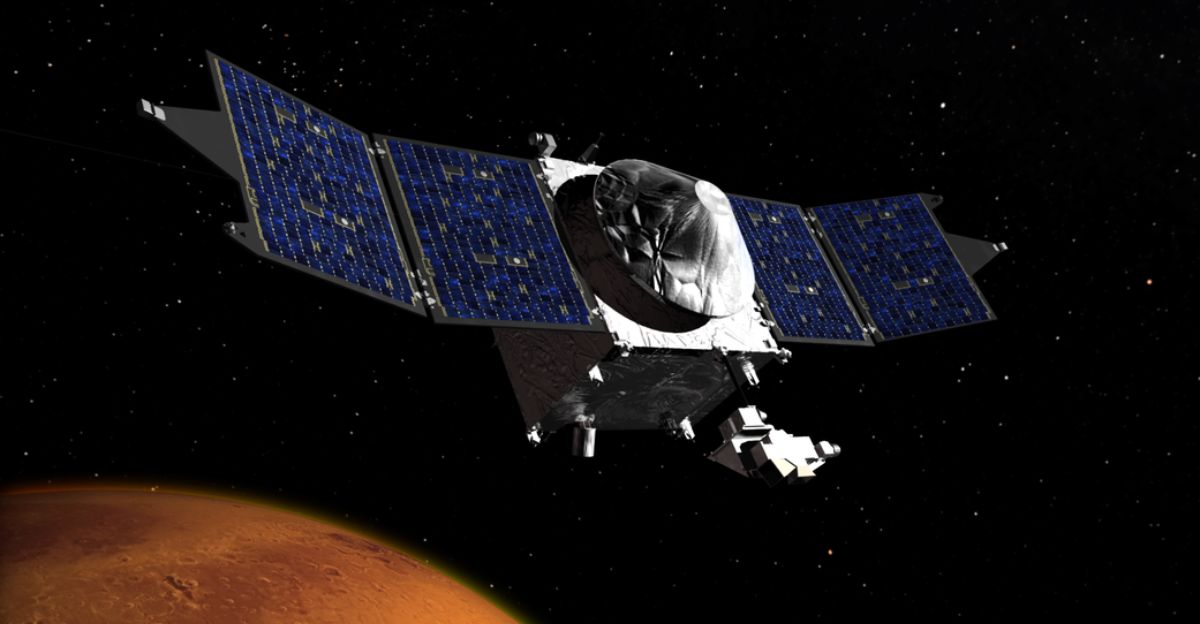
The incident has accelerated discussions in Washington about the urgent need to refresh the aging Mars network before it collapses. Recognizing the risk, Congress allocated $700 million in the 2025 legislative session for a new commercial Mars telecommunications orbiter.
This next-generation satellite is scheduled for launch in late 2028, but MAVEN’s silence opens a dangerous three-year gap where any further failures could sever our high-speed link to the Martian surface.
Sample Return Risks
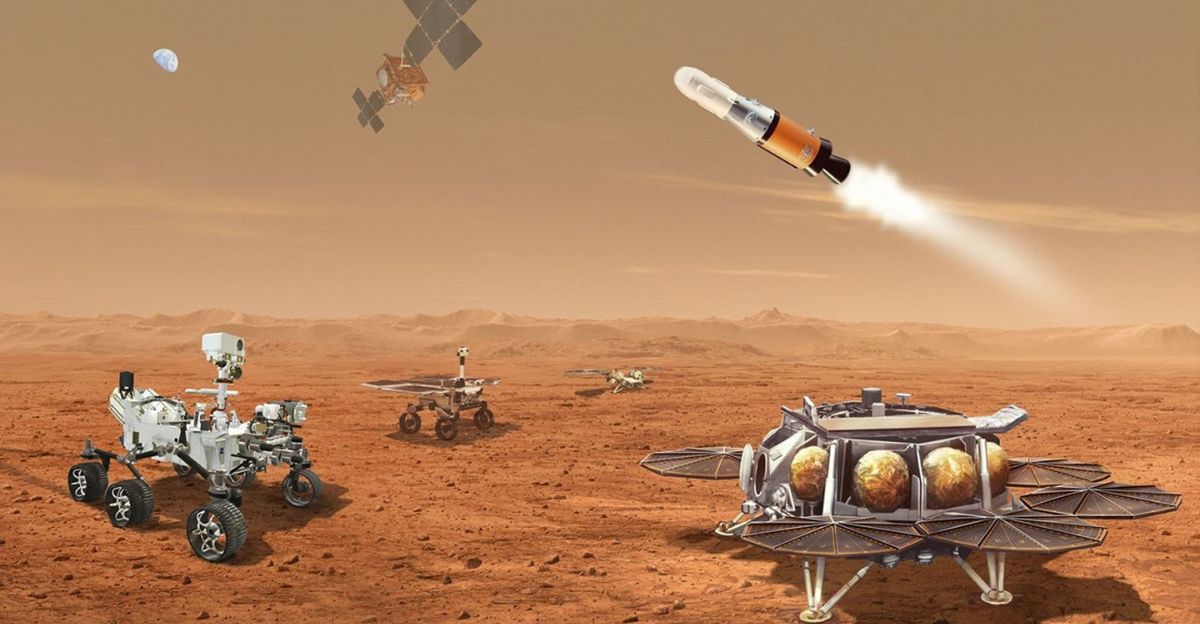
The loss also complicates the planning for the high-stakes Mars Sample Return mission, which relies on accurate environmental data. MAVEN has been the primary weather buoy for Mars, monitoring the density of the upper atmosphere to help engineers verify landing trajectories for future spacecraft.
Without this real-time data, mission planners may have to rely on older, less accurate atmospheric models, increasing the risk profile for the next generation of landers.
Listening for Life
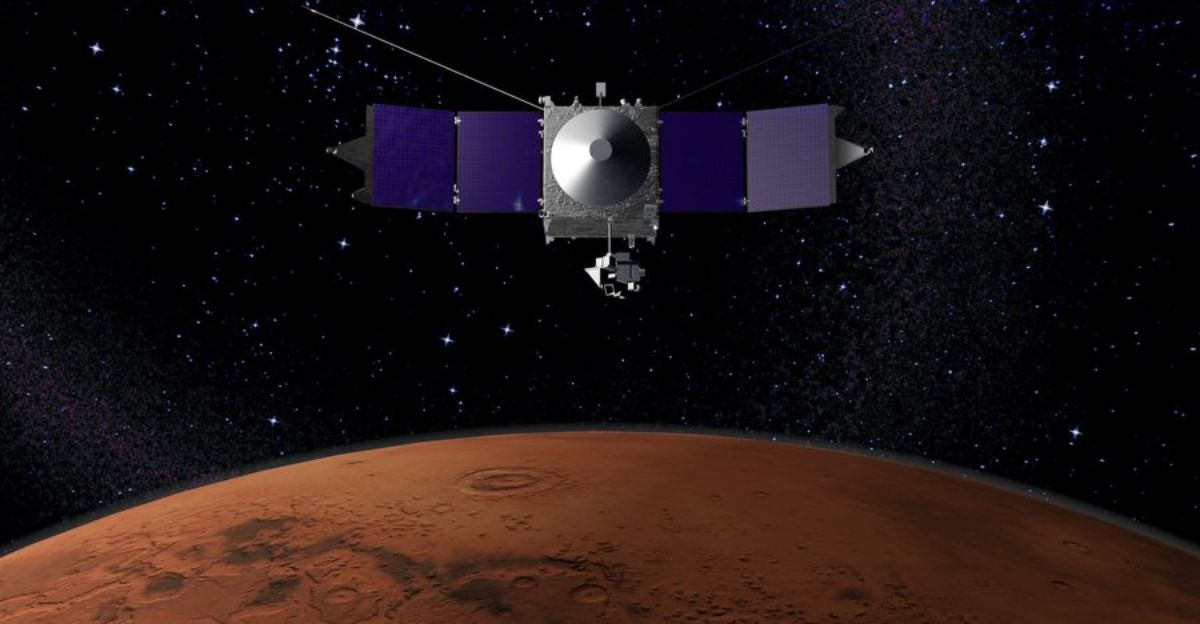
For now, the only option for the flight control team is to wait and listen to the static. The Deep Space Network continues to scan the void, and amateur radio astronomers have even joined the search, turning their dishes toward the Red Planet in hopes of catching a faint carrier wave.
Every day that passes without contact makes the scenario more dire, but space history is filled with spacecraft that have phoned home after long periods of silence.
The Campfire Ashes
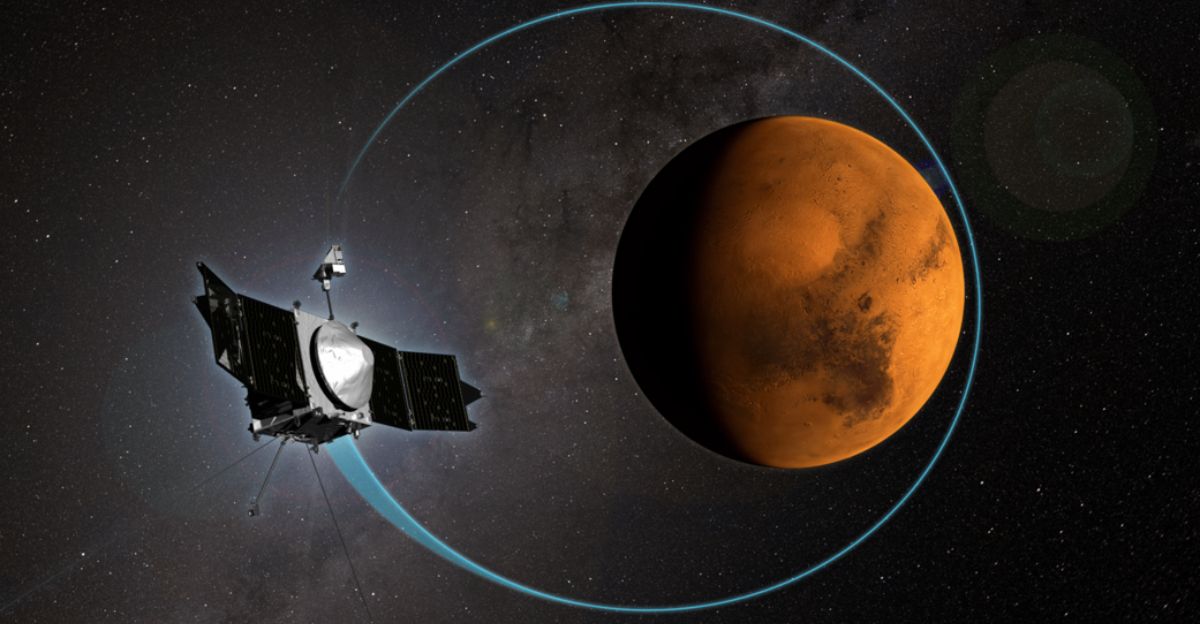
“It is like we found the ashes from a campfire,” Shannon Curry said of her team’s atmospheric research earlier this year, describing how MAVEN reconstructed Mars’ past. Now, the team hopes to find a spark of life in their silent spacecraft before it becomes a relic itself.
Until the batteries are confirmed dead, NASA will not give up on the $671 million explorer that has been our faithful eye in the Martian sky for eleven extraordinary years.
Sources:
”NASA Teams Work MAVEN Spacecraft Signal Loss.” NASA / MAVEN Mission Blog, Dec 9, 2025.
“NASA loses contact with its Maven spacecraft orbiting Mars for the past decade.” MSN, Dec 2025.
“NASA’s MAVEN Makes First Observation of Atmospheric Sputtering at Mars.” NASA Science Mission Directorate, May 28, 2025.
“NASA Loses Contact with MAVEN Mars Orbiter.” SatNews, Dec 8, 2025.
“NASA loses contact with Mars orbiter. What to know about the missing signal.” USA Today, Dec 12, 2025.