
A rare visitor from outside our solar system, named 3I/ATLAS, has caught the attention of scientists worldwide. NASA recently shared the clearest images yet of this object, which is only the third interstellar visitor ever seen by humanity. These new details have sparked a global effort to learn as much as possible before 3I/ATLAS continues its journey back into deep space.
Discovery and Unique Arrival
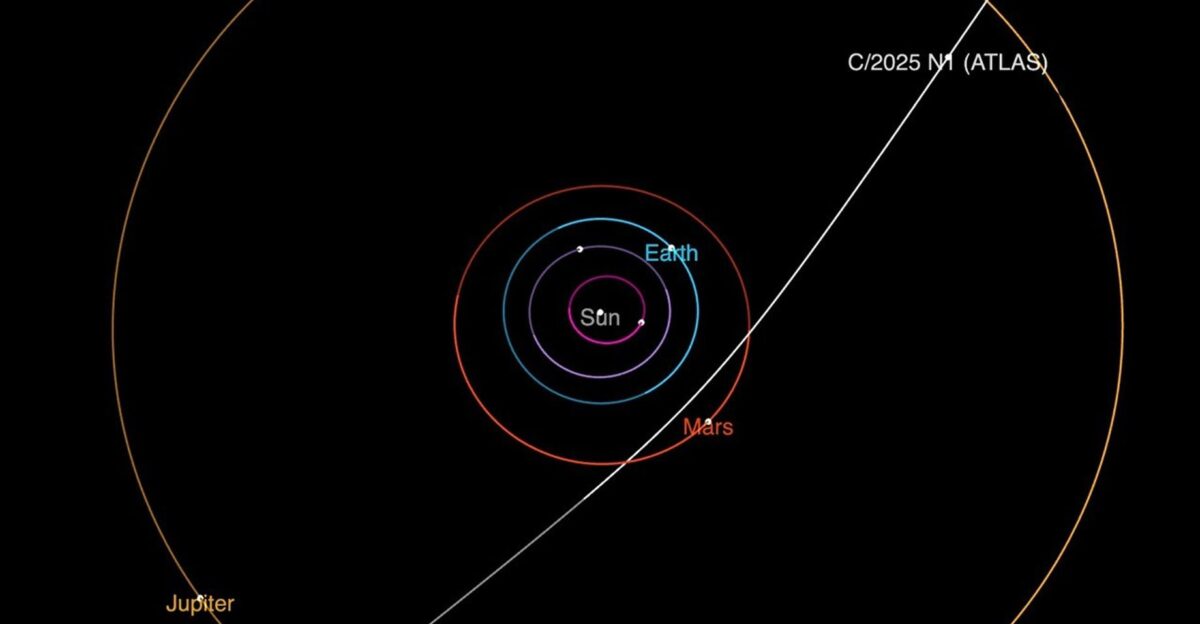
3I/ATLAS was first detected in July 2025 by a telescope in Chile and quickly drew interest for being from beyond our solar system. Before this, only two other interstellar objects, ‘Oumuamua in 2017 and Borisov in 2019, were ever seen visiting our solar neighborhood. When 3I/ATLAS entered the solar system, its path took it close to Mars. Multiple spacecraft, such as NASA’s Mars Reconnaissance Orbiter and other observatories, rushed to capture its image, even as a government shutdown in the United States delayed the release of these groundbreaking visuals.
This visitor stands out not just because it is so rare but also because it arrived from a different direction than previous interstellar objects, hinting at a varied origin somewhere far in the thick disk of our galaxy. Scientists say seeing an interstellar object up close is a unique chance to test what we know about objects coming from other solar systems.
Strange Size and Behavior
What makes 3I/ATLAS especially interesting is its impressive size and odd features. Its core is almost a kilometer wide, as big as Manhattan Island, and its outer cloud of gas and dust stretches over 1,600 square kilometers, bigger than any other observed interstellar object. One of its strangest behaviors is the appearance of an anti-tail, a stream of material that points toward the Sun, not away from it like a regular comet’s tail. This anti-tail is far longer than anything previously recorded, challenging what astronomers thought they knew about comet behavior.
Since the Mars orbiter’s camera is much sharper than other space telescopes, close-up pictures now let scientists study the object’s surface and these odd jets in incredible detail. This level of accuracy gives researchers a new way to study objects that travel between the stars, something not possible until now.
Survival and Unusual Activity
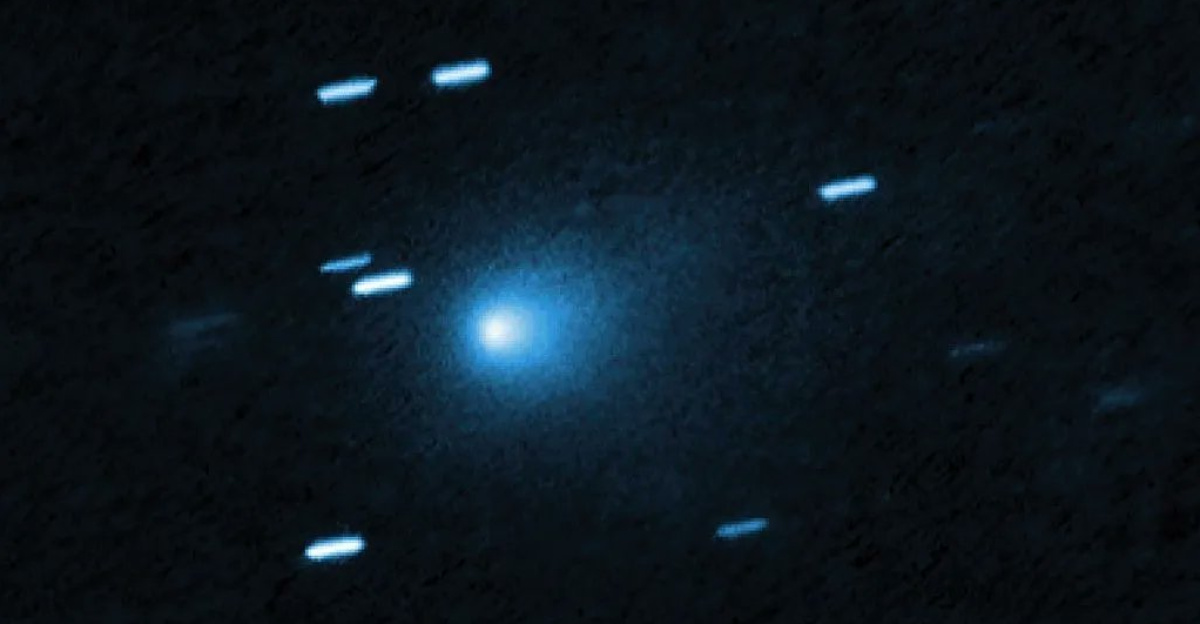
Many experts predicted that 3I/ATLAS would break apart after passing near the Sun, due to extreme heat and gravity, but it survived the trip in one piece. This surprising toughness is forcing scientists to rethink their ideas about how fragile or durable such objects can be during close encounters with stars. On top of this, radio astronomers in South Africa detected signals from 3I/ATLAS showing it was breaking down water molecules with sunlight, creating hydroxyl, a typical sign of comet activity. This is the first time scientists have caught radio emissions from an interstellar object, offering new tools to understand these rare visitors.
Researchers worldwide quickly coordinated efforts to track and study the comet as much as possible from different angles. As mission teams worked together, the scientific community discussed the importance of sharing data quickly, especially when events like government shutdowns might delay valuable information on objects that could disappear at any time.
Ongoing Questions and Future Research
Although most experts agree 3I/ATLAS is a comet, its survival, powerful jets, and mysterious anti-tail have led to open debates in the scientific world. Some, like Harvard astrophysicist Avi Loeb, wonder whether the object’s bizarre features could mean we are dealing with something even more unusual, possibly involving unknown physics or technology. However, NASA officials stress that there is no evidence that 3I/ATLAS is anything other than a natural, if highly unusual, cosmic object.
As 3I/ATLAS moves past Mars and heads toward Jupiter, more spacecraft like NASA’s Juno and the European JUICE probe, are preparing to continue collecting data. Scientists have only a short window, likely until March 2026, before 3I/ATLAS heads back into interstellar space. Each new piece of information could lead to discoveries about where this strange object came from and what secrets it might reveal about other worlds beyond our solar system.