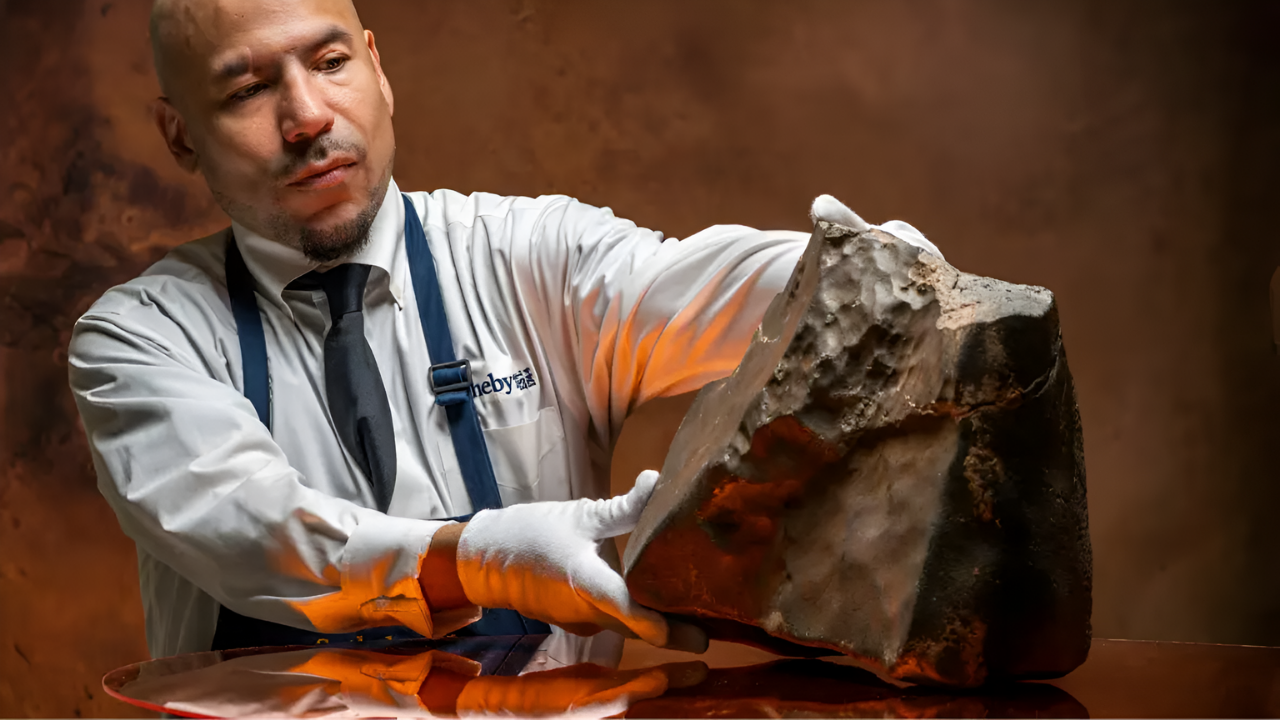
A strange rock standing alone in the dusty expanse of Jezero Crater on Mars has captured the attention of planetary scientists. NASA’s Perseverance rover, after five years of exploring the Red Planet, has identified a 31‑inch‑tall stone with an unusually sculpted shape and a composition rich in iron and nickel. Named Phippsaksla, the rock is now under intense scrutiny as a possible meteorite, a discovery that could reshape understanding of Mars’s bombardment history and its place in the solar system.
A Martian Anomaly
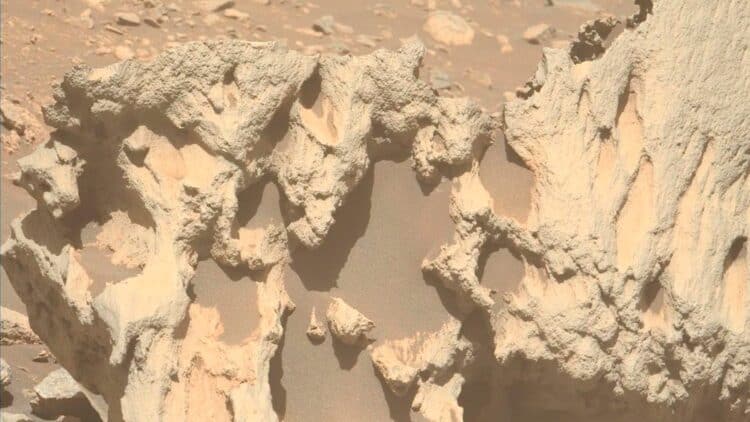
Phippsaksla stands out not only for its shape but also for what lies beneath its surface. Spectroscopic readings show elevated levels of iron and nickel, elements that are uncommon in concentrated form in typical Martian rocks. If confirmed as a meteorite, this would be Perseverance’s first definitive detection of such an object in Jezero Crater, despite years of searching. The finding raises questions about how frequently Mars has been struck by space debris and how these impacts have shaped the planet’s surface over billions of years.
Jezero’s Ancient Past
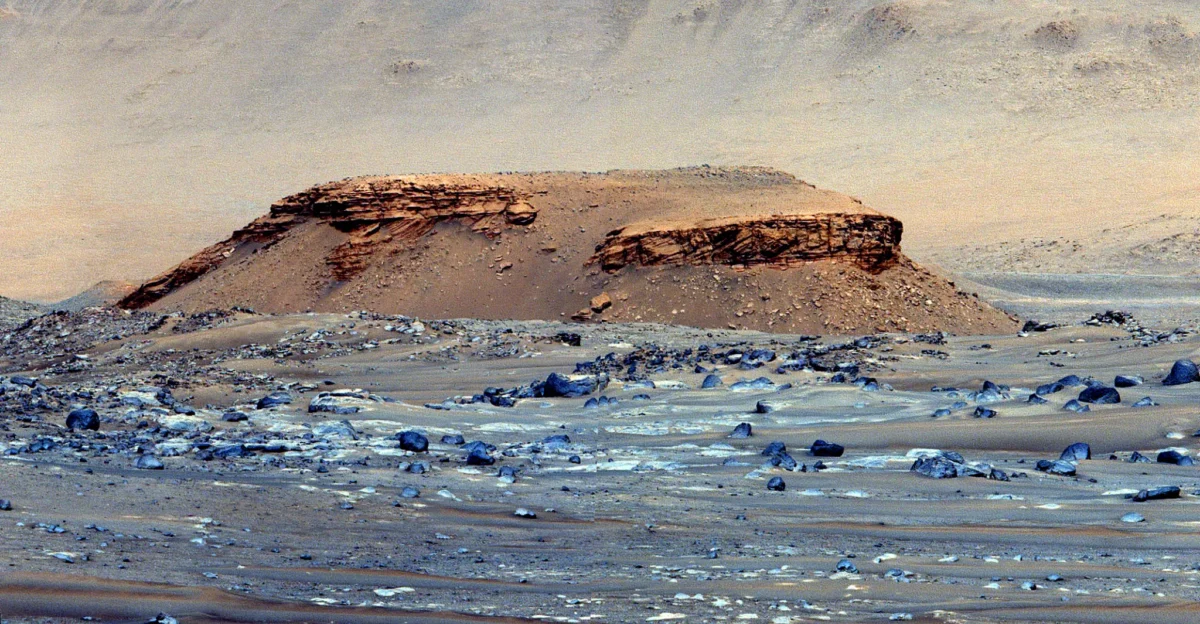
Jezero Crater, roughly 28 miles across, is a former river delta dating back about 3.8 billion years. Its layered sediments and impact scars preserve a record of Mars’s turbulent geological history. The crater has long been seen as a prime location to study ancient water activity and potential signs of past habitability. Its position in the solar system also makes it a natural collector of meteorites, with dust and debris from ancient impacts still visible in its terrain. Phippsaksla’s discovery in this region adds a new layer to that story, suggesting that Jezero may hold more extraterrestrial relics than previously thought.
The Moment of Detection
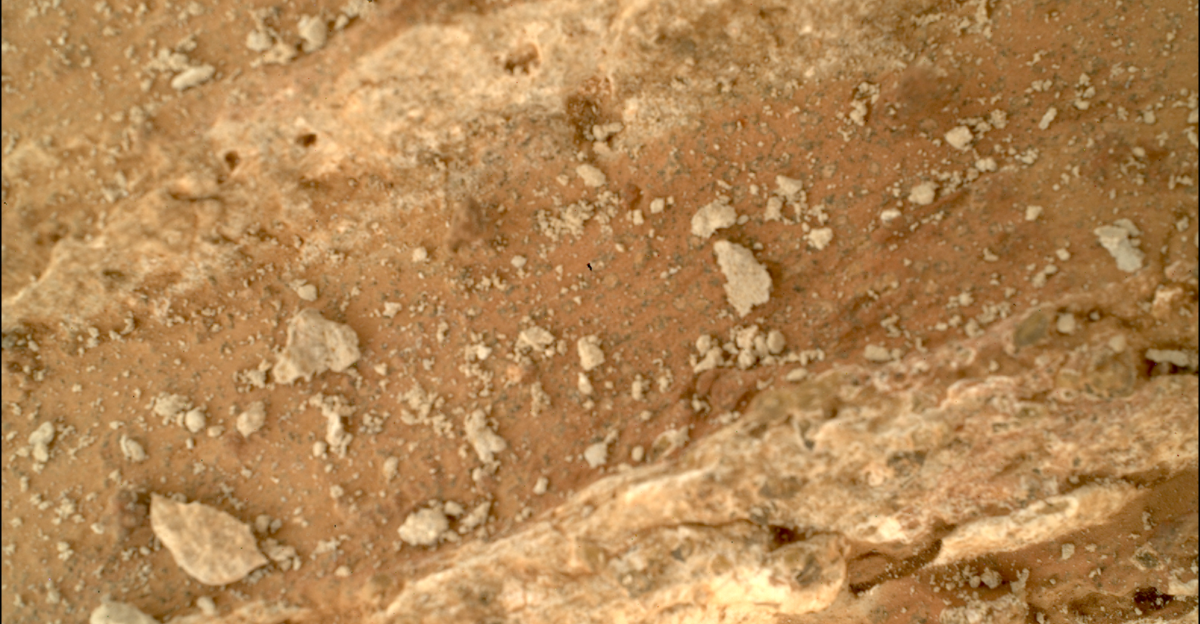
The discovery came on September 2, 2025, during Sol 1612 of Perseverance’s mission, in the Vernodden area of Jezero Crater. The rover’s cameras spotted a rock that sharply contrasted with the surrounding flat, fragmented material. Perseverance’s SuperCam instrument, which uses a laser to analyze the elemental makeup of distant targets, was quickly directed at the object. Initial results showed high concentrations of iron and nickel, matching the profile expected for an iron‑nickel meteorite. This moment marked a long‑awaited breakthrough in the search for such objects in this region of Mars.
Why This Site Matters
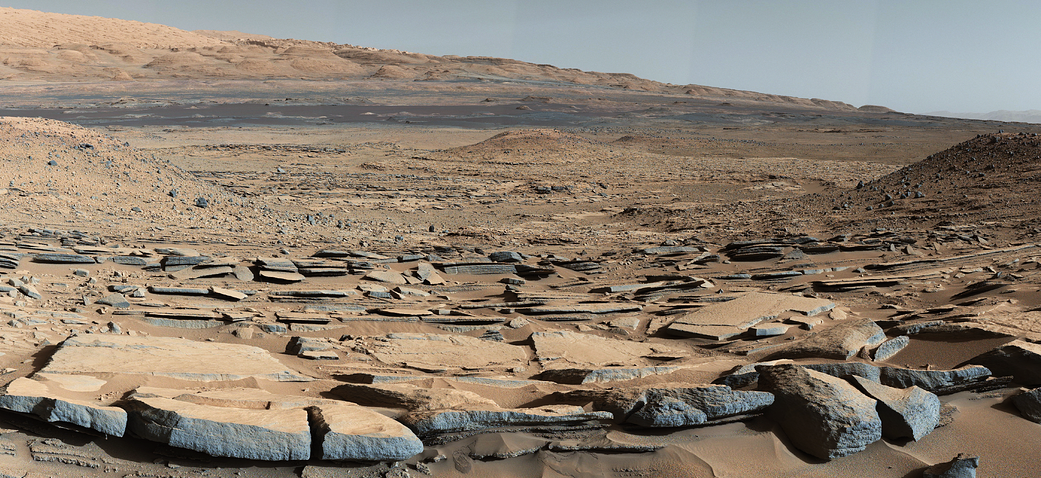
Vernodden is a transition zone between different geological layers, where erosion has exposed deeper materials. This makes it an ideal spot for finding buried meteorites that might otherwise remain hidden. Perseverance was originally focused on studying minerals formed in the presence of water, which could indicate past habitable conditions. The unexpected detection of Phippsaksla during this work highlights how planetary rovers can simultaneously advance multiple scientific goals, from hydrology to impact history.
What Comes Next
Scientists are now working to confirm whether Phippsaksla is indeed a meteorite and, if so, to determine its origin. Iron‑nickel meteorites are typically fragments from the cores of large asteroids that broke apart early in the solar system’s history. Mars, lying between the asteroid belt and the inner planets, has likely collected many such fragments over time. Phippsaksla’s journey may have spanned millions of miles before it landed in Jezero Crater, where it remained undisturbed until Perseverance’s arrival. Future analysis, including possible return to Earth through the Mars Sample Return program, could provide definitive answers about its composition and history.
Sources:
NASA Science Blog, “A Stranger in Our Midst?”, November 13, 2025
NASA Perseverance Mission Updates, Mission Status Reports, November 2025
NASA Mars Exploration Program, Jezero Crater Geology, 2024–2025
Space.com, “NASA’s Perseverance Rover Discovers First Meteorite on Mars After 5 Years”, November 25, 2025
NASA Mars 2020 Mission Official Blog, Perseverance Rover Discoveries, October 1–November 13, 2025
Smithsonian Astrophysical Observatory, Meteorite Database and Analysis, 2025