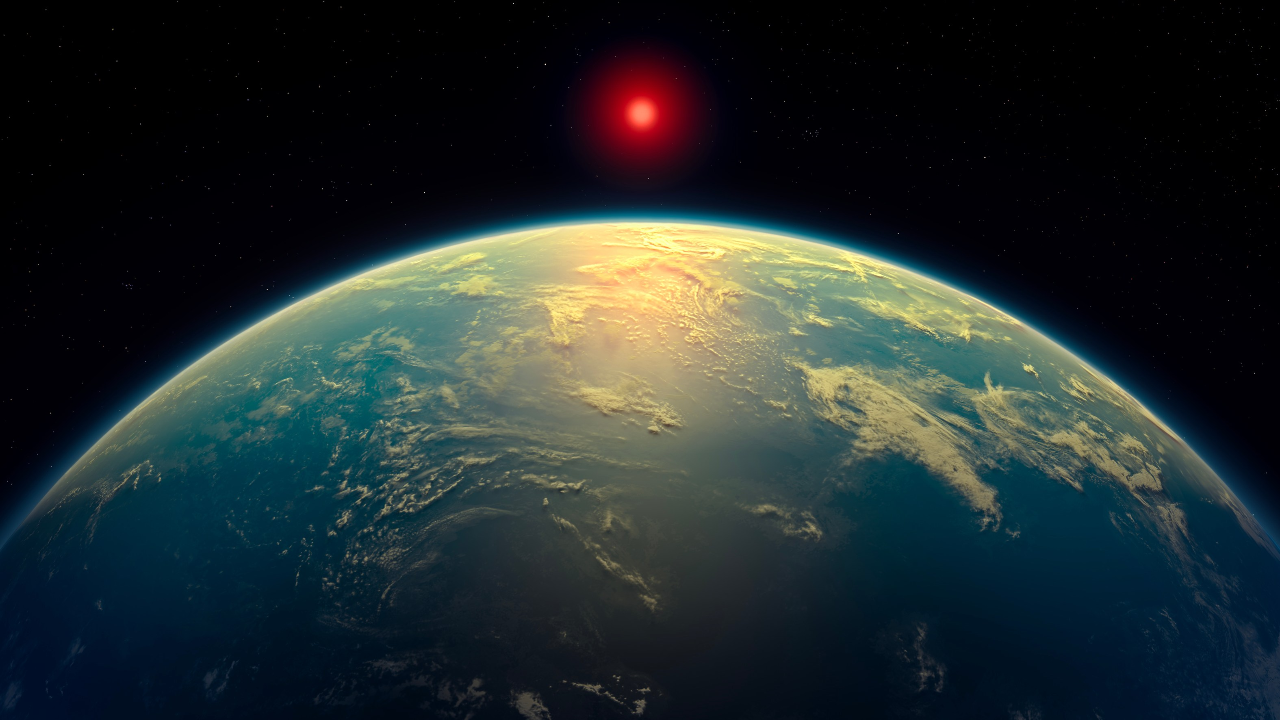
In a groundbreaking step in the search for life beyond Earth, NASA’s James Webb Space Telescope (JWST) has detected gases on the planet K2-18b that could be signs of biological activity. Although this is not a direct discovery of life, these gases, sometimes called biosignatures, are linked on Earth to processes carried out by living organisms.
The detection of these molecules is an exciting hint that this distant world might host conditions suitable for life, but scientists caution that further observations and analysis are needed before confirming the presence of extraterrestrial life.
A Super-Earth Possibly Hosting Water
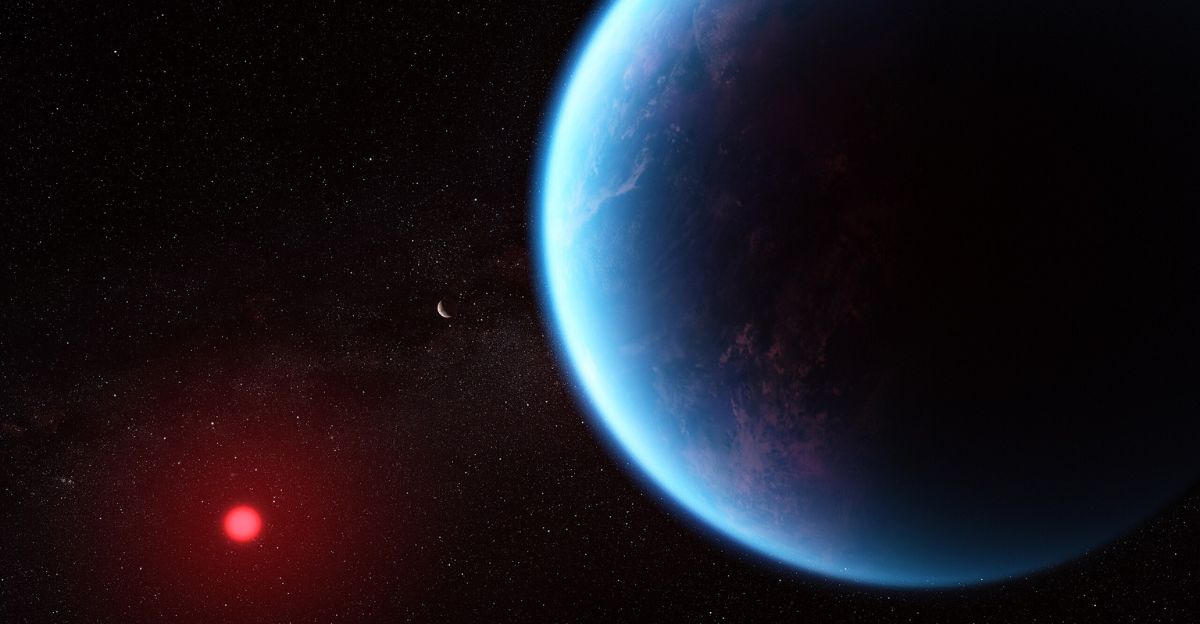
K2-18b is an intriguing planet located about 124 light-years from Earth, orbiting a cool red dwarf star. It is classified as a super-Earth because it is bigger and heavier than our planet, roughly 2.6 times Earth’s radius and over 8 times its mass.
These characteristics suggest it could have a thick atmosphere and potentially liquid water on its surface or beneath it. What makes K2-18b especially exciting to scientists is its position in the so-called habitable zone, the region around a star where temperatures might allow liquid water to exist.
JWST’s Role in Studying Exoplanets
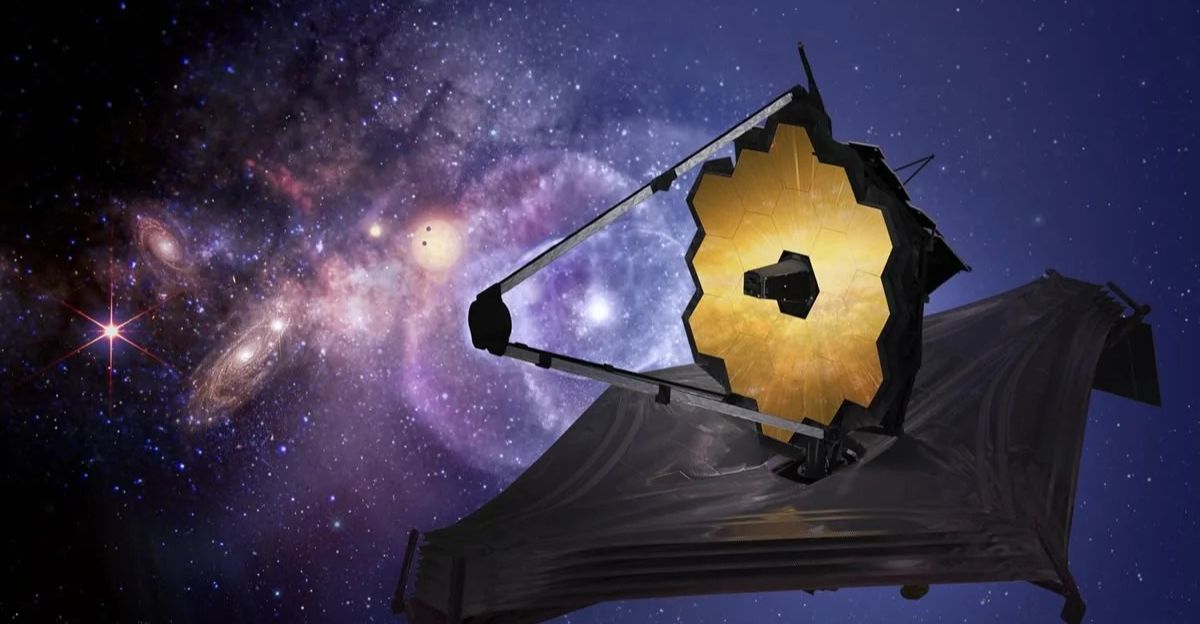
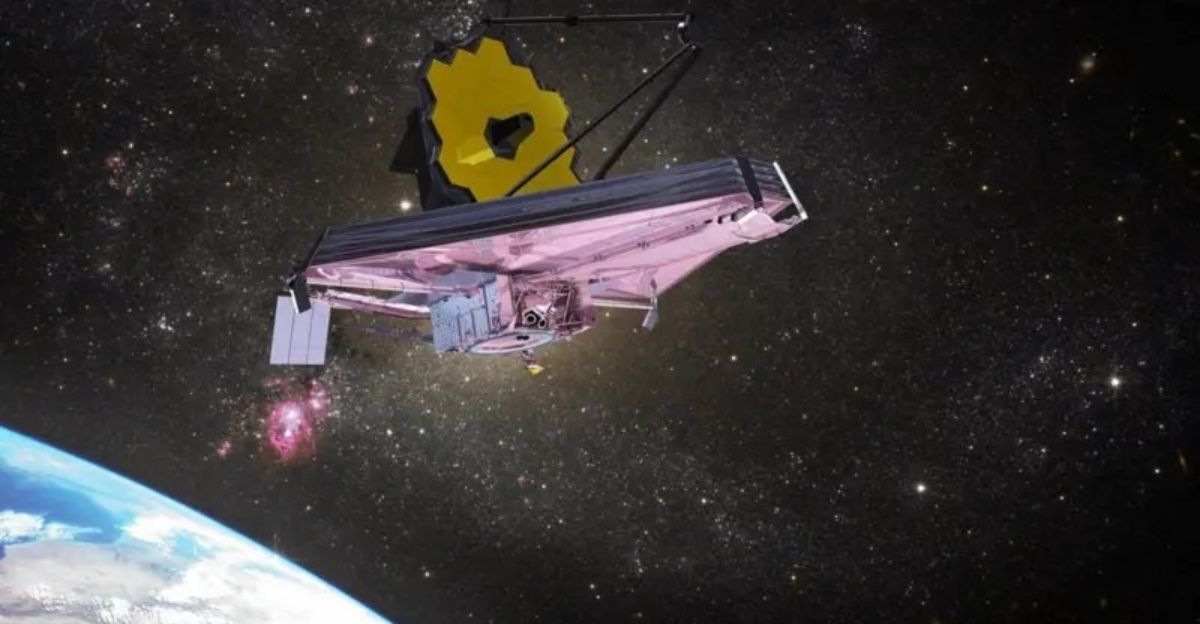
The James Webb Space Telescope (JWST) is one of the most advanced space observatories ever built, designed to look deeper into the universe than ever before. An important part of its mission is to study the atmospheres of planets outside our solar system, known as exoplanets, to search for signs that these worlds might support life.
JWST uses a technique called spectroscopy, which analyzes the light that passes through or reflects off a planet’s atmosphere. Different gases absorb light at specific wavelengths, creating patterns that act like fingerprints, allowing astronomers to identify what the atmosphere contains.
Possible Biosignature Gases
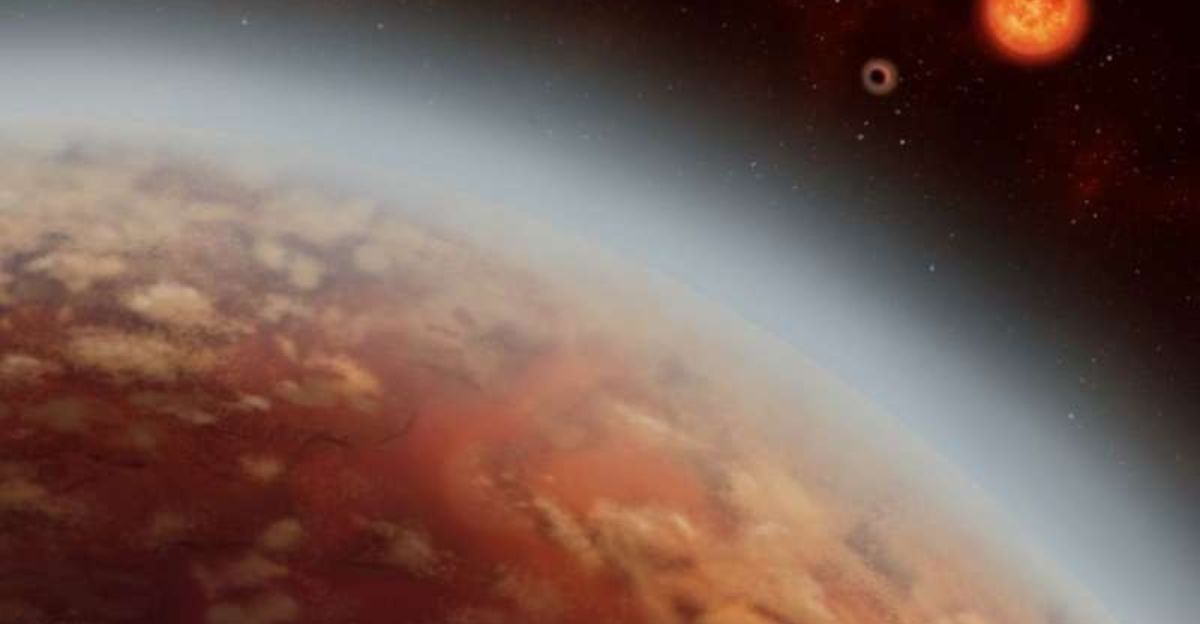
Scientists analyzing the atmosphere of K2-18b have reported tentative signs of two gases called dimethyl sulphide (DMS) and dimethyl disulphide (DMDS). On Earth, these gases are mostly produced by marine life, such as bacteria and tiny ocean plants, playing important roles in ocean ecosystems and atmospheric chemistry.
Because of their biological origin here, detecting these gases on another planet raises hopes that similar life processes might be occurring. However, scientists emphasize caution as these molecules might also be created through unknown non-biological or geological processes, especially on a planet very different from Earth.
Statistical Confidence and Ongoing Verification
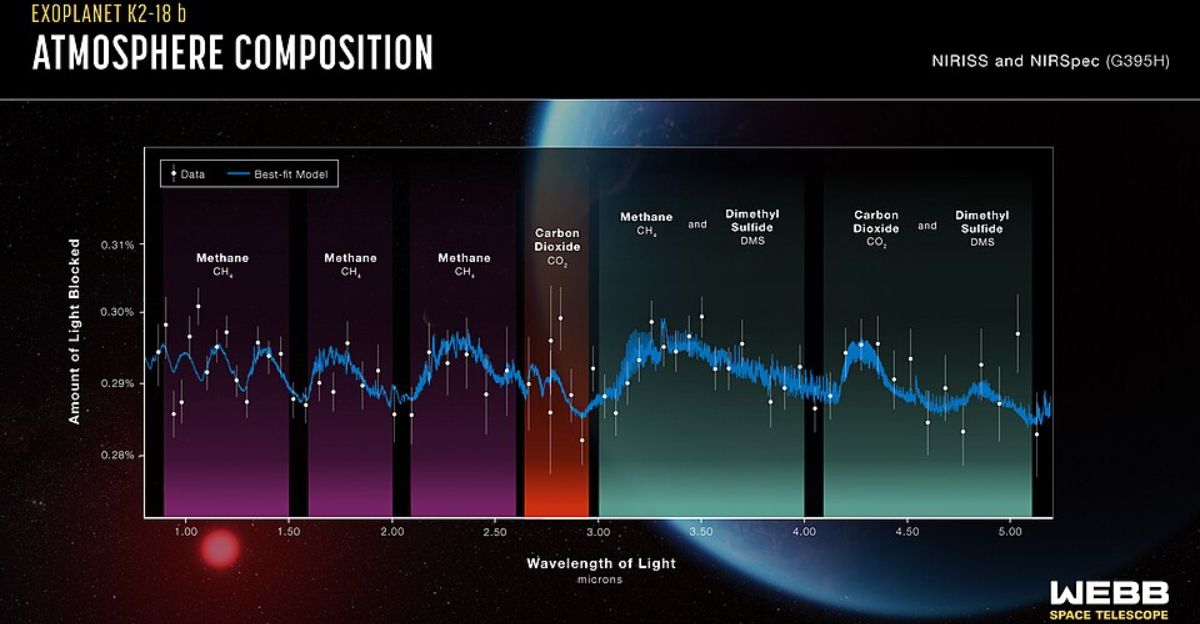
When scientists analyze data from distant planets like K2-18b, they use statistics to measure how likely it is that their results are real and not just caused by random chance. Right now, the detection of certain gases in K2-18b’s atmosphere has a confidence level of about 99.7%, often referred to as three sigma.
This means there is a small chance, about 0.3%, that the signal could be a false positive. While this level of certainty is promising, the scientific community generally requires a much higher confidence called five sigma (or 99.99999%) to claim a true discovery, especially for something as important as signs of life.
Atmospheric Makeup Points to Water, But Not Confirmed
Scientists studying K2-18b’s atmosphere have found notable levels of methane and carbon dioxide, gases that can come from both biological activity and natural planetary processes. One interesting observation is the apparent absence of ammonia, a gas that, if present, could be tied to certain chemical balances in the atmosphere.
On Earth, ammonia dissolves readily in water, so its missing or very low levels on K2-18b could suggest that liquid water is taking it up, hinting at the possible presence of oceans or large bodies of liquid beneath the atmosphere.
K2-18b’s Orbit Places It in the Habitable Zone
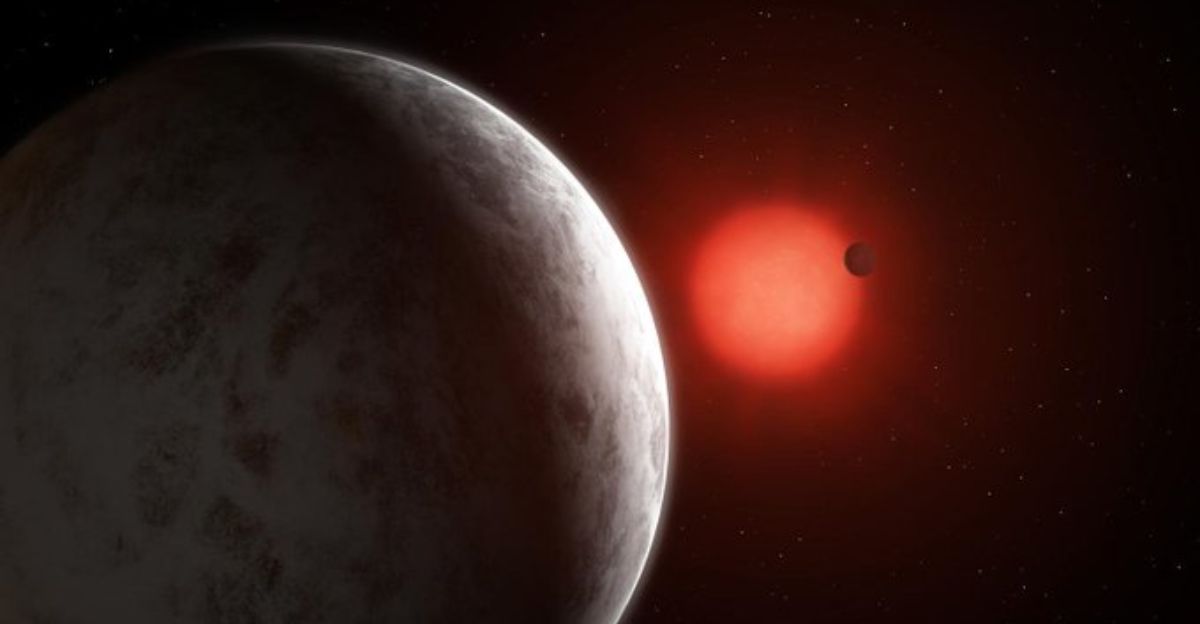
K2-18b completes one full orbit around its red dwarf star in just under 33 days, much shorter than Earth’s 365-day orbit. Even though the planet is much closer to its star than Earth is to the Sun, its star is significantly cooler and less bright.
This means that despite the shorter orbit, K2-18b receives a similar amount of energy to what Earth gets from the Sun.
K2-18b as a Leading Candidate in the Search for Life
Thanks to JWST data, K2-18b is now one of the most promising targets to study for possible life beyond Earth, though firm conclusions have yet to be reached. Its atmospheric signals have sparked global excitement for future research.
A Milestone in Exoplanet Atmosphere Study
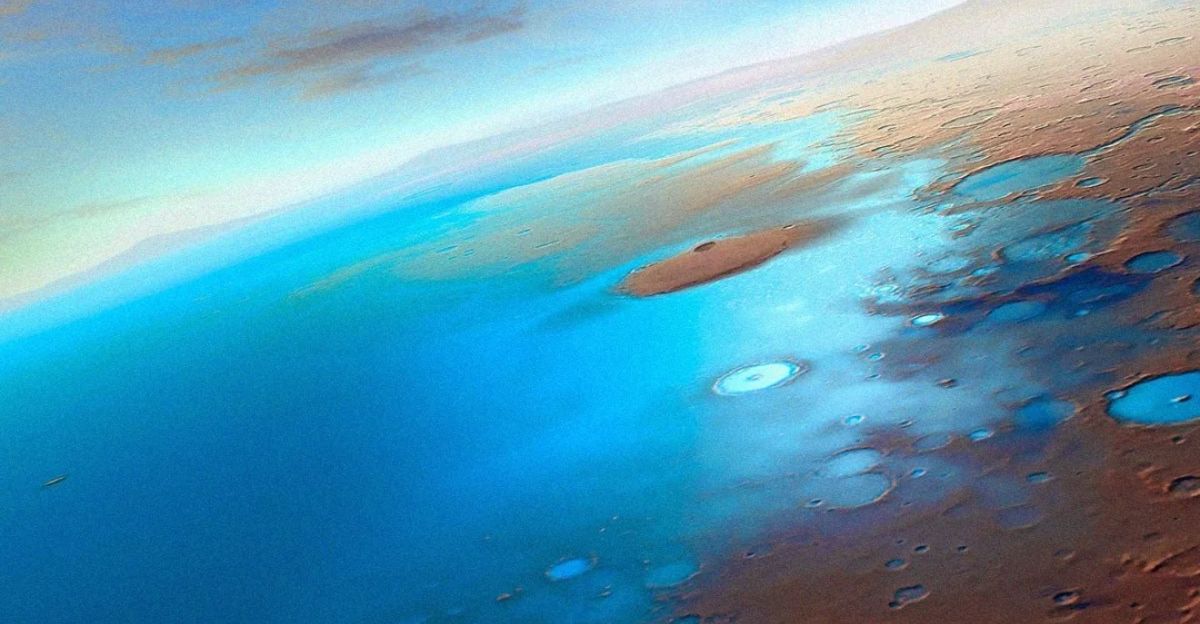
Detection of gases potentially linked to living organisms on K2-18b marks a milestone in the study of exoplanet atmospheres. Previously, such biosignature gas detections at this scale have not been made on exoplanets.
This is one of the first times scientists have been able to measure such complex gases that on Earth are primarily linked to life. This breakthrough sets the stage for future discoveries and a deeper understanding of planets that might support life.
The Scientific Race to Confirm or Refute Life Indicators
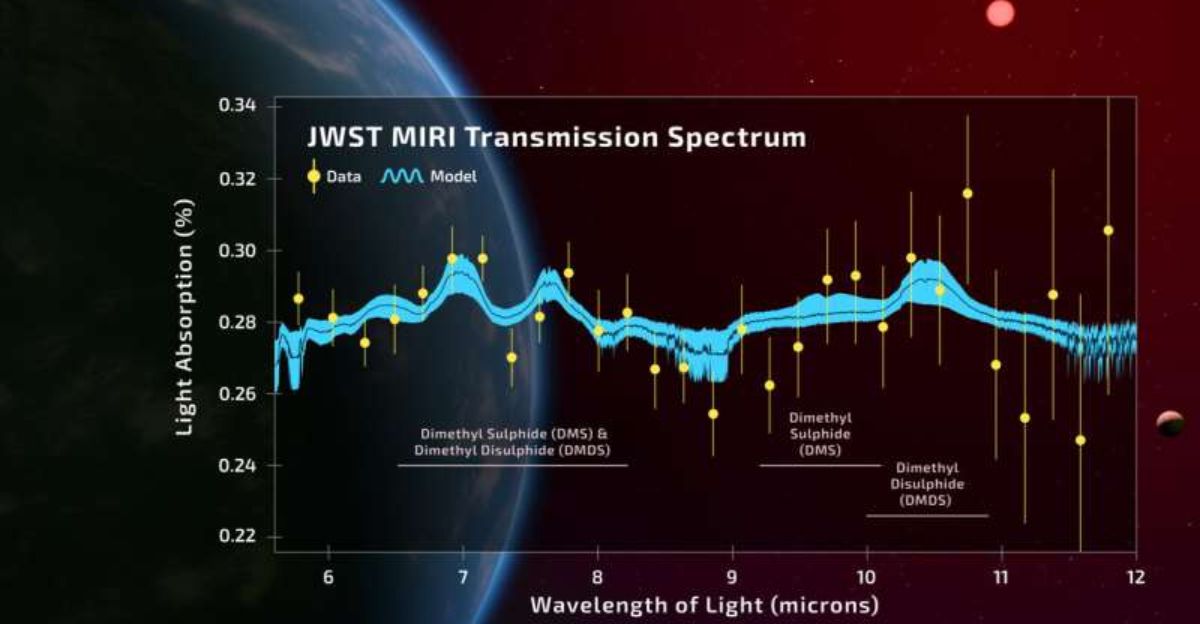
Multiple teams worldwide are analyzing JWST data and preparing for new observations to validate whether the detected gases indicate biology or other natural processes. This investigative phase is expected to continue over the next 1-2 years.
What Confirmed Life Would Mean for Our Galaxy
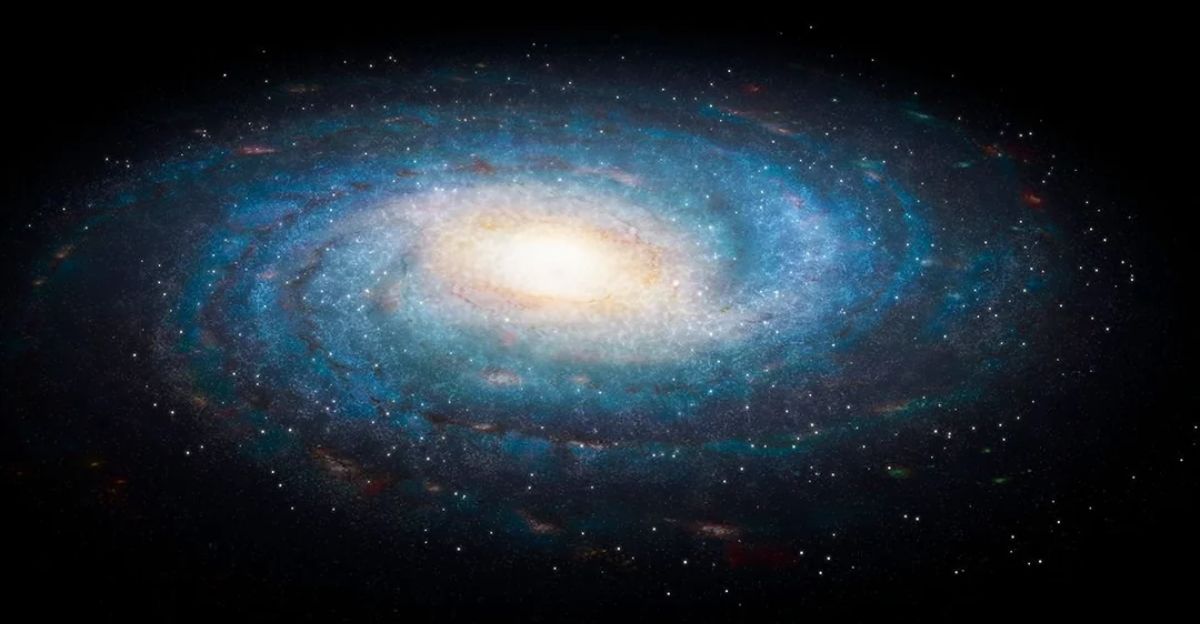
If future studies confirm that K2-18b hosts life, even in simple microbial form, it would have profound implications for our understanding of the universe. It would suggest that life is not unique to Earth, but rather a common outcome given the right environmental conditions.
Considering that the Milky Way galaxy contains hundreds of billions of stars, many with their own planets in habitable zones, confirmation of life on one distant world could mean billions of planets might harbor life as well.
The Vast Distance Separates Us from K2-18b
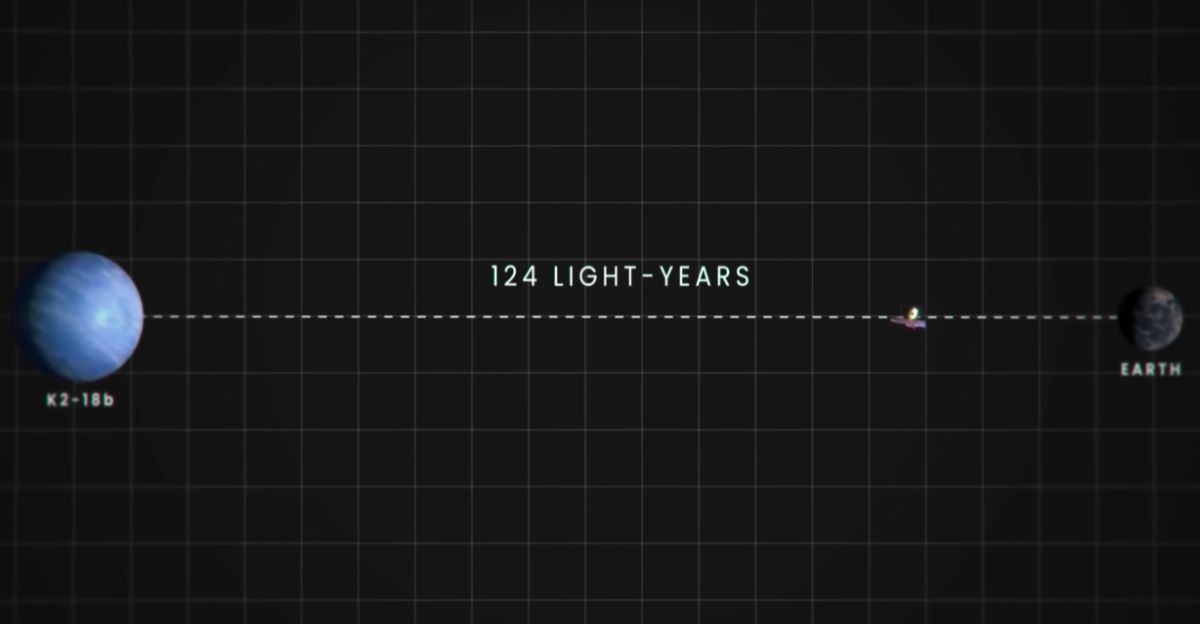
At about 124 light-years away, or nearly 700 trillion miles, K2-18b remains far beyond current spacecraft reach. With current spacecraft technology, a journey to K2-18b would take millions of years, far beyond any feasible human or robotic mission in the foreseeable future.
This distance means that, for now, our understanding of this intriguing world relies entirely on observations made by powerful space telescopes like JWST.
The Ammonia Mystery and Its Possible Explanations
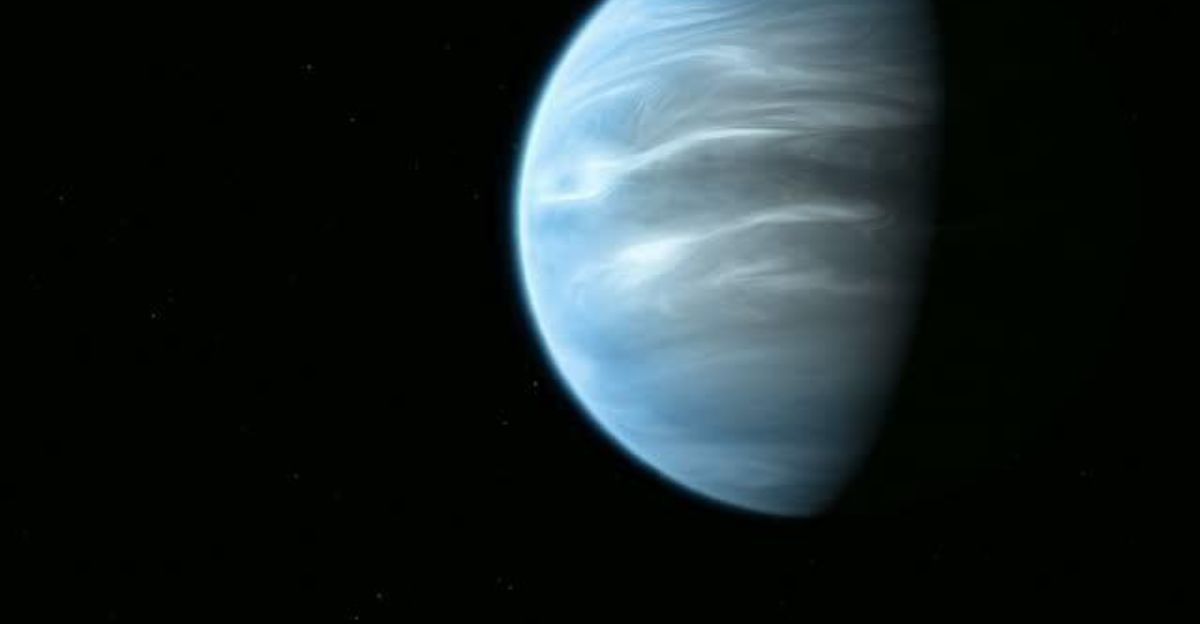
One of the most intriguing puzzles about K2-18b is the apparent absence or very low levels of ammonia in its atmosphere, as detected by JWST observations. On Earth, ammonia is a common gas that dissolves easily in water, so scientists hypothesize that if K2-18b has a vast liquid ocean beneath its hydrogen-rich atmosphere, it could be absorbing and depleting the ammonia from the air above.
This shortage aligns with models of hycean worlds, planets blending hydrogen atmospheres with global oceans, making it a tantalizing clue for water’s presence. However, other explanations exist. Ammonia might be locked away in deeper atmospheric layers, destroyed by photochemical reactions, or simply not abundant due to the planet’s unique chemistry.
Different Scientific Interpretations of K2-18b’s Environment
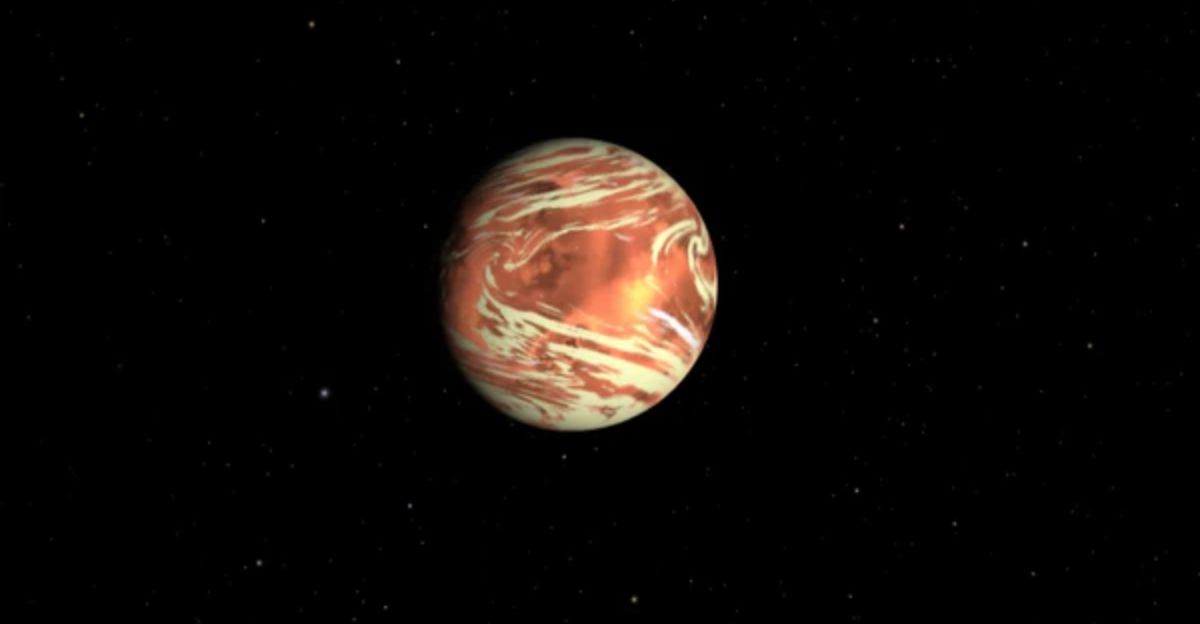
Scientists have proposed various models of K2-18b, including a water-rich ocean world, a small gas giant, or a planet with molten rock interiors. With a range of competing models, from water worlds to gaseous hybrids, they highlight the challenges of interpreting limited spectral data from 124 light-years away, with ongoing JWST observations expected to refine or rule out possibilities.
Are DMS and DMDS from Life or Geology?
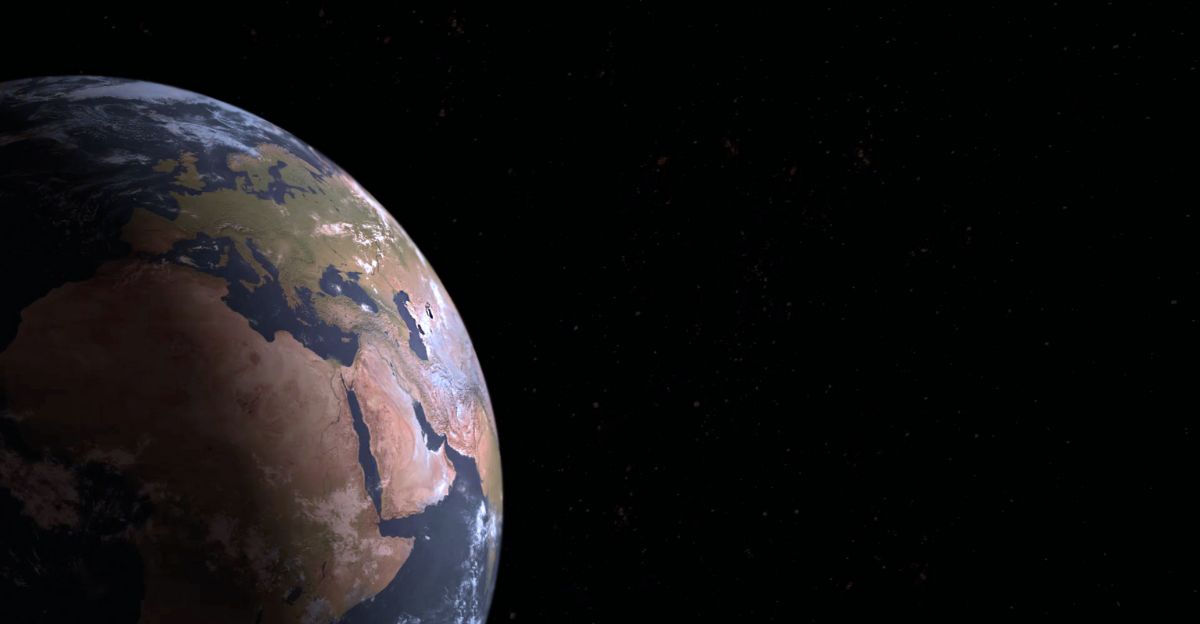
While on Earth DMS and DMDS are mainly biological in origin, it’s possible unknown geological processes on K2-18b produce them. Because K2-18b is a very different kind of world, a possible hycean or sub‑Neptune planet with a hydrogen‑rich atmosphere, researchers must consider whether exotic, non‑biological chemistry could produce these sulfur-bearing molecules without life.
Philosophical and Scientific Implications if Life is Found
Scientifically, it would validate that life arises readily under habitable conditions, boosting estimates of how common biology might be among the trillions of exoplanets in our galaxy and beyond. Philosophically, it would challenge the idea of Earth’s uniqueness, sparking debates about the Fermi Paradox, why we haven’t encountered alien civilizations, and prompting reevaluation of religious doctrines centered on human exceptionalism.
Anticipation Builds for Definitive Results
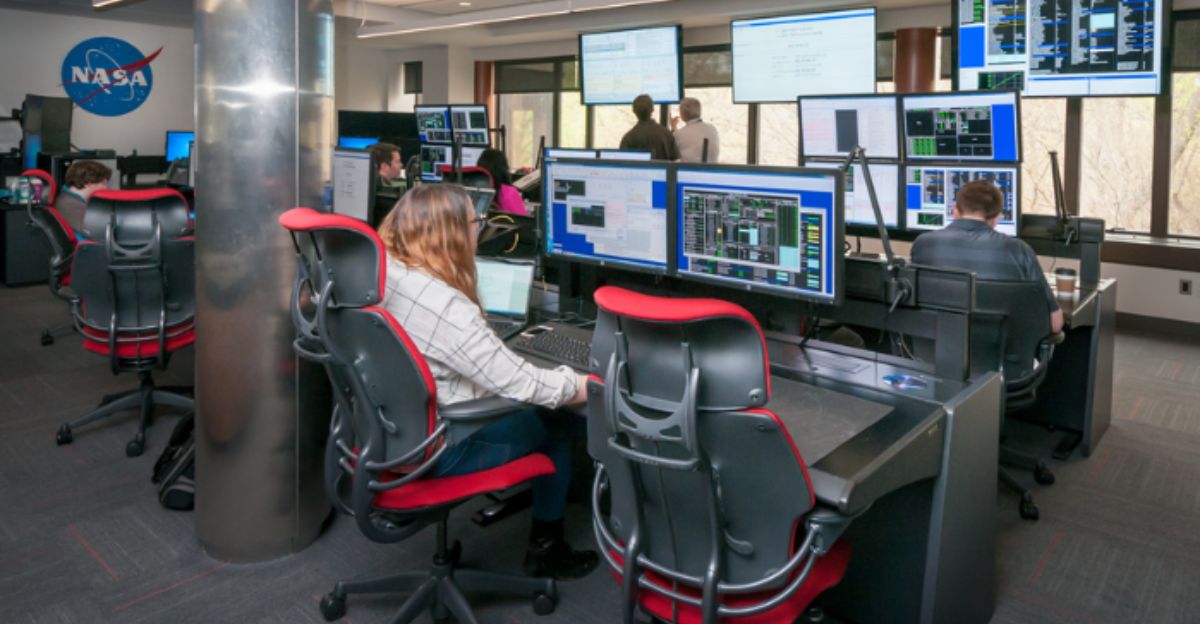
The scientific community is buzzing with excitement over K2-18b, as researchers anticipate major breakthroughs within the next 1-2 years that could confirm or refute the tantalizing signs of life. Multiple teams are racing to analyze fresh JWST data, conduct follow-up observations, and develop advanced models to distinguish biological signals from geological ones.
A Revolutionary Tool in Exoplanet Science
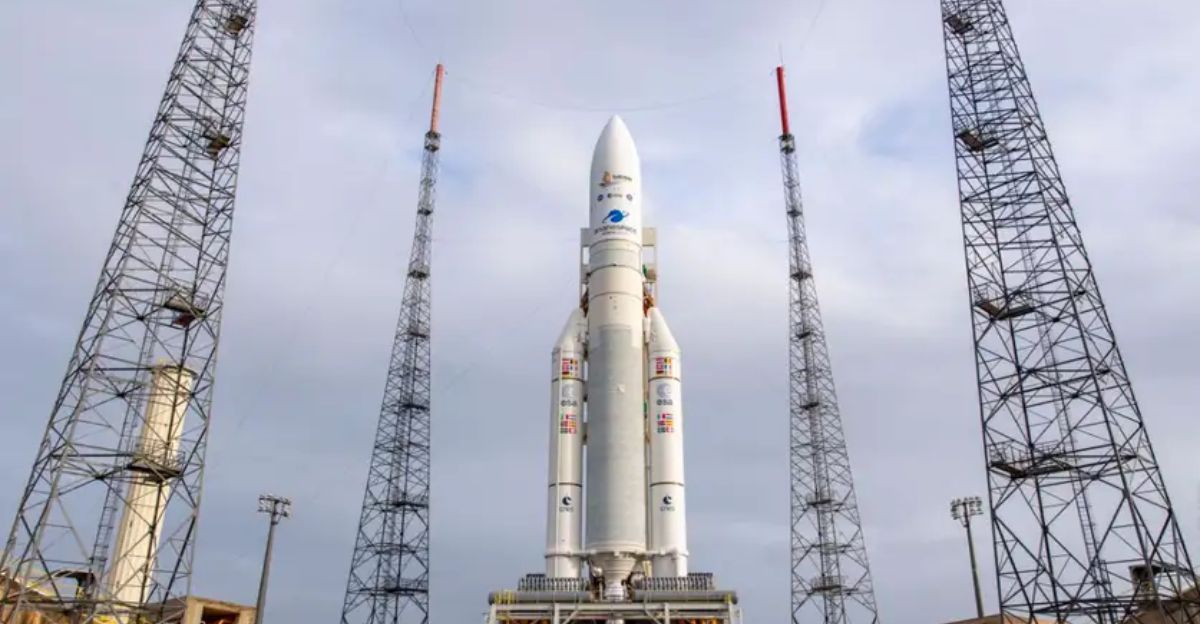
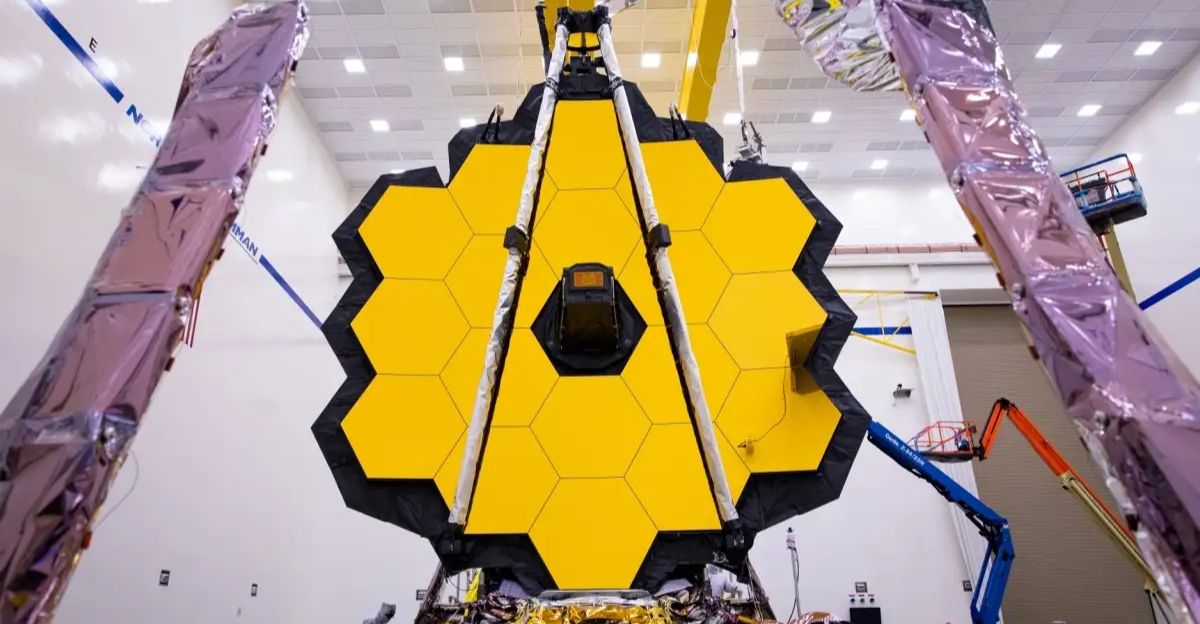
Launched in 2021, JWST’s massive 6.5-meter mirror and advanced infrared instruments allow it to peer through thick atmospheres, capturing light spectra that reveal molecular compositions invisible to earlier telescopes like Hubble.
This sensitivity has enabled unprecedented studies of habitable-zone planets, turning K2-18b from a distant data point into a prime target for life detection. JWST’s mid-infrared capabilities, in particular, excel at identifying sulfur compounds and water vapor signatures that hint at ocean worlds.
What High Levels of DMS Might Suggest
If future observations confirm elevated levels of dimethyl sulfide (DMS) or dimethyl disulfide (DMDS) in K2-18b’s atmosphere, potentially thousands of times higher than Earth’s, these concentrations could imply extraordinarily productive biological activity.
The Future of Exoplanet Habitability Research
Whether or not life is confirmed on K2-18b, this planet’s study will push forward our understanding of ocean worlds and improve techniques to find habitable conditions on distant planets across the galaxy.
Sources:
New study revisits signs of life on K2-18 b – Astronomy
Scientists detect signature of life on a distant planet – CNN
Scientists find promising hints of life on K2-18b – BBC