NASA has temporarily stopped part of its investigation into possible signs of life on a faraway planet, after two years of studying data from the James Webb Space Telescope (JWST). Scientists had spotted signals that looked like a possible hint of life—but the evidence was too uncertain to draw any solid conclusions. For now, NASA is taking time to double‑check the results and improve the tools used to study worlds beyond our solar system.
A Telescope Built to Change Planet Discovery
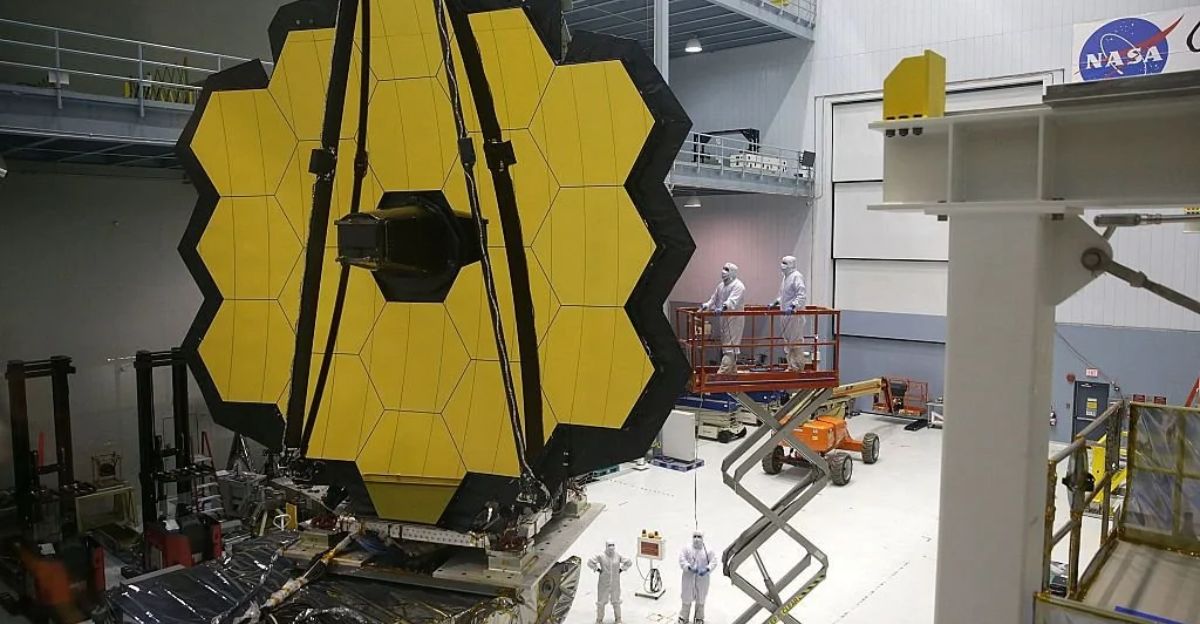
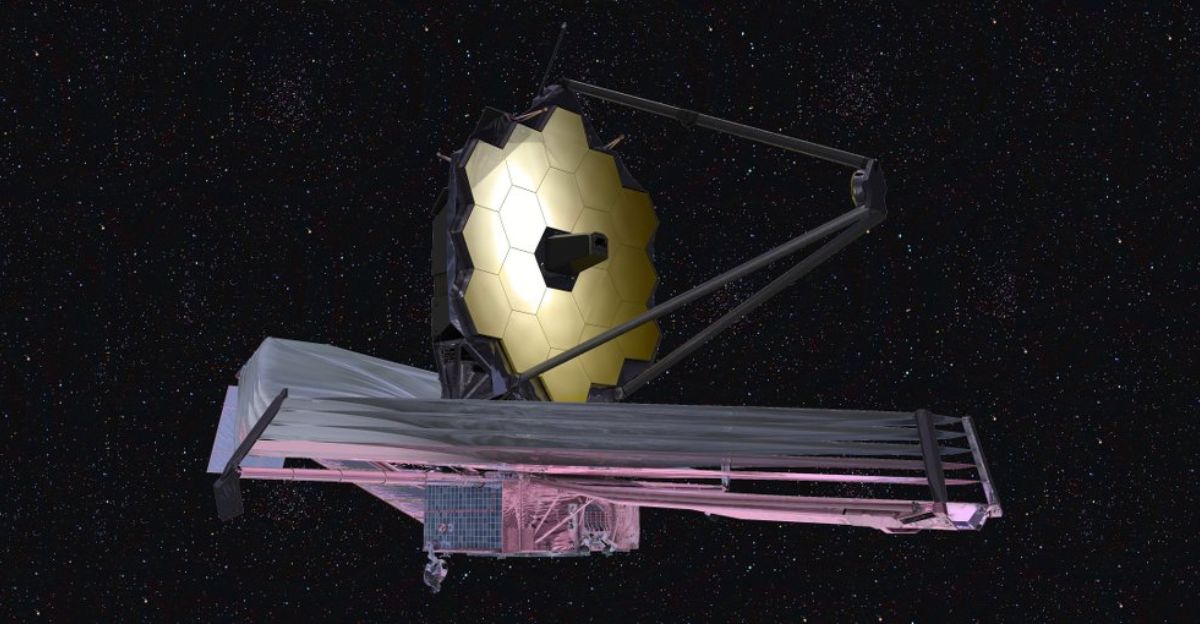
Launched in 2021 for about $10 billion, JWST is one of humanity’s most advanced scientific instruments. It was first designed to look at the universe’s earliest galaxies, but it quickly became an essential device for studying planets that orbit other stars. By detecting subtle changes in light passing through a planet’s atmosphere, JWST can identify different gases and molecules, even from hundreds of trillions of kilometers away.
One of the scientists leading this work is astrophysicist Nikku Madhusudhan from the University of Cambridge. His team has focused on a planet called K2‑18b, which has become a key test case in the search for life elsewhere. NASA has promoted JWST as a way to find promising worlds like this one, while emphasizing that any claim about life must be backed by strong, independent evidence.
The Strange World of K2‑18b
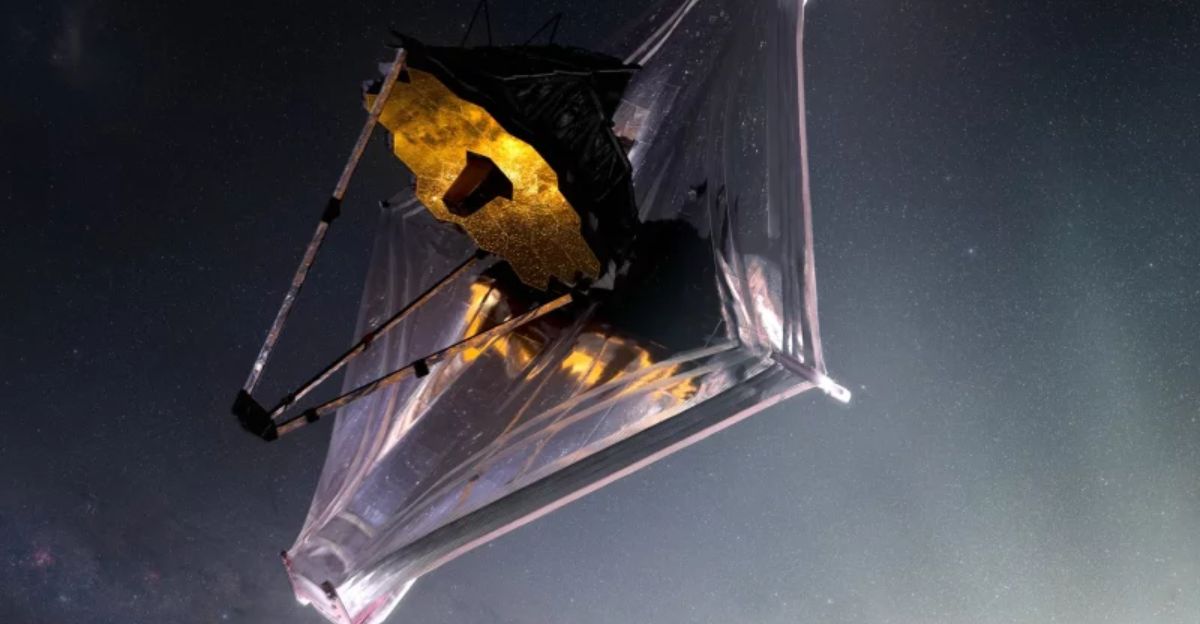
K2‑18b orbits a small, cool red dwarf star around 120 light‑years from Earth, in the constellation Leo. The planet is about 2.6 times the size of Earth and more than eight times as massive. This puts it halfway between a rocky “super‑Earth” and a gas‑covered “mini‑Neptune.” Its orbit lies within its star’s “habitable zone,” where temperatures could allow liquid water to exist—a key ingredient for life as we know it.
These conditions made K2‑18b a candidate for what scientists call a “Hycean” planet: a world with deep oceans and an atmosphere rich in hydrogen, where simple life could survive. However, the same data also allow for less friendly scenarios—like extremely hot, high‑pressure oceans or thick layers of ice below the surface. In short, it’s possible K2‑18b is habitable, but that’s far from certain.
A Flickering Hint: The Dimethyl Sulfide Debate
The excitement around K2‑18b reached new heights when Madhusudhan’s team thought they found traces of a molecule called dimethyl sulfide (DMS) in its atmosphere. On Earth, DMS is mainly produced by marine microorganisms like plankton, so its discovery elsewhere would be a potential sign of life. Early studies in 2023 and 2025 hinted at unusually high levels of DMS, sparking headlines worldwide.
But the signal turned out to be on shaky ground. The supposed DMS feature was barely above JWST’s detection limits, meaning it could easily be an error. A 2025 study by NASA and Cambridge researchers said the confidence level was only around 99.7 percent—strong, but still below the standard needed for a discovery. When other teams re‑analyzed the data with different assumptions about clouds and temperature, the DMS signal weakened or disappeared altogether. In a follow‑up, NASA concluded there was no firm evidence the molecule existed there at all.
Meanwhile, JWST detected other gases—like methane and carbon dioxide—in a hydrogen‑rich atmosphere, which supports the idea that K2‑18b could be a Hycean world. Scientists note that these gases alone don’t mean life is present, but they add to the reasons to keep studying the planet closely.
Why NASA Decided to Wait
As more independent groups reviewed the data, NASA chose to pause the part of its K2‑18b program focused on potential signs of life, particularly the DMS signal. The decision wasn’t about giving up, but about being cautious. Small changes in how researchers modeled clouds or gas layers could make a weak signal appear or vanish entirely. That uncertainty reminded many astronomers of earlier mistakes—like when 19th‑century observers thought they saw “canals” on Mars, or when a strange radio signal turned out to come from a microwave oven.
NASA’s advisory panels supported the pause, urging the agency to focus on improving its instruments and models before making claims about biology. The rest of the research into K2‑18b continues, but scientists want to avoid leaping to conclusions. JWST was built to study faint galaxies and large exoplanets; detecting proof of life on another world pushes even its high limits.
What Comes Next for the Search
Many astronomers view this decision not as a failure, but as a sign that exoplanet science is maturing. The field moves faster now—ideas and potential discoveries are tested and corrected within months, not decades. NASA emphasizes that JWST’s mission is to identify promising targets and measure gases that could hint at life, not to deliver final proof. Confirming biological activity will likely require new telescopes, better models, and multiple chemical clues that fit together.
Researchers stress that finding any single molecule won’t be enough to prove life. The real breakthrough will come from consistent patterns involving several gases and the exclusion of non‑biological explanations. For now, K2‑18b remains an intriguing mystery—a world that could be friendly to life or unbearably harsh.
NASA’s cautious approach echoes the broader scientific principle of patience and precision. Rather than rush to claim a discovery, the agency prefers to wait for evidence that can stand up to intense scrutiny. The lessons from K2‑18b will likely shape how scientists interpret future signals from distant worlds, ensuring that when humanity finally does detect clear proof of life beyond Earth, the evidence will be unmistakable and strong.
Sources:
NASA – Webb Discovers Methane, Carbon Dioxide in Atmosphere of K2-18 b – 10 September 2023
BBC News – Scientists find promising hints of life on distant planet K2-18b – 16 April 2025
NASA – How NASA’s Webb Telescope Supports Our Search for Life Beyond Earth – 17 April 2025
University of Cambridge – Strongest hints yet of biological activity outside the solar system – 16 April 2025
Scientific American – Is Dimethyl Sulfide Really a Sign of Alien Life? – 17 April 2025