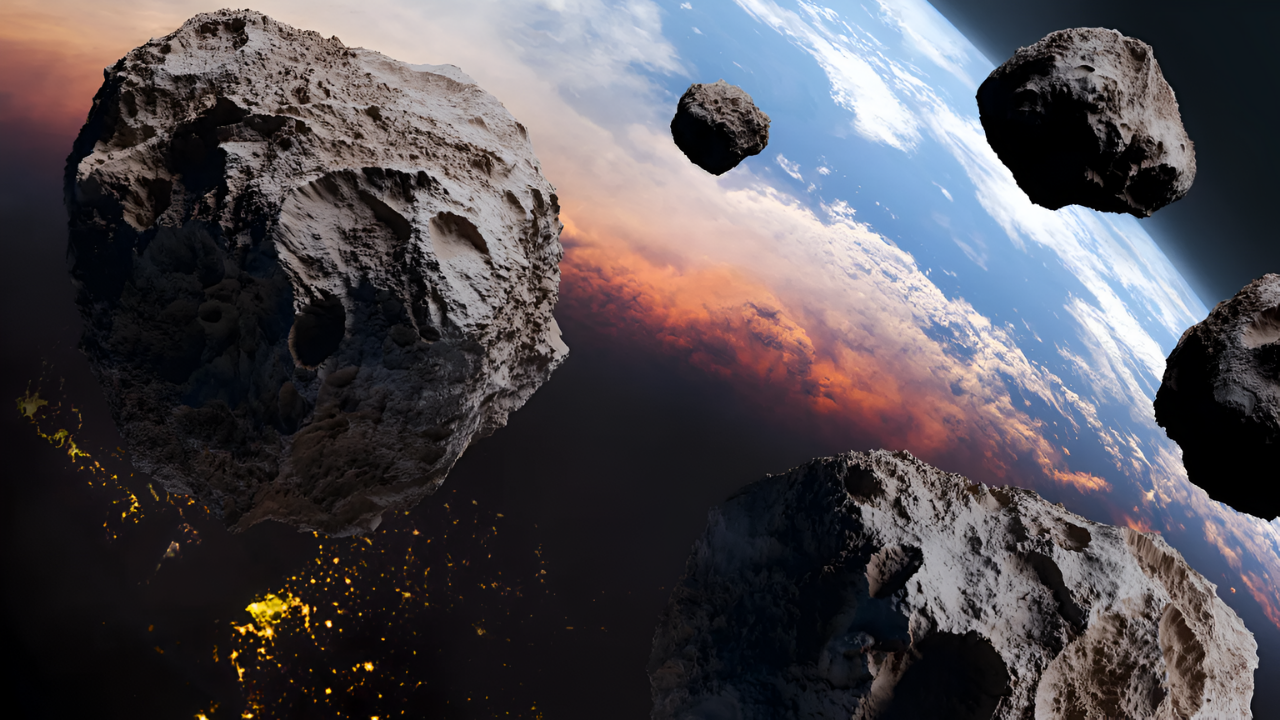
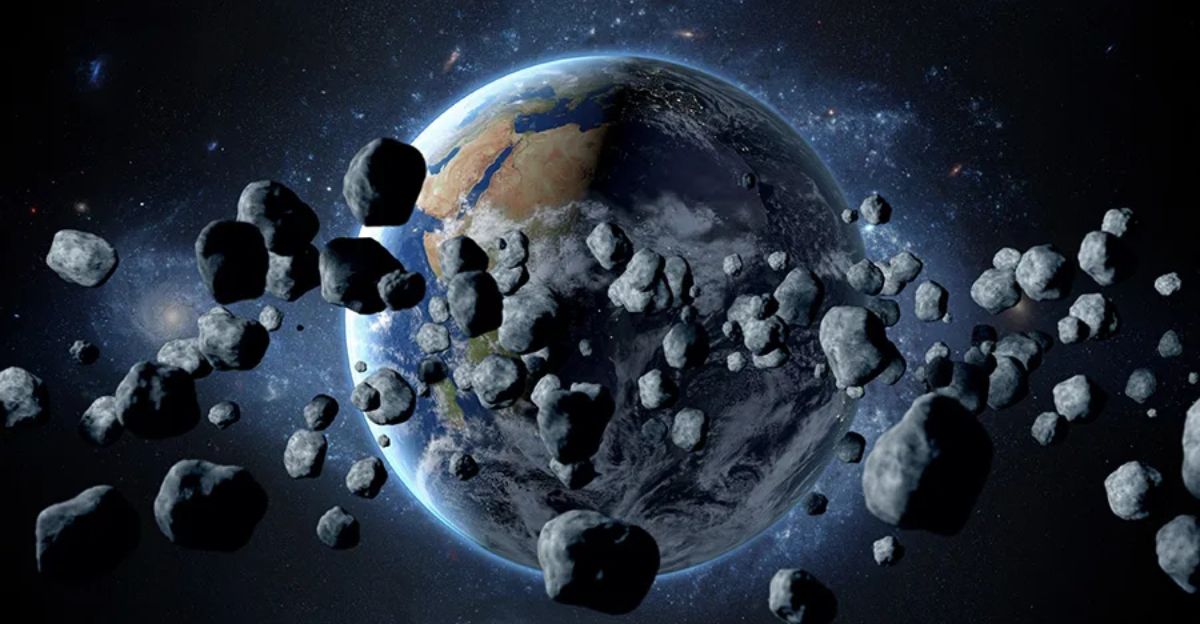
On March 21, 2021, an object the size of the Empire State Building—traveling at 77,000 miles per hour—passed within 1.25 million miles of Earth. Asteroid 2001 FO32 was classified as “potentially hazardous,” yet most people never heard about it. The flyby represented far more than a near-miss; it became a crucial test of humanity’s ability to detect, track, and ultimately defend against cosmic threats that could devastate our planet.
The Discovery of a Speed Demon
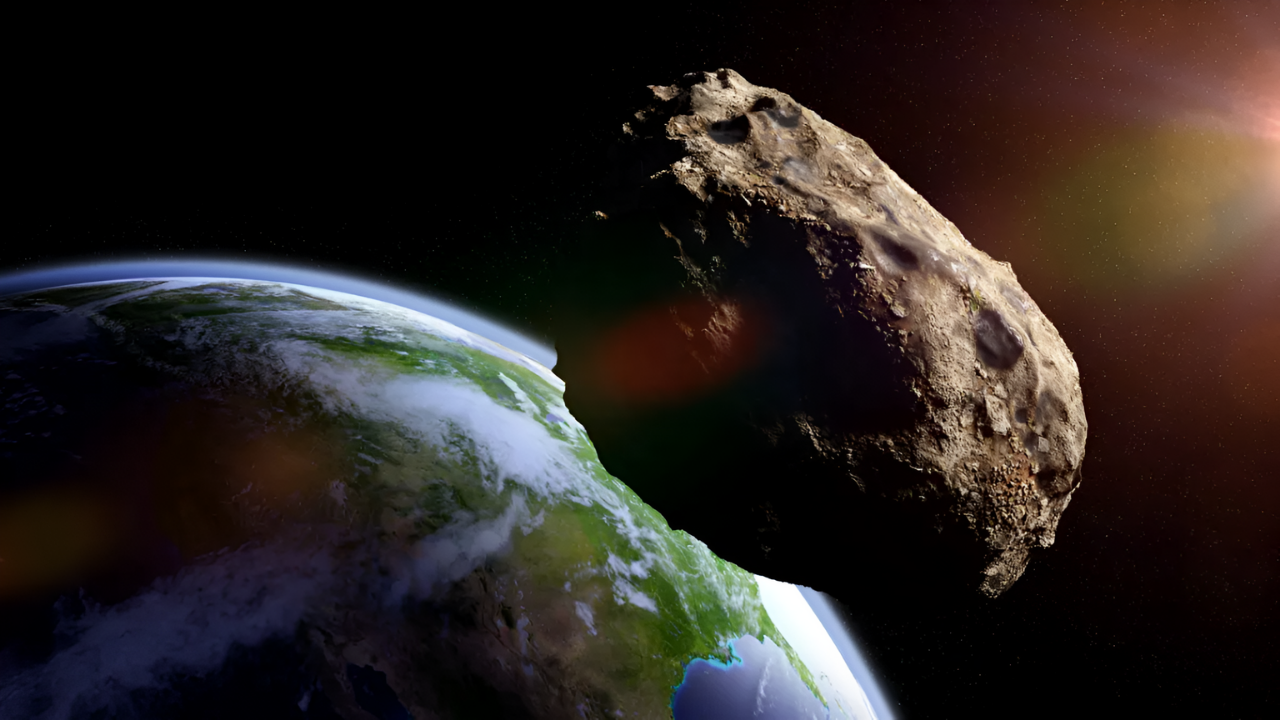
Astronomers at a New Mexico observatory first identified 2001 FO32 on March 23, 2001. Initial measurements revealed an object estimated at up to 2,230 feet across—nearly twice the height of the Empire State Building. For two decades, NASA’s Center for Near-Earth Object Studies monitored this cosmic bullet as it followed an unusual trajectory through our solar system.[1]
The asteroid’s extraordinary velocity stemmed from its bizarre, highly tilted orbit. Unlike most asteroids that travel along the same flat plane as Earth, 2001 FO32 dives toward the sun at a steep 39-degree angle, swinging closer than Mercury before being flung back past Mars. This extreme path creates a massive gravitational slingshot effect, accelerating the object to speeds that defy intuition. To contextualize the velocity: a commercial jet would require 330 hours to circle Earth, yet this asteroid accomplished the same distance in less than 20 minutes.[1]
A Narrow Escape in Cosmic Terms
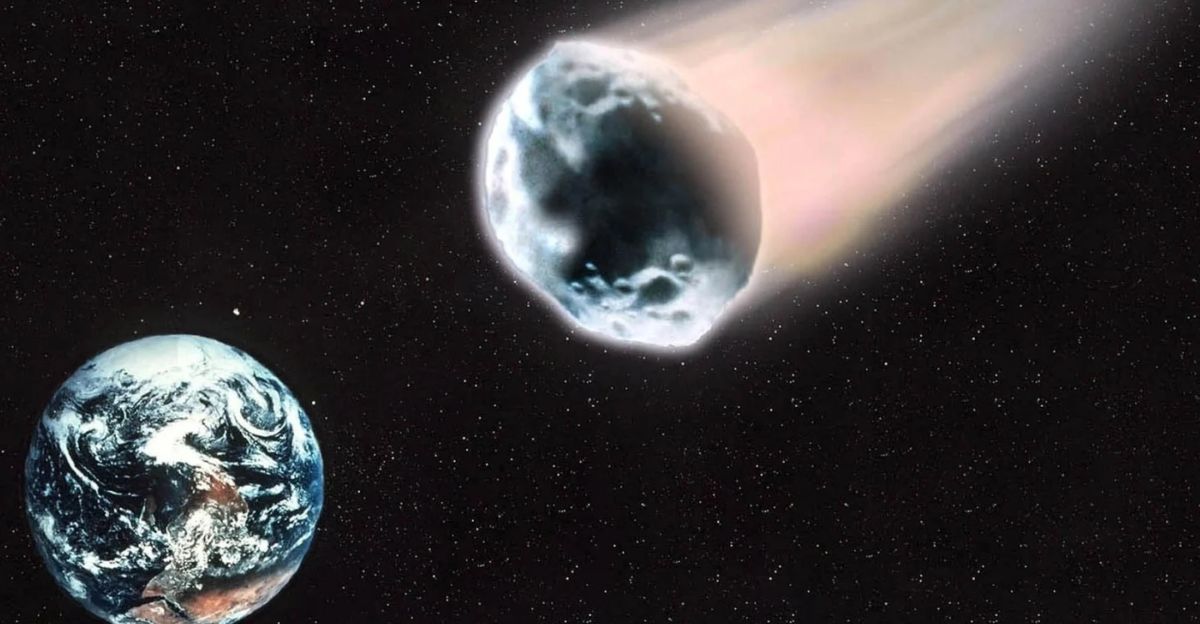
When 2001 FO32 made its closest approach, it remained 1.25 million miles away—just over five times the distance to the Moon. NASA designated the flyby as “safe,” yet the “potentially hazardous” classification carried weight. Paul Chodas, NASA’s leading asteroid tracker, noted that the object’s path was known “very accurately,” a statement that carried an implicit warning: we saw this one coming, but what about the next?
The implications of a direct impact were sobering. An object this size striking Earth would release energy equivalent to thousands of nuclear bombs. The impact would instantly obliterate a major city, trigger continent-spanning earthquakes, and blast vaporized rock into the atmosphere, blocking sunlight for months and creating a devastating “nuclear winter” effect across regions or potentially the entire globe.
A Scientific Opportunity
For researchers, the 2021 flyby represented an unprecedented opportunity rather than merely a threat. Scientists in Hawaii directed the powerful NASA Infrared Telescope Facility at the speeding rock, analyzing sunlight reflecting off its surface to decipher its chemical composition. University of Arizona researcher Vishnu Reddy described the effort as “doing geology with a telescope,” studying a pristine relic from our solar system’s formation. Astrophysicist Gianluca Masi, streaming observations to a live audience, captured the moment’s significance: “How excited I am to bring this to you.”
From Observation to Action
The 2001 flyby of FO32 exposed critical vulnerabilities in planetary defense. While NASA effectively tracked truly massive asteroids exceeding 3,300 feet, smaller city-killer-sized objects remained harder to detect. The close approach demonstrated that an object nearly half a mile wide could approach Earth with most of the public unaware until weeks beforehand. This realization catalyzed concrete action.
The agency demonstrated that planetary defense is achievable by intentionally crashing a spacecraft into an asteroid moonlet named Dimorphos, successfully altering its orbit. The European Space Agency’s Hera mission is now en route to study the aftermath, marking humanity’s transition from passive observation to active planetary protection.
The Future of Cosmic Defense
As of late 2025, NASA tracks tens of thousands of near-Earth asteroids, with hundreds designated “potentially hazardous.” Several bus-sized rocks pass by Earth this very month, largely unnoticed by the general public. The vulnerability remains: our ability to deflect a threat depends entirely on recognizing it with sufficient warning to take action.
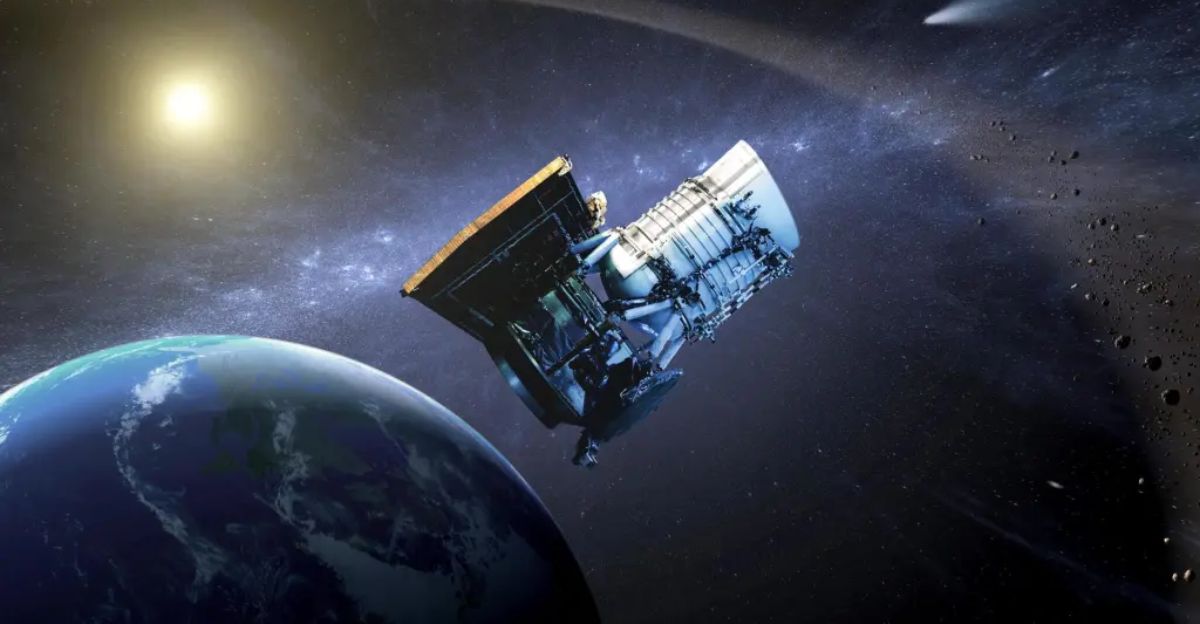
Everything is about to change. NASA announced plans to launch the NEO Surveyor space telescope in late 2027, riding a SpaceX Falcon 9 into deep space. This infrared telescope will detect hazardous asteroids from the darkness of space, unhindered by daylight or Earth’s atmosphere, and is expected to identify two-thirds of the city-killer asteroids currently undetected. After its 2021 visit, 2001 FO32 continues its journey past Mars, destined to return in 2052 at a slightly safer distance of 1.75 million miles. When it arrives, a new generation of scientists equipped with far more advanced tools will be waiting.
Sources
NASA Jet Propulsion Laboratory (JPL) Center for Near Earth Object Studies — Asteroid 2001 FO32 orbit determination and closest approach data (March 2021)
NASA Near Earth Object Program — Near-Earth asteroid catalog and hazard assessment methodology (September 2025 update)
University of Arizona Lunar and Planetary Laboratory — Infrared spectroscopy observations and mineral analysis (Vishnu Reddy, principal researcher)
Virtual Telescope Project (Ceccano, Italy) — Real-time observational data and public communication archive (Gianluca Masi, director)
NASA DART Mission Documentation — Double Asteroid Redirection Test impact results and kinetic deflection validation (2022)
European Space Agency Hera Mission — Asteroid deflection follow-up investigation and planetary defense collaboration