On December 27, 2024, astronomers found a 60-meter asteroid named 2024 YR4. Initial calculations showed a 3.1% chance it could hit Earth on December 22, 2032.
This was the highest risk level in over 20 years. NASA and ESA mobilized to track it. By February 2025, scientists ruled out an Earth impact.
But the asteroid’s path remained significant for planetary defense testing.
Building-Sized Threat
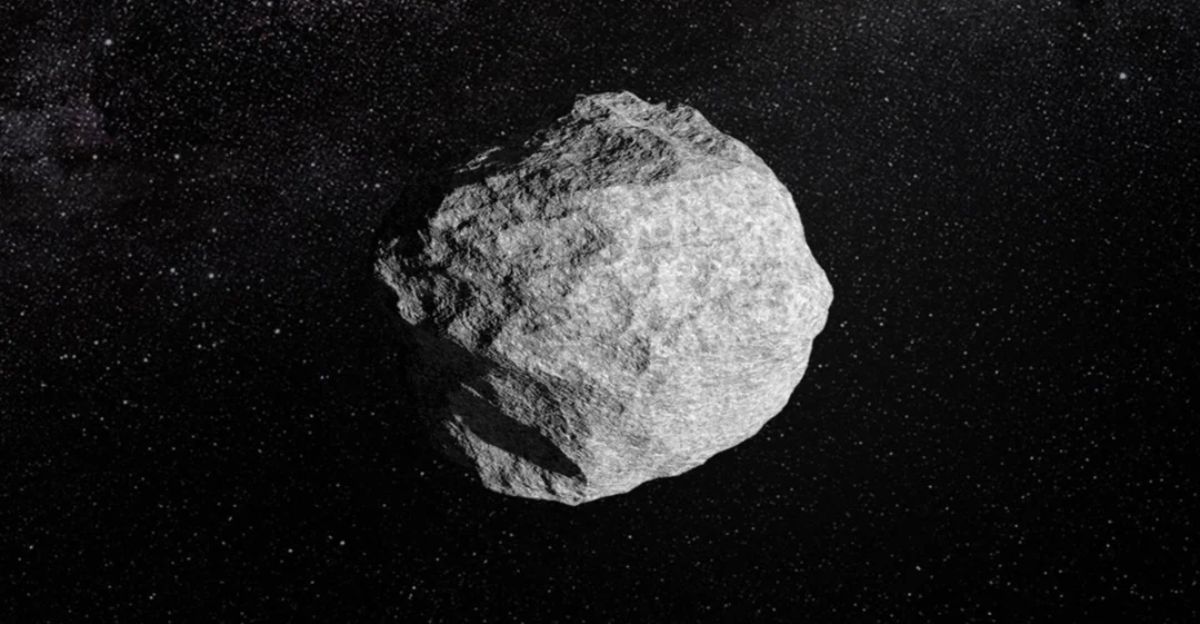
Asteroid 2024 YR4 measures 60 meters (200 feet), about as tall as a 15-story building.
Scientists classify it as “building-killer” size—large enough to devastate a city if it hit Earth. It’s a rocky object in the potentially hazardous category.
Ground telescopes first spotted it in late December. Bigger, better telescopes later revealed its precise orbit and size more clearly.
The Probability Spike
In late January 2025, scientists pooled observations.
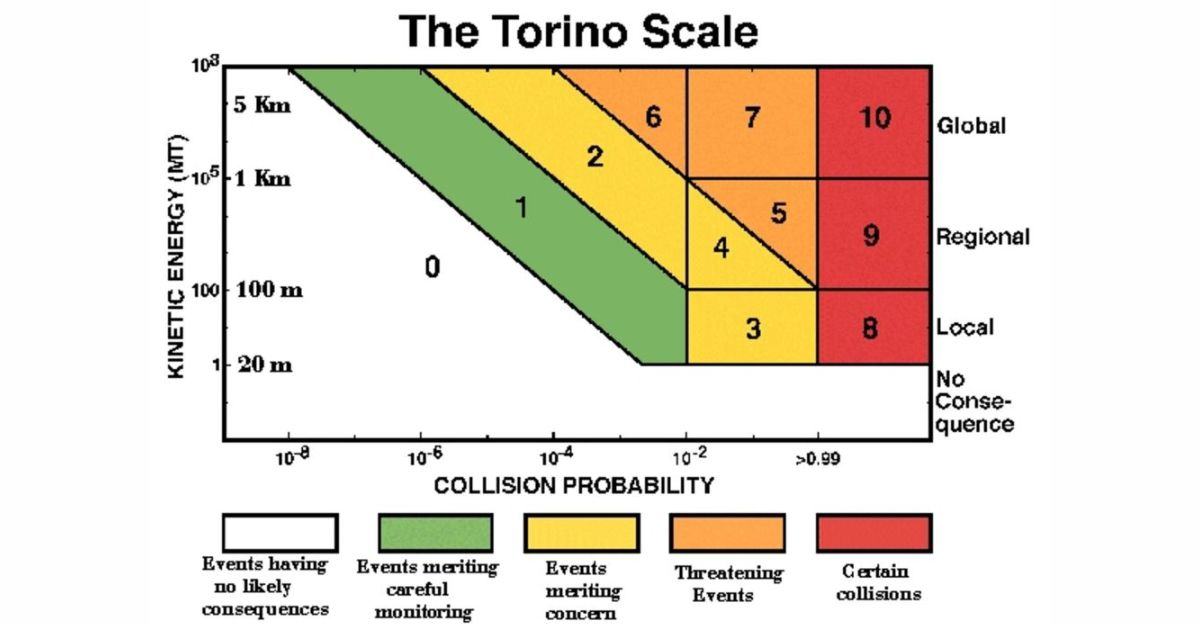
The asteroid’s risk of impacting Earth reached 3.1% for 2032. This triggered a Torino Scale Level 3 rating—meaning “close encounter needing attention.”
Only one asteroid ever scored higher: Apophis in 2004 (Level 4). Apophis was downgraded to zero risk as more accurate data became available. Level 3 means a 1% or greater collision chance.
When Earth Was Safe Again
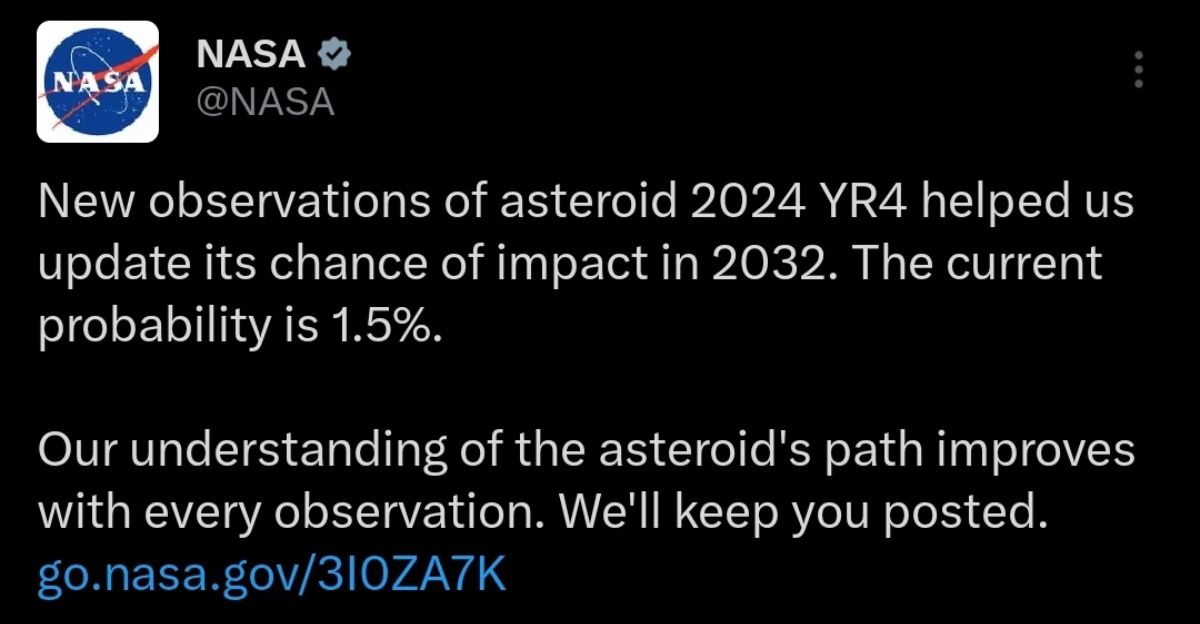
By February 25, 2025, new telescope data had reduced the Earth impact risk to 0.001%.
ESA and NASA both announced the downgrade. This showed planetary defense working perfectly: first uncertainty, then precision.
Computers analyzed data using NASA’s Sentry Risk system. Scientists confirmed the findings quickly and transparently. The next close Earth pass in 2028 will allow more observations.
The Moon
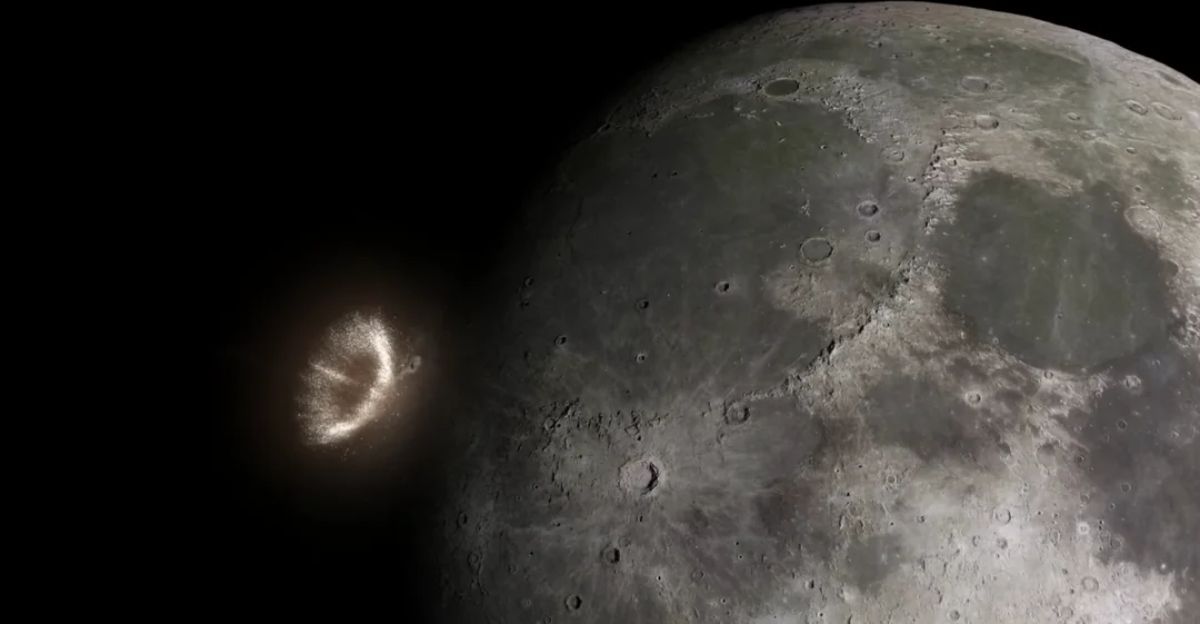
When Earth’s impact risk dropped, a new threat emerged: the Moon.
Data showed a 4.3% chance the asteroid would hit the Moon on December 22, 2032. That’s a 95.7% chance it misses.
But 4.3% is one of the highest lunar impact probabilities ever tracked. A Moon strike could send debris toward Earth orbit and lunar bases.
The Crater Problem
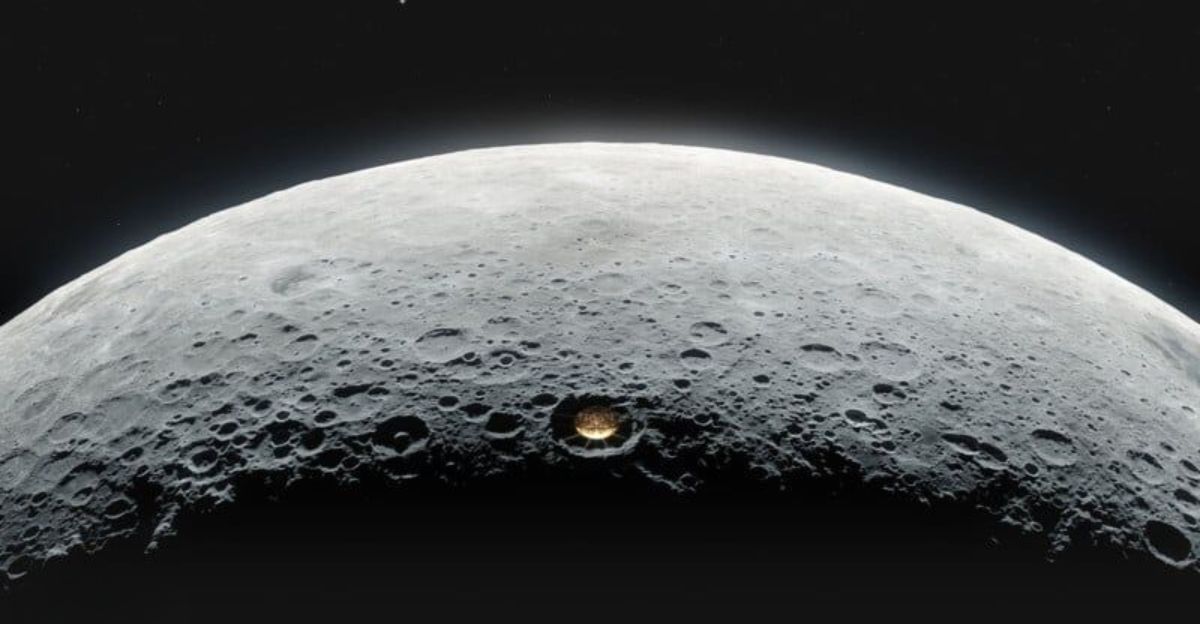
A lunar impact would create a crater about one kilometer wide.
The energy would equal 6.5 megatons of TNT—a medium nuclear bomb. The rock would vaporize and shoot outward at an extreme speed. Some debris would escape the Moon entirely.
Heat, shock waves, and landscape changes would follow. The crater would be similar to large impact craters on Earth.
A Hundred Million Tons of Debris
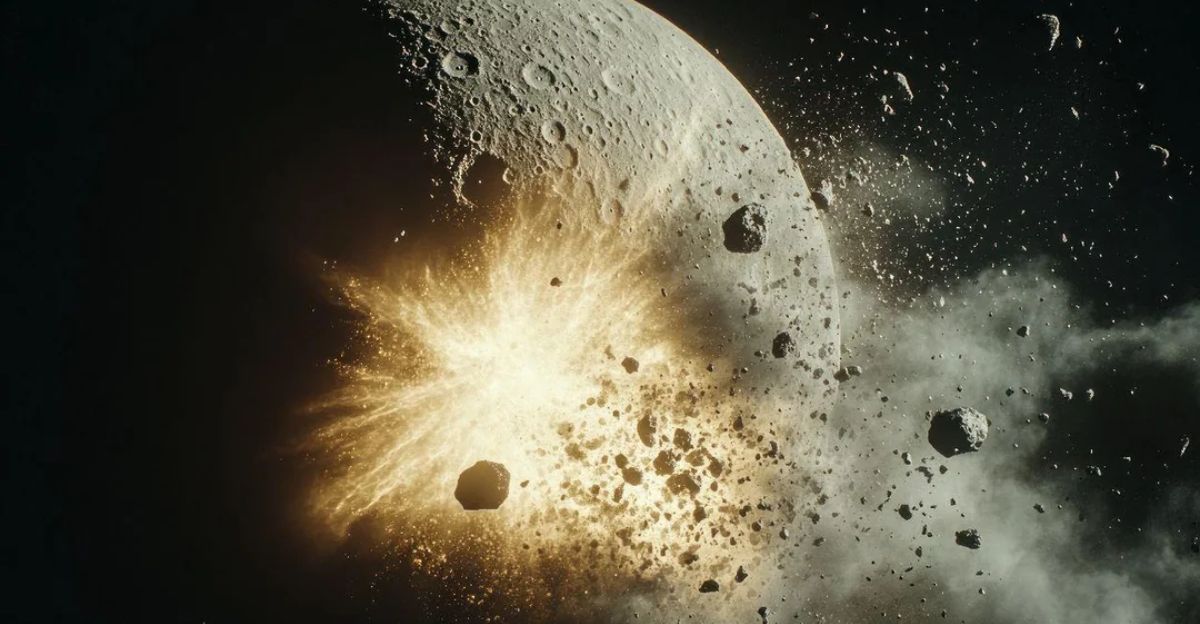
The impact would throw roughly 100 million kilograms (110,000 tons) into space.
This isn’t dust, but rather rock fragments ranging from millimeters to meters. Debris would fly faster than the Moon’s escape speed. Up to 10% could reach Earth’s orbit within days.
The debris cloud would follow complex trajectories. Some would be pulled to Earth; other pieces would be lost to space.
Satellites in the Crosshairs
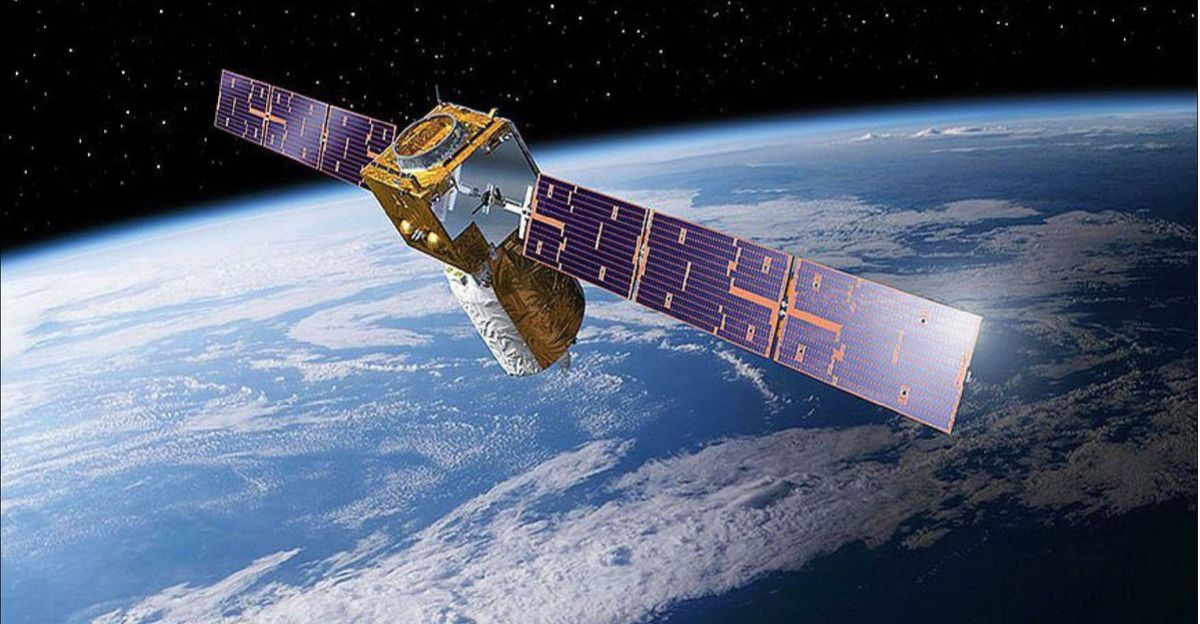
Dr. Paul Wiegert’s team studied the threat to orbiting satellites. Debris could expose satellites to “a decade’s worth of impacts in just days.”
Millimeter particles could strike 10 to 1,000 times harder than normal. Almost 90% of satellites orbit in Low Earth Orbit (LEO). Tiny impacts rarely end missions.
However, thousands of hits would age satellites more rapidly and shorten their lifespan.
The Lunar Gateway Stakes
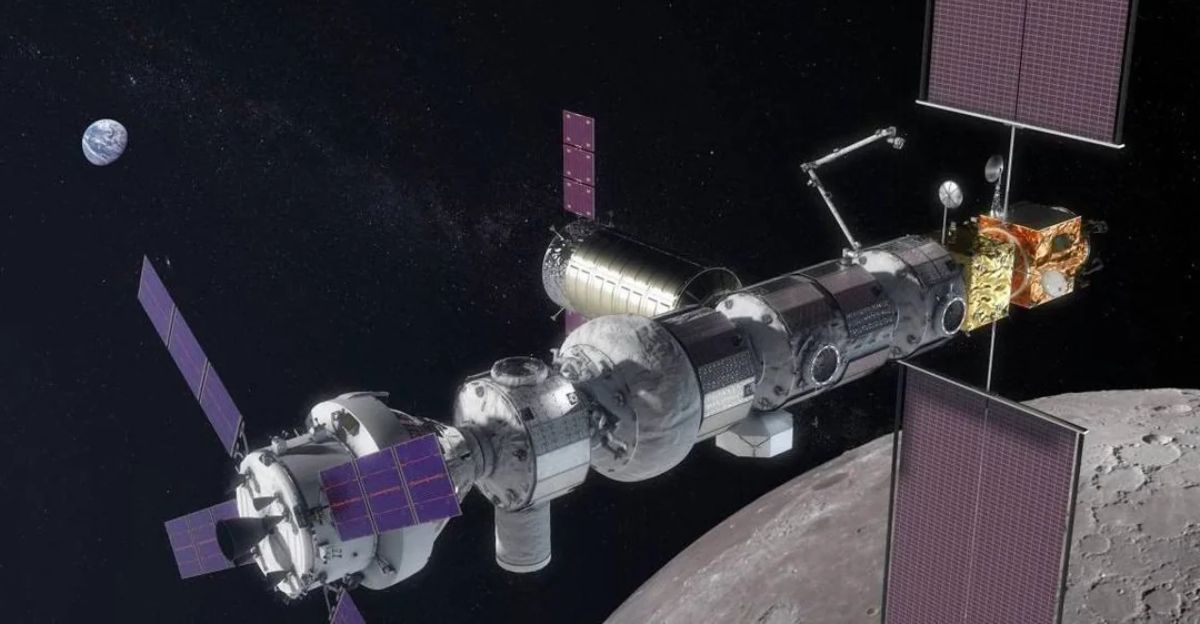
NASA’s future Lunar Gateway space station would face serious risks.
Crewed lunar missions would be in even greater danger. Debris would scatter across the Moon’s surface as it falls back.
Astronauts could face particles traveling at 10 kilometers per second (22,400 miles per hour). The hazard period would last days in late 2032. This creates a critical safety window for future Moon operations.
The Webb Confirmation
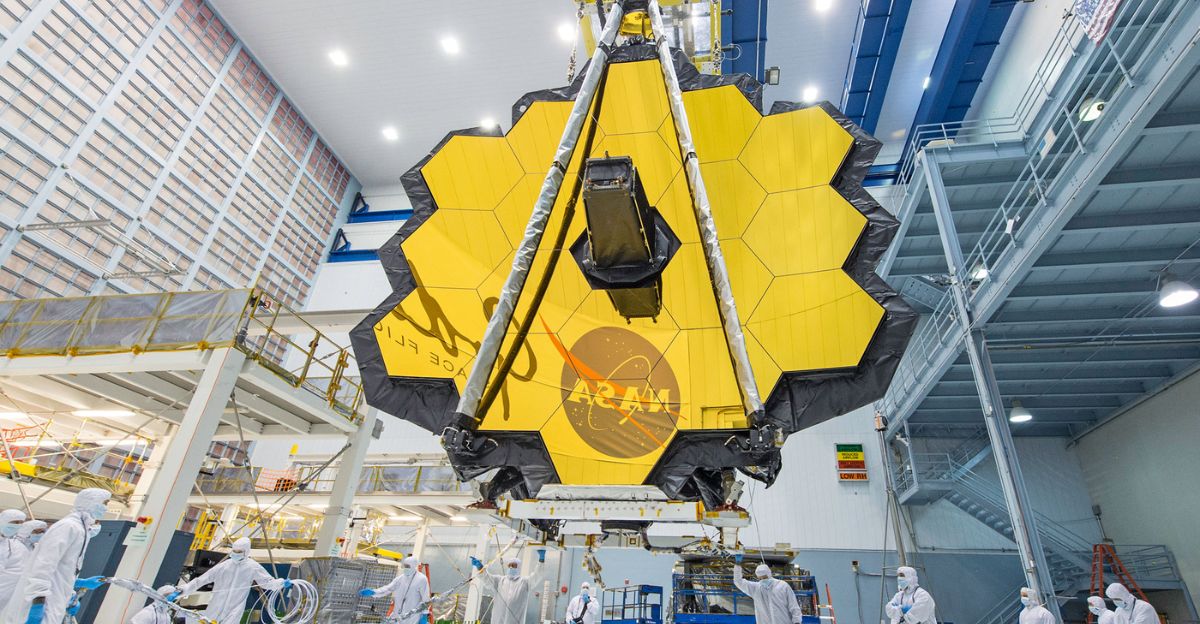
On March 26, 2025, the James Webb Space Telescope precisely measured the asteroid’s size. It used infrared heat, not reflected light.
This method is effective regardless of surface brightness or orbital parameters. Webb confirmed the 60-meter estimate within tight margins.
This was one of JWST’s smallest observations. Better size data improved all risk and crater calculations.
20 Percent Better Data
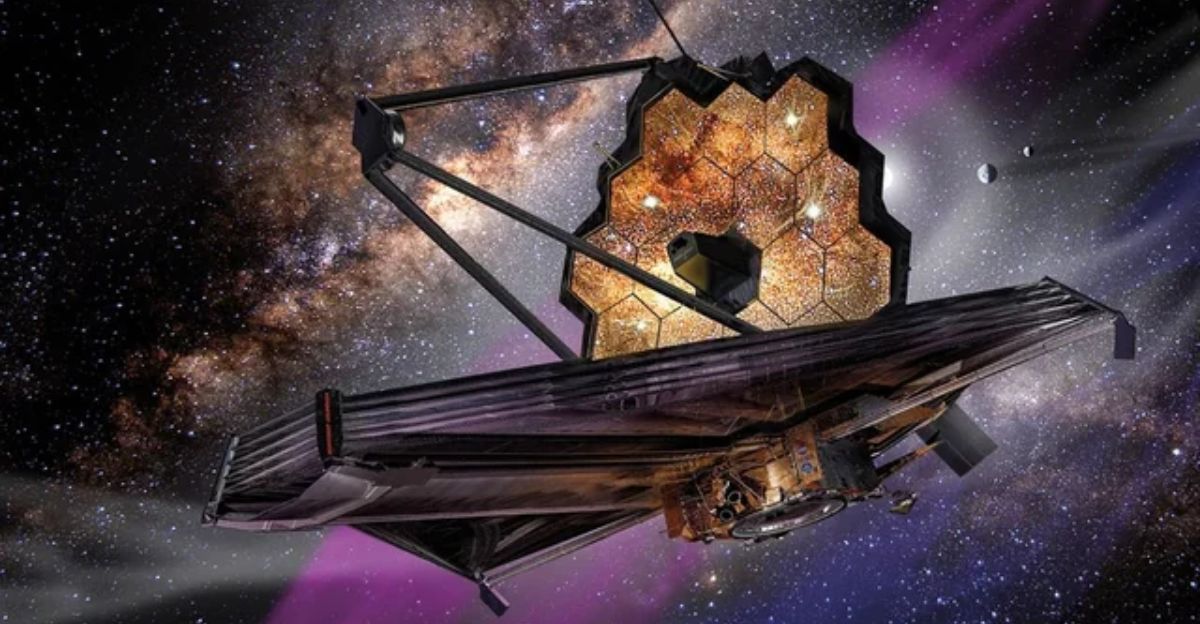
Webb’s observations improved orbital accuracy by about 20%.
The prediction corridor became much tighter. All calculations improved: Earth impact, Moon impact, strike location, debris paths.
Small improvements in orbital knowledge create big gains in hazard forecasting. The 2028 Earth close pass will offer ground telescopes another opportunity for refinement.
Each data point makes predictions more reliable.
When Observation Windows Close
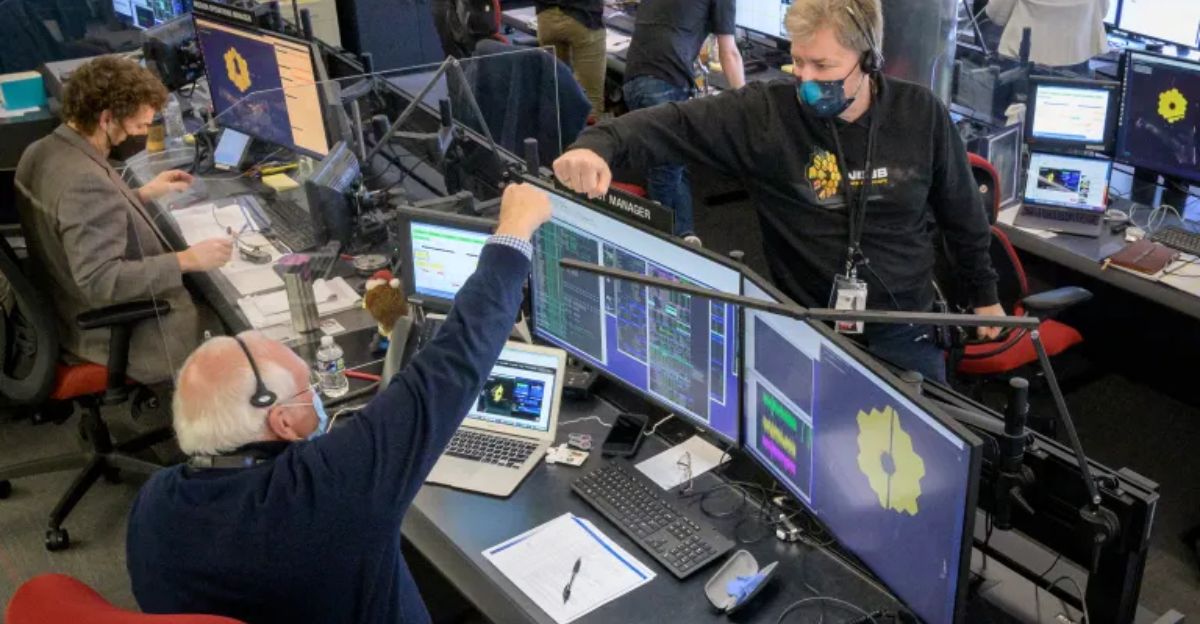
The asteroid moved behind the Sun by April 2025 (called conjunction). No telescope on Earth could track it until 2028. This multi-year gap means trajectory changes would go undetected.
Uncertainty could grow. “The asteroid should remain observable through early April,” NASA noted. Computer models and old data would guide predictions.
The 2028 pass becomes critical for confirmation.
The 2028 Window
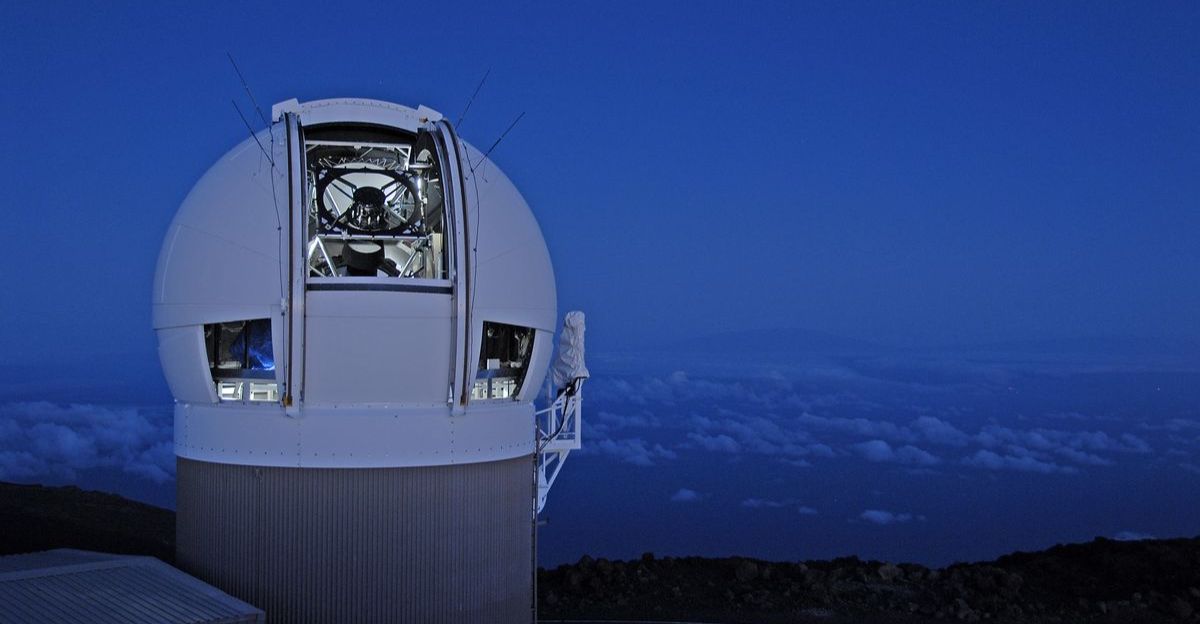
In 2028, the asteroid passes near Earth again on its path to the Moon. Scientists will use ground radar, space infrared sensors, and optical telescopes.
These observations will refine the trajectory more than Webb could. Data may confirm or eliminate the risk of a lunar impact.
This is the last major observation before 2032. Error margins shrink as the date approaches.
Planetary Defense Options
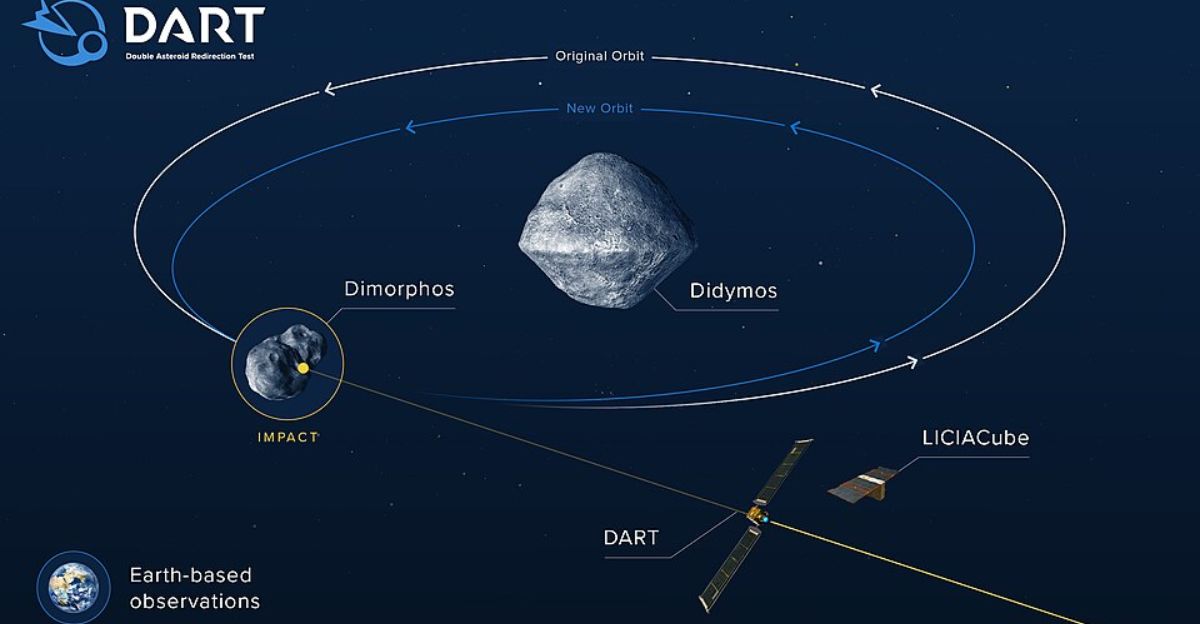
If the asteroid heads for impact, scientists have options. Kinetic impactor spacecraft—like NASA’s DART mission—can deflect asteroids.
DART successfully moved asteroid Dimorphos in 2022. Nuclear explosions remain a controversial option. Four years of warning (2028–2032) allows time to build and launch a mission.
A 4.3% lunar impact probability doesn’t require action at this time. But planning continues.
“Extend That Shield a Little Bit Further”

Dr. Paul Wiegert offered a key insight in media interviews.
“We need to extend that shield a little bit further,” he said. Planetary defense traditionally meant protecting Earth only.
However, the 2024 YR4 shows that risks now extend to the space between Earth and the Moon.
Satellites, stations, and lunar bases occupy this region. As humanity expands outward, defense must too.
Regulatory Response and Coordination
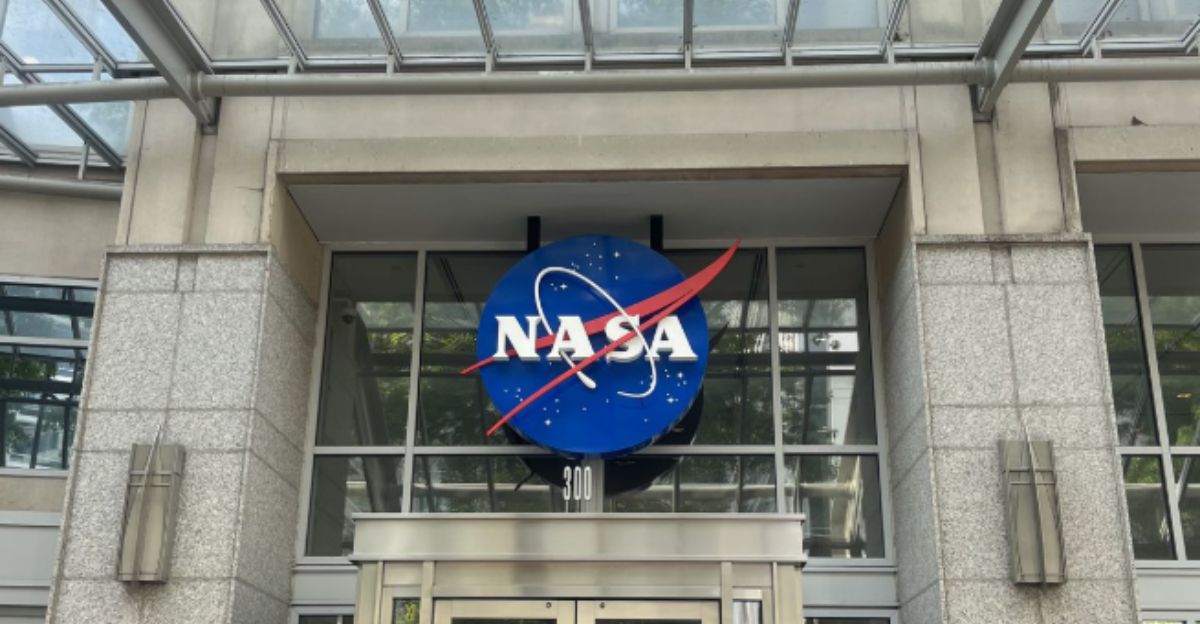
NASA’s Planetary Defense Office coordinated the international response using established protocols.
The International Asteroid Warning Network (IAWN) notified 58 countries. The Minor Planet Center maintained the asteroid database. ESA independently verified calculations.
This decentralized approach worked well. No single agency owned the information. Open scientific collaboration prevented panic while keeping the public informed.
Satellite Industry Implications
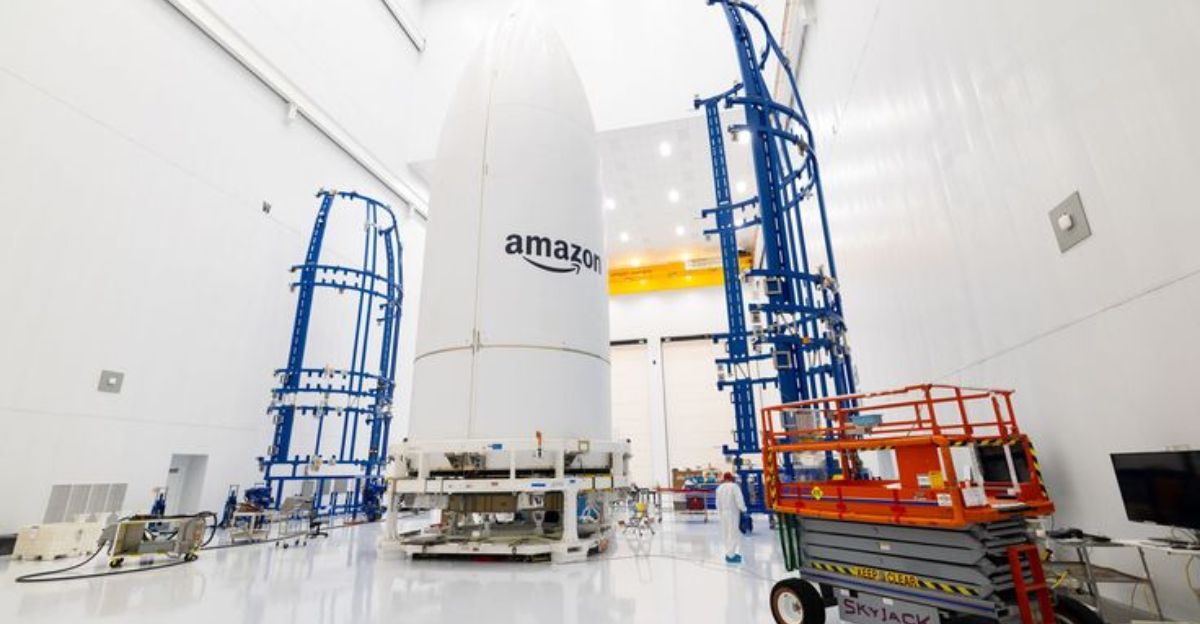
Satellite companies examined collision risks for 2032. Starlink, Amazon Kuiper, and others studied evasive maneuvers. Insurance companies requested new risk assessments.
Space infrastructure owners realized orbits aren’t perfectly safe. Debris storms would persist for days. Temporary orbit adjustments might be needed.
The satellite industry is worth over $100 billion. Planetary defense now attracts business attention.
Public Perception and Misinformation

Social media exaggerated the threat. Some posts falsely claimed an imminent impact on Earth. The Planetary Society’s experts corrected misconceptions.
They compared the risk to car accidents: a low probability but manageable one. CNN and NPR reported facts: genuine scientific interest, but low catastrophic risk.
The episode showed both effective scientific communication and public vulnerability to false claims.
Historical Precedent: From Apophis to Today
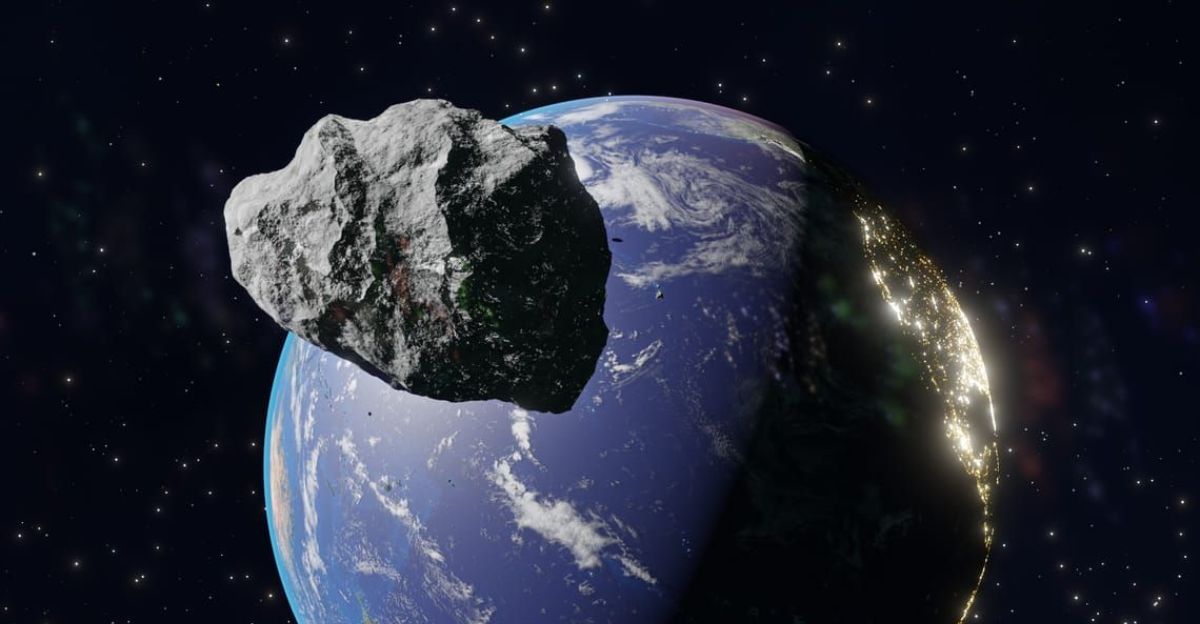
Asteroid 2024 YR4 follows Apophis’s pattern. Apophis scored a Level 4 (the highest) when it was discovered in 2004. Risk declined as better data arrived.
By August 2006, it dropped to Level 0. Today, Apophis poses no threat. The 2024 YR4 trajectory suggests a similar resolution: high uncertainty, followed by a dramatic risk reduction.
By 2028, risk should stabilize. Planetary defense lessons from Apophis prove useful again.
The Bottom Line
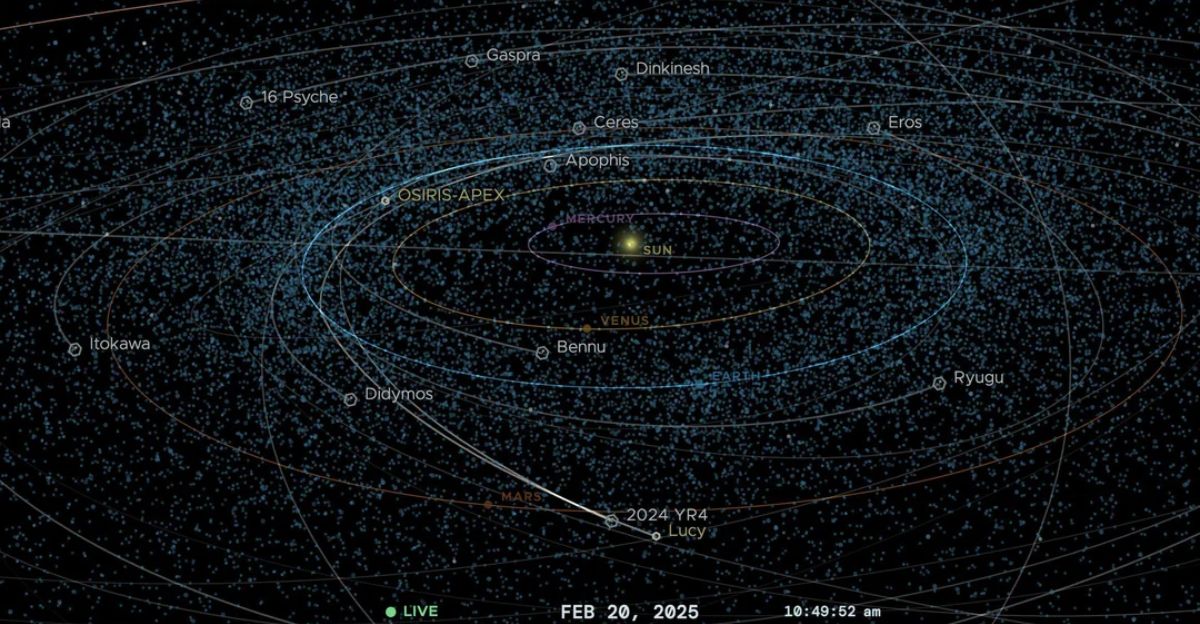
Asteroid 2024 YR4 is a real object and has been tracked precisely.
It presents a manageable planetary defense scenario. The 4.3% Moon impact probability doesn’t require emergency action at this time.
If it strikes, satellites face temporary challenges, but Earth stays safe. Scientists will observe in 2028 and determine if mitigation is effective.
The case demonstrates planetary defense in action, encompassing detection, communication, coordination, and planning.