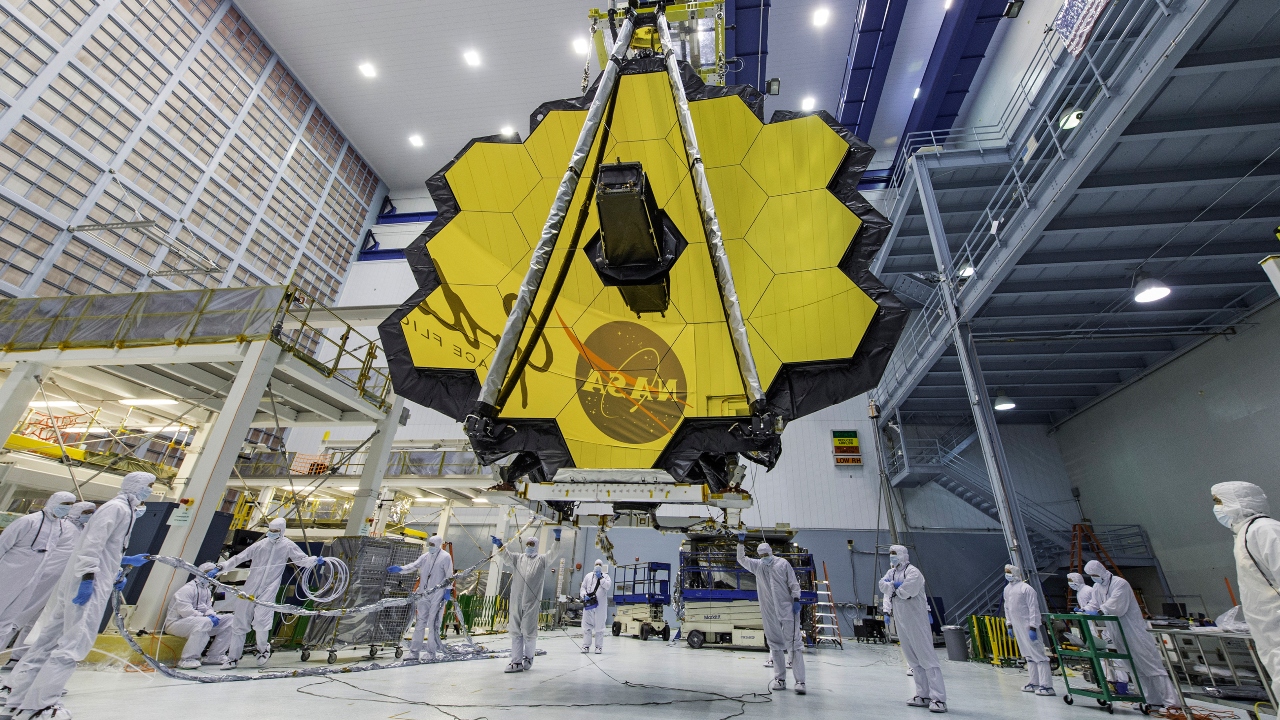
Scientists using the James Webb Space Telescope (JWST) have spotted unusual gases in the air of a planet called K2-18b, which is 124 light-years away. These gases, on Earth, come mostly from living things like tiny sea creatures. The discovery doesn’t prove life exists there, but it’s a big step toward finding planets that could support life outside our solar system.
K2-18b orbits a cool red dwarf star in the Leo constellation. It sits in the “habitable zone,” where temperatures might allow liquid water to exist. The planet is 2.6 times wider than Earth and over eight times heavier. Experts call it a “super-Earth” or “sub-Neptune.” It likely has a thick atmosphere full of hydrogen and possibly big amounts of water on the surface or in a hidden global ocean under clouds.
JWST studies the planet by breaking its starlight into colors, like a rainbow. Each gas absorbs light in a unique way, creating a “fingerprint” that tells scientists what’s in the air. On K2-18b, they’ve found clear signs of methane and carbon dioxide. There’s almost no ammonia, and hints of sulfur gases that Earth life makes.
Possible Signs from Living Things

The most exciting find is traces of two gases: dimethyl sulfide (DMS) and dimethyl disulfide (DMDS). On Earth, tiny ocean life like plankton and bacteria produce almost all of these. They help with chemistry in seas and skies. Finding them on another planet would be amazing because they rarely form without life here.
But K2-18b is not like Earth. It’s probably a “hycean” world, a planet with a hydrogen-heavy atmosphere and maybe a deep ocean. Strange chemical reactions from rocks or air might make these sulfur gases without any life. Scientists need more data, computer models, and checks from other teams to tell biology from non-living causes.
The air also has lots of methane and carbon dioxide but very little ammonia. On Earth, ammonia mixes easily with water. Its absence on K2-18b suggests it might sink into a big ocean below. This fits ideas about hycean planets. Other ideas include radiation breaking it down or it hiding deep inside. Experts are still studying these.
How Sure Are Scientists?

Spotting gases from so far away is tricky because signals are weak. Astronomers use stats to measure confidence. For K2-18b, the gas signs hit “three-sigma,” or about 99.7% sure. That’s good, but there’s still a small chance it’s just noise or telescope glitches.
For huge claims like life signs, scientists want “five-sigma”, a one-in-millions error chance. Reaching that needs more JWST looks, better data crunching, and independent checks. This could take one to two years with new observations.
Even with doubts, K2-18b is now a star in exoplanet research. It’s one of the first small habitable-zone planets where JWST could spot complex molecules linked to Earth life. This alone is a huge tech win, turning a blurry dot into a real habitability puzzle.
The Future Hunt for Life-Friendly Worlds
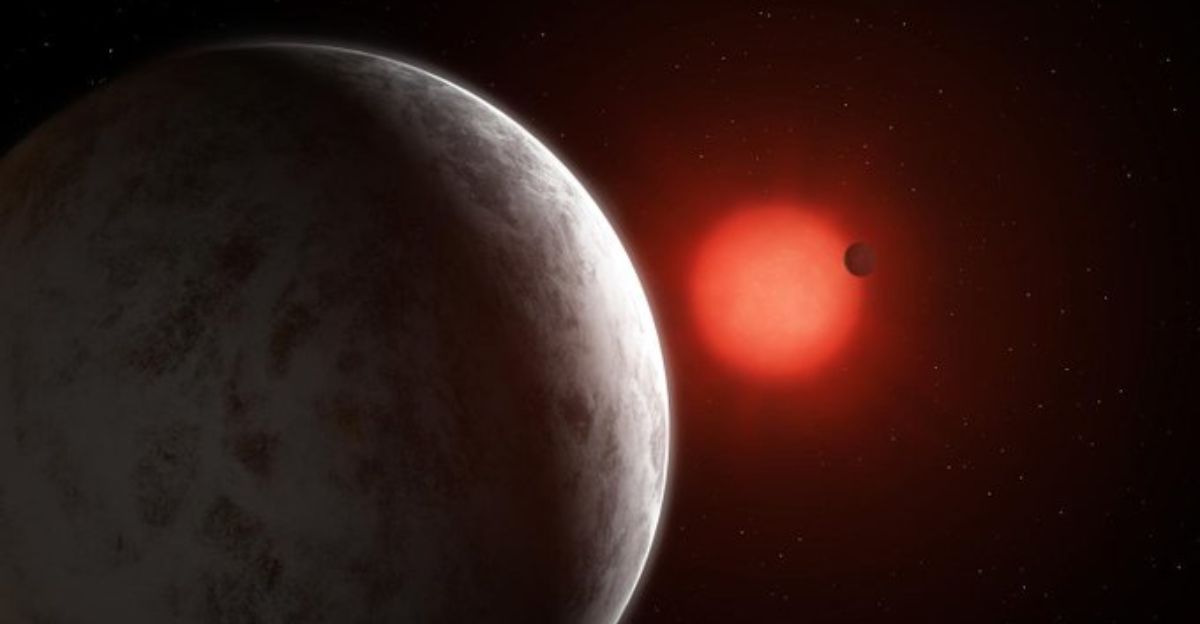
K2-18b circles its star in just 33 days, much quicker than Earth’s year. The star is cooler and dimmer than our Sun, so the planet stays close but gets Earth-like energy. Its size and thick air make it perfect for JWST’s infrared tools, which spot water vapor, methane, CO2, and sulfur through atmospheres.
JWST launched in 2021 with a 6.5-meter mirror and super-sensitive detectors. It beats older telescopes at reading exoplanet airs, especially for rare gases and hidden oceans under hydrogen skies. K2-18b is an early success, but many more planets await study in habitable zones.
Debate continues on K2-18b’s true look. It could be an ocean world with thick air, a mini gas giant with rock inside, or something with little water. More data will sort this out.
Even if no life shows up, K2-18b will teach us how to read far-off atmospheres. If DMS levels prove sky-high and non-life causes fail, it could be our first solid sign of alien life. With billions of stars and habitable planets in the Milky Way, life might pop up where conditions fit. At 124 light-years (700 trillion miles), we can’t visit, but remote studies will shape future telescopes and searches.
Sources:
New study revisits signs of life on K2-18 b – Astronomy, New study revisits signs of life on K2-18 b, 30 July 2025
European Space Agency (ESA), Webb discovers methane and carbon dioxide in atmosphere of K2-18 b, 31 August 2023
NASA, Webb discovers methane and carbon dioxide in atmosphere of K2-18 b, 27 August 2025
EurekAlert!, Strongest hints yet of biological activity outside the solar system, 15 April 2025
CNN, Scientists detect signature of life on a distant planet, 2023
BBC, Scientists find promising hints of life on K2-18b, 2023