
Federal investigators in Minnesota uncover “a new $50 million fraud scheme” every single day they investigate state Medicaid programs, according to First Assistant U.S. Attorney Joe Thompson. The staggering revelation came in December 2025 as prosecutors announced that approximately $9 billion in taxpayer funds may have been fraudulently stolen since 2018.
Thompson described the situation bluntly: “The magnitude of fraud in Minnesota cannot be overstated. What we see is staggering, industrial-scale fraud.”
Record-Breaking Theft From Safety Net Programs

Between 2018 and 2025, organized criminal networks systematically exploited Minnesota’s Medicaid and social services programs, creating what prosecutors call the largest welfare fraud crisis in American history. Federal authorities identified 14 “high risk” Medicaid programs with combined billing totaling $18 billion during this period.
Prosecutors estimate that “half or more” of this massive sum was obtained fraudulently through elaborate schemes involving fake patients, phantom services, and falsified documentation.
From Food Aid to Luxury Cars

The corruption touched programs designed to help Minnesota’s most vulnerable residents: children needing meals, autistic kids requiring therapy, seniors seeking housing assistance, and people with disabilities striving for independence. Instead of serving these populations, fraudsters diverted funds to purchase Porsches, luxury goods from Burberry and Louis Vuitton, and transferred millions to foreign accounts.
The schemes were so sophisticated that prosecutors coined the term “fraud tourism” to describe criminals traveling from other states specifically to exploit Minnesota’s programs.
The $250 Million Feeding Scheme

The largest single fraud case centers on Feeding Our Future, a nonprofit that falsely claimed to have distributed 91 million meals to low-income children during the COVID-19 pandemic.
Federal prosecutors allege that ringleader Aimee Bock and restaurant owner Salim Said created paperwork for meals never provided, establishing over 250 supposed food distribution sites statewide. Both were convicted in March 2025 following a six-week trial, with 78 individuals indicted and 59 convicted to date in the sprawling conspiracy.
Stolen Funds Fueled Extravagant Lifestyles

Court documents reveal how defendants spent their ill-gotten gains. Najmo M. Ahmed helped operate Evergreen Grocery and Deli, which received over $4.2 million based on fraudulent food distribution claims. She transferred at least $1.1 million to foreign textile companies while shopping at high-end retailers.
Aimee Bock was ordered to forfeit $5.2 million in assets, including a Porsche, $3.7 million from bank accounts, luxury electronics, and designer goods seized by federal agents.
Autism Services Program Balloons 700%

Minnesota’s Early Intensive Developmental and Behavioral Intervention program experienced suspicious explosive growth from 2018 to 2024, with provider enrollment increasing 700% and payments surging from $6 million to nearly $192 million annually.
Federal prosecutors allege providers recruited children from Minnesota’s Somali community, falsely diagnosing them as eligible for autism treatment and paying parents kickbacks for enrolling their children. One in five of the state’s 450 EIDBI providers came under criminal investigation.
Therapy Center Operator Admits $14 Million Theft

Asha Farhan Hassan, 28, pleaded guilty in December 2025 to stealing $14 million through Smart Therapy Center, which submitted fraudulent autism treatment claims totaling $31.8 million to Minnesota Medicaid. Hassan was simultaneously connected to the Feeding Our Future scheme, having stolen an additional $465,000 from that program.
Her dual participation exemplifies how fraudsters operated across multiple programs simultaneously, maximizing illegal profits while legitimate providers struggled to navigate complex regulations.
Housing Program Collapses Under Weight of Fraud

The Housing Stabilization Services program saw its annual costs explode from a modest $2.6 million budget in 2020 to over $104 million by 2024, driven largely by fraudulent claims rather than genuine service expansion.
The program, designed to help seniors and people with disabilities find housing, became so compromised that the Walz administration shut it down entirely in summer 2025. Prosecutors charged 13 individuals with submitting millions in fake bills for services never rendered to vulnerable populations.
Criminals Travel Across Country to Exploit System

Two Philadelphia residents, Anthony Waddel Jefferson and Lester Brown, allegedly registered fictitious companies as Minnesota service providers and filed $3.5 million in fraudulent claims from across the country.
Their arrests prompted prosecutors to identify “fraud tourism” as an emerging threat, with Minnesota’s programs becoming so notorious among criminal networks that out-of-state actors now view the state as a lucrative target.
New Program Grows 3,600% in Three Years

The Integrated Community Services program experienced the most dramatic growth, expanding from $4.6 million in 2021 to $170 million in 2024—a staggering 3,600% increase in just three years. The program’s “low barriers to entry” allowed providers to begin offering disability services without obtaining licenses, creating opportunities for fraud.
Federal agents executed their first ICS fraud search warrant in December 2025 at Ultimate Home Health Services in Bloomington, which allegedly defrauded Medicaid of $1.1 million within 15 months.
Inspector General Calls Situation ‘Shocking’

Minnesota Department of Human Services Inspector General James Clark described the extent of alleged fraud as “shocking” and emphasized that “fraud has become the business model” for many supposed service providers.
Clark called for immediate meetings with federal prosecutors to coordinate efforts and stated, “If there is evidence of Medicaid fraud, the state should be given the information so DHS can slam the door shut on payments to those individuals and businesses.”
Demographic Concentration Creates Community Tensions

More than 90% of individuals charged in major fraud cases announced through December 2025 were of Somali descent, according to the U.S. Attorney’s Office, though the vast majority are American citizens by birth or naturalization.
Minnesota is home to approximately 108,000 Somalis, the largest Somali population in the United States. The cases have created painful divisions within the Somali community, with many law-abiding Somali Americans feeling unjustly subjected to suspicion as a group rather than focusing on individual criminals.
Viral Video Spreads Unverified Claims
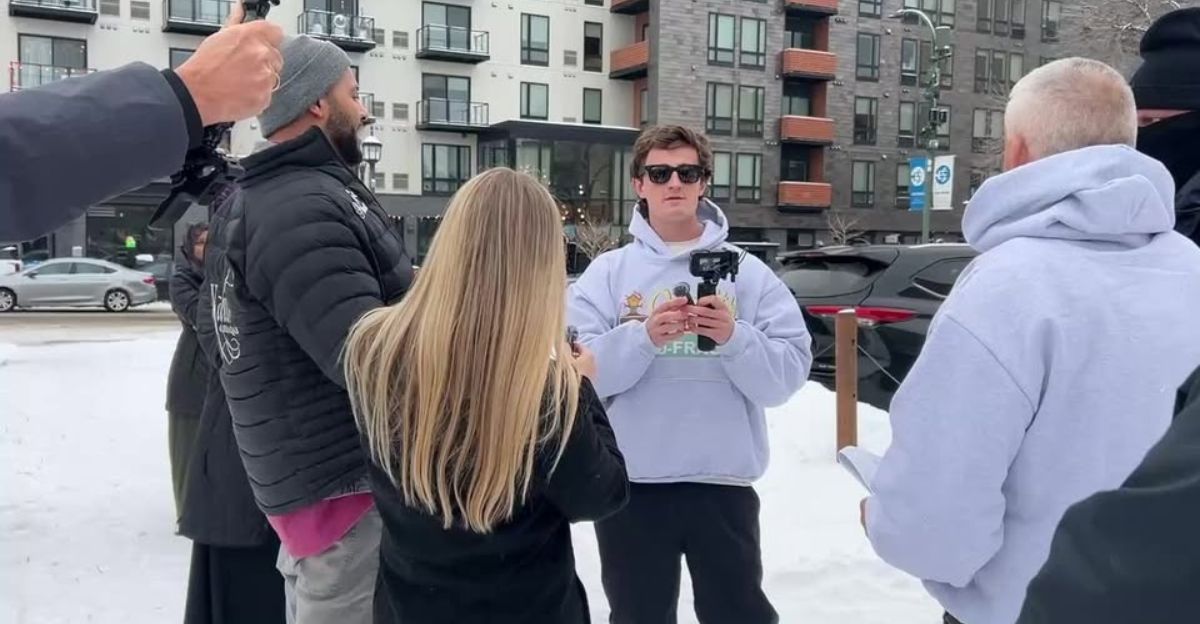
In late December 2025, right-wing YouTube influencer Nick Shirley, 23, posted a 43-minute video titled “I Investigated Minnesota’s Billion Dollar Fraud Scandal,” visiting nearly a dozen Somali-operated daycare centers. Shirley confronted staff, sometimes with up to eight people, demanding to see children or enter without appointments.
However, local news organization WCCO debunked many claims, finding that all but two centers had active licenses and recent state inspections showing no fraud evidence. State officials subsequently found children present at eight of nine locations.
Licensed Daycare Forced to Close Permanently

Quality Learning Center, which became the face of Shirley’s video allegations, closed permanently on January 6, 2026, despite having no proven fraud charges against it. The center had received $1.9 million in tax dollars over its operating history and was last inspected in June 2025, when it was found to have ten safety violations but no evidence of fraud.
The closure demonstrates how viral misinformation can destroy legitimate businesses before investigations conclude, harming both owners and families relying on childcare services.
Trump Administration Freezes $10 Billion Nationwide

On January 6, 2026, the Department of Health and Human Services froze $10 billion in federal funding for child care subsidies, social services, and cash assistance across five Democratic-led states: Minnesota, New York, California, Illinois, and Colorado.
The freeze affects the Temporary Assistance for Needy Families program ($7 billion), the Child Care and Development Fund ($2.4 billion), and Social Services Block Grants ($870 million). Millions of low-income families who depend on these programs for basic needs now face uncertainty.
Presidential Rhetoric Targets Immigrant Community

President Trump made inflammatory statements about Minnesota’s Somali community, calling Somali immigrants “garbage” who “contribute nothing” to American society. He ended temporary deportation protections for Somali immigrants in Minnesota, claiming without evidence that “Somali gangs are terrorizing the people of that great State.”
The Trump administration deployed approximately 2,000 Department of Homeland Security agents to the Twin Cities in early January 2026, creating fear in immigrant communities regardless of their involvement in any criminal activity.
Governor Abandons Reelection Bid

On January 6, 2026, Governor Tim Walz announced he would not seek a third term, citing the need to focus on fighting fraud without campaign constraints. Walz stated, “An organized group of criminals have sought to take advantage of our state’s generosity, but we now see an organized group of political actors seeking to take advantage of the crisis.”
His decision reflects intense political pressure as Republicans accused him of enabling fraud by ignoring whistleblower warnings and retaliating against those who raised concerns.
Congressional Investigation Demands Answers

The House Oversight Committee held a hearing on January 6, 2026, where Minnesota state lawmakers testified that Walz and Attorney General Keith Ellison failed to act on fraud warnings.
State Representative Kristin Robbins testified that “Tim Walz and his Administration have willfully turned a blind eye to crime, in the face of countless whistleblower and Auditor reports.” The committee invited both officials to testify in February 2026, threatening subpoenas if they don’t appear voluntarily before Congress.
Five States Sue to Restore Funding

California, Colorado, Illinois, Minnesota, and New York filed a lawsuit on January 8, 2026, against the Trump administration seeking to halt the $10 billion funding freeze. The states argue the action is unconstitutional and breaches federal laws governing assistance programs, which require specific procedures before terminating funding.
The lawsuit seeks immediate injunctive relief to restore funding for vulnerable populations while legal challenges proceed, setting up a major confrontation between state and federal authorities.
Investigation Continues to Expand Nationwide

Federal prosecutors continue announcing new indictments weekly as they work through evidence seized from hundreds of locations across Minnesota. The scandal has prompted calls for a nationwide review of Medicaid oversight systems, with states from California to New York now examining whether similar vulnerabilities exist in their programs.
Other state auditors report finding suspicious patterns in autism services, housing assistance, and food distribution programs that mirror Minnesota’s red flags, suggesting the problem may extend far beyond one state’s borders.
Legitimate Services Face Existential Threat

Federal prosecutor Thompson warned, “No one will back these programs if they continue to be plagued by fraud,” noting that criminal schemes threaten services for people who genuinely need them. The state implemented a 90-day suspension of payments across all 14 high-risk programs and enlisted third-party auditors to scrutinize every claim before disbursement.
Minnesota mandated comprehensive audits of high-risk Medicaid programs, expected to be completed by late January 2026, as authorities scramble to restore public trust.
Long Road to Recovery and Reform

Minnesota officials estimate it may take years to fully uncover the scope of fraudulent activity and implement comprehensive reforms that prevent future exploitation. Several factors enabled the fraud: COVID-19 pandemic rule changes allowing easier remote billing, explosive payment growth outpacing oversight capacity, programs with minimal licensing requirements, and fraudsters providing kickbacks to enroll people in services.
State officials must now balance aggressive fraud prevention with ensuring legitimate providers can continue serving vulnerable populations without excessive bureaucratic barriers that could delay critical care to those who truly need it.
Sources:
“At least $9B billed across 14 Medicaid services in Minnesota may be fraudulent, US attorney.” CBS News Minnesota, December 17, 2025.
“How Fraud Swamped Minnesota’s Social Services System.” The New York Times, November 29, 2025.
“Key figures in the controversy over alleged fraud in Minnesota programs.” CNN, January 2, 2026.
“Federal judge orders forfeiture of $5.2 million from Feeding Our Future founder.” KOMO News, January 6, 2026.
“Right-wing influencer’s fraud claim leads to threats for Somali daycare owners.” NPR, January 2, 2026.
“Minnesota lawmakers highlight fraud schemes at hearing.” CBS News, January 6, 2026.
“Trump administration freezes $10 billion in child, family aid.” CNBC, January 6, 2026.
“Tim Walz Says He Ended Minnesota Governor Run to Fight Fraud.” The New York Times, January 6, 2026.