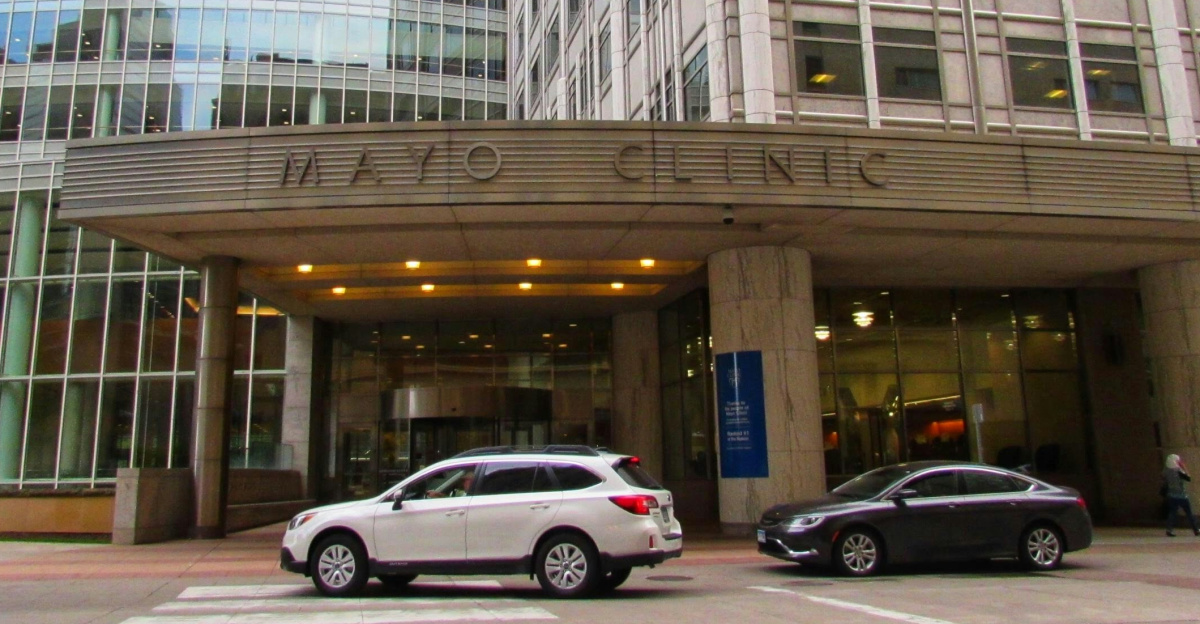
On December 10, 2025, Mayo Clinic closed 6 clinics across southeastern Minnesota, cutting local access for up to 25,000 residents. The move came just 3 months after September’s announcement, forcing patients to travel 6 to 23 miles for basic primary care. It marked Mayo’s 25th clinic closure in 8 years. The numbers look clinical, but the human fallout spread quickly.
Six Towns Left Without Nearby Care

Belle Plaine, Caledonia, Montgomery, Northridge, St. Peter, and Wells watched local clinic doors shut in December. Some places, like Montgomery with 3,537 residents, lost the last healthcare site in town. Patients now face 15+ minute drives for routine appointments. One retired resident said, “Having a clinic in town is very important to us. That’s the last thing I want to see.” Her worry echoed widely.
A Young Mother’s Longer Drive

Mikayla Grenburg, a young mother in the Mankato area, described what the change means at home: “Now I have to travel an extra 20 minutes there and back just to get my son his needed medical care. Traveling that much extra time with a few-month-old baby is difficult.” Transportation became her biggest obstacle to staying on track medically. Her story also highlights who absorbs the burden first.
Mayo’s Official Reason For Closing
Mayo Clinic pointed to “staffing shortages and declining patient volumes” as the reason for consolidation. Dr. Karthik Ghosh, Vice President of Mayo Clinic Health System Minnesota, said: “These decisions reflect the realities of delivering high-quality care in smaller communities today.” Mayo also noted that many small clinics depend on only one or two physicians, so a single departure can destabilize access. The explanation sounds practical, but it raises another question.
The Shortage Didn’t Start Yesterday

Staffing pressures built up for years. While 20% of Americans live in rural areas, only 10% of physicians practice in these areas. Rural pay tends to be lower, childcare options can be limited, and career advancement is more challenging. Minnesota has 69 counties designated as Primary Care Health Professional Shortage Areas, meaning 2 out of every 3 counties already face gaps. Mayo’s closures exacerbate the existing shortage rather than alleviating it.
Closures Became A Familiar Pattern

These shutdowns were Mayo’s 25th clinic closure in 8 years across southern Minnesota, Wisconsin, and Iowa. The pace picked up after 2020, when pandemic disruption met tightening Medicaid pressures. Yet, the Mayo Clinic Health System reported strong 2024 performance with $1.29 billion in total income, raising doubts about the pure financial necessity. If profitability isn’t the only driver, the strategy looks more deliberate than reactive.
The Residents Who Feel It First

The heaviest hit lands on people with the fewest options: elderly patients on fixed incomes, disabled residents needing frequent care, and low-income families juggling costs. Rural residents were already 55.8% more likely than urban residents to cite gasoline and travel expenses as serious barriers. Adding 6 to 23 miles each way can push preventive care out of reach. The distance is measurable, but the losses compound quietly.
Workers Left In Limbo After Closures

Between 180 and 360 healthcare workers lost jobs or faced uncertain relocation after the 6 clinics closed. Mayo said staff would “receive guidance” exploring “future employment options,” wording that does not guarantee placement. Union voices warned that shuttering clinics drains a town’s economy along with its care. Mayo has not disclosed detailed employment outcomes. When healthcare jobs disappear, local stability can vanish with them.
Clinics Anchor Small Town Economies

Rural clinics and hospitals are often among the largest employers in town. Research cited in the draft notes that 1 rural primary care physician supports 26.3 local jobs and generates $1.4 million in annual labor income. Montgomery’s loss means more than medical inconvenience; it threatens payrolls, spending, and tax base. Closures also ripple into supply chains, administration, and support services. That economic shock helps explain why locals view healthcare as a public good, not a commodity.
Albert Lea And A Promise That Faded

Albert Lea also faced service cutbacks beyond the 6 clinic closures. Mayo relocated elective outpatient procedures in ophthalmology, orthopedics, endoscopy, and gynecology to Austin and Waseca, approximately 25 miles away. In 2017, Mayo had assured residents that outpatient surgery “is the future” and would thrive locally. The December announcement undercut that assurance and reinforced fears about short-lived commitments. Once trust erodes, communities stop believing reassurances.
Travel Burdens Already Ran High

Even before the closures, rural patients typically traveled 18 miles for medical care, nearly double the average urban distance. Now, many affected residents must add 6 to 23 more miles per visit. For seniors with limited transportation, that is not just an inconvenience; it can become a reason to skip care. Studies cited in the draft link transportation barriers to 43% more missed appointments and similar declines in screenings. A small extra trip can lead to a significant decline in health.
Why Virtual Visits Can’t Fill The Gap

Mayo promoted “Primary Care On Demand,” its 24/7 virtual option, as an alternative to local clinics. But about 1 in 10 rural Minnesotans lack reliable broadband for video visits. Rural residents also used phone and video visits at lower rates than urban patients, even when such technology was available. Treating telehealth as a full replacement ignores the digital divide and the need for hands-on exams. Virtual care can help, but it cannot be the whole system.
A National Collapse, Not Just Minnesota

Mayo’s choices mirror a wider U.S. crisis. More than 130 rural hospitals have closed since 2010. As of 2025, over 700 rural hospitals face closure risk, with 300 at immediate risk. Nearly 60% of rural hospitals no longer deliver babies, and 117 have ended labor and delivery services since 2020, about 2 each month. Rural healthcare is shrinking faster than policymakers can respond, and communities are noticing the acceleration.
Minnesota’s Rural Squeeze Is Severe

Minnesota’s numbers are stark: 69 of 87 counties, or 79%, are designated Primary Care Health Professional Shortage Areas. Rural residents spend an average of 64 minutes traveling for medical-surgical care, compared with 19 minutes in urban areas. The state applied for $1 billion in federal Rural Health Transformation Program funding to blunt the crisis. Yet Mayo’s closures suggest consolidation is moving faster than reforms. When systems centralize, geography turns into destiny for many patients.
Medicaid Cuts Add New Pressure

The “One Big Beautiful Bill Act,” signed July 4, 2025, set $911 billion in Medicaid cuts over 10 years, intensifying rural uncertainty. Rural hospitals rely heavily on Medicaid, accounting for approximately 20% of their revenues, and face a projected 21% decline in reimbursement. Republicans added a $50 billion Rural Health Transformation Fund, but experts say that covers only 37% of expected rural Medicaid losses, leaving an $87 billion gap. That math signals what many administrators fear is coming.
Communities Push Back Anyway

Albert Lea residents are not accepting decline quietly. The Albert Lea Health Care Coalition is organizing alternatives. Brad Arends, its President, said: “We’re not surprised by it… I think this was probably the plan all along.” The coalition raised millions in donations to launch 2 new clinics, one for employer groups and one with new providers, aiming for availability within 6 months. Retired Mayo doctors even offered part-time help, showing local resolve can outlast corporate plans.
When Missed Care Becomes A Pattern

Transportation barriers produce real health consequences. Rural seniors without reliable rides skip screenings, miss chronic disease visits, and delay treatment until problems become emergencies. The draft cites studies showing transportation-limited seniors sometimes choose to forgo care rather than pay the travel cost. Mental health also suffers: rural suicide rates are 16 per 100,000 versus 11.8 per 100,000 in urban areas, even with similar overall health perception. If care keeps moving away, what happens to those already struggling?
Minnesota Tries To Buy Time

The Minnesota Department of Health submitted a Rural Health Transformation Program application seeking $1 billion over 5 years. The plan emphasizes workforce recruitment and retention, technology infrastructure, preventive community care, and regional collaboration. The central problem is timing: federal investment arrives in phases, while clinic doors can close overnight. That mismatch leaves towns exposed in the gap between planning and reality. Funding may be essential, but closures force immediate improvisation.
A Fork In The Road For Rural Care

Rural healthcare now faces two trajectories. Continued consolidation means more clinic closures, more rural hospital shutdowns, expanding medical deserts, and widening inequities year after year. The alternative requires urgent policy shifts: reimbursement parity that reflects higher rural costs, loan forgiveness and rural training pipelines, broadband investment, and transportation support. Mayo’s latest moves suggest consolidation is currently winning. The open question is whether public policy can change incentives fast enough to matter.
The Decision Point Still Ahead

Mayo Clinic closed 6 clinics, but the larger rural healthcare story is still unfolding. Communities want to know whether leaders will invest in workforce development and reimbursement reform, or accept growing medical deserts. They also wonder if Rural Health Transformation funding will reach the ground in time, or arrive after more doors shut. Rural Minnesota is waiting, and so is rural America. The only real uncertainty is how many more towns lose care before action finally catches up.
Sources
Mayo Clinic to close 6 clinics, consolidate service lines. Healthcare Dive, September 9, 2025
Mayo Clinic to shutter 6 clinics, consolidate care. Becker’s Hospital Review, September 8, 2025
Mayo Clinic closes 6 rural Minnesota health clinics, more may follow. MPR News, December 19, 2025
Clinical Service Transitions. Mayo Clinic Health System, updated December 11, 2025
The Loss of a Rural Hospital Is Devastating for a Local Community. Boston University School of Public Health, 2025