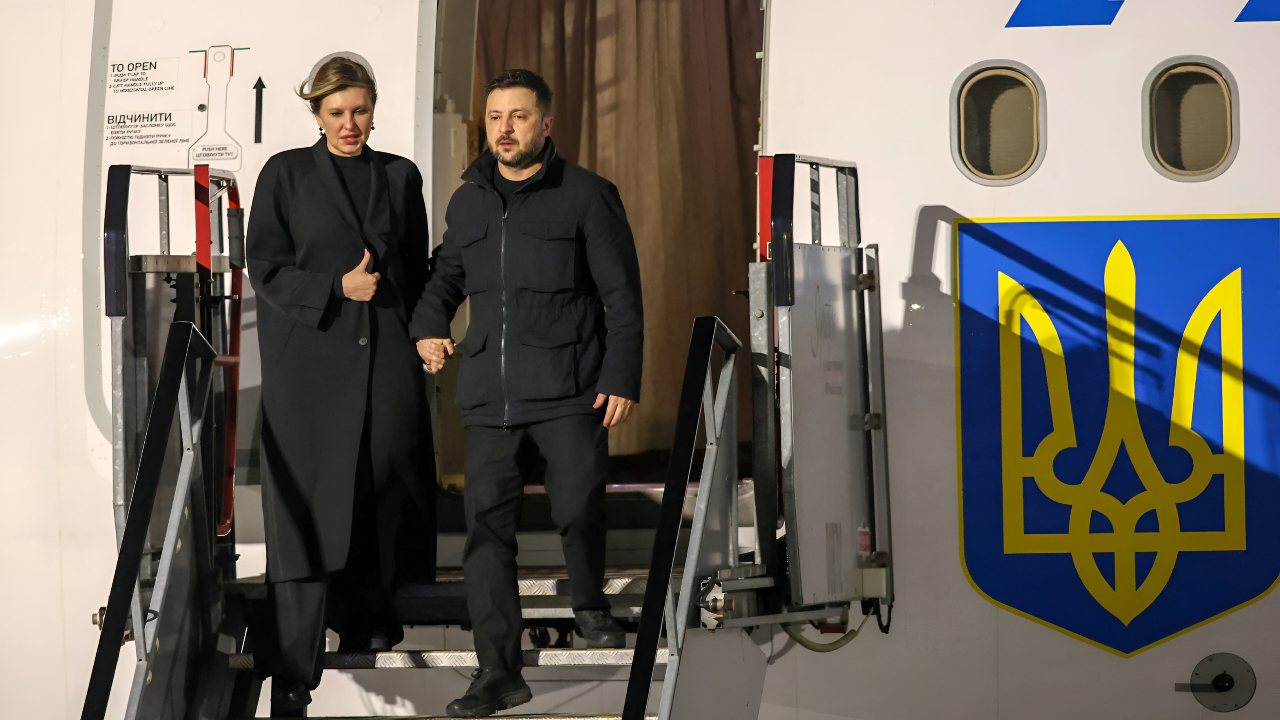
Four military-grade drones came within seconds of intersecting President Volodymyr Zelenskyy’s flight over the Irish Sea on the night of December 1, in an incident that has exposed a profound gap in Ireland’s ability to protect its own airspace. His aircraft landed in Dublin slightly ahead of schedule, narrowly avoiding the drones, which reached the designated intercept point just after the plane had passed through it. The operation unfolded entirely within Irish territorial waters and was unknown to most of the country as Zelenskyy began a high-profile visit the following day.
Unseen Threat Above the Irish Sea
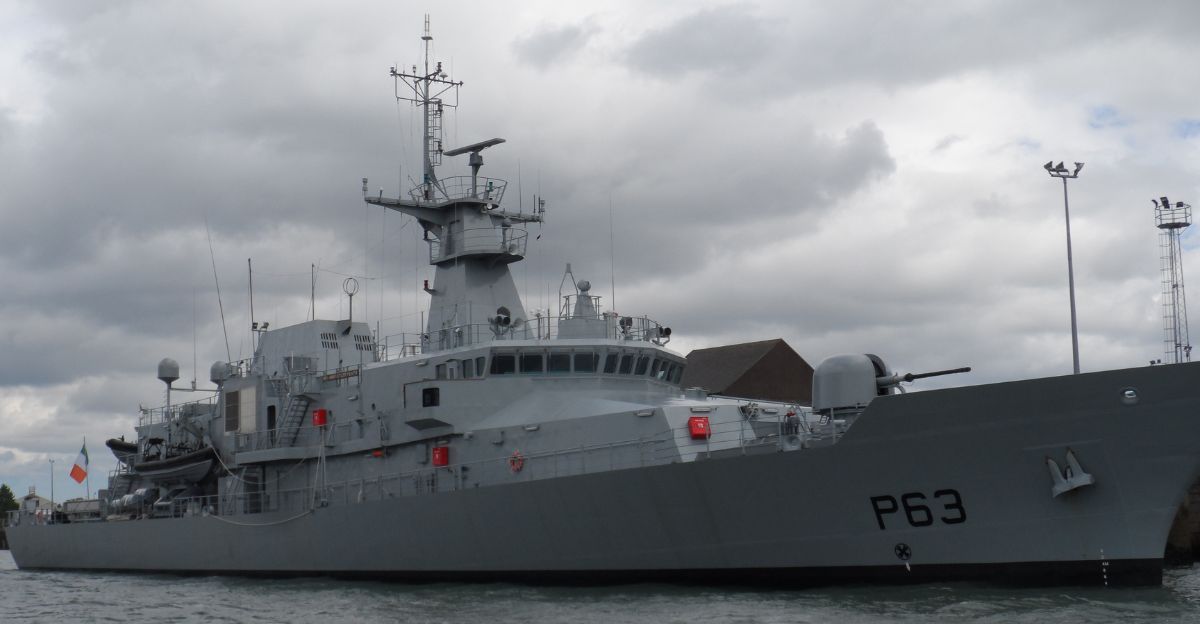
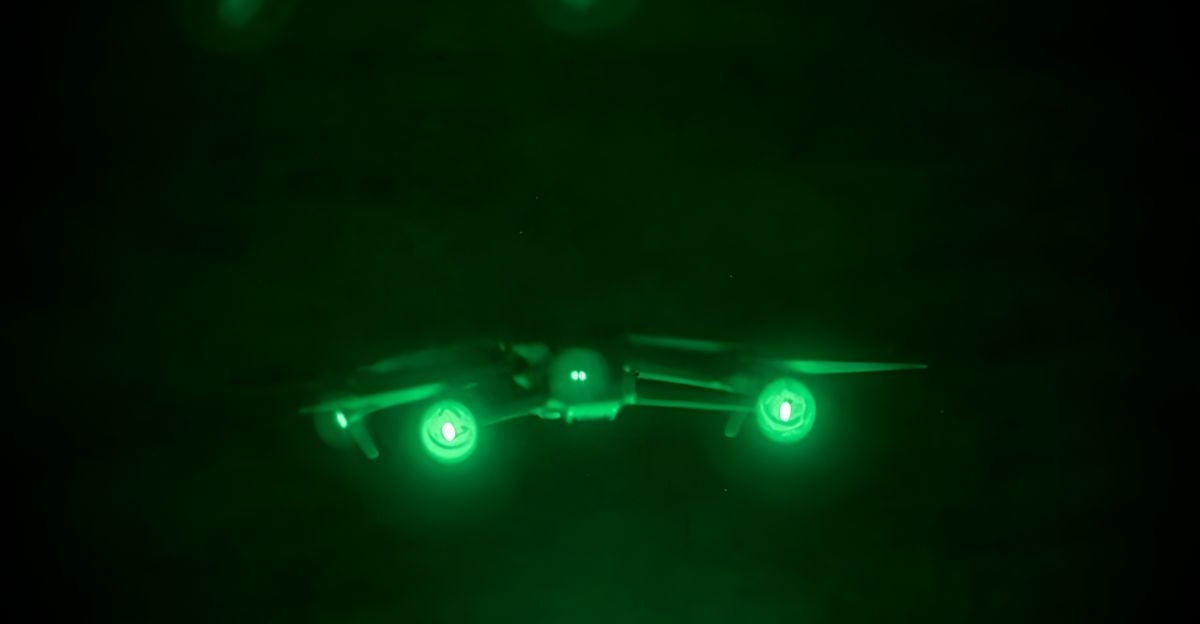
With Zelenskyy’s plane safely on the ground, the drones shifted course and began circling the LÉ William Butler Yeats, an Irish Naval Service patrol vessel secretly deployed in the Irish Sea to help safeguard the visit. For as long as two hours, the aircraft orbited above the ship north of Dublin, their lights clearly visible in the night sky near Howth.
From the deck, the crew watched the drones pass overhead, unable to intervene. In Dublin, security officials tracked the same targets as radar blips looping across their screens. The aircraft were operating inside the 12 nautical mile limit marking Irish territorial waters, yet authorities could not determine exactly where they had launched from. Investigators suspect a departure point in northeast Dublin, possibly around Howth, but have not ruled out a launch from a vessel beyond the visible horizon.
Drones Built for Conflict, Not Hobbyists
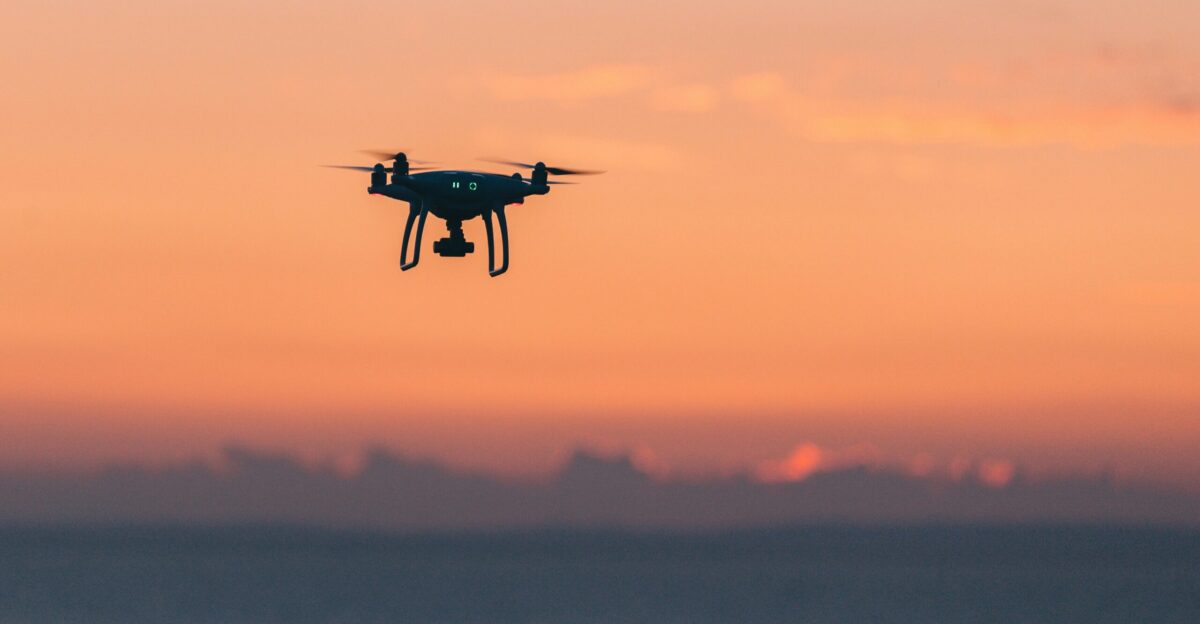
Security sources quickly concluded the four aircraft were not consumer models. They were described as large, costly quadcopters of military specification, each controlled by a separate operator. Comparable systems typically cost from about $125,000 to $500,000 per unit, placing the potential value of the mission’s hardware at between $500,000 and $2 million.
These drones did not attempt to hide. Rather than operating in darkness, they flew with lights illuminated, visible from the ground and at sea. Analysts believe that detail was intentional, serving as a demonstration that whoever controlled the systems could violate Irish airspace without fear of immediate response. The level of precision and coordination involved suggested access to advanced intelligence and resources usually associated with state-backed or state-aligned actors engaged in hybrid operations rather than isolated individuals.
A Country Watches, But Cannot Respond
The incident revealed just how limited Ireland’s defensive capabilities are against modern airborne threats. The LÉ William Butler Yeats lacked the specialist air search radar needed to track unmanned aircraft effectively. An Irish Air Corps plane was already patrolling the region but did not attempt to engage the drones. Gardaí on the ground possessed handheld counter-drone devices, but the aircraft were flying higher and farther away than those systems could reach.
In the early hours of Tuesday, Garda Commissioner Justin Kelly received an emergency briefing. Soon after, the Taoiseach and the Ministers for Justice and Defence were informed. Decision-makers were confronted with a stark choice: attempt to neutralize the unidentified drones or let them depart. They opted not to fire, choosing instead to gather as much information as possible and pursue the matter through investigation.
Political Theatre Above, Investigation Below
By dawn, the four drones had disappeared. No wreckage was recovered, no signal was traced publicly, and no group or government has acknowledged involvement. The devices, and presumably their operators, were gone.
Later that same day, Zelenskyy entered the Dáil chamber to sustained applause. In his address, he thanked Ireland for sheltering around 80,000 Ukrainian refugees and highlighted ongoing peace discussions involving US and Russian representatives. He noted that Ireland had committed a further €125 million in aid to Ukraine’s defense. Most in the chamber were unaware of how close an unidentified operation had come to his arrival hours earlier.
When the Ukrainian president departed Ireland that evening, his plane followed a revised and tightly controlled exit route designed specifically to reduce exposure to any renewed drone activity. The adjusted procedure underscored how seriously Irish and allied security planners had taken the threat, even as they kept details out of public view.
A European Pattern and Ireland’s Vulnerability
The Dublin events form part of a wider pattern of drone incursions across Europe in recent months, affecting both civilian and military infrastructure. Since September, airports in Brussels, Copenhagen, Munich, Berlin, Liège, Gothenburg, and Oslo have all faced disruptions or temporary shutdowns linked to drone activity, sometimes grounding scores of flights at short notice.
NATO describes hybrid warfare as the combined use of military and non-military tools to destabilize countries without triggering formal declarations of war. Polish, Lithuanian, Estonian, and Belgian officials have publicly warned that recent drone incidents match this pattern and have directly or indirectly linked them to Russia or Russian-aligned actors. Ireland, long committed to military neutrality and limited defense spending, now finds itself drawn into the same security landscape.
The country currently has no fighter jets and has relied for years on a confidential understanding with the UK’s Royal Air Force to intercept suspicious manned aircraft approaching its airspace. That arrangement offers little protection against small, unmanned systems. A €300 million plan to install primary radar for national surveillance is not expected to be fully operational until 2028. Former senior officers have warned that this leaves Ireland among the least defended states in Europe against precisely the sort of drone activity witnessed over the Irish Sea.
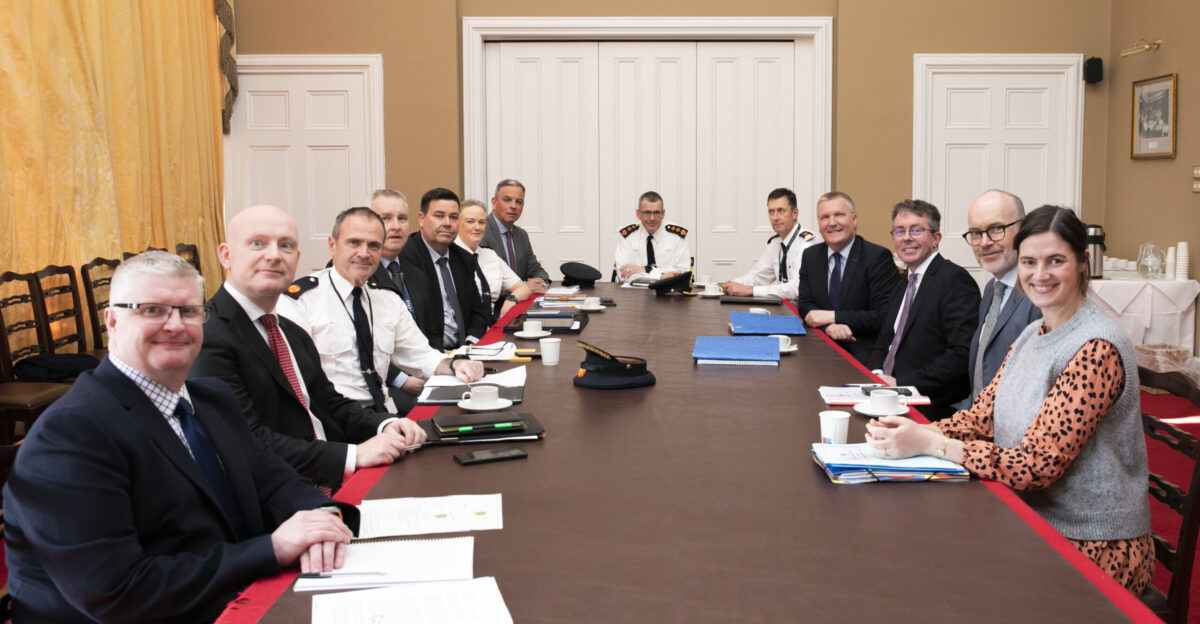
In response to the December incident, senior officials in Dublin convened an emergency meeting on December 3 to review the threat and agree immediate steps. Defence Minister Simon Harris fast-tracked the purchase of a single emergency counter-drone battery to be based at Baldonnel Air Corps headquarters. That one system, at one location, is expected to help safeguard the country during its 2026 presidency of the European Union, when numerous heads of government will travel to Ireland.
Other European states have already turned to allies for support. France deployed anti-drone Fennec helicopters to Belgium after its own disruptions, while Germany sent the frigate Hamburg to assist Denmark with air and maritime defence. Irish authorities have begun exploring whether similar external backing will be needed for the 2026 period, a sensitive prospect for a state that has historically emphasized its independence from military blocs.
Sovereignty in the Age of Hybrid Conflict
The drones’ appearance and disappearance have triggered a broader reassessment of Irish assumptions about security and neutrality. Successive governments had worked on the premise that staying outside formal military alliances and avoiding confrontation would largely insulate the country from great-power disputes. The December episode showed that actors willing to operate in the legal and political grey zones of hybrid conflict are not deterred by such positions.
Taoiseach Micheál Martin ordered a full security review and An Garda Síochána’s Special Detective Unit opened a formal investigation, supported by the Defence Forces and international partners. Officials have declined to comment publicly on suspects or motives. When asked for clarification, the Irish Defence Forces replied only that they had no comment on “any alleged incidents,” citing operational secrecy.
Behind closed doors, investigators are still working through core questions. They are examining who might have had both motive and means to direct four high-cost drones into Irish airspace during a foreign leader’s visit, whether the primary objective was an attack, a rehearsal, or an intelligence probe, and what signals were sent by flying so visibly over a naval vessel in Irish waters.
For Ireland, the episode has become a case study in how modern conflict can unfold without a shot being fired or a formal claim of responsibility being made. It has underscored that the boundary between peace and confrontation is now crossed not only by missiles and aircraft, but also by unmanned systems that can appear, act, and vanish before a state has time to respond. As the investigation continues in secrecy, officials are under pressure to ensure that if drones return to Irish skies during a future high-level visit, the country will be better prepared to meet them.
Sources
The Journal (Ireland)–original reporting on four military-style drones breaching the Dublin no-fly zone and approaching Zelenskyy’s flight path
RTÉ/Irish and international broadcasters–coverage of the Dublin drone incident and Irish security response
CBS News–reporting on unidentified drones breaching Ireland’s airspace during Zelenskyy’s visit
UK Defence Journal–analysis of the Irish Sea drone activity and LÉ William Butler Yeats deployment
Al Jazeera/BBC/European outlets–documentation of 2025 European drone disruptions at Copenhagen, Oslo and other airports
Irish defence and budget documents/specialist defence reporting–€300 million primary radar and 2028 operational target