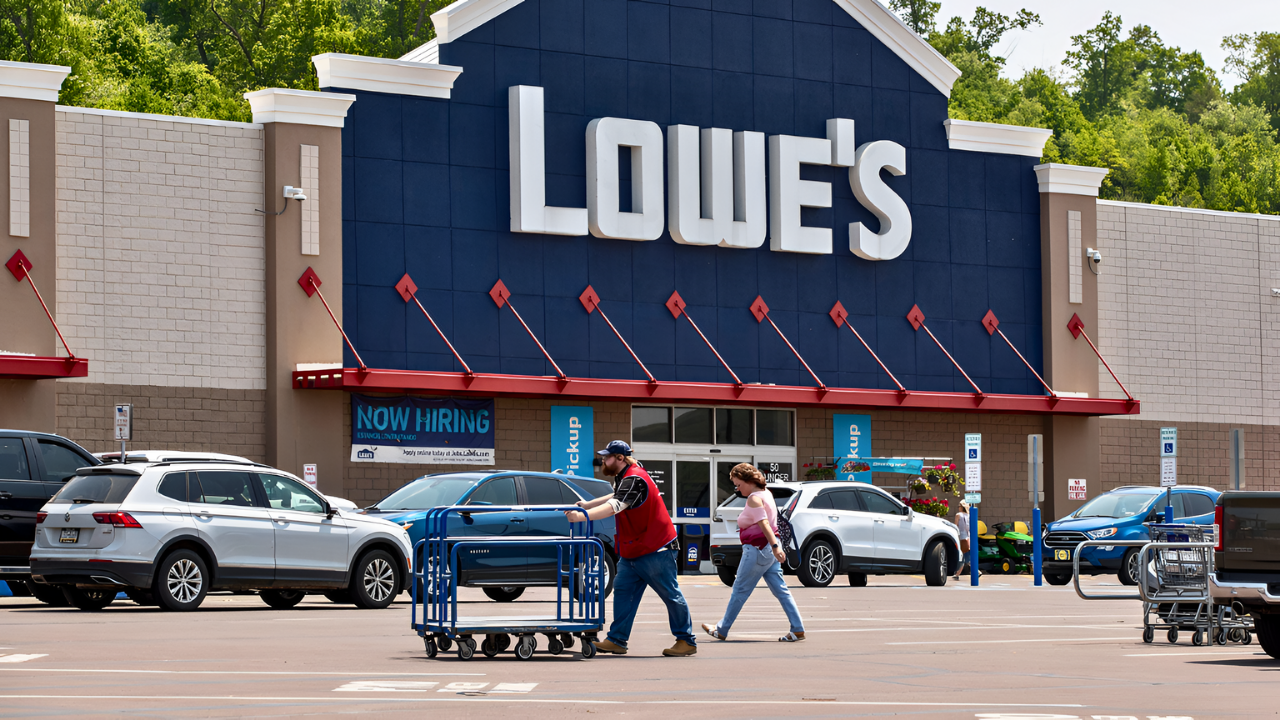
Lowe’s Companies completed its $8.8 billion all-cash purchase of Foundation Building Materials on October 11, 2025, securing a vast network of over 370 distribution centers and 40,000 professional contractor customers across North America. This move catapults Lowe’s into deeper competition with Home Depot in the high-value professional segment, where contractors drive larger orders than do-it-yourself buyers.
The transaction counters Home Depot’s $18.25 billion acquisition of SRS Distribution in 2024. Combined, these deals total nearly $33 billion in spending over two years, fueling a consolidation surge in building products distribution. Professionals now form the primary battleground, as they produce higher transaction values amid a fragmented market.
Foundation Building Materials: A Growth Engine

Established in 2011 by Ruben Mendoza, Foundation Building Materials posted $6.5 billion in revenue and $635 million in adjusted EBITDA for 2024. From 2019 to 2024, it achieved approximately 25% compound annual revenue growth and 30% EBITDA growth, supplying contractors with drywall, metal framing, insulation, and commercial doors.
Lowe’s bought at 13.4 times EBITDA and 1.35 times revenue, lower than Home Depot’s 16.1 times EBITDA for SRS. Analysts called the price disciplined, considering Foundation’s momentum in the $250 billion professional interior building products sector.
The deal builds on Lowe’s $1.3 billion acquisition of Artisan Design Group in April 2025, forming a platform from structural materials to finishes for homebuilders and commercial projects. Lowe’s CEO Marvin Ellison noted it enhances Pro offerings and fits the Total Home strategy.
Expert Analysis: Market Big Enough for Both

Neil Saunders, managing director of GlobalData, said the Pro segment has become the key arena for home improvement retailers. He added that with two major players, competition will intensify, but the market’s size and fragmentation allow both to gain ground.
Lowe’s used $9 billion in bridge financing from Bank of America and Goldman Sachs, followed by $5 billion in bonds issued in September 2025 across five tranches. S&P Global Ratings upheld a BBB+ rating, and Moody’s affirmed Baa1, signaling controlled leverage.
Unlike Lowe’s retail stores, Foundation’s centers specialize in commercial delivery, large-order staging, and just-in-time supply for construction sites. This setup positions Lowe’s for projects over $50,000, complete with account management and trade credit.
Cross-Selling Opportunities Drive Synergies

Revenue potential spans Foundation’s structural supplies, Artisan’s finishes, and Lowe’s fixtures and hardware. A homebuilder project could flow seamlessly: rough materials from Foundation, cabinets from Artisan, and tools from stores, boosting retention.
Foundation’s Blueprint Takeoff uses AI to analyze plans and estimate materials. Lowe’s will merge it with ProDesk and the MyFBM app, which provides real-time pricing and bilingual ordering.
With more than 18 million housing units needed in the United States by 2033, demand remains sustained, with 60% of Foundation’s revenue from new residential and commercial builds. Moderating interest rates could accelerate recovery.
First-Year Earnings Accretion Expected

The deal should boost adjusted diluted earnings per share in the first full year, excluding synergies. CFO Brandon Sink highlighted gains from cross-selling, efficiencies, and digital tools.
DA Davidson lifted its target to $266, UBS to $325. Morningstar planned a high-single-digit fair value increase, citing attractive multiples versus Home Depot’s deals.
Lowe’s will retain Foundation’s brand, operations, and Mendoza’s leadership. These contractor ties, built over 14 years to $6.5 billion revenue, demand a light-touch approach.
Home Depot maintains significantly larger market share in the home improvement sector, with professionals comprising approximately 50% of Home Depot’s sales despite representing a smaller portion of total customers. Lowe’s targets interior product niches and professional segments for competitive differentiation.
Integration Execution as Critical Success Factor
Success hinges on aligning procurement, IT, logistics, and sales without service disruptions. Precedents point to $500 million to $1 billion in annual savings within three years.
Shares gained 3% on the August 2025 announcement with solid Q2 results but ended the year down 13%, tied to housing demand worries, not the deal.
Expected Federal Reserve cuts of 50-75 basis points through 2026 may lower mortgage and financing costs, spurring building and renovations.
Mergers persist as retailers and distributors consolidate categories. Private equity activity creates more targets amid steady cash flows.
These investments, totaling $10.1 billion with Artisan, bet on pros consolidating buys with full-service providers amid housing recovery. Execution will determine if Lowe’s captures lasting share in the $250 billion market.
Sources:
“Lowe’s completes $8.8bn acquisition of Foundation Building Materials.” Yahoo Finance, October 2025.
“Lowe’s acquires Foundation Building Materials for $8.8bn.” Retail Insight Network, October 2025.
“Lowe’s to acquire Foundation Building Materials for $8.8 billion.” Investing.com, August 2025.
“Home Depot acquires SRS Distribution in $18bn purchase.” PE Insights, March 2024.
“DA Davidson raises Lowe’s stock price target to $266 on FBM acquisition.” Investing.com, August 2025.
“Lowe’s Earnings: Core Business Marches Along While FBM Acquisition Provides Growth.” Morningstar, August 2025.