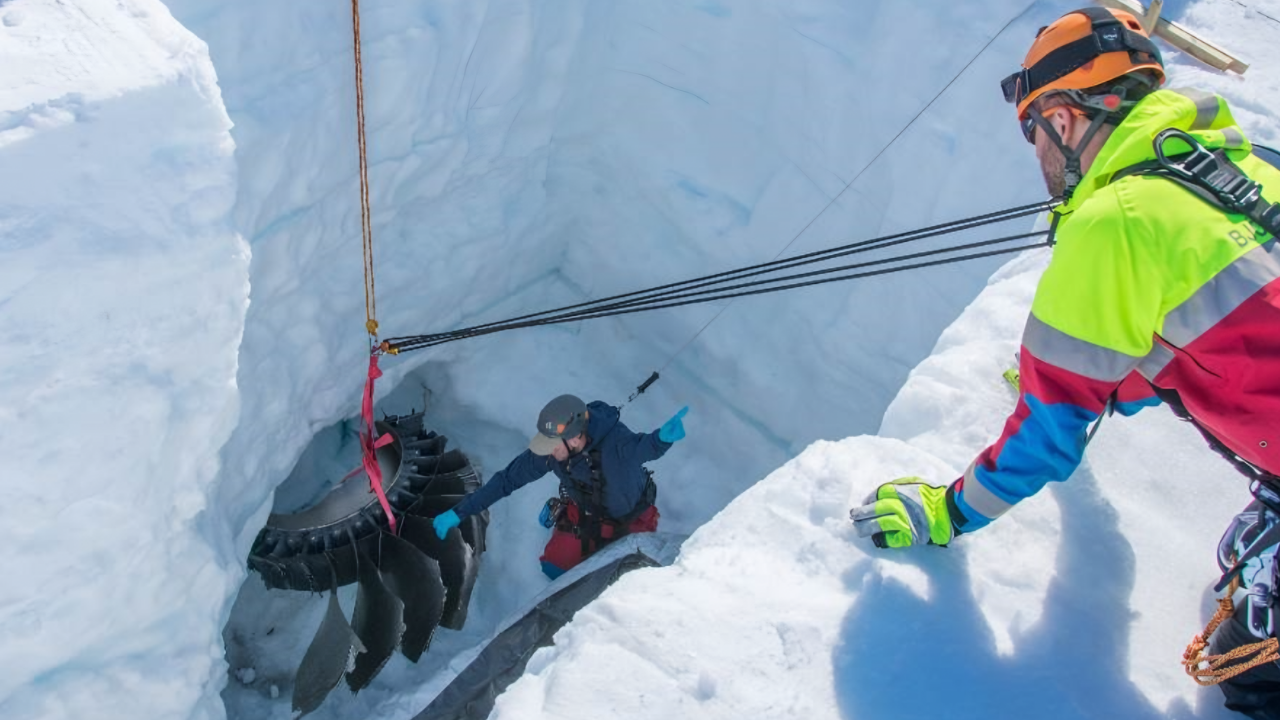
A robotic ocean float that scientists thought was lost under Antarctica’s thick ice has surprisingly resurfaced, bringing back valuable information from one of the least explored parts of the planet. The float, released in September 2020, spent about eight to nine months drifting silently beneath the Denman and Shackleton ice shelves. During that time, it traveled roughly 300 kilometers and collected nearly 200 vertical profiles of the water’s temperature and salt levels. These findings are changing what scientists know about East Antarctica’s stability and how oceans affect its glaciers.
This robotic float worked automatically, moving like a small submarine. It regularly dived down to the seafloor, then rose back toward the surface every few days, measuring key ocean conditions along the way. Because it was trapped beneath thick ice, it could not communicate with satellites or reveal its location in real time. Instead, it stored all its data while floating alone in the dark, icy waters. Months later, when it finally reached an opening near the front of the ice shelf, it surfaced and sent all its stored information. What was once considered lost turned into one of the most successful Antarctic research missions in recent years.
Mapping a Hidden World Beneath the Ice
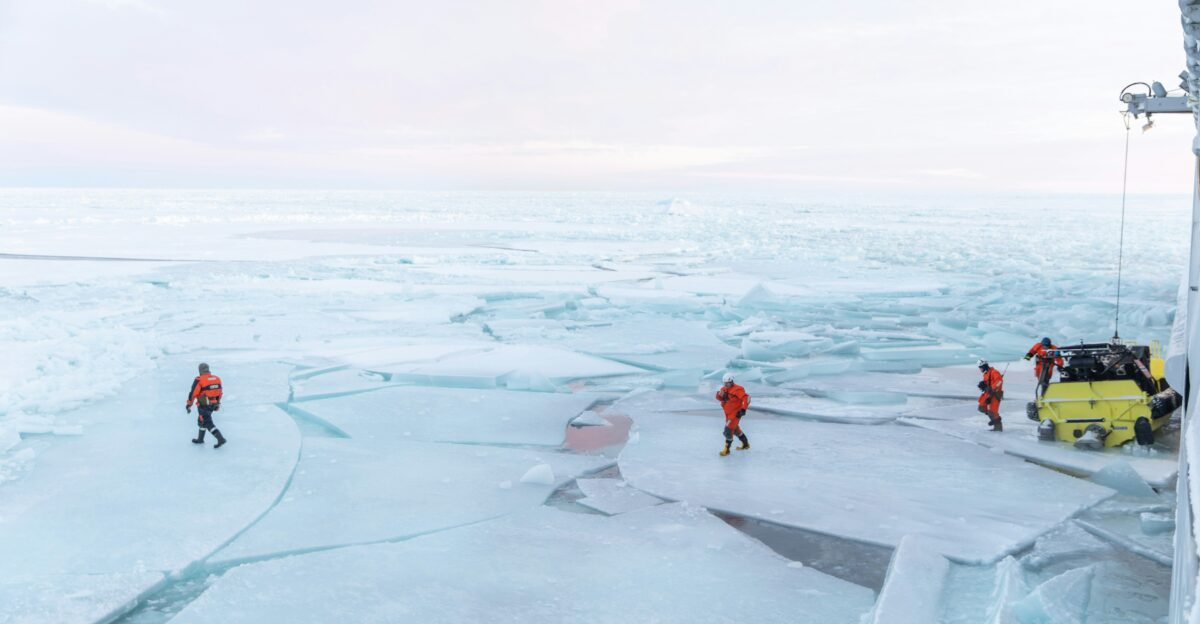
Until now, no scientific instrument had managed to collect continuous readings beneath an East Antarctic ice shelf. Most previous efforts relied on computer models, satellite images, or limited ship expeditions near the ice edge. This new data provides the first direct record of what the ocean is doing under these massive ice sheets.
The information is helping scientists see how water circulates below the shelves and how its temperature and salt content are affecting the ice. For decades, East Antarctica was thought to be more stable than the western side of the continent, where faster melting is already observed. Thanks to this float’s detailed measurements, researchers now know that warm ocean water can also reach deep beneath the East Antarctic glaciers, making them far more vulnerable than once believed. This discovery challenges the long-held idea that East Antarctica is “safe” from rapid melt.
Hidden Warmth and Accelerating Ice Melt
Among the most surprising findings was the presence of warm, salty water known as modified Circumpolar Deep Water moving along the seafloor into the Denman Glacier’s under-ice cavity. This relatively warm current then rises and touches the bottom of the glacier, creating a small layer of just about 10 meters where the heat and salt are trapped beneath the ice. In this thin boundary layer, melting speeds up as the warmer water erodes the ice from below.
By contrast, the nearby Shackleton Ice Shelf was found to have colder water underneath, showing that these conditions can vary greatly even between neighboring glaciers. The float’s detailed profiles of temperature and salinity help scientists pinpoint where and how melting is happening. These results give new insight into why some glaciers retreat faster than others and how underwater currents might be accelerating that process without being visible from above.
The Global Risk of Antarctica’s Melting Ice
The Denman Glacier poses a particular concern for scientists. It sits in a deep basin that slopes downward toward the center of the continent. This shape makes it especially vulnerable, once warmer water reaches the point where the glacier lifts off the ground (the “grounding line”), it can cause the whole glacier to start retreating rapidly. Denman alone holds enough ice to raise global sea levels by about 1.5 meters. Nearby Totten Glacier stores even more, with potential to add another 3.5 meters. Together, these two glaciers could contribute roughly five meters to global sea-level rise if they were to lose their ice entirely.
The robot’s data confirm that warm water is already flowing beneath Denman. Small changes in that thin warm-water layer, either in its temperature or thickness could push the glacier into an irreversible retreat.
This information is crucial far beyond Antarctica. Around the world, hundreds of millions of people live near coastlines. In the United States alone, nearly 40 percent of the population, about 127 million people, live in coastal areas. Rising seas increase the threat of flooding in cities like New York, Miami, and New Orleans, putting hundreds of billions to over a trillion dollars in property at risk this century. Globally, the Intergovernmental Panel on Climate Change (IPCC) estimates that $7 to $14 trillion in coastal assets could be endangered by 2100 as sea levels climb under worst-case warming scenarios.
The new Antarctic data will help improve climate models that guide such predictions. Scientists now understand that they had underestimated how much ocean heat reaches East Antarctica, and how thin boundary layers move that heat directly to glacier bases. Because more than 90 percent of the excess heat trapped by greenhouse gases ends up in the oceans, this warming will continue to affect even the coldest parts of the planet.
The endurance of the float under extreme conditions, cold, darkness, and intense pressure proves that autonomous systems can reach places humans can’t. Its success opens the door to more missions that could fill in missing pieces of our understanding about Earth’s changing climate. The message is clear: even in East Antarctica, where ice was thought to be secure, the ocean is quietly reshaping the future of sea levels, one degree at a time.
Sources:
CSIRO – Adrift like Shackleton: Robot float survives Antarctic ice – 5 December 2025
The Conversation – What our missing ocean float revealed about Antarctica’s melting glaciers – 29 April 2025
Interesting Engineering – Robot survives months in never-seen Antarctic cavity, finds … – 8 December 2025
The Cryosphere (EGU) – Recent acceleration of Denman Glacier (1972–2017), East Antarctica – 10 February 2021
Nature Communications – Recent acceleration in global ocean heat accumulation by … – 27 October 2023