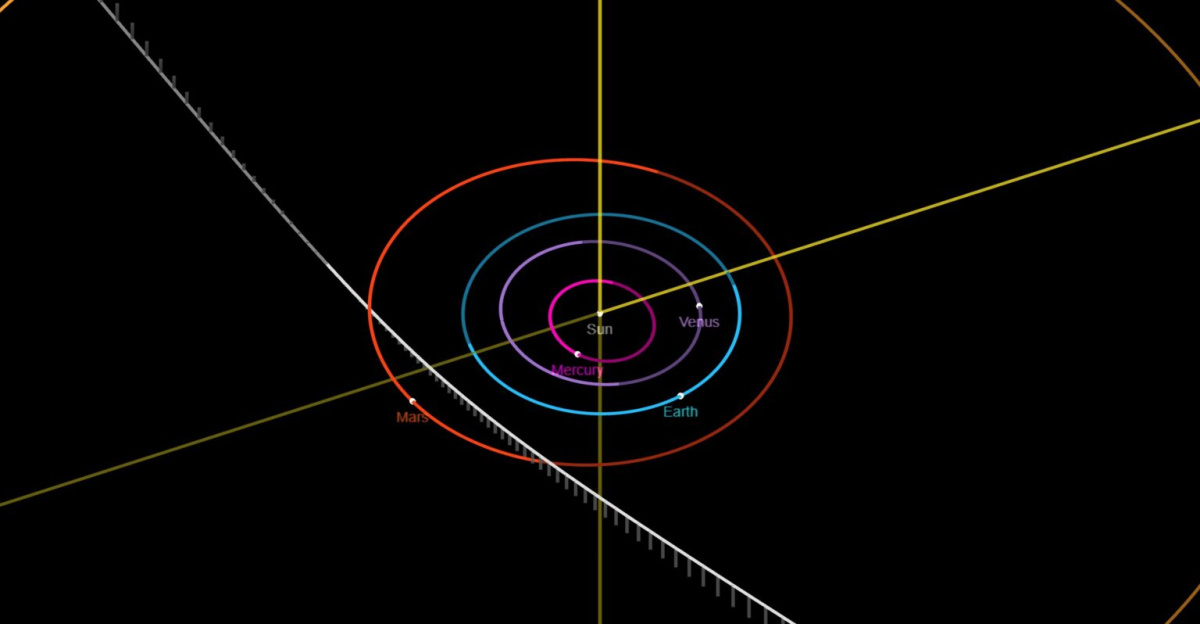
Scientists discovered a strange object from beyond our solar system in 2025, and now they are unable to agree on its nature. Astronomers named it 3I/ATLAS. Harvard astrophysicist Avi Loeb noticed 12 unusual things about this object that do not match how normal comets behave. The object’s path through space had only a 0.2% chance of happening naturally, according to Loeb’s calculations.
It accelerated faster than gravity alone would explain. When the object came close to the sun in October 2025, its color turned blue, and its jets shot out sideways instead of pointing away from the sun as typical comets do. Loeb said scientists should investigate these strange behaviors instead of dismissing them. However, many mainstream astronomers strongly disagreed with him.
Chris Lintott from Oxford University called Loeb’s ideas “nonsense on stilts.” Steven Desch from Arizona State University accused Loeb of making mistakes in his methods and skipping peer review to push wild theories. Jason Wright from Penn State University published a detailed paper highlighting what he perceived as serious errors in Loeb’s trajectory analysis.
Famous physicist Brian Cox said 3I/ATLAS is completely natural and nothing unusual. These mainstream scientists warned that Loeb was misleading the public by promoting unproven speculation. Loeb fought back, arguing that the scientific establishment was too afraid to investigate new ideas because they cared more about their reputations than finding the truth.
Congress Gets Involved, and NASA Holds a Press Conference
The argument became so intense that it reached the U.S. Congress. Representative Anna Paulina Luna sent a formal letter to NASA on October 31, 2025, demanding that the space agency release all images, records, and data about 3I/ATLAS immediately. A government shutdown that started on October 1 had already delayed NASA’s communications about the object.
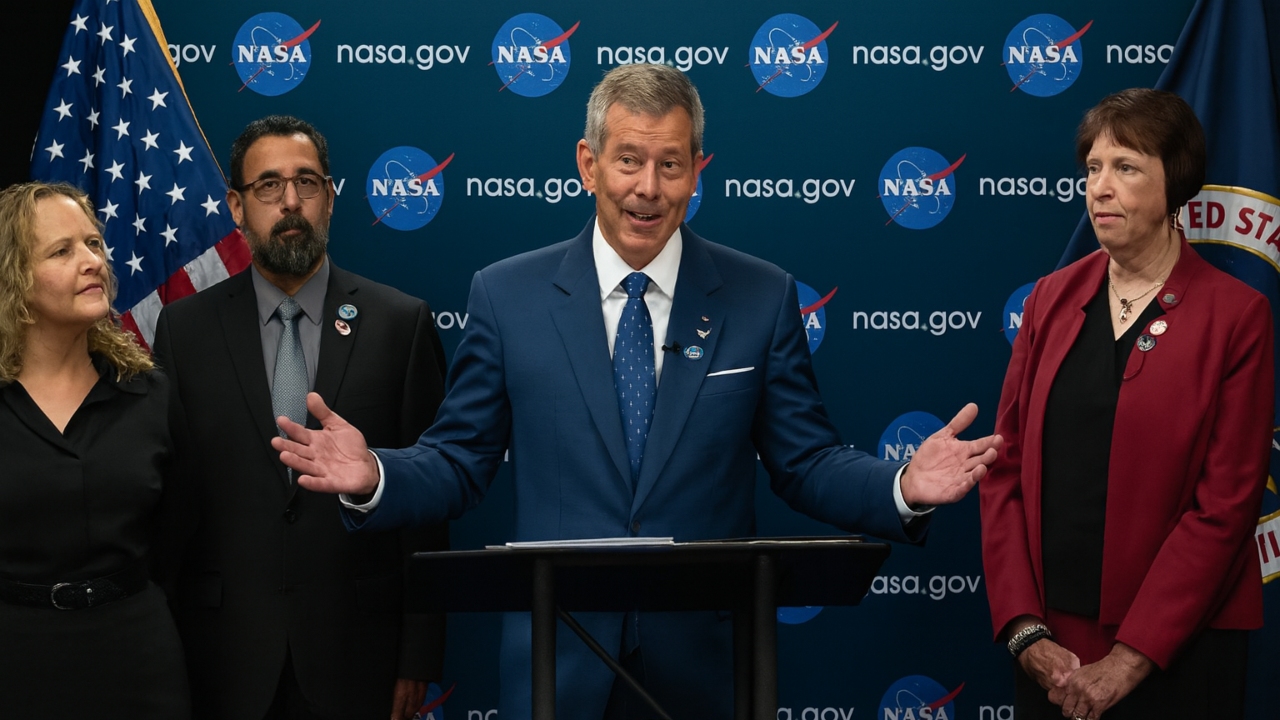
On November 19, NASA finally held a major press conference. Associate Administrator Amit Kshatriya and Science Mission Directorate head Nicky Fox presented images taken by the Mars Reconnaissance Orbiter from approximately 19 million miles away using the HiRISE camera. The images showed only a blurry white ball with no clear details.
NASA officials announced that 3I/ATLAS is a comet with no signs of artificial origin. However, amateur astronomers captured much sharper and clearer images from Earth, which made people angry. Critics accused NASA of deliberately releasing low-quality images and hiding the better data. Many people online compared NASA’s blurry photos with the clearer amateur pictures and questioned why the space agency was not showing the world its best images.
Loeb pointed out that NASA had never answered his requests for the clearest HiRISE pictures. He quoted Sherlock Holmes, saying, “There is nothing more deceptive than an obvious fact,” and warned that being too cautious might cause scientists to miss something extremely important for humanity.
The Real Problem Goes Much Deeper
This whole situation reveals a bigger problem in how science handles mysterious objects when the public is watching. Loeb believes that institutions dismiss unusual evidence too quickly, actually preventing scientists from asking important questions. Mainstream scientists counter that making wild public claims without peer review ruins scientific discussion.
The real debate shifted from whether 3I/ATLAS is artificial or natural to something much bigger: can scientific institutions study unusual phenomena openly without being accused of cover-ups? As 3I/ATLAS continues to move through our solar system, independent astronomers continue to track it, and the scientific community remains divided.
Some people believe one side, some believe the other, and nobody trusts the institutions anymore. The true challenge now involves something harder than identifying the object—scientists and the public need to rebuild trust in the institutions that explain what happens in space.
This argument demonstrates that how scientists communicate with the public matters just as much as what they discover, and poor communication can damage public confidence in science, even when the scientific questions remain unanswered.