
Intel’s decision to cut more than 3,100 jobs at its Hillsboro campus, Oregon’s largest private employer, arrives at a defining moment for the state’s economy and the broader semiconductor industry. The company is reallocating resources to new mega-sites in Ohio and Arizona, thereby shifting the center of gravity for American chip production.
The move affects thousands of families, reshapes local business ecosystems, and raises national questions about how federal incentives influence corporate strategy. As communities brace for change, the future of Oregon’s tech identity hangs in the balance. Here is what is happening.
Oregon Faces a Sharp Workforce Contraction
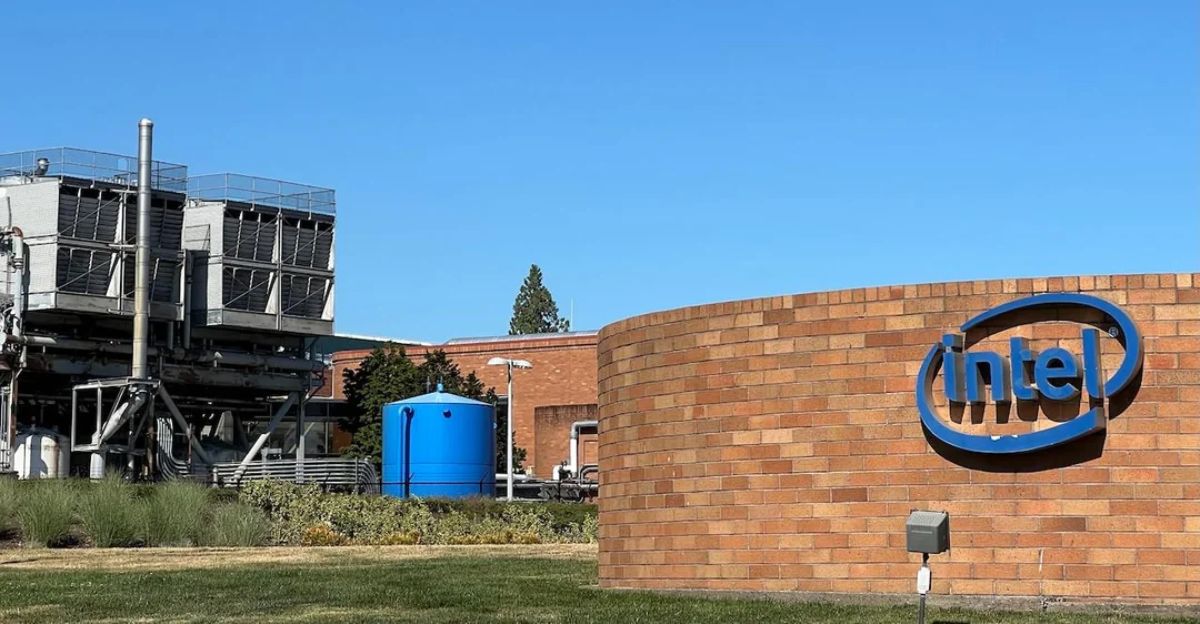
Intel’s Hillsboro operations have long served as the backbone of Oregon’s technology sector, employing approximately 23,000 people before the recent wave of cuts. The reductions include 2,392 workers dismissed during the summer of 2025 and another 669 positions eliminated in November 2025. Together, they surpass 3,100 job losses in a single year, creating one of the steepest employment declines in the state’s tech history.
The contraction is already rippling across neighborhoods built around Intel’s long-time stability. With staff levels expected to settle near 18,000, thousands of high-wage jobs have disappeared, leaving uncertainty for workers, schools, and local services. For many families, the impact is immediate and deeply personal as decades of reliance on steady Intel employment give way to sudden economic strain.
Small Businesses and Suppliers Brace for Losses

The effects of Intel’s downsizing stretch far beyond its campus. Restaurants, retailers, medical clinics, and service providers that heavily rely on Intel traffic are preparing for significant revenue drops. Reduced consumer spending creates pressure on businesses that are already balancing tight margins, forcing many to reassess their staffing plans and future investments.
Economic multiplier research shows that semiconductor job losses often hit supporting industries especially hard. High-tech equipment manufacturers, logistics companies, utility providers, and maintenance operations all rely on Intel’s manufacturing scale and steady orders.
As contracts shrink and demand falls, these companies face their own rounds of difficult decisions. The cumulative strain is spreading throughout Washington County, threatening a broader slowdown across the regional economy.
Federal Incentives Accelerate Intel’s Shift
Intel’s restructuring stems from financial urgency and strategic redirection. The company posted a $17 billion net loss in fiscal year 2024, its worst result since 1986, and initiated a $10 billion annual cost-cutting plan that includes a 15 percent global workforce reduction. While these pressures explain the Oregon cuts, Intel’s investments in Ohio and Arizona highlight a deliberate pivot toward newer sites with lower costs and more substantial growth potential.
Federal incentives play a central role in this shift. Ohio is receiving $1.5 billion in direct CHIPS Act support for Intel’s $28 billion project, which includes two major fabrication plants expected to create 3,000 permanent Intel jobs and more than 7,000 construction positions. Arizona is benefiting from its share of the $7.86 billion CHIPS Act award, solidifying its place as another key base for Intel’s future operations.
Oregon’s New Role Focuses on Research and Development
Despite Intel’s deep roots in Oregon, the company is transitioning the site into a primarily research-focused hub rather than a center for large-scale manufacturing. Intel has announced a $36 billion investment aimed at modernizing its research and development facilities, with the goal of advancing process development rather than expanding production capacity.
This distinction marks a turning point for the region. Oregon remains critical to Intel’s innovation pipeline, but its role in high-volume chip manufacturing is shrinking. Notably, the layoffs announced in July 2025 and November 2025 occurred after Intel secured its CHIPS Act award on November 26, 2024. The timeline highlights Intel’s stance that the job losses result from cost-cutting and strategic realignment, rather than federal incentives, even as national funding enhances the company’s presence in other states.
Communities Navigate Economic and Social Fallout
The removal of thousands of Intel jobs is creating a cascade of challenges across the region. Declining employment reduces demand for local services, lowers consumer spending, and affects tax revenues that fund schools and community programs. Research on semiconductor manufacturing regions shows that job losses in anchor companies typically reverberate through multiple layers of the local economy.
In response, Washington County and state officials are launching retraining programs, job fairs, and initiatives to support small businesses. These efforts aim to retain tech talent, help displaced workers, and prevent an accelerated exodus of skilled professionals. For many communities, the focus has shifted to building resilience and preparing for a more diversified economic future.
A Turning Point for Oregon and the National Chip Industry

Intel’s retrenchment in Oregon stands as the most extensive semiconductor downsizing in state history and signals a broader geographic reshaping of American chipmaking. Federal incentives are driving rapid expansion in states like Ohio and Arizona, where cutting-edge facilities and lower operating costs align with long-term growth plans. Meanwhile, legacy centers, such as those in Oregon, face the challenge of redefining their roles in an evolving industry.
The implications extend far beyond corporate strategy. Local families, schools, small businesses, and regional governments are adapting to a new economic reality shaped by shifting investments and changing workforce needs. As the United States seeks to strengthen its semiconductor leadership, the balance between innovation, manufacturing, and community stability remains central to the national conversation.