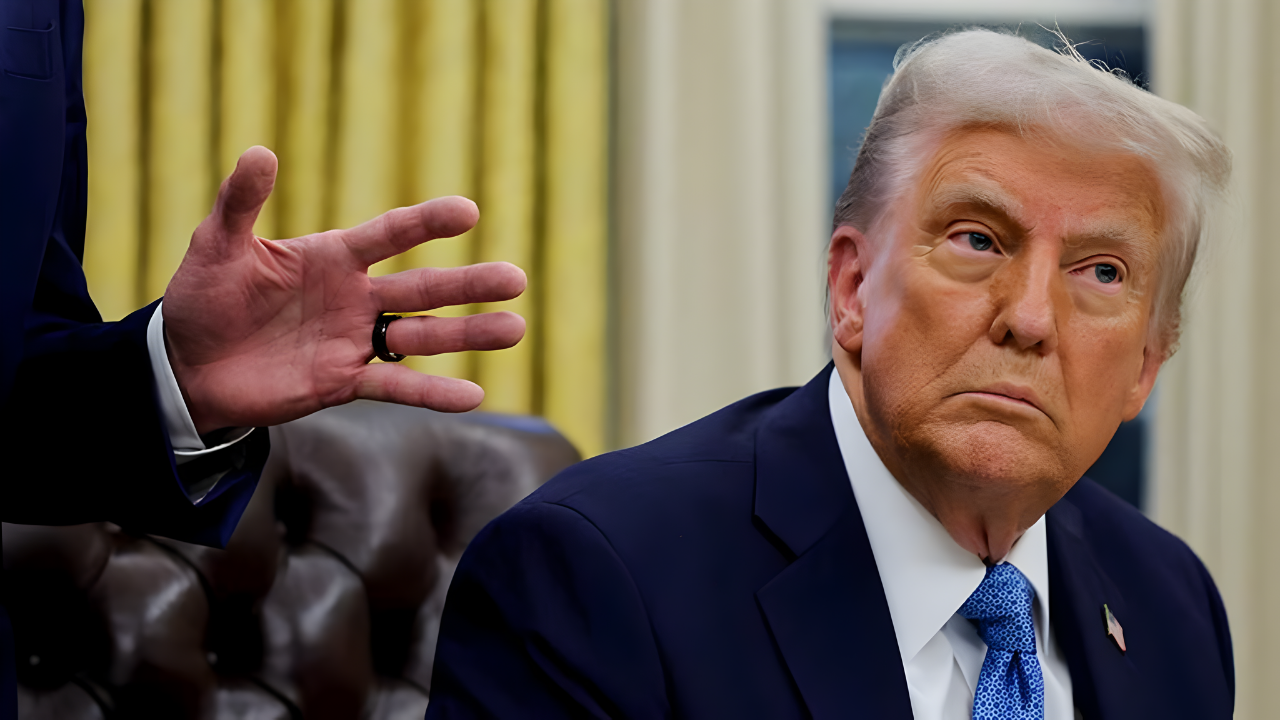
For weeks, online prediction markets have been tracking a highly specific question: Will Donald Trump formally declassify files related to extraterrestrial life by the end of this year? In early December, that obscure wager suddenly exploded. The odds of “yes” on one major platform jumped from 6 percent to 98 percent in four days, drawing in millions of dollars from traders who stand to lose everything if disclosure does not happen by December 31 at 11:59 p.m. Eastern time. The surge has turned a niche bet into a broader test of how markets, politics, whistleblowers, and official denials intersect around one of the most sensitive subjects in government.
Prediction Markets and a Sudden UFO Spike
Prediction platforms, such as Polymarket, allow participants to stake real money on future events, ranging from elections to policy decisions. Supporters argue that this collective wagering functions as a crowd-based signal system: bad guesses are punished financially, while informed predictions are rewarded. In this case, the UFO disclosure market has drawn unusually large trades, including individual wagers exceeding $20,000 and some accounts reportedly committing more than $100,000 to a “yes” outcome.
Between December 6 and 10, money and probability moved together. The likelihood of Trump ordering UFO-related declassification by year’s end climbed from 6 percent to 81 percent in four days, later reaching 98 percent as roughly $7 million flowed into the market. One particularly active trader, known only as @ster, rapidly accumulated “yes” shares in large blocks. The identity and motivations of this participant remain unknown.
Polymarket’s rules bar government insiders from trading on non-public information, but enforcement is limited by design and technology. That leaves an open question: Are traders making a colossal error, or are they reacting to signals that have not been disclosed in public channels? UFO filmmaker Mark Christopher Lee has suggested that someone “on the inside close to Trump” may be behind the buying spree, though no evidence has been provided beyond trading patterns.
Trump’s Promises and a New Documentary Push
Donald Trump has repeatedly expressed interest in UFO transparency. In a September 2024 conversation with podcaster Lex Fridman, he said of potential disclosure, “I’d love to do that. I have to do that,” while referencing discussions with people he described as “serious” who reported unexplained aerial encounters. His 2024 campaign message included explicit pledges to declassify files on unidentified aerial phenomena, as well as long-sought records related to the assassinations of John F. Kennedy and Robert F. Kennedy. Some assassination records have already been ordered released.
Momentum around unidentified phenomena has also been shaped by a recent documentary, “The Age of Disclosure,” which premiered on November 21. The film features 34 current and former U.S. officials from the military, intelligence agencies, and Congress speaking on camera about UFOs. Director Dan Farah has said Trump has “become aware of the base facts” and that his team is “working around the clock” on a disclosure strategy. The film presents a sweeping narrative: that for roughly eighty years, the United States has concealed evidence of non-human intelligent life and has attempted to reverse-engineer advanced technology recovered from crashes.
This cinematic storyline aligns with longstanding claims from some researchers and former officials, but it remains sharply at odds with official findings from NASA and the Pentagon, which state that extraterrestrial life has not been confirmed and that no such secret programs exist.
Whistleblowers, Congress, and Official Denials
Public pressure for transparency has grown in parallel with formal testimony. In July 2023, retired U.S. Air Force Major David Grusch appeared before Congress to describe what he called a “multi-decade UAP crash retrieval and reverse engineering program.” Under oath, he said he was “informed of non-human biologics” associated with some incidents and submitted classified evidence to congressional committees and the Intelligence Community Inspector General. The Department of Defense and the Pentagon later issued statements rejecting claims that the U.S. possesses recovered alien craft or bodies.
On Capitol Hill, interest cuts across party lines. Senator Chuck Schumer, after Trump signed declassification orders related to assassinations, publicly urged, “Now do UFOs.” Representative Anna Paulina Luna, who leads the House Task Force on Declassification, has argued that citizens “deserve maximum transparency on UAPs.” Advocates frame the issue as one of oversight and public right to know, while skeptics highlight national security, technological secrecy, and the need to protect sensitive sources and methods.
Complicating matters further, commentators such as Joe Rogan have emphasized the legal risks facing potential insiders. On his program, Rogan argued that without formal amnesty, those with access to classified UFO programs could face severe penalties for unauthorized disclosure, including long prison terms. That fear, he suggested, may help explain why dramatic testimony has been limited and why some alleged participants remain silent even as public interest rises.
Leaked Videos, Historical Claims, and an Information Gap
Officially, the Department of Defense maintains that unidentified phenomena are an area of investigation, not proof of extraterrestrial visitors. The Pentagon’s All-Domain Anomaly Resolution Office released three previously classified videos from U.S. military operations in Europe, including one labeled PR-018 that shows an infrared image of what officials described as a “physical object,” but ultimately classified as “unremarkable.” The releases were framed as part of a broader effort to address unexplained cases and reduce speculation through documented explanations.
At the same time, the Pentagon’s 2024 Historical Record Report concluded there was “no evidence” of recovered alien technology or long-running crash-retrieval programs. NASA has echoed that position, stating that extraterrestrial life has yet to be discovered. These findings directly contradict the claims advanced in “The Age of Disclosure” and by whistleblowers like Grusch.
Supporters of the secrecy narrative argue that post–Second World War geopolitical competition encouraged governments to hide any technological breakthroughs, especially those that could confer military or strategic advantages. They suggest that sharing information with allies risked revealing capabilities to adversaries and that secrecy became self-reinforcing over decades. If such an account were ever officially validated, it would raise profound questions about democratic governance, accountability, and the scale of institutional concealment.
Deadlines, High Stakes, and an Uncertain Outcome
The wager driving market frenzy hinges on precise conditions. For “yes” bets to pay out, the Trump administration must issue a formal declassification order by December 31 and release previously classified files specifically “pertaining to extraterrestrial life and/or unexplained aerial phenomena.” Public comments, speeches, routine Pentagon updates, or partial document releases would not be sufficient under the posted rules. Only a formally documented declassification accompanied by actual files entering the public domain would resolve the market in favor of disclosure.
A separate transparency deadline looms over another sensitive topic: the Department of Justice faces a December 19 timetable to release unclassified materials related to Jeffrey Epstein. Observers note that these twin timelines—UFO files and Epstein documents—have created what some describe as a “dual transparency crisis,” both centered on long-rumored government secrets and both converging in the same month.
As of mid-December, the White House and senior officials have issued no formal statements signaling imminent UFO declassification. Trump’s previous remarks have conveyed interest but not a clear timetable. The resulting contrast is stark: prediction markets reflect near-total confidence in short-term disclosure, while government agencies reiterate denials and maintain standard procedures.
If Trump follows through and orders the release of credible, previously hidden evidence pointing to non-human intelligence, the consequences could range from shifts in religious and philosophical thought to rapid changes in global security planning and international relations. If the deadline passes quietly, millions of dollars in “yes” wagers will be wiped out, traders who appeared prescient will be seen as mistaken or misled, and prediction markets themselves may face questions about their reliability in areas where rumors and beliefs are unusually strong. Either way, the year-end clock has turned a long-running debate over unidentified phenomena into a tightly bound test of promises, institutions, and the signals that money sends.
Sources:
Polymarket prediction market trading data and market rules documentation
Retired U.S. Air Force Major David Grusch congressional testimony (November 2023)
“The Age of Disclosure” documentary (November 2025) featuring 34 government officials
Pentagon All-Domain Anomaly Resolution Office (AARO) official releases and video documentation
Joe Rogan Experience podcast statements on whistleblower amnesty and UFO transparency
Trump administration statements and Lex Fridman Podcast interview (September 2024)