
Federal Reserve Chair Jerome Powell’s Jackson Hole speech jolted markets. Traders pushed the odds of a September rate cut to roughly 85% overnight.
Powell warned that “downside risks to employment are rising” and could materialize “quickly”, even as inflation remains above 2%.
This tone marked a sharp pivot from his aggressive 2022 stance.
Investors cheered: Matthew Miskin of Manulife said Powell had “locked in that September rate cut”, and its certainty was “rippling in a positive way across global markets”.
Stakes Rising

Analysts see inflation pressures intensifying even as jobs cool. Core PCE inflation is tracking near 2.9% year-over-year, and models like the Cleveland Fed’s nowcast put it around 2.96% for July (up from June).
Such stubborn price pressures – partly driven by President Trump’s tariffs – are adding to Fed headwinds.
Indeed, Reuters reports that import duties are “starting to boost inflation,” raising fears of a stagflation scenario (slow growth with high prices).
This combines with softening job data to complicate policy: just as price gauges rise, labor-market metrics are slipping.
Historical Context

Jackson Hole has, over decades, become the Fed’s marquee economic forum.
It began in 1978 as a regional agricultural conference, but in 1982, Kansas City Fed President Roger Guffey invited Fed Chair Paul Volcker to Jackson Hole, Wyoming.
Volcker loved the area’s fly-fishing and accepted. Since then, Jackson Hole has hosted Fed Chairs and policymakers from around the world. (Indeed, Volcker’s fly-fishing hobby was partly why the symposium was moved there.)
Each year scholars present research on inflation, labor and global trade amid the Tetons. Over 150 papers have been shared there as the conference evolved into a global gathering.
Mounting Pressures

The Fed enacted one of the steepest tightening cycles in generations, raising rates 11 times from near-zero (March 2022) to 5.25%-5.50% by mid-2023.
That aggressive stance did tame inflation, which has fallen from a 9.1% peak (June 2022) to roughly 2.7% today. But with inflation still above target, policymakers are highly sensitive to any price upticks.
For example, July’s Producer Price Index jumped 0.9% – the largest monthly gain in years. In short, policymakers have inflamed inflation concerns, even as labor costs are rising, forcing a delicate balance in “restrictive” policy.
The Pivot

At Jackson Hole on August 22, Powell signaled an unusually dovish turn. He emphasized that the “balance of risks appears to be shifting” toward jobs.
Crucially, he warned that labor-market weaknesses could “manifest rapidly” and urged vigilance.
This was a sharp break from 2022, when he vowed to crush inflation “whatever the cost” to jobs. Investors responded enthusiastically.
As Matthew Miskin of Manulife noted, Powell’s words basically “locked in that September rate cut,” and that certainty is “rippling in a positive way across global markets”.
Regional Impact
Behind the numbers, the jobs recovery is stalling. Payroll gains have shrunk to only ~35,000 per month on average – versus roughly 123,000 per month last year.
Unemployment is only 4.2%, but even that slight rise is historically unusual outside recessions.
The July report showed very weak hiring, and May/June job gains were sharply revised down. Employers across regions now report fewer openings and some layoffs.
Labor market has gone from red-hot to lukewarm, raising doubts about continued hiring momentum.
Human Story

Many Americans are already feeling this slowdown. Job-seekers report that companies are pulling back on recruiting amid uncertainty. Analysts see clear signs of cooling.
For instance, Christopher Rupkey (FWDBONDS) noted Trump’s policies “may be starting to make a dent in the labor market” and that it is “badly wounded”.
This means workers – even those with solid skills – find it harder to jump into new positions.
Anecdotal reports of hiring freezes and delayed raises are becoming common, underscoring the shift from the post-pandemic boom.
Wall Street Response
Major Wall Street firms quickly rewrote their playbooks. A number of banks now forecast rate cuts later this year. For example, Goldman Sachs now sees three quarter-point reductions in 2025.
Morgan Stanley likewise expects cuts in September and December. After Powell spoke, traders immediately raised bets: CME FedWatch shows an 85% chance of a 25bp cut in Sept.
However, not everyone is all-in. Some strategists (e.g. at Morgan Stanley) advise caution: with inflation still above 2%, the case for haste appears limited.
Market odds of easing have jumped, but uncertainty remains.
Macro Perspective
The Fed is grappling with a classic dilemma: inflation versus jobs. Trump’s tariffs and stimulus have pushed prices up, even as tighter migration policies have tightened labor supply.
July wholesale prices rose 0.9% – a post-pandemic high – in part thanks to higher import levies on food and goods.
At the same time, immigration crackdowns have removed workers. California farmer Lisa Tate warns bluntly, “If 70% of your workforce doesn’t show up, 70% of your crop doesn’t get picked”, highlighting a labor crunch.
These factors imply inflation is more persistent while the economy cools, leaving the Fed with conflicting signals.
Policy Revelation
Perhaps most strikingly, Powell used Jackson Hole to reset the Fed’s strategy. He abandoned the 2020 average-inflation target regime and returned to a traditional 2% focus.
In his words, the new framework “returned to a framework of flexible inflation targeting and eliminated the ‘makeup’ strategy”.
This means the Fed will no longer aim to “make up” past misses, but keep inflation close to 2% going forward. Economists hailed the shift. Kathy Bostjancic of Nationwide said it “reverted to [the] pre-COVID framework” with a symmetric focus on inflation and jobs.
Joe Brusuelas of RSM warned it implies markets should prepare for “higher rates for longer” despite expected cuts.
Internal Tensions

Behind the scenes, Fed officials are divided. In July’s meeting, two governors – Christopher Waller and Michelle Bowman – dissented, arguing for immediate cuts.
They warned the easing might be premature. Most others disagree: many policymakers note that tariffs could yet rekindle inflation.
Chicago Fed President Austan Goolsbee underscored the risk, noting recent tariffs could make core inflation “really start shooting up…[a] dangerous data point”.
There’s a debate inside the Fed: some emphasize the labor slowdown, others worry about inflation resilience.
Leadership Transition

Jackson Hole was Powell’s final speech of the summer and his last at the symposium. His term expires in May 2026.
In the meantime, President Trump is reshaping the Fed’s leadership. He recently announced he will remove Governor Lisa Cook from her post and is filling seats with officials favoring looser policy.
This unprecedented move – no Fed governor has been fired in modern times – calls the Fed’s independence into question. How much room Powell (and the Fed) has to maneuver may depend on these political currents.
Strategic Recalibration

Markets have quickly repriced future policy. Traders now expect ~65 basis points of easing by year-end.
In fact, almost all traders see at least two quarter-point cuts in 2025.
All eyes are on September 16-17: that meeting will test Powell’s credibility. Crucial data – the July PCE inflation report (Aug 30) and August jobs report (Sep 5) – will arrive just before.
If inflation and payrolls surprise, the Fed’s “data-dependency” will be scrutinized. In short, every economic report now feels like a step in a delicate balancing act.
Expert Skepticism

Despite the flurry of easing bets, some analysts urge caution. July’s surge in wholesale prices has raised red flags: stubborn inflation may not yield as quickly as hoped.
In fact, one Reuters analysis warned that sticky prices could “limit the Fed’s ability” to cut aggressively.
Morgan Stanley’s team highlights that the case for early cuts is “limited” amid resilient price pressures.
Critics fear cutting too soon might reignite inflation – especially if tariff effects have yet to fully filter into consumer prices.
Future Framework
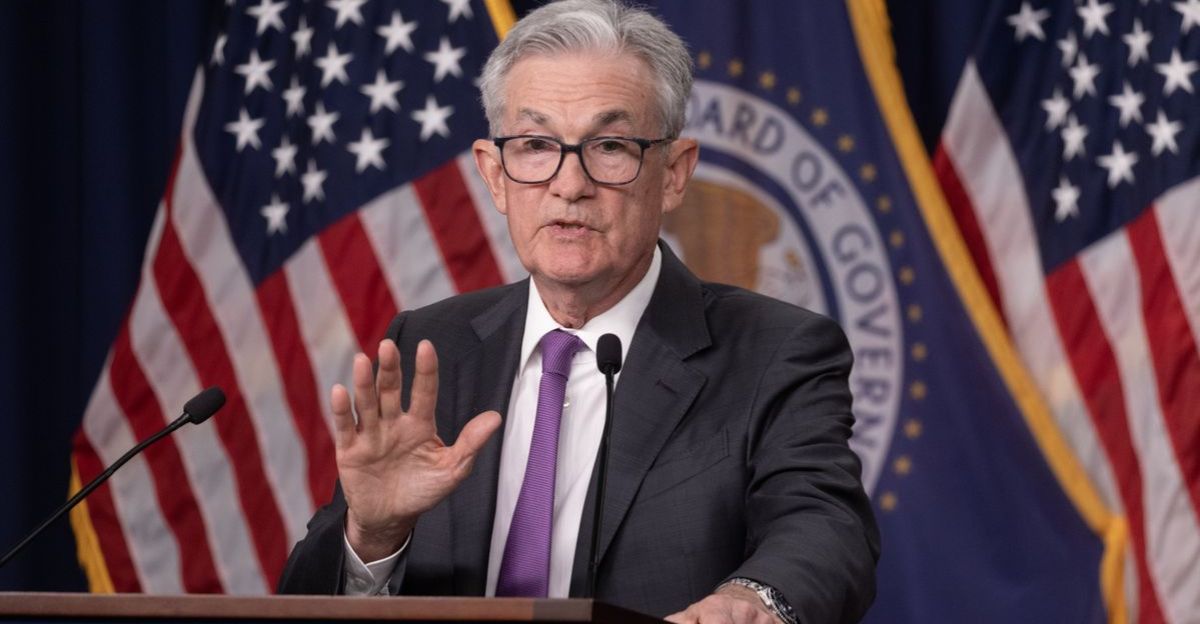
Powell’s framework revision clears a roadmap, but future policy will be set by his successor and the evolving Board. The Fed’s next leaders will decide how to weigh 2% inflation vs. maximum employment.
Atlantic Council analysts note that “how the emerging Fed…executes the dual mandate of…price stability and full employment” is the critical question.
The September meeting will reveal much: will Fed policy remain driven strictly by data, or bend under political and market pressures?
In the end, Powell’s framework is a guide, but implementation lies ahead.
Political Implications
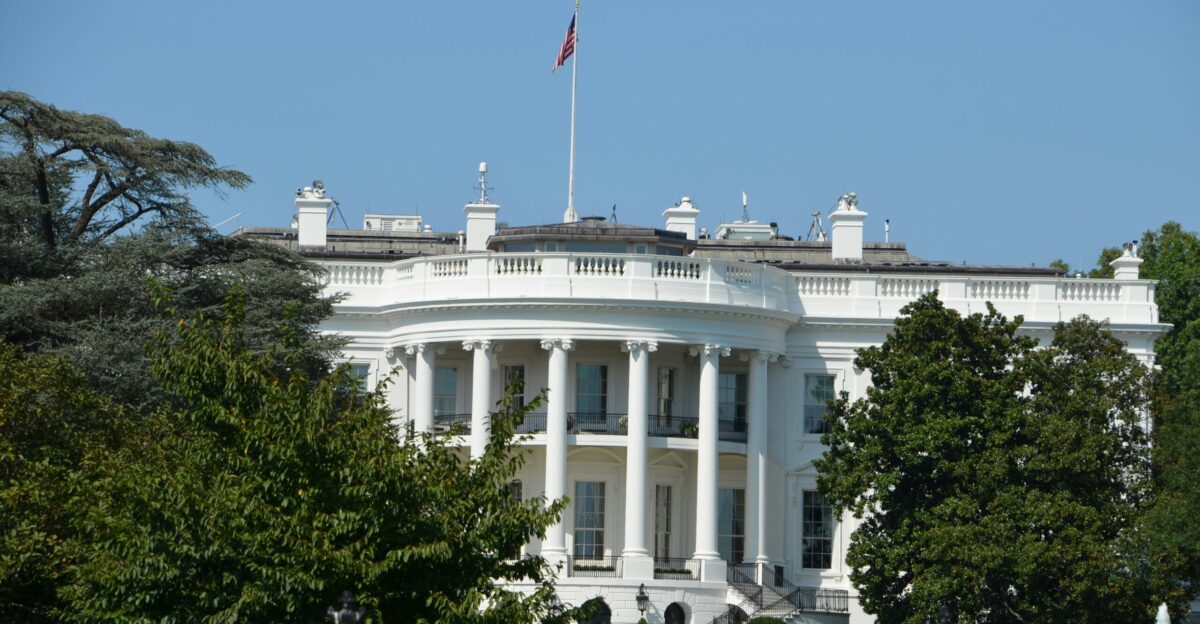
The White House has openly pressured the Fed to ease. Treasury Secretary Scott Bessent has said rates should be “150 to 175 basis points lower”.
Trump publicly mocked Powell for not cutting sooner and even demanded that Gov. Lisa Cook resign.
This campaign – from calls for cuts to efforts to oust governors – is unprecedented. It raises the question: can the Fed stand firm on policy, or will it bend to political winds? T
he outcome will test the Fed’s hard-earned independence at a crucial inflection.
Global Consequences

Global markets are reacting. The dollar fell sharply after Jackson Hole, dropping nearly 1% on Friday.
The euro climbed to $1.1728 (a high since July) while the yen slipped.
A weaker dollar and lower U.S. rates would typically boost emerging-market assets and commodities.
But central bankers abroad worry: a dovish Fed could complicate their inflation fights. ECB officials noted the difficulty of coordinating policy under diverging cycles. In short, U.S. policy shifts will ripple worldwide.
Market Mechanics

It’s August, with thin trading, so Powell’s words echoed loudly. Investors warned that low summer liquidity could magnify volatility.
Indeed, as tech stocks sold off earlier, markets grew jittery about “stagflation” (sluggish growth plus high inflation).
Still, the prospect of Fed cuts has driven rallies: rate-sensitive sectors and risk assets have already climbed on easing hopes.
Portfolio managers caution that any mismatch between data and Fed action (or renewed inflation spikes) could trigger sharp swings once trading normalizes.
Generational Shift

Powell’s tenure – spanning pandemic response and an inflation fight – has already reshaped perceptions of the Fed.
Looking ahead, a new generation of policymakers may carry different priorities.
Younger Fed voices might tilt more toward jobs over price stability. Atlantic Council observers note markets are focused on how this “emerging Fed” will handle its mandate.
The coming leadership change could redefine the balance between growth and inflation targets for years, setting a new course for monetary policy.
What This Signals

The Jackson Hole moment crystallized a deeper shift in Fed policy philosophy.
Powell’s speech will be seen as the inflection when the Fed explicitly weighed labor support against inflation vigilance – a nod toward the Fed’s dual mandate over pure price-fighting.
Whether this pivot is prescient or premature remains to be seen.
Its outcome will influence how central banks balance competing pressures in an era of uncertainty and will be debated for years to come.