In early October 2025, analysts warned that a looming government shutdown poses immediate risks to an already fragile U.S. economy. The nonpartisan CBO says about 750,000 federal workers could be furloughed daily (costing ~$400 million in lost pay each day), and economists estimate each extra week of shutdown could trim GDP growth by ~0.1–0.2 percentage points.
Financial markets are jittery as data agencies (BLS, BEA, Census) suspend key economic reports until funding resumes.
Immediate Service and Tourism Threats

Meanwhile, federal services to vulnerable Americans stall. Over 40 million people rely on SNAP food assistance, which faces severe disruption without Congress’s action. States dependent on tourism brace for losses: Utah’s “Mighty Five” national parks alone generate about $3.1 billion in visitor spending annually.
Even home sales in flood zones are jeopardized: without an appropriation, the National Flood Insurance Program cannot issue required policies.
Historic Shutdowns Reveal Possible Impact
Historically, shutdowns have varied widely in length and effect. Roughly 20 federal shutdowns have occurred since 1977, most ending within days. By contrast, the last shutdown (Dec 2018–Jan 2019) spanned 35 days, sidelining about 800,000 workers and costing at least $11 billion in lost output (around $3 billion of economic activity was never recovered).
That record-setting episode sets a high bar for potential damage today.
Jobs and Inflation Send Warning Signals

Current labor data already show strain. Unemployment was 4.3% in August 2025, and hiring slowed to just +22,000 jobs (versus ~200,000/mo earlier). Even worse, official revisions later revealed the economy had nearly 911,000 fewer jobs over 2024–25 than initially reported.
Core inflation has also ticked up (about 2.9% year-over-year in August). As MUFG’s Christopher Rupkey warns, the economy is “skating as close to the edge of recession as you can get”.
Shutdown Day One and Major Shift

At 12:01 a.m. ET on Oct. 1, funding lapsed and the shutdown began. CBO analysts confirm this stops pay for roughly 750,000 federal employees (halting ~$400 million in daily wages). Unusually, the Trump administration signaled it may turn these into permanent cuts: an OMB memo ordered agencies to draft mass reduction-in-force notices for lower-priority jobs.
Planning layoffs instead of simple furloughs is the cause of this crisis, raising the stakes far beyond any recent funding lapse.
Hardship in Park Towns and Farms

Local economies are reeling. Tourism-dependent towns near national parks face immediate losses: a 2013 shutdown cost parks about $500 million in visitor spending. This time, Utah’s government has pledged state funds to keep its parks open, but even short closures shave local income.
In farm country, USDA services vanish: roughly 42,000 of 85,900 agriculture department employees are furloughed, suspending crop insurance, loans and food inspections at peak season.
Federal Workers Under Strain

The shutdown’s human toll grows. Millions of essential workers (TSA screeners, air traffic controllers, border agents, etc.) must keep working without pay. Seasoned controller Caleb Harmon-Marshall warns that if a shutdown drags beyond two weeks, staffing collapses.
In 2018, about 10% of TSA officers called in sick during the third week – a pattern likely to repeat, straining safety and creating dangerous backlogs.
Wall Street’s Flight to Safety

Financial markets immediately braced. Safe-haven flows pushed gold above $3,830/oz (a record high), while U.S. stock futures slid (~0.4% drop in S&P 500 futures early Oct. 1). Forecasters quantify the fallout: Goldman Sachs sees roughly a 0.15–0.2 point GDP loss per week of shutdown.
Moody’s Analytics and others warn that any prolonged stoppage would raise unemployment and cut consumer spending. Investors are girding for turbulence.
Fed’s Quandary Without Data
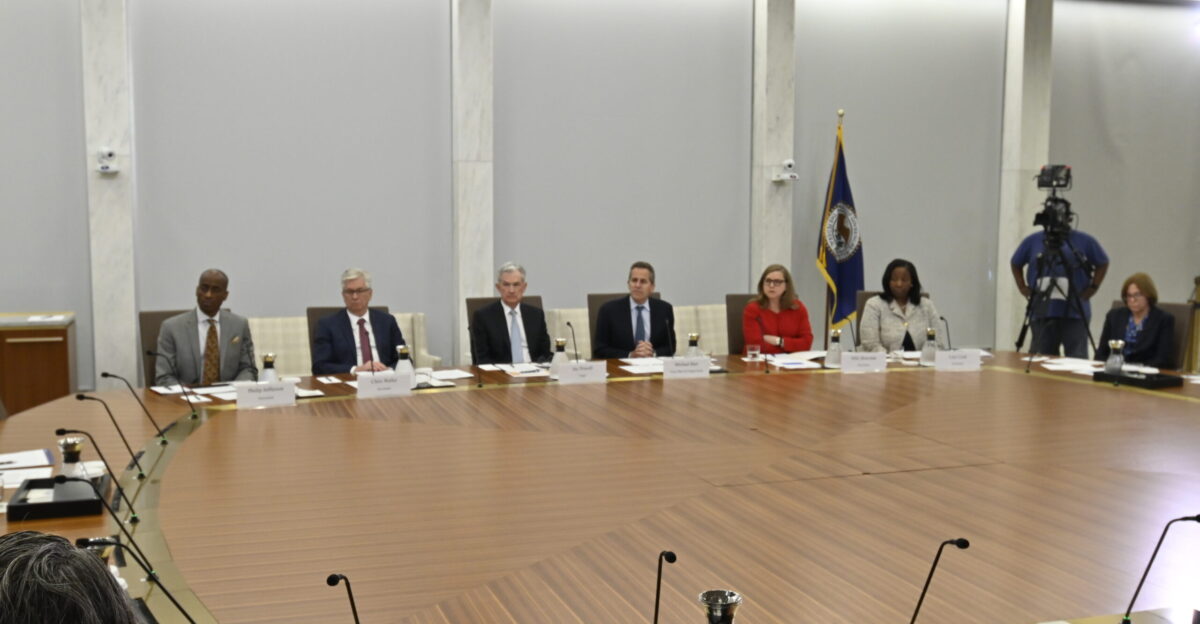
The Federal Reserve now faces an unprecedented dilemma. Its Oct. 28–29 meeting approaches with no fresh jobs or inflation numbers in hand. Powell has already called the economic outlook “challenging”.
Before the shutdown, about 90% of traders expected a 25bp cut in October, but RBC economists now see a pause as more likely. In short, the Fed may be forced to decide with one eye closed.
Data Vacuum Confronts Policymakers
Even routine data gathering is halted. October’s CPI release (due Oct. 15) is critical for the 2026 Social Security cost-of-living adjustment, but a shutdown could delay it.
The Labor Department warns a postponed CPI “might have an impact on the COLA announcement”. This data blackout leaves policy makers and markets scrambling for clues. RBC analysts say it further tilts the Fed toward a pause in October.
Unions Sue to Protect Workers

Federal unions immediately filed suit to block the layoff plan. AFGE and AFSCME sued on Sept. 30, calling the OMB directive illegal. They note that past shutdowns furloughed employees but did not fire them outright.
As AFSCME President Lee Saunders warned, the administration is “again breaking the law… illegally targeting federal workers with threats of mass firings”. The courtroom showdown has begun.
Trump Embraces Hardline Tactics
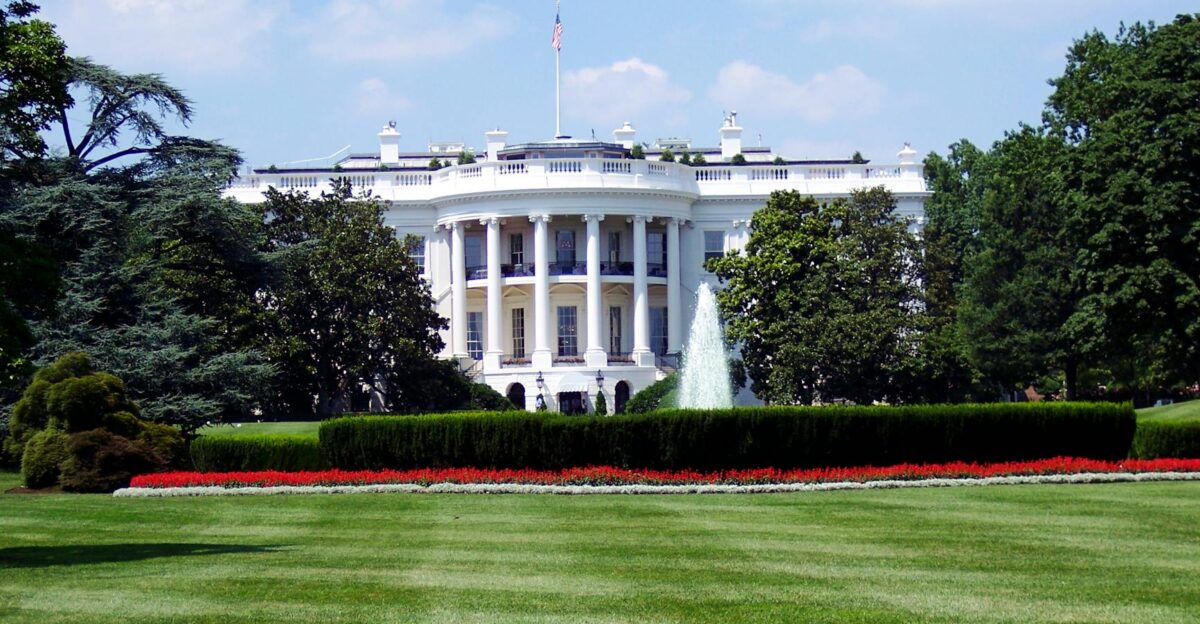
The White House is striking a hard line. President Trump told reporters the shutdown lets him make cuts “that are irreversible, that are bad for them… cutting programs that they like”.
Behind the scenes, OMB Director Russ Vought instructed agencies to prepare mass layoff notices for “non-essential” positions. This is the first time an administration has explicitly planned permanent downsizing during a shutdown, signaling a major shift in playbook.
Public Sector Recovery Hurdles
Even after reopening, recovery won’t be straightforward. The federal workforce was already thin: only ~2.3 million civilian staff nationwide, with roughly 148,000 leaving since Jan 2025.
Many agencies are understaffed or near retirement. Some states are already scrambling: Colorado says it may deploy state funds to keep Rocky Mountain Park open, and Utah officials pledge local funds to protect their park tourism economy.
Analysts Caution on Long-Term Effects

Top economists are unsettled by this shutdown’s novel threats. Barclays analyst Michael McLean warns that “a shutdown this time may not follow past precedent,” implying effects could last beyond a typical lapse.
Deutsche Bank’s Brett Ryan notes that interrupting data collection processes causes “a cascading effect across the entire set of released statistics”. In other words, the impact will ripple into every corner of economic data and decision-making for months.
Standoff Could Drag On
With neither side budging, no end date is in sight. Congress adjourned Sept. 30 still deadlocked, evoking the 35-day shutdown record of 2018–19.
Each additional week inflicts more damage: economists say every week costs on the order of a few tenths of a percent of GDP. The big question is whether this will be resolved in days or spiral into a prolonged crisis with lasting economic scars.
Polarization and Plummeting Ratings

The standoff underscores political paralysis. Democrats note they offered a funding plan to keep healthcare subsidies flowing, while Republicans demand spending cuts and policy riders. Voters see it play out in real time: only ~26% of Americans approve of Congress now.
Trust in government sinks further as pay and services are used as leverage. Many worry this dangerous new precedent could erode confidence in U.S. institutions for years.
International Alarm Bells Ringing

Global markets and allies are watching warily. As the world’s largest economy, a U.S. funding lapse sends shockwaves abroad. Credit agencies have flagged the risk: Moody’s says another shutdown would be “further evidence” of U.S. fiscal weakness, potentially jeopardizing the AAA rating.
Foreign investors and governments privately worry whether America remains a reliable leader if domestic dysfunction keeps basic services hostage. The stakes span beyond Washington.
Courts Decide Shutdown Scope

Now the battle is partly legal. Unions argue that the Antideficiency Act and precedent forbid firing workers in a lapse. The union complaint emphasizes that past shutdowns “resulted in furloughed, not fired, federal employees”.
The administration counters it needs these personnel changes for national security and border missions. The courts’ decisions will set precedent: can shutdowns be used as tools to permanently reshape government?
Young Staff Brace for Shock

Younger federal employees face acute uncertainty. The average federal worker is ~47 years old, but only ~8% are in their 20s – meaning young staff often carry hefty student loans and rent. Meanwhile, hiring is frozen.
OPM reports monthly hiring is about two-thirds below normal (~7,400 hires vs ~22,000 previously), and the freeze was extended through mid-October. Many college grads now see federal jobs put on hold or off the table.
Democracy on the Line

This shutdown is more than an economic hiccup; it’s a test of governance. As Biden adviser Lael Brainard warned, a funding lapse is “reckless” and creates “completely unnecessary risks” for communities and families.
At stake is whether basic government functions will resume normal operations or become perpetual bargaining chips. The path chosen will define American leadership and stability both at home and around the world.