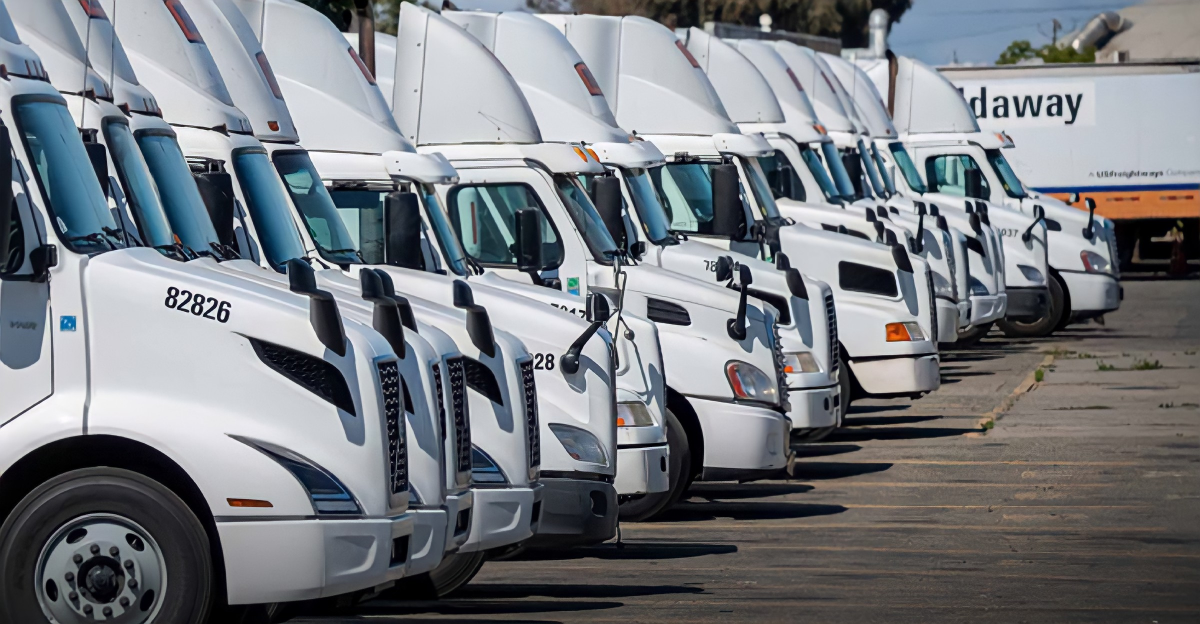
On July 30, 2023, freight trucking across America ground to a halt. Early that sweltering morning, dozens of Yellow’s canary-yellow rigs sat idle outside terminals from Atlanta to Albuquerque. Overnight dispatch texts abruptly ordered drivers to stop hauling freight – effectively freezing millions of dollars’ worth of deliveries in place.
Large shippers, sensing trouble, immediately diverted cargo elsewhere; major retailers like Walmart and Home Depot quickly halted Yellow shipments to avoid losing goods.
It was a stunning scene: a near-100-year-old carrier – Yellow was “shutting down after 99 years,” as CBS News put it – seized up, leaving an eerie silence on the docks and highways.
Cost Spike

The shutdown sent shock waves through the supply chain. With Yellow off the grid, retailers and manufacturers scrambled to re-route freight, and that cost them. Industry data show rerouting less-than-truckload freight became far more expensive almost overnight, with spot-market rates surging in major lanes.
As one analyst noted, Yellow’s “historically cheapest” pricing had masked the carrier’s razor-thin margins – “that’s why they obviously were not making money,” freight consultant Satish Jindel told CBS. This meant shippers now paid a premium: hauling the same goods via FedEx Freight, XPO or other carriers quickly drove prices up by double digits.
Many logistics managers warned these higher freight bills would eventually trickle down to consumer prices, even as the Fed grappled with inflation.
Century Pedigree
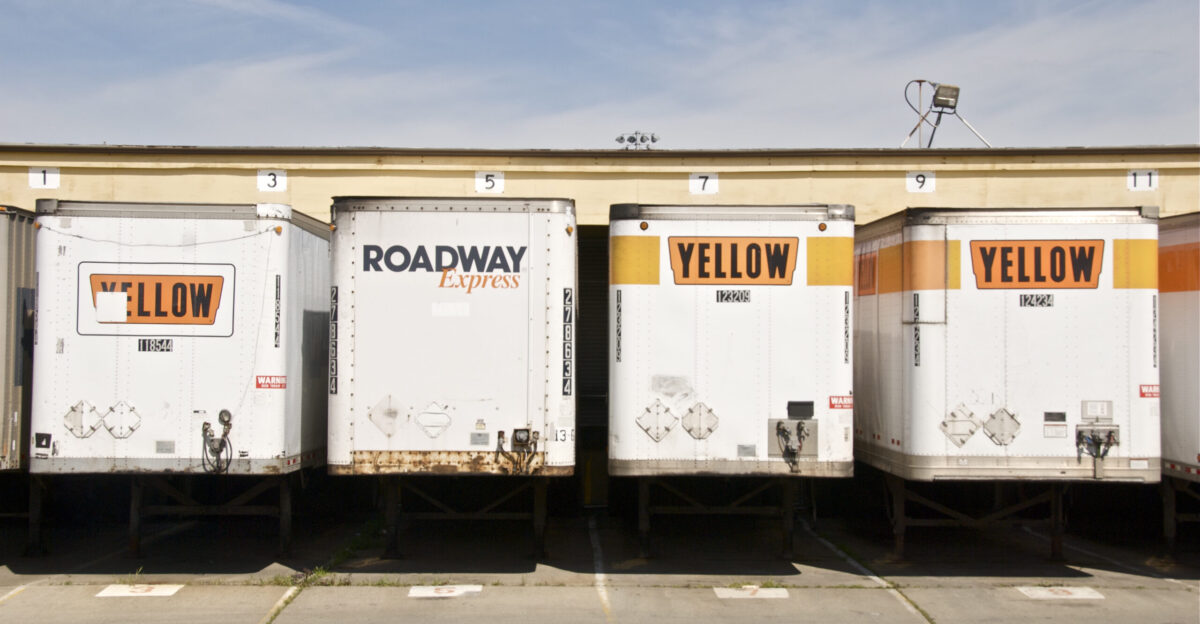
Yellow’s collapse was all the more shocking given its storied history. The company began in 1924 as a small taxi and bus service in Oklahoma City, ferrying workers and oil men around town in a fleet of yellow Model-Ts.
In the decades that followed, Yellow built one of the nation’s first coast-to-coast trucking networks, growing by merging with rivals. By the early 21st century Yellow had swallowed several carriers – most notably unionized LTL carrier Roadway (2003) and USF (2005) – and amassed over 12,000 trucks and 40,000 trailers at its peak.
Yellow long ranked as America’s third-largest LTL trucking company, hauling roughly 10% of the country’s less-than-truckload freight. For nearly a century the yellow fleet was a fixture on U.S. roads and in family garages; one observer later called Yellow’s network “a textbook case in scale.” But all that heritage would vanish suddenly, illustrating that even a 99-year-old champion can falter.
Union Showdown
Behind the scenes, a bitter tug-of-war had been unfolding. About 22,000 Yellow drivers and dockworkers – over 70% of its 30,000-person workforce – were represented by the Teamsters union. In early 2023, management launched “Project One,” an effort to unify routes and work rules across the country, warning that Yellow could run out of cash without streamlined operations.
The Teamsters bristled. Union leaders warned “Project One” would undermine local work protections and effectively force concessions from drivers. By mid-summer, Teamsters President Sean O’Brien had twice hinted at strike votes to protest what he called a “give-back” contract scheme.
Customers and regulators were on edge, watching whether labor clashes might “drive the company out of business.” (Unbeknownst to shippers, the answer would come just days later.)
Bankruptcy Blow

On August 7, 2023, Yellow’s worst fears came true. The company and 23 affiliates filed Chapter 11 in Delaware, disclosing roughly $2.15 billion in assets against $2.59 billion in debts. It was the largest transportation bankruptcy in memory, and blame flew instantly.
CEO Darren Hawkins issued a statement blaming the Teamsters: “Teamsters leadership was able to halt our business plan, literally driving our company out of business,” he said.
The union’s response was equally fiery. Teamsters president Sean O’Brien told Reuters that Yellow’s “dysfunctional, greedy C-suite” – not the workers – ruined the company. Court filings echoed the rhetoric, with Yellow’s investors and lawyers placing much of the blame on union “intransigence,” while the union pointed to decades of acquisitive missteps and debt.
Jobs Vanish

The bankruptcy filing unleashed a human tsunami. On a single Monday in early August, Yellow effectively laid off its entire workforce – roughly 30,000 employees across all 50 states.
Unemployment offices from Ohio to California braced for surges. Job fairs sprang up overnight as local officials scrambled to help Yellow’s drivers, mechanics, and office workers find new work.
Many of the teamsters were told through terse emails or union notifications that they were no longer employed. As one former driver put it, waking up to find a “Yellow” app on his phone just went dark. The sense of betrayal ran deep – decades of expertise and license plates disappeared overnight.
Paycheck Shock

For countless Yellow employees, the end came with a financial punch. Legally mandated paid overtime, commissions, and unused leave were suddenly in limbo. FreightWaves chronicled one dockworker, Maria Alvarez, who lost track of some thirty unpaid overtime shifts and vacation days when Yellow shut down. “I gave them twenty-three years – now I’m owed pennies,” she said bitterly to the site.
Across the docket, Yellow’s own records revealed $137 million in employee wages, PTO, and commission claims. Under bankruptcy rules, ordinary workers and rank-and-file drivers were set to recover only a tiny fraction – roughly 12–16% – of what they’re owed.
Meanwhile, law offices are flooded with WARN Act suits from former employees who say they got only a few days’ notice.
Rivals Ascend
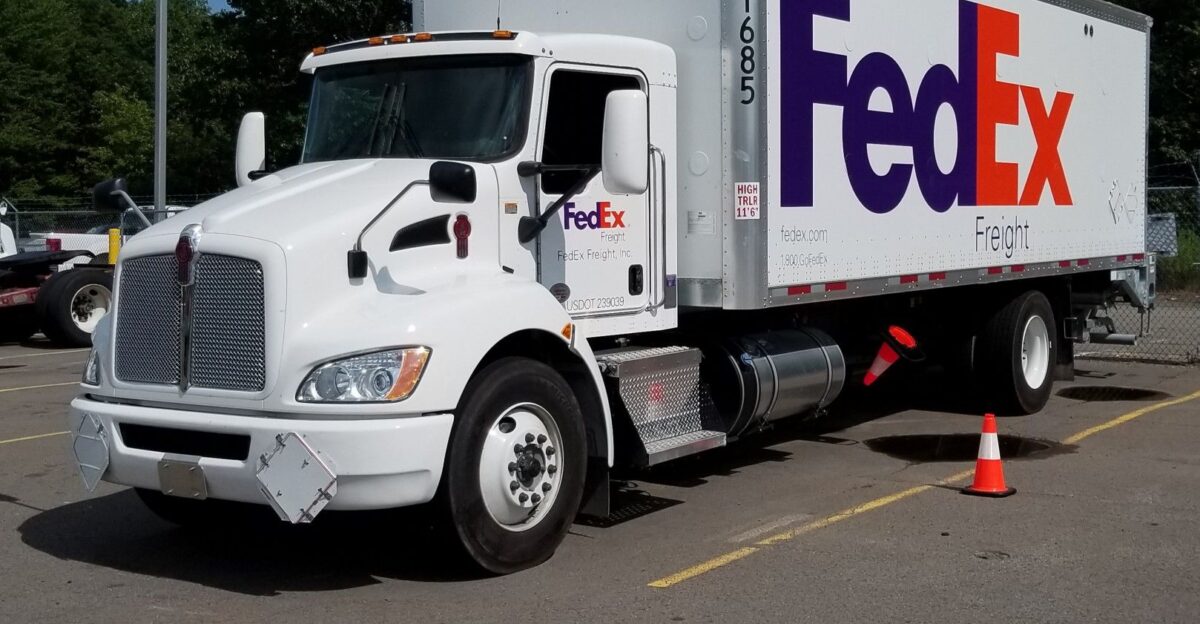
No sooner had Yellow fallen than its competitors pounced. Almost immediately in August and September 2023, major LTL carriers inked emergency deals to carry the freight left stranded. XPO Logistics, FedEx Freight, and others struck rapid-response contracts with retailers like Walmart and Home Depot to haul Yellow’s diverted loads.
Even smaller players found themselves bidding for extra volume. And in bankruptcy court, Estes Express Lines emerged as a stalking-horse buyer for Yellow’s real estate: in mid-September, Estes offered $1.525 billion in cash for about 128 of Yellow’s former terminals. (An earlier stalking-horse bid by Old Dominion had been $1.5 billion.)
Industry analysts viewed Estes’ bid as a bellwether: if winning, Estes would have the right to match any higher offers, effectively teeing up a broader LTL consolidation play.
Shipping Prices Spike

The knock-on effects on pricing became clear in the data and predictions. With capacity suddenly tighter, spot-market rates climbed. By August, Midwest LTL spot rates were reported around $4.21 per hundredweight, up from about $3.80 the month before.
Even ACT Research noted that with one significant carrier gone, shippers could face ongoing cost pressure. Logistics executives warned higher freight bills might feed inflation: a consumer packaged goods VP told analysts that even a few percentage points jump in their shipping line items could erode profit margins or be passed on to shoppers.
Experts like consultant Satish Jindel saw it coming: as he told CBS, “there is capacity with other LTL carriers to handle the diversions from Yellow, but it will come at a high price”.
Repayment Twist

Here’s the irony: just months later, taxpayers got their money back. In a surprise February 2024 filing, Yellow disclosed it fully repaid the $700 million pandemic loan plus about $151 million of interest. U.S. Treasury officials celebrated – the federal government took in every dollar it had lent.
Yellow’s chief restructuring officer Matt Doheny even boasted that this repayment “demonstrates Yellow’s absolute commitment to fulfilling our promise to the American taxpayers”. But that sunny message rankled laid-off workers and union leaders. Teamsters President Sean O’Brien shot back that corporate bankruptcies like this one routinely leave “hardworking people… left behind in this process”.
He was referring to the unpaid wages and benefits still owed to ordinary employees – losses they would never recover.
Investor Clash

By 2024 and 2025, Yellow’s restructuring became a battleground for investors and pension funds. Hedge fund MFN Partners – which had become Yellow’s largest shareholder – mounted a legal offensive. MFN claimed that the massive multiemployer pension funds had “inflated” Yellow’s withdrawal liabilities with punitive calculations, effectively “commandeering” the estate’s value.
In various motions, MFN urged judges to trim or reject billions of pension claims, arguing only smaller amounts were truly owed. On the other side, the pension funds defended their claims to the hilt.
They noted that Yellow had collected federal bailouts that should reduce its pension obligations, but insisted the law allowed their funds to claim huge withdrawal fees. Overlapping lawsuits and appeals pitted bondholders (including Apollo-financed lenders) who argued for liquidation against those favoring a structured wind-down.
Board Shuffle

Meanwhile, Yellow’s leadership ranks shuffled in 2024. Longtime CEO Darren Hawkins quietly stepped down that spring, replaced in title by Matt Doheny – a turnaround specialist and former chairman – as the company’s chief restructuring officer.
Along with that change, two of Yellow’s independent board directors resigned, citing other commitments, leaving the board with more handpicked committee members. Regulators also intervened: in June 2024, a federal trustee formally appointed an official committee of unsecured creditors (including union pension reps) to oversee Yellow’s decisions.
A skeleton Yellow “executive team” of just a few former managers was authorized to run the liquidation and sale process. (At one point, filings showed only 272 people on payroll, including Doheny himself, former CEO Hawkins, the ex-CFO, and one or two others.)
Asset Auction

By late 2023, the picture became clearer as Yellow’s assets found buyers. In December 2023, a court approved the $1.88 billion sale of 130 of Yellow’s terminals. Those proceeds went first to repay all secured creditors – meaning the Wall Street and bank lenders got paid in full. In early 2024, the company also auctioned off the bulk of its fleet: over 30,000 tractors and trailers were sold piecemeal, bringing in roughly $176 million.
Smaller deals followed, including sales of leased warehouses and IT assets. What remained – smaller parcels of real estate and Yellow’s intellectual property – was folded into a new Liquidating Trust.
Yellow became a pure liquidation estate: cash-rich for the moment, but with no ongoing business to generate revenue. Together, the asset sales gave the estate over $2 billion in cash, enough to cover its biggest debts, but ultimately just a fraction of the over $10 billion in claims filed.
Recovery

Despite these sales, the numbers for unsecured creditors look grim. Yellow’s Fourth Amended Chapter 11 Plan (filed March 2025) projects general unsecured recoveries of only 12–16%.
The plan honors federal law by paying the $15,150 per employee maximum for unpaid wages and commissions (which would fully cover accrued PTO). But that leaves little for WARN notices or collective bargaining claims.
The settlement with Central States, the largest Teamsters pension fund, sets Yellow’s early withdrawal liability at about $1.038 billion – a huge chunk of the estate. Once that payment is made, the remaining proceeds are split pro rata among all unsecured claims. In other words, even if the estate generates $750–800 million for unsecured creditors, the vast majority of workers, vendors, and smaller lenders will get just pennies on the dollar.
Capacity Question

A key concern now is industry capacity. Yellow once hauled roughly 10% of all U.S. less-than-truckload freight. With that share gone, analysts warn the nation’s LTL network is tighter than before.
Many point to the industrial Midwest, where Yellow’s footprint was largest, as a lingering pinch point – freight rates there look likely to stay elevated through 2026. Some shippers have already started shifting more loads to rail intermodal or even parcel carriers in search of certainty, though most admit those substitutes come with reliability trade-offs.
The practical impact of Yellow’s absence may be felt in higher shipping costs and longer lead times. As one logistics executive put it, shippers are effectively paying insurance for stability: they’d rather overpay competitors than risk another sudden collapse in capacity.
Loan Lessons

Yellow’s downfall has also become a political parable. Many lawmakers now call the Trump-era bailout loan a mistake. A congressional report in mid-2023 flatly stated that Yellow “never met eligibility criteria” for the national security loan program. Think tanks have used the example to warn against rushed emergency lending.
In a Washington Post op-ed, one critic labeled the $700 million loan a “cautionary tale,” noting tens of thousands of jobs disappeared even as taxpayers eventually got paid back.
Others argue it exposed flaws: Congress and federal regulators have since debated tightening rules so that only truly vital carriers could receive similar support in future crises. Yellow’s $700 million lifeline is now cited as evidence that even “critical” carriers should prove stability before asking for (or receiving) public money.
Global Watch

The ripples from Yellow’s failure have crossed oceans. In Tokyo and London, analysts noted that extreme swings in U.S. trucking rates could tilt global supply chains. Japan’s Yamato Holdings warned investors that America’s trucking volatility is a factor pushing some manufacturers to near-source production closer to home.
Likewise, DB Schenker pointed out that as U.S. road freight tightens, European exporters may turn more goods to air freight or other higher-cost modes to avoid border delays. In currency markets, these comments have helped buoy dollar freight futures (a proxy for international shipping costs).
Carriers abroad are watching Yellow’s saga as a signal: if U.S. truck capacity remains unstable, it will bleed into global logistics strategies – whether nearshoring production or hiring more European freight haulers.
Legal Battles

Even after liquidation began, Yellow remained entangled in courtroom fights – especially over pensions. On September 16, 2025, the U.S. Third Circuit decisively upheld the pension-fund regulations that increased Yellow’s withdrawal liability. That decision cemented how much the multiemployer plans can claim.
The court’s ruling meant the Central States fund’s allowed $1.038 billion withdrawal claim stands firm. (Yellow and its largest shareholder, MFN, had argued that congressional pandemic relief should have lowered Yellow’s bill; the court disagreed.)
With that legal battle lost, Yellow’s bankruptcy estate must honor those hefty pension claims, further shrinking recoveries for everyone else. Meanwhile, MFN and the pension funds continued dueling over small exceptions and calculation methods, but those fights are now side issues given the court’s broad ruling.
Legacy Lost

Among logistics historians, Yellow’s collapse is often compared to the fall of Consolidated Freightways in 2002 – another giant erased almost overnight. In trucking museums and industry circles, the name “Yellow” now means a bygone era.
Retirees like longtime driver Richard Horner (76) have been public voices of nostalgia: Horner told CNN that seeing Yellow’s downfall “breaks a chain linking three generations of drivers,” referring to how his father and son both once drove Yellow trucks. Yellow memorabilia – from old uniforms to retired tractors – have become collectors’ items.
The North American Trucking Museum in Knoxville reportedly scrambled in 2023 to acquire Yellow artifacts before they vanished in the bankruptcy sales. For many former Yellow folk, the company’s demise is deeply personal.
Why It Matters
Ultimately, Yellow’s implosion exposes the fragile balance in today’s freight networks. Labor costs, leverage, and government backing were all on display. The saga shows how a large, unionized carrier can survive on lean margins and massive debt only as long as debt remains affordable and customer trust holds.
When trust (and cash) finally ran out, even a 100-year-old nameplate crumbled. As one political analyst put it, the episode is now being cited as evidence that “no industry is too big to fail” if its fundamentals sour.
Policymakers are taking note: debates over how (or whether) to rescue legacy carriers have been refueled. For shippers and workers alike, the lesson is clear – giant or not, a business built on shaky financials and labor strife will eventually hit a wall, with consequences that reach far beyond its own terminals.