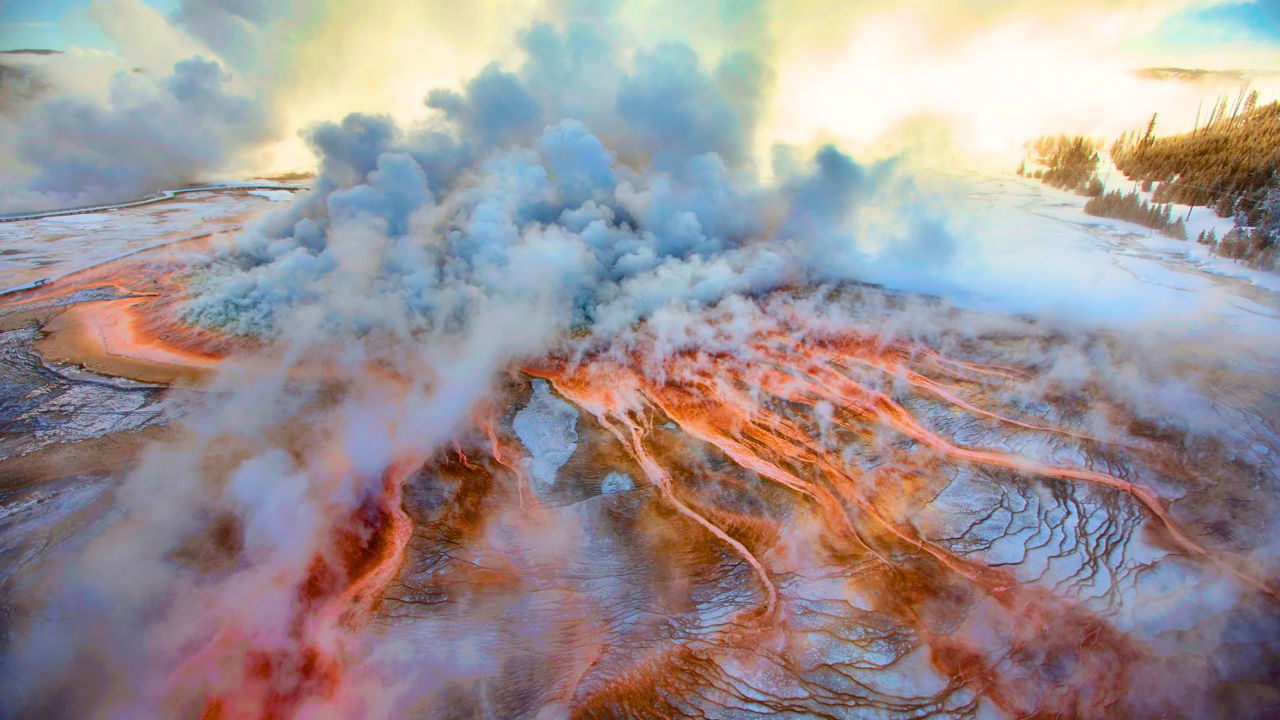
Beneath Yellowstone Lake, roughly 300 feet underground, a swarm of more than 2,000 small earthquakes in 2021 triggered a cascade of changes that exposed how Earth’s hidden microbial ecosystems respond to tectonic energy in near real time. Scientists sampling fluids from a deep borehole documented a dramatic shift: hydrogen, sulfide, and dissolved organic carbon spiked to record levels, followed by a measurable bloom in microbial cells and a reshuffling of microbial communities. The discovery challenges decades of assumptions that deep bedrock aquifers remain geologically stable and slow-changing, revealing instead a responsive biosphere tightly coupled to seismic activity.
A Window Into the Deep Biosphere
Up to roughly 30 percent of Earth’s total biomass may exist underground, thriving in permanent darkness within bedrock aquifers at depths of tens to hundreds of meters. These organisms survive by extracting energy from chemical reactions between water and minerals, independent of sunlight. Before this research, scientists largely treated such continental bedrock ecosystems as geologically buffered and slow-evolving, responding over centuries rather than months.
The Yellowstone borehole, reaching approximately 100 meters into bedrock along the lake’s western shore, provided a narrow but revealing window into this hidden realm. When the 2021 earthquake swarm struck, that window became a live feed, documenting how subtle tectonic motions instantaneously reshape the chemical energy available to subsurface life.
The 2021 Earthquake Sequence
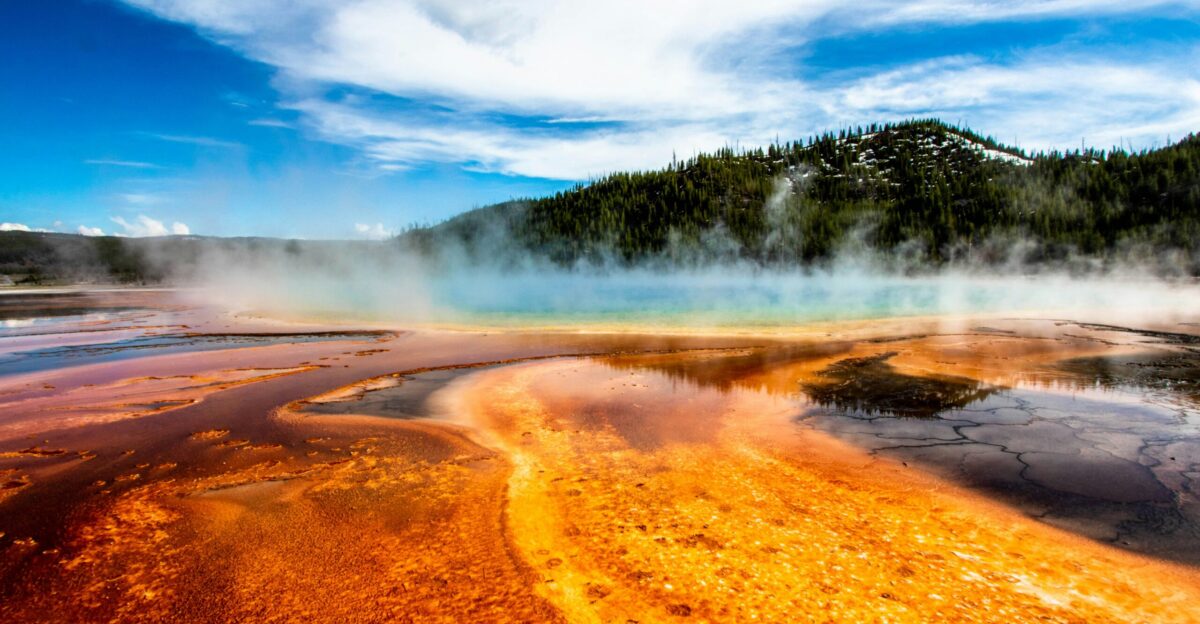
Between May and November 2021, Yellowstone recorded more than 2,000 small quakes clustering beneath and near Yellowstone Lake, with no single dominant mainshock. Machine-learning analyses of the broader caldera reveal that over 86,000 earthquakes occurred from 2008 to 2022, with more than half organized as swarms—confirming that pulsed shaking is normal behavior for the system.
The 2021 sequence was geologically modest but scientifically ideal: strong enough to fracture rock and redirect fluids, yet weak enough to avoid disruptive surface damage. It functioned as a natural experiment, injecting kinetic energy into a known aquifer while instruments and sampling campaigns were already positioned to capture the outcome.
Chemistry Transformed by Fracturing
Researchers collected water samples five times throughout 2021, bracketing the peak of the earthquake swarm and its aftermath. They analyzed the fluids for dissolved gases, organic carbon, major ions, and microbial cells and DNA. This repeated sampling proved critical: a single snapshot would have missed the post-swarm surge in hydrogen, sulfide, and dissolved organic carbon and the rise in planktonic cell counts that followed.
The core geochemical result was striking. After the swarm, concentrations of hydrogen, sulfide, and dissolved organic carbon in the aquifer jumped sharply. Laboratory experiments grinding local rhyolite rock reproduced similar releases of hydrogen and organic carbon, strongly supporting the idea that seismic fracturing liberates trapped substrates and exposes fresh mineral surfaces that react with water. Hydrogen and reduced sulfur compounds serve as prime electron donors for chemosynthetic microbes, which fix carbon dioxide into biomass using these energy sources instead of sunlight.
Microbial Response and Community Shift
Biologically, the borehole water showed a marked increase in planktonic cell concentrations following the chemical shift. Sequencing and community analyses revealed that taxa capable of oxidizing inorganic substrates—certain hydrogen- and sulfur-oxidizing lineages—temporarily became more dominant as new energy sources surged. Over subsequent months, as geochemistry relaxed toward pre-swarm conditions, community composition drifted again, undercutting the assumption that bedrock aquifer microbes form a static, slow-moving assemblage.
Instead, Yellowstone’s deep microbes behave as a responsive, opportunistic biosphere that tracks seismic feeding pulses in near real time. This represents the first documented case where modest crustal shaking has been tied so clearly to rapid ecological change in a continental bedrock aquifer.
Broader Implications and Future Research
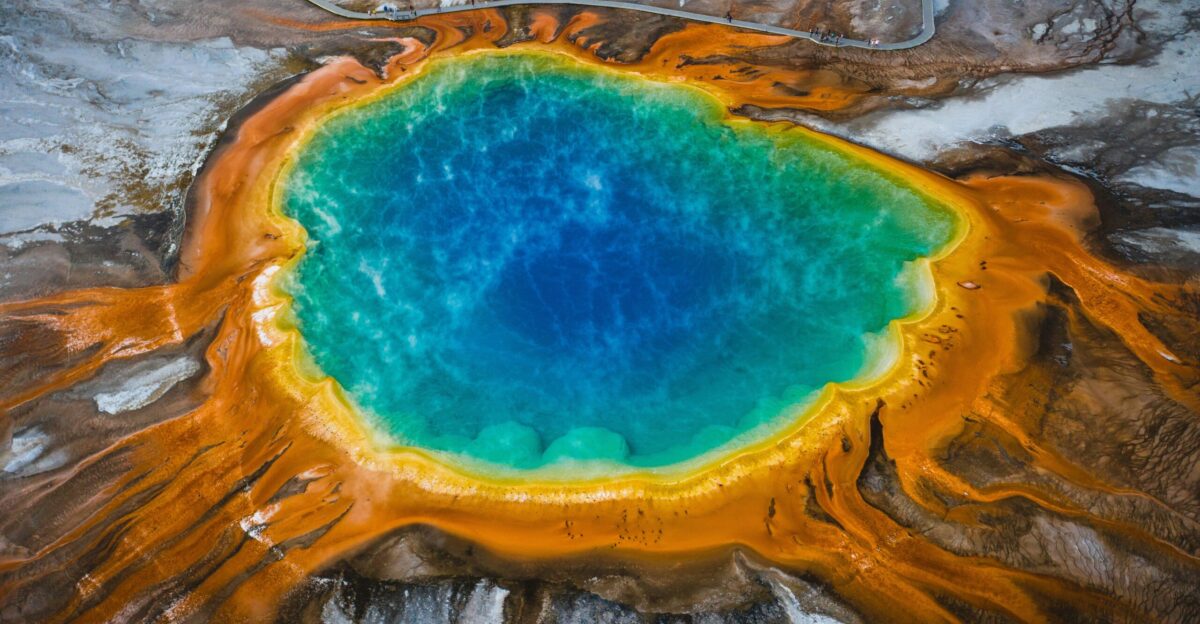
Although the study focuses on a single borehole, Yellowstone’s volcanic field spans approximately 2.2 million acres and hosts thousands of geothermal features riding the same fractured crust and fluid pathways. Around the world, dozens of active volcanic and geothermal regions—including Iceland, New Zealand, Japan, and Indonesia—combine similar ingredients: fractured hot rock, circulating fluids, and frequent small quakes. The Yellowstone findings likely represent one instance of a widespread but previously unrecognized mechanism feeding deep microbial life in tectonically active crust.
The research also carries implications for astrobiology. Mars exhibits ongoing seismicity and evidence for past or present subsurface ice and brines. If Martian quakes similarly fracture crust and refresh geochemical gradients in water-bearing zones, they could create transient energy injections for chemosynthetic microbes analogous to those observed beneath Yellowstone, sharpening target criteria for future life-detection missions.
Sources:
PNAS Nexus Publication – Yellowstone Seismic-Microbial Research
University of Utah Seismograph Stations – Earthquake Monitoring & Catalog
PNAS 2018 – Bar-On et al. “The Biomass Distribution on Earth”
USGS Yellowstone Volcano Observatory – Borehole Monitoring & Geophysical Network