Enrolling an aging parent in home care requires a great deal of trust. You believe paperwork is filed, care is delivered, and bills are honest. Yet, for five years, a trusted company billed for care that never happened, including services for veterans who had already died.
This systematic fraud targeted elderly veterans across California. The architect of this massive scheme was apprehended just moments before escaping to Nigeria.
The Veterans Community Care Program

The Veterans Community Care Program exists to ensure elderly and disabled Americans who served their country do not age without support. The VA contracts with private companies across seven California counties—including Fresno, San Francisco, and Contra Costa—to provide unskilled nursing and daily assistance.
These veterans depend on strangers for basic dignity. Instead of honest support, they received systematic fraud designed to exploit their vulnerability.
The Scale of the Fraud

Between December 2019 and July 2024, approximately 10,000 individual false claims entered the VA’s billing system. For sixty months, the deception went undetected. The scheme involved duplicate charges for previously paid care, claims for days when caretakers were absent, and hours billed that exceeded the actual work done by employees.
Most notably, the company billed for “ghost patients” care allegedly provided weeks after veterans had already passed away.
The Money Trail

Prosecutors allege $7 million was stolen from the program. Assistant U.S. Attorney Calvin Lee and investigators traced the funds, which were spent immediately on personal expenses or transferred strategically to bank accounts in Asia and Africa.
The money was not used for legitimate operations in California, but was deliberately moved to construct an exit strategy. The funds fueled a lavish lifestyle before vanishing overseas.
The Architect: Cashmir Chinedu Luke

Cashmir Chinedu Luke, 66, of Antioch, California, was the CEO and sole owner of Four Corners Health LLC in Fresno. Operating without oversight committees or compliance departments, Luke held complete control as the billing representative and decision-maker.
He personally submitted claims and controlled the bank accounts. This concentration of power allowed one man to deceive the VA’s third-party benefits administrator for five years.
Four Corners Health LLC

Four Corners Health LLC is presented as a legitimate provider in Fresno, with approximately 25 employees and an estimated annual revenue of $942,885. Documents suggest incorporation in 2023.
While the company appeared professional to families—filing paperwork and fielding calls—its infrastructure masked a scheme to bill for non-existent care while channeling millions into offshore accounts. The legitimate facade hid a $7 million theft operation.
Failure of Oversight

Federal investigators question how 10,000 false claims bypassed VA alarms. Luke likely leveraged intimate knowledge of claim processing to hide fraud within the sheer volume of submissions. The VA’s third-party benefits administrator apparently lacked real-time verification checks for death notifications or sophisticated duplicate detection.
This gap allowed the scheme to persist for five years without triggering audits or raising red flags within the system.
The Vulnerable Victims

The fraud targeted veterans aged 65 and older enrolling in the Veterans Community Care Program. While the exact number of victims remains undisclosed, 10,000 false claims suggest hundreds to thousands were affected across the seven counties.
Some victims noticed a decline in care quality, while others never knew they were being robbed.
Financial Impact Breakdown

The $7 million theft averages roughly $1.4 million per year, or approximately $116,000 per month. It comprises approximately 10,000 submissions averaging $700 per fraudulent claim. While individual amounts were small, the aggregate theft was massive.
This money could have funded genuine in-home care for hundreds of elderly people. Instead, it funded Luke’s personal lifestyle while veterans watched legitimate care erode due to vanishing resources.
Billing for the Dead

Court documents allege Four Corners Health submitted claims for services provided weeks after veterans died. This required deliberately ignoring death notices, indicating the scheme was calculated rather than a result of administrative error.
The success of these claims suggests a catastrophic failure in verification protocols at the third-party administrator level. Someone had to knowingly submit bills for patients who were physically unable to receive care.
A History of Fraud?

Department of Justice records indicate a person with the same name was convicted in 2009 in Maryland for conspiracy to commit identification document fraud and aggravated identity theft. That individual served 27 months in federal prison.
Detention documents in the current case noted “ties to Nigeria” and “discrepancies” in background information. If this confirms recidivism, the pattern suggests a career of fraud spanning nearly two decades.
The Escape Plan

On December 3, 2025, Luke arrived at San Francisco International Airport with documentation for a flight to Nigeria. He checked in and approached security, intending to leave the country permanently.
The timing was cinematic but crucial. Had he boarded, he would have likely disappeared beyond U.S. jurisdiction. This attempted flight served as a critical turning point, transitioning him from a suspect to a fugitive.
The Airport Arrest

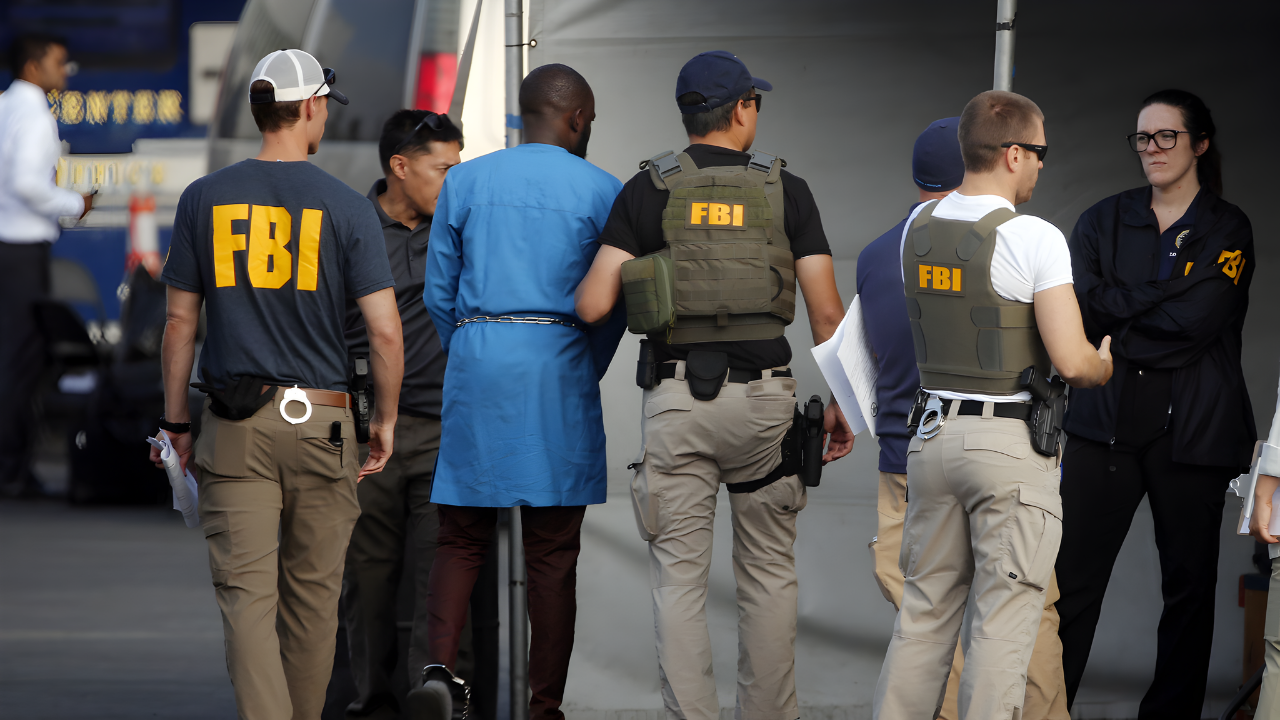
Federal agents from the Veterans Affairs Office of Inspector General, working in coordination with law enforcement, apprehended Luke at the security checkpoint just minutes before he could board. This intervention prevented him from escaping justice. The coordination between investigators and airport security was vital.
Five years of fraudulent activity ultimately came to a halt with five minutes of federal intervention at a departure gate, resulting in the arrest of the scheme’s architect.
Building the Case

Assistant U.S. Attorney Calvin Lee built the case by cross-referencing billing records against caretaker schedules and death certificates. Investigators traced bank transfers across international borders, assembling 10,000 data points into an irrefutable pattern of fraud. They tracked funds moving to Asia and Africa.
The investigation was methodical, connecting the dots between the false claims in California and the financial exit strategy being built overseas.
Legal Status and Rights

Despite the arrest and allegations, Cashmir Chinedu Luke is presumed innocent until proven guilty in a court of law. The criminal complaint represents prosecutors’ allegations based on their investigation. Luke’s defense will have the opportunity to challenge the government’s case, question evidence, and present alternative explanations.
Discovery will unfold, and grand jury proceedings may follow. Only through that process will a conviction actually result.
Facing the Consequences

If convicted, Luke faces up to 10 years in federal prison and a $250,000 fine. Federal sentencing guidelines will account for the $7 million loss, the vulnerability of the elderly veteran victims, and the five-year duration of the scheme.
Whether he serves the maximum term depends on the outcome of plea negotiations and the trial. The penalties reflect the seriousness with which federal law treats healthcare fraud targeting vulnerable populations.
Systemic Vulnerabilities

This case exposes potential systemic vulnerabilities. If one CEO in Fresno operated a $7 million scheme undetected for five years, other providers may be exploiting similar gaps. The case underscores the pressing need for thorough audits of home health contractors and legislative reforms to enhance third-party verification.
Regulators must ask how many others are exploiting the same loopholes that Luke allegedly used for half a decade.
Beyond the Money

Numbers matter, but they don’t tell the real story. Behind the $7 million and 10,000 false claims sit elderly Americans who served their country and trusted they’d be cared for. Families believed paperwork was legitimate.
Luke systematically violated every layer of that trust, transforming a program designed to honor military service into a vehicle for personal enrichment. That betrayal transcends criminal charges and sentencing guidelines.
A Warning to Others

To would-be fraudsters watching from other companies, the federal government sends a clear message: it will coordinate across agencies and intercept you before you escape. The dramatic airport arrest demonstrates that federal law enforcement prioritizes veterans’ cases with intensity.
That commitment signals consequences are real. The system may have gaps, but its reach remains long enough to catch those who attempt to flee with stolen funds.
Honoring the Victims

At the heart of this story are the elderly American veterans who deserved honest care. As this case proceeds through federal court, the focus must remain on them. Their voices deserve to be heard in every hearing.
Their betrayal deserves recognition. Justice requires more than an airport arrest; it requires proof in court and a commitment to ensuring that no veteran is ever exploited in this manner again.
Sources
Department of Justice – U.S. Attorney’s Office, Eastern District of California criminal complaint and press release on Cashmir Chinedu Luke and Four Corners Health LLC
U.S. Department of Veterans Affairs – Veterans Community Care Program and Fraud, Waste, and Abuse guidance
Veterans Affairs Office of Inspector General materials on Community Care Program integrity and fraud oversight
Local and regional reporting on Luke’s arrest and alleged $7 million VA fraud scheme (GV Wire, Mid Valley Times, KMPH, SFGATE)