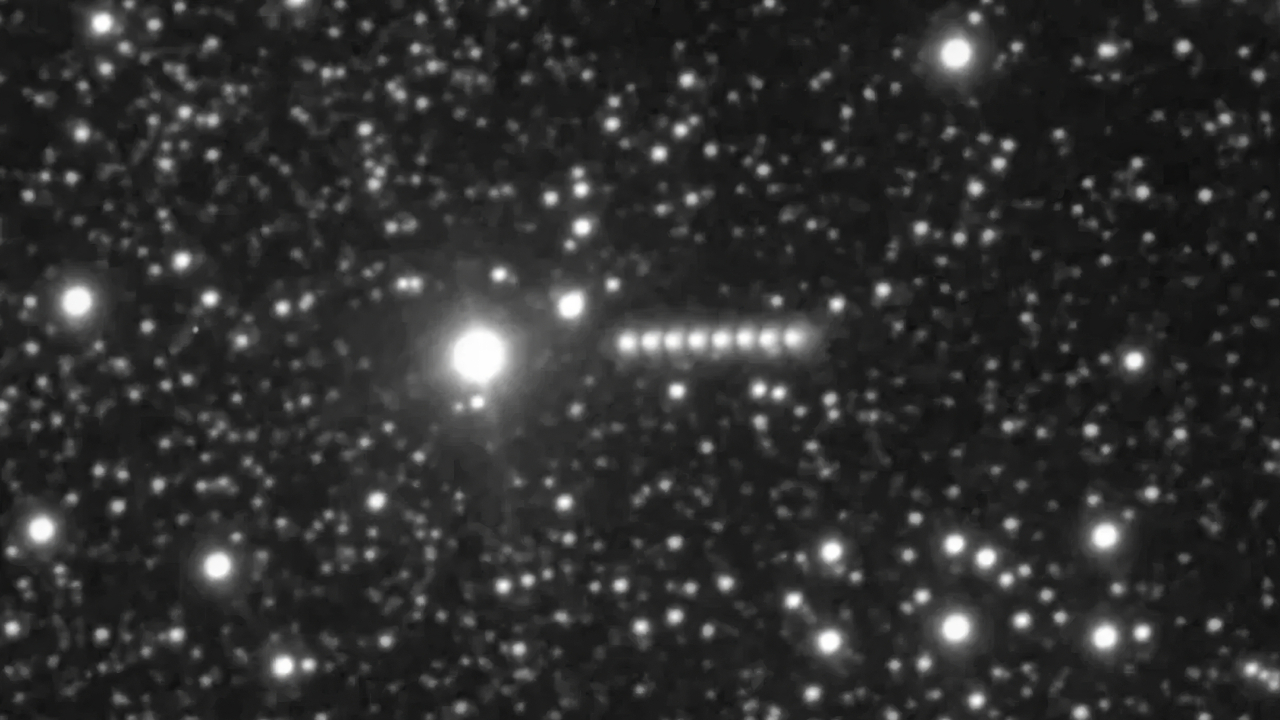
3I/ATLAS is a rare visitor from outer space that has captured the attention of astronomers since its discovery in July 2025. This interstellar object is only the third of its kind seen traveling through our solar system, and it presents scientists with an exciting mystery. As 3I/ATLAS prepares to pass Earth at a safe distance in December, experts are working hard to learn more about its unusual features and find out if there is more to it than meets the eye.
A Scientist Who Challenges Norms
Harvard Professor Avi Loeb has become an important voice in the discussion about 3I/ATLAS. Loeb is known for questioning common scientific ideas and previously suggested that ‘Oumuamua, the first interstellar object detected in 2017, might be artificial.
While most astronomers disagreed with Loeb’s view, he continues to encourage a deeper investigation of 3I/ATLAS. Loeb argues that it is important not to quickly dismiss strange findings because pushing boundaries and exploring the unknown is key to scientific progress.
What Makes 3I/ATLAS Special

3I/ATLAS is unique compared to the other interstellar objects astronomers have studied. It is much larger than its predecessors, stretching several kilometers across, making it the biggest interstellar visitor seen to date. The object is moving at a remarkable speed of about 130,000 miles per hour, much faster than either ‘Oumuamua or 2I/Borisov. This fast motion helps confirm that 3I/ATLAS comes from outside our solar system.
The material found in its tail is also surprising. Most comets have a lot of water ice, but 3I/ATLAS’s tail is composed of only 4% water, with the rest made of gases like carbon dioxide and carbon monoxide. Even more puzzling, astronomers found a gas called nickel tetracarbonyl, which is usually linked to industrial activity on Earth. This is the first time this kind of gas has been observed in a comet, and scientists are unsure how it could form naturally in the cold conditions of space.
Strange Path and Behaviors
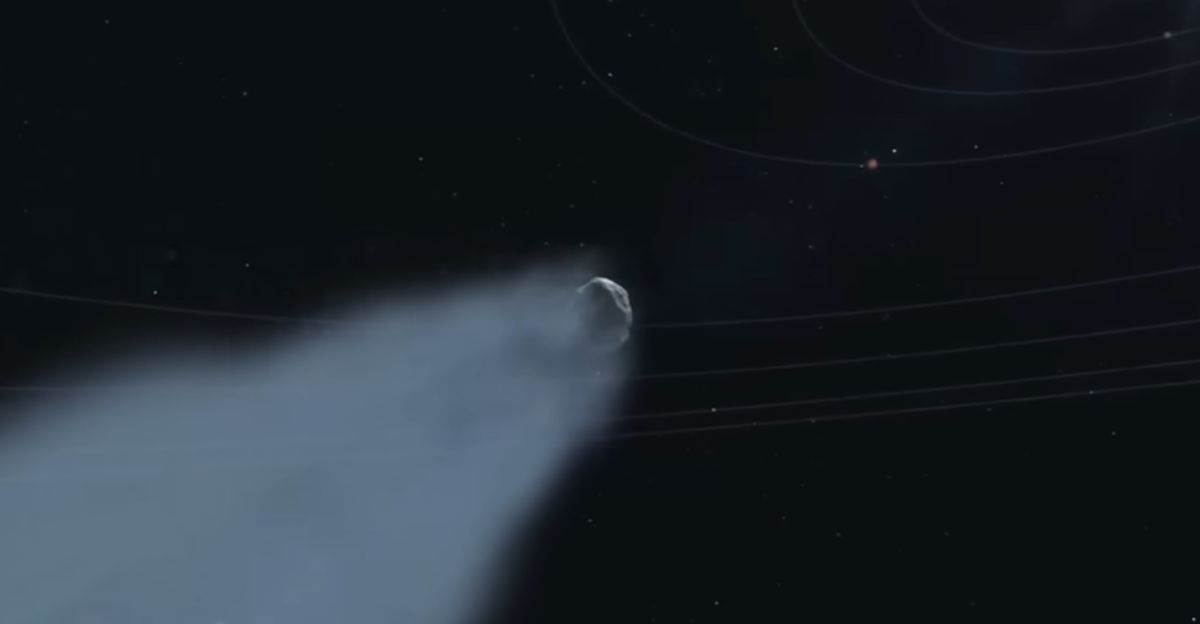
The trajectory of 3I/ATLAS stands out because of where it travels in the solar system and how it moves. Its course brings it close to several planets on a path that seems tightly woven and even somewhat planned, unlike the more straightforward routes of typical comets. This has led some scientists to speculate whether 3I/ATLAS could be surveying planets or if its path is just a coincidence.
One of its most unusual qualities is its retrograde motion: it travels in the opposite direction of the planets but stays closely aligned with the flat plane that the planets orbit along. This kind of alignment is very rare for interstellar objects. In addition, its approach lines up with the area of the sky where the famous “Wow! Signal” was detected in 1977, though researchers say this might just be luck rather than something meaningful.
Odd Visual Traits and Scientific Debate
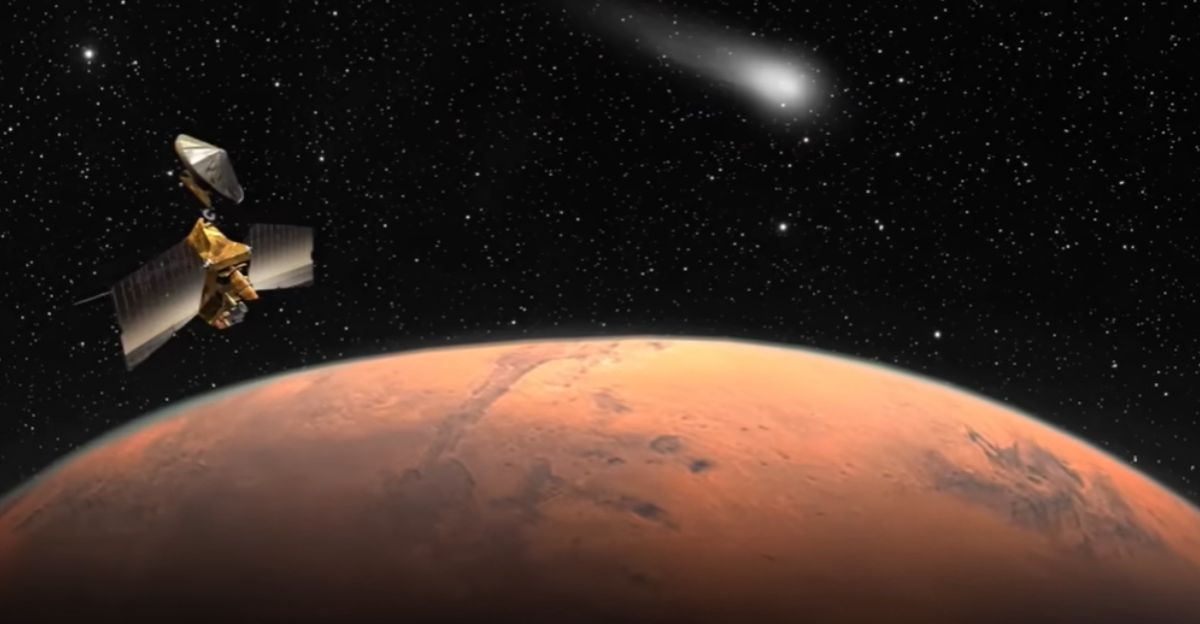
As 3I/ATLAS came closer to the Sun, it did not develop a classic comet tail; instead, it appeared as a bright point of light. Experts noticed a constant jet that pointed toward the Sun, not away from it like usual comets, and at its closest point, the object turned a brilliant blue, a phenomenon never seen in previous comets. New studies of the way light bounced off its surface showed patterns unlike anything observed before, hinting that its surface or atmosphere may be made of unfamiliar materials.
Most astronomers still believe 3I/ATLAS’s strange characteristics could have natural explanations, such as forming in an unusual environment or through rare processes that happen in space. NASA and other space agencies stress that extraordinary claims require extraordinary proof. Loeb and a small group of researchers say it is worth considering all possibilities, including the idea that 3I/ATLAS could be artificial, but they remain in the minority.
On December 19, 2025, 3I/ATLAS will pass Earth at about 270 million kilometers, allowing telescopes from around the world to collect detailed observations. This will help astronomers figure out more about the object and maybe answer some of the big questions it has raised.
Awaiting Discovery

No matter whether 3I/ATLAS turns out to be a natural oddity or something more, its journey reminds scientists of how much remains unknown about space. The comet’s many strange qualities challenge what we thought we knew and show why it is important to keep an open mind in science.
As researchers and the public get ready for its close approach, many are excited to see what new discoveries and mysteries might come from this interstellar visitor