
The Grand Canal’s murky waters transformed into a radioactive neon green this week, stopping gondoliers mid-stroke and drawing gasps from visitors on the Rialto Bridge. The sudden shift wasn’t a natural phenomenon or an industrial accident, but a calculated visual shock orchestrated by climate activists determined to draw global attention to environmental inaction.
As the emerald plume expanded below the ancient stone bridge, the source became unmistakable. Greta Thunberg, the 22-year-old climate icon, stood shoulder to shoulder with nearly three dozen activists from Extinction Rebellion, commanding what they framed as a mock funeral for a dying planet. The group unfurled banners criticizing world leaders’ failure to act, timing their demonstration to coincide with the conclusion of the COP30 United Nations climate conference in Brazil. They claimed the green dye symbolized the “massive effects of climate collapse” that international leadership had systematically ignored.
The theatrical protest didn’t last long. Italian police swiftly cleared the bridge, detaining participants and escorting Thunberg away in a chaotic scene captured by international media. The consequences proved surprisingly severe. Local authorities issued a formal expulsion order banning Thunberg from Venice for 48 hours and imposing a fine of approximately $175—a penalty designed to deter future disruptions.
Regional Leadership Condemns The Action

Luca Zaia, president of the Veneto region, wasted no time condemning the demonstration. He branded the dye job as “disrespectful” to the city’s fragile ecosystem and centuries of history, declaring that “vandalism doesn’t protect the environment.” City officials treated the green substance as a potential pollutant threatening the lagoon’s delicate balance, though Extinction Rebellion countered that the dye was fluorescein—a non-toxic tracer powder commonly used by plumbers to locate leaks—that would dissolve without leaving permanent traces.
The protest carried explicit political dimensions. Activists targeted the policies of Italian Prime Minister Giorgia Meloni, accusing her government of failing to meet climate commitments. By striking during the final days of the COP30 summit, the group aimed to embarrass the administration on the world stage, leveraging Venice’s global prominence to amplify their dissatisfaction with Rome’s environmental record.
A Coordinated National Campaign
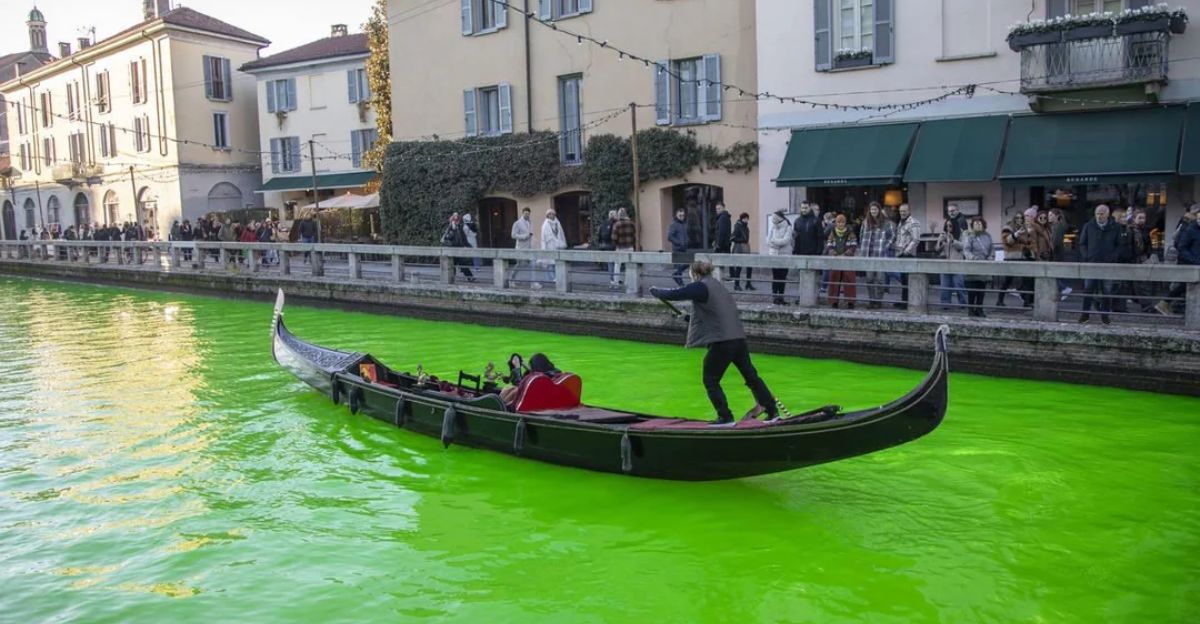
What initially appeared as an isolated incident revealed itself as part of a massive, coordinated operation. Extinction Rebellion announced that simultaneous actions had occurred across ten other Italian cities. From fountains in Genoa and Padua to rivers in Turin, Bologna, and Taranto, water features across the peninsula were dyed green, demonstrating this was a highly organized national strike rather than a rogue event.
Tourist reactions proved more nuanced than expected. While some visitors expressed annoyance at the disrupted views, international reporters found unexpected sympathy among crowds. Several tourists called the protest “legitimate,” acknowledging that the shock of the green water effectively underscored the terrifying reality of rising sea levels threatening to submerge Venice entirely by 2100.
The Paradox Of Targeting A Sinking City
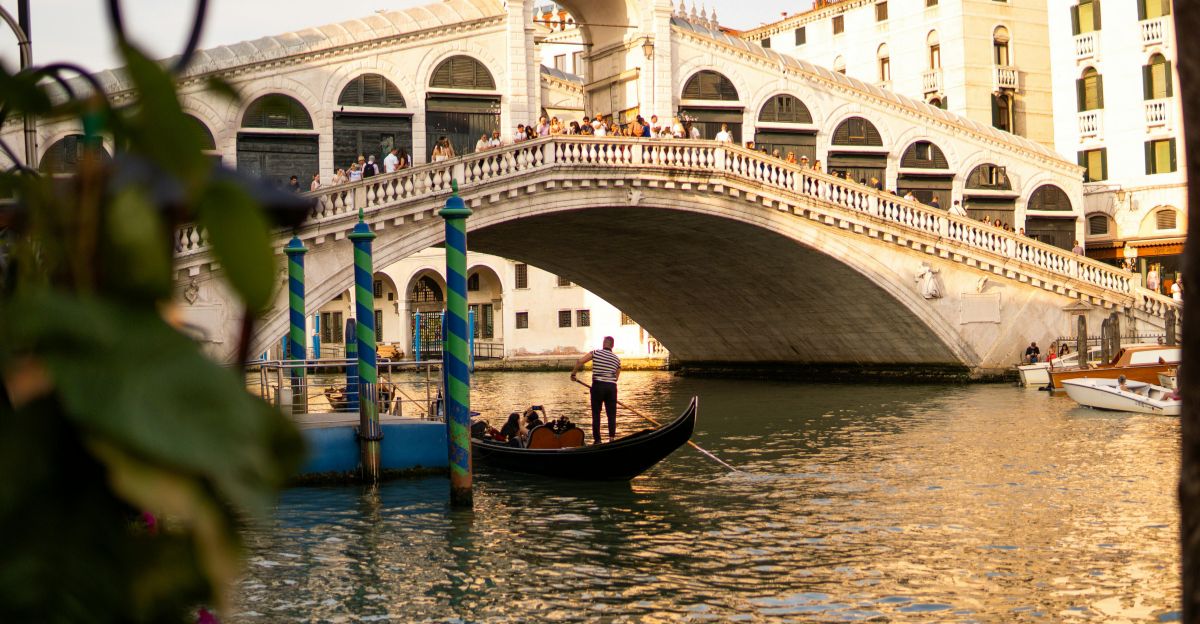
The choice of Venice added bitter irony to the entire affair. Activists targeted a city that stands as arguably the most visible victim of the crisis they protest. Facing more frequent “acqua alta” (high water) floods—occurring up to 250 times annually in worst-case scenarios—Venice embodies a paradoxical tension: protecting the city’s present-day tourism economy versus fighting for its long-term survival against the rising Adriatic Sea.
The $175 fine sparked its own debate about the effectiveness of protest. Critics argued the penalty was insufficient for major disruption of public order, while supporters viewed it as a badge of honor—a trivial price for headlines reaching millions globally. The relatively modest fine, considering the massive international exposure, raised questions about whether legal deterrents effectively discourage activists willing to face arrest for their cause.
Historical Echoes And Shifting Tolerance
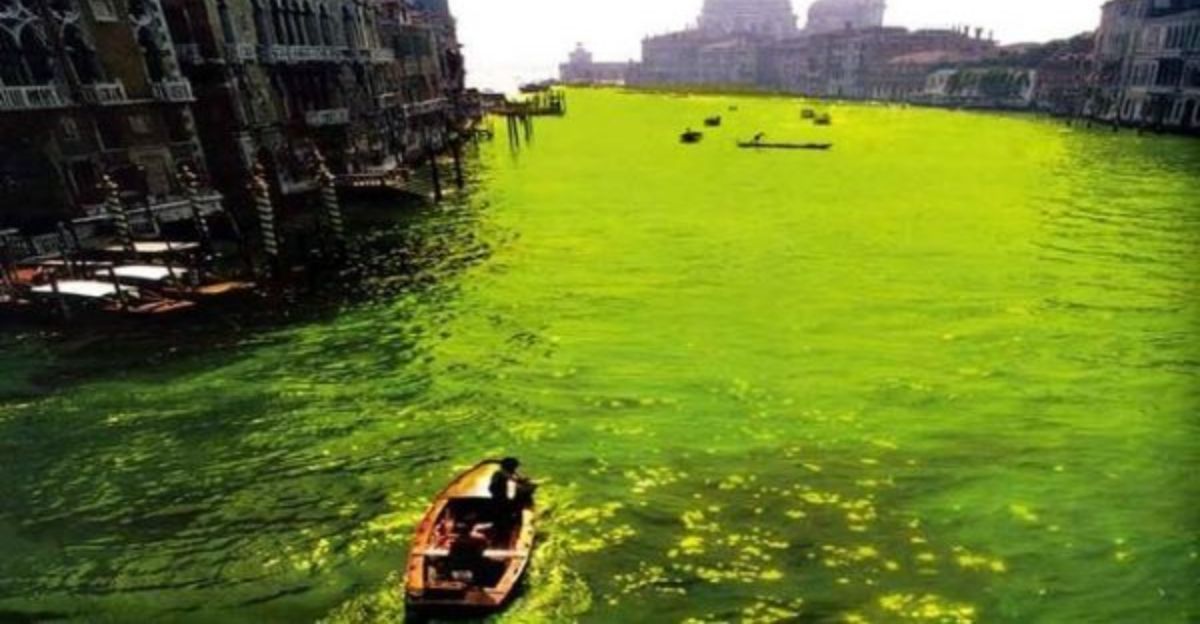
This wasn’t the first time Venice’s waters turned green. In 1968, Argentine artist Nicolás García Uriburu dyed the Grand Canal green to promote ecological awareness during the Venice Biennale. That instance is now remembered as avant-garde art, yet Thunberg’s repetition nearly 60 years later is being treated as a public order crime—highlighting how authorities’ patience has eroded as climate tactics have become increasingly confrontational.
As the dye faded and Thunberg departed under her 48-hour expulsion order, the debate lingered. Did turning the Grand Canal green galvanize support for climate action, or did it alienate locals trying to protect their city? With the Meloni government standing firm and regional leaders crying foul, the stunt succeeded in dominating the news cycle. Whether it moved the needle on climate policy remains as uncertain as the canal’s returning waters, but for one day, the world couldn’t look away from Venice.
Sources
Fox News – Greta Thunberg banned from Venice after green dye climate protest (Nov 24, 2025)
ABC News – Climate activist Greta Thunberg banned from Venice after Grand Canal dye protest (Nov 25, 2025)
The Telegraph – Greta Thunberg banned from Venice after dyeing canal green (Nov 23, 2025)
Anadolu Agency – Greta Thunberg briefly banned from Venice after green dye climate protest in Grand Canal (Nov 25, 2025)
UNESCO World Heritage Centre – Venice and its Lagoon (official designation record)
Smarthistory – Nicolás García Uriburu, Coloration of the Grand Canal, Venice (historical reference verification)