Greenlanders began their day hearing the White House press secretary say that using military force to acquire their island was “always an option.” For a territory of 56,000 people long sheltered by NATO and U.S.-Denmark security frameworks, the statement shattered diplomatic convention and exposed a fundamental tension within the alliance—whether collective defense treaties constrain the world’s most powerful military or merely describe its intentions.
The Strategic Calculus Behind Arctic Ambitions

Washington’s renewed focus on Greenland reflects genuine strategic competition rather than nostalgic territoriality. The island contains 25 of the 34 critical raw materials identified by the European Commission as essential to modern economies, including lithium, rare earth elements, and graphite, which are needed for batteries, semiconductors, and defense systems.
European assessments value Greenland’s total mineral wealth at approximately $4.4 trillion, though only $186 billion is currently economically extractable. For an administration concerned about competing with China for the supply chains underpinning advanced technology and military capabilities, these resources represent a significant leverage point in a long-term great-power rivalry.
The strategic argument extends beyond minerals. Pituffik Space Base (formerly Thule Air Base) hosts roughly 150 U.S. Air Force and Space Force personnel, providing ballistic missile warning and space tracking vital to North American defense under the 1951 U.S.-Denmark Defense Agreement.
Trump administration officials have interpreted current security arrangements as insufficient and have signaled that complete territorial integration—not mere facility access—is their objective. The January 25 deadline for resumed negotiations, announced by Trump on January 5, was read across Europe not as a scheduling convenience, but as a timeline within which diplomatic and military pressure would operate in parallel.
Europe’s Unified Boundary
The White House comment triggered coordinated responses from six major European allies. Within 24 hours, leaders of France, Germany, Italy, Poland, Spain, and the United Kingdom joined Denmark in public statements asserting that “Greenland belongs to its people.” The speed and uniformity reflected recognition that Washington was challenging a post-World War II principle: that territorial claims require consent from the affected population and existing sovereign authorities, not military superiority.
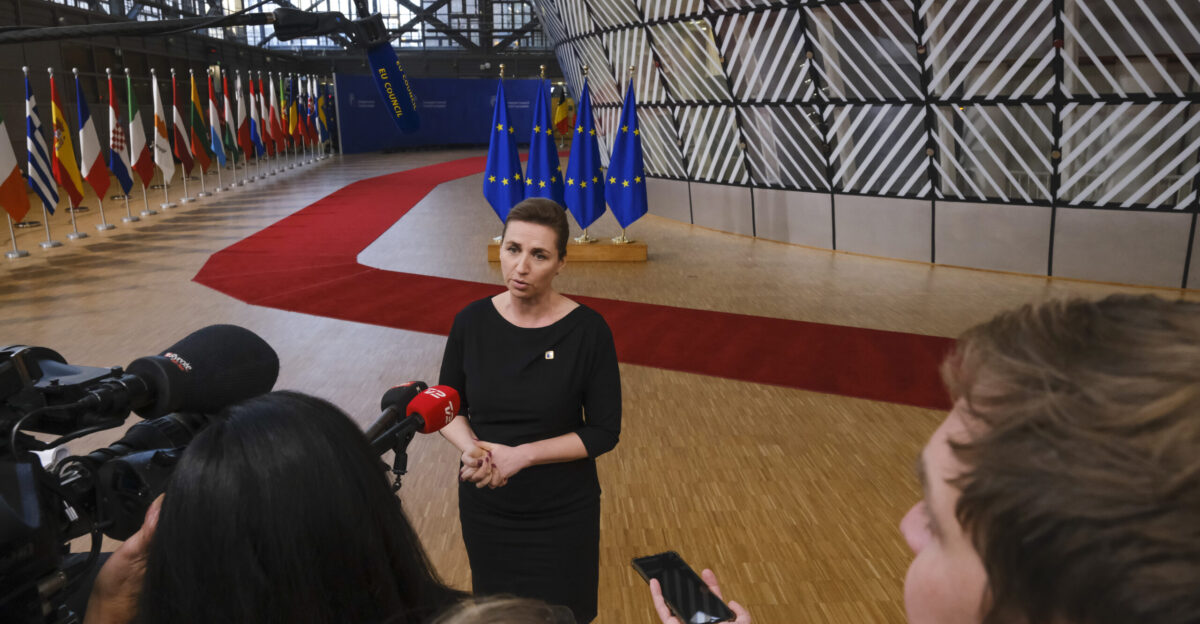
Danish Prime Minister Mette Frederiksen articulated the alliance’s existential stakes most directly, warning that any U.S. military action against Greenland would mean “everything stops—including NATO and the security provided since World War II.” She was not negotiating; she was naming the price of unilateral action: the potential collapse of 77 years of collective security architecture binding roughly 370 million Europeans and North Americans.
Canada moved to reinforce that message through symbolic and institutional means. Prime Minister Mark Carney announced that Governor General Mary Simon, an Inuit descendant, would travel to Greenland in February with Foreign Minister Anita Anand to open a Canadian consulate in Nuuk. The gesture signaled that indigenous Arctic populations have backing from neighboring states precisely when Washington’s intentions are ambiguous.
NATO’s Legal Framework Under Stress
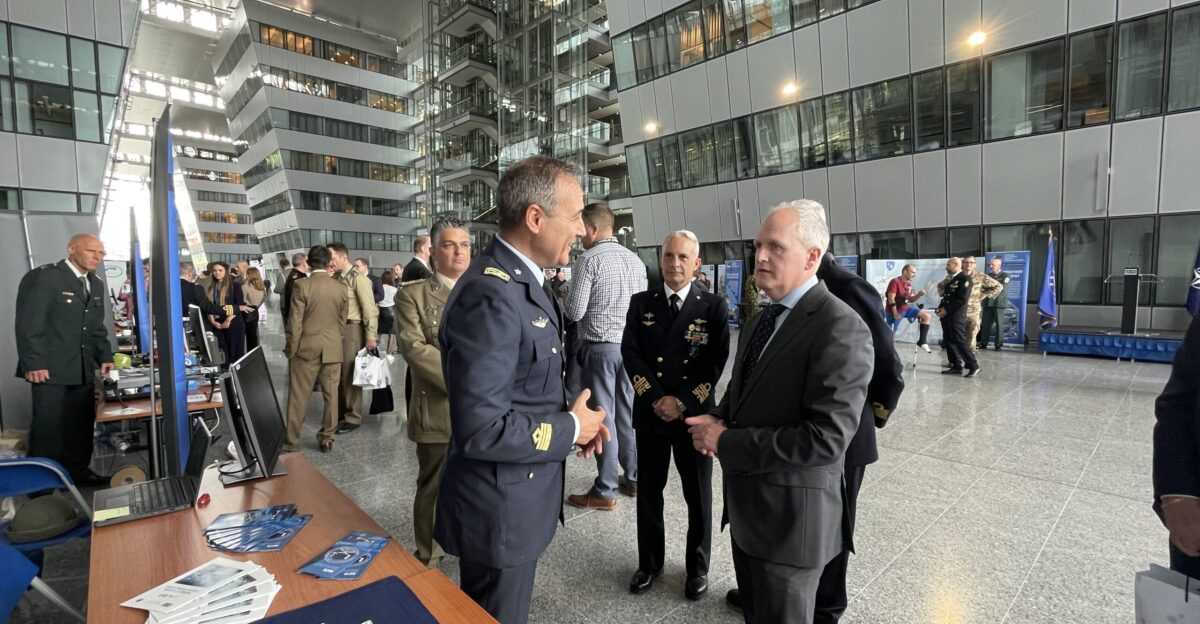
Article 5 of NATO’s founding treaty (April 4, 1949) provides that an armed attack against one member constitutes an attack against all. Critically, each member decides its own response; no collective vote is required. The article has been invoked once—after the September 11 attacks—when allies supported the United States with minimal procedural delay. That history amplifies the significance of European warnings that any move against Greenland could activate mutual defense obligations.
The legal structure creates an asymmetry. The United States could act unilaterally, but doing so would invite Article 5 invocations from affected allies. European leaders have implicitly suggested they would consider military action against Greenland a breach of alliance norms severe enough to justify Article 5 responses, though they have carefully avoided explicit threats. That ambiguity itself becomes a stabilizing factor if it raises the perceived cost of unilateral action.
Washington’s Internal Divisions
The U.S. government has not spoken with one voice. Stephen Miller, serving as deputy chief of staff, told CNN that “Greenland should be part of the United States” and that “nobody is going to fight the United States militarily” over the issue—an assessment that discounts both Denmark’s military capabilities and NATO’s treaty obligations. The White House has consistently maintained that military options remain viable.
House Speaker Mike Johnson, by contrast, rejected military action explicitly. When asked whether force was appropriate, he replied, “No,” and later emphasized: “We are not at war with Greenland. We have no intention.” His statements reflect congressional skepticism about military adventurism and concern that using force against a NATO ally would damage the alliance itself.
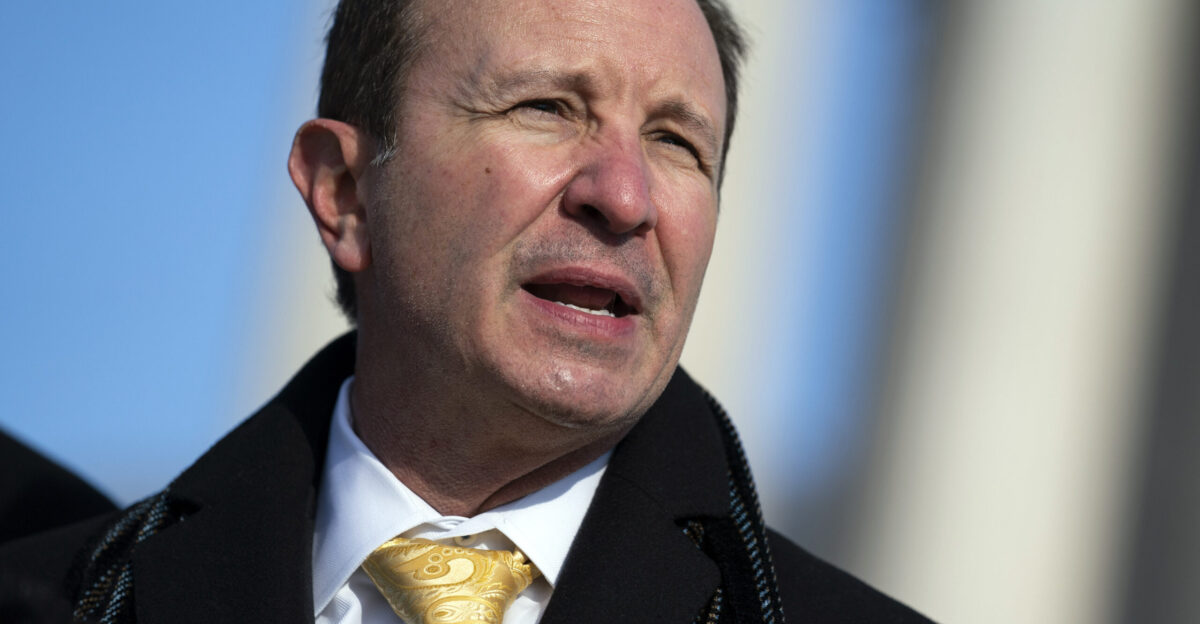
The administration appointed Louisiana Governor Jeff Landry as Special Envoy to Greenland with a mandate to integrate the territory into the United States. Landry’s public comments have echoed that objective, suggesting a dual-track strategy in which diplomatic pressure and military readiness advance simultaneously toward the January 25 date.
The Coming Test
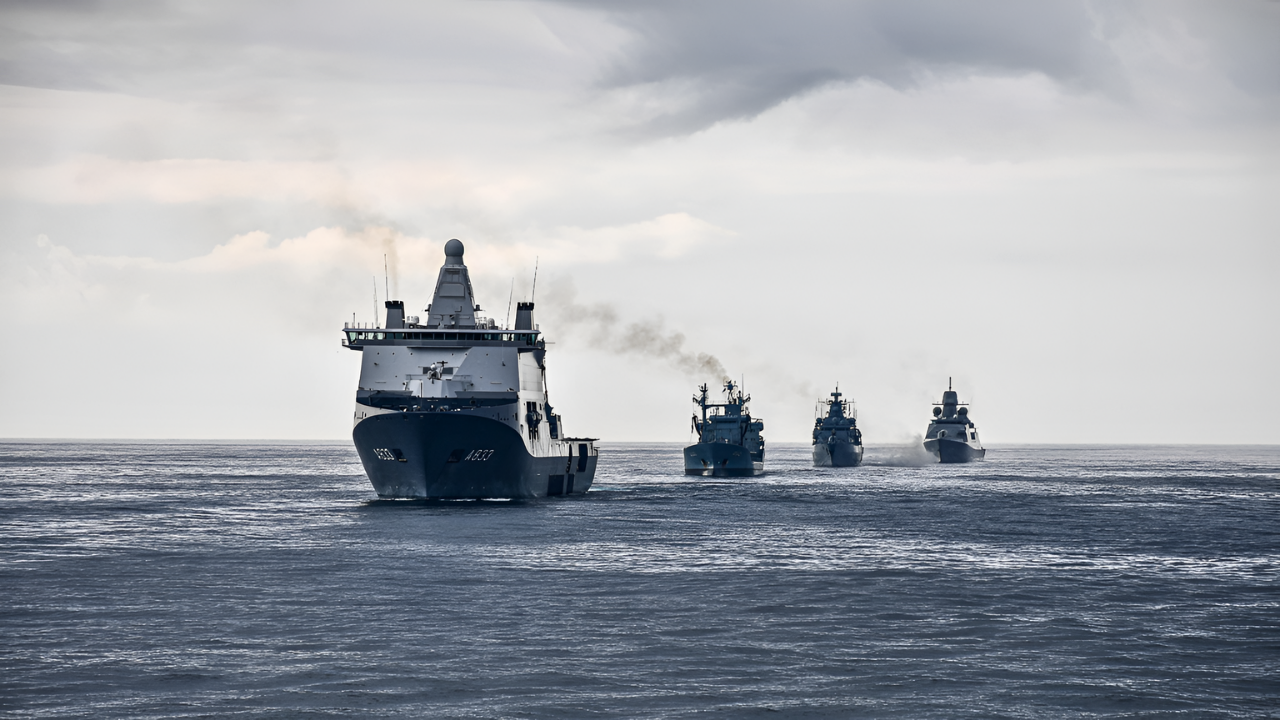
As the January 25 deadline approaches, the situation remains unresolved. A German frigate FGS Sachsen, part of NATO’s Standing Maritime Group 1, continues its routine, pre-planned deployment in the North Atlantic. European capitals reiterate that Greenland’s future belongs to its people and existing sovereign frameworks. And Washington maintains that military measures remain available while internal discord persists over whether that option should ever be exercised.
The episode tests whether NATO’s collective security framework still constrains unilateral action by its most powerful member or whether an era of more assertive territorial ambition will redefine what the alliance actually guarantees. For Greenlanders, the answer will determine whether inherited assumptions about protection and stability survive in the face of 21st-century great-power competition.
Sources
NATO Standing Maritime Group 1 deployment documentation, NATO official records
Geological Survey of Denmark and Greenland (GEUS) 2023 critical minerals assessment
U.S. State Department Defense Agreement records, Denmark-U.S. 1951 treaty documentation
White House Press Secretary Karoline Leavitt statements, January 6-7, 2026
New York Times “Inside ‘Operation Absolute Resolve,’ the U.S. Effort to Capture Maduro,” January 3, 2026
BBC News “How could Donald Trump ‘take’ Greenland?”, January 7, 2026