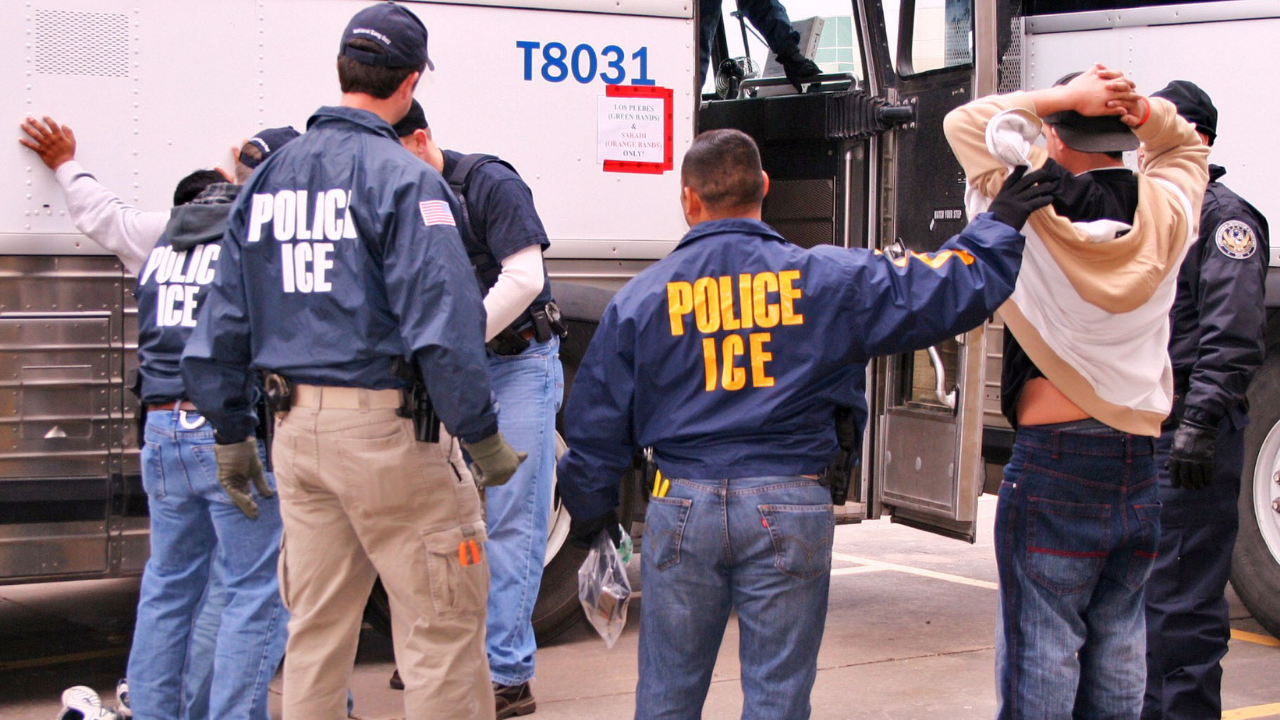
Mahmoud Khalil, a Palestinian‑born Columbia graduate and US lawful permanent resident, faces renewed risk of immigration detention and removal after a 3rd Circuit panel ordered dismissal of the habeas case that secured his release from ICE custody in June 2025.
The panel held that the New Jersey federal district court lacked authority to grant that habeas relief and said challenges to his removal must proceed through the statutory petition‑for‑review process after immigration proceedings conclude. The decision narrows the availability of habeas as an interim safeguard for noncitizens alleging that immigration actions are retaliatory or otherwise unconstitutional.
From Campus Protests to ICE Custody
Khalil became publicly associated with pro‑Palestine or Gaza‑related protests at Columbia University during the 2024 campus encampments. He is a lawful permanent resident married to a US citizen and is the parent of a US‑citizen child. Federal immigration agents arrested him in early March 2025, and he spent roughly three and a half months in immigration detention, including at a facility in Louisiana, before his release in June.
The administration relied in part on a rarely used provision of the Immigration and Nationality Act that allows removal on foreign‑policy grounds, and US District Judge Michael Farbiarz later found that provision likely unconstitutional as applied and ordered his release on bail.
The Appeals Court Limits the Habeas Route
In January 2026, a divided 2–1 3rd Circuit panel vacated the June 2025 district‑court orders and instructed the lower court to dismiss Khalil’s habeas petition. The majority concluded that Congress had set up a comprehensive review scheme under which most challenges to removal, including constitutional claims, must be raised through a petition for review of a final order in the court of appeals rather than through district‑court habeas while immigration proceedings are ongoing.
The ruling leaves in place the immigration‑court process and permits federal review only at the petition‑for‑review stage, a structure some commentators note could delay judicial consideration of free‑speech and due‑process arguments until after an individual has faced prolonged detention or a final removal order. Judge Arianna Freeman dissented, emphasizing the importance of meaningful review for claims involving First Amendment retaliation.
Why the Case Has Broader Implications
Khalil’s case arises at the intersection of immigration enforcement, campus protest politics, and foreign‑policy‑related grounds of removability. DHS and administration officials have described him as a leader or central figure in disruptive or antisemitic campus protests, allegations his legal team disputes and which have not resulted in criminal charges.
Free‑expression and civil‑rights advocates say the foreign‑policy provision and the 3rd Circuit ruling could affect other students, scholars, and noncitizens engaged in pro‑Palestine or Gaza‑related advocacy by making it harder to obtain early federal‑court review of alleged retaliation.
Jurisdiction and the REAL ID Act
The government’s appellate victory turns on jurisdiction rather than a final merits ruling on Khalil’s First Amendment claims. The 3rd Circuit majority relied on jurisdiction‑channeling and jurisdiction‑stripping provisions in the REAL ID Act and related INA amendments, which direct most challenges to removal— including constitutional claims and questions of law—into petitions for review filed in the courts of appeals after immigration proceedings conclude.
Judge Farbiarz had previously concluded that Khalil was likely to succeed in challenging removal based on the foreign‑policy ground, and he enjoined the government from removing Khalil on that basis while also ordering his release on bail. By vacating those orders and requiring dismissal of the habeas petition, the 3rd Circuit left those constitutional questions unresolved while allowing immigration authorities to continue pursuing fraud‑based and foreign‑policy‑based charges through the immigration‑court system.
Retaliation Allegations, Gaza Speech, and First Amendment Stakes
Khalil and his lawyers argue that his arrest, detention, and attempted removal stem from his Gaza‑related and pro‑Palestine speech rather than neutral enforcement priorities. Public court filings and media reports indicate that, nearly a year after his arrest, he has not been charged with any violent or non‑immigration‑related crimes.
The government has alleged misrepresentations and omissions on his green‑card application, including about past affiliations and activities, while his attorneys describe those allegations as unfounded or pretextual. Farbiarz’s earlier rulings signal serious constitutional concerns about using the foreign‑policy removal ground in a way that appears tied to political activism, although the 3rd Circuit has now set those issues aside on jurisdictional grounds rather than resolving them.
Present Status and Downstream Effects
As of late January 2026, Khalil remains in the United States and is not in ICE custody. In September 2025, an immigration judge in Louisiana ordered him removed to Algeria or, in the alternative, Syria, primarily on the basis of alleged misrepresentations in his green‑card process; Khalil has appealed that decision to the Board of Immigration Appeals.
Following the 3rd Circuit ruling, a DHS spokesperson publicly urged Khalil to use the CBP Home “self‑deportation” app, stating that he should “self‑deport now before he is arrested, deported, and never given a chance to return.” Advocates and university stakeholders warn that the handling of this case may influence how foreign students, scholars, and other noncitizens view the risks of high‑profile campus activism, particularly on issues related to Gaza and US foreign policy.
Conclusion: What Is at Stake
Supporters of Khalil’s position argue that his case tests whether constitutional protections for speech, due process, and habeas review meaningfully constrain immigration and foreign‑policy decisions when they intersect with contentious protests and national‑security rhetoric.
They note that a federal district judge has already rejected the administration’s foreign‑policy rationale for his detention and ordered his release, and that no independent evidence has publicly linked him to violent criminal conduct. The 3rd Circuit’s jurisdictional ruling now places those constitutional questions on hold until the immigration‑court process runs its course and any petition for review is decided, a sequence that will shape how similar cases are litigated in the future.
Sources:
- CNN – “Appeals court reverses decision that freed Palestinian activist Mahmoud Khalil” (Jan. 15, 2026)
- Reuters – “US appeals court ruling raises prospect of rearrest of pro‑Palestinian activist” (Jan. 15, 2026)
- Anadolu Agency – “Palestinian activist Mahmoud Khalil says US cannot deport him amid ongoing appeals” (Jan. 22, 2026)
- Tribune / wire (via Pakistan) – “US appeals court ruling raises prospect of re‑arrest of pro‑Palestinian activist” (Jan. 14, 2026)
- ABC News – “Appeals court says judge had no jurisdiction to order Mahmoud Khalil’s release” (Jan. 14, 2026)
- AP News – “Court reverses decision that freed pro‑Palestinian activist” (Jan. 15, 2026)