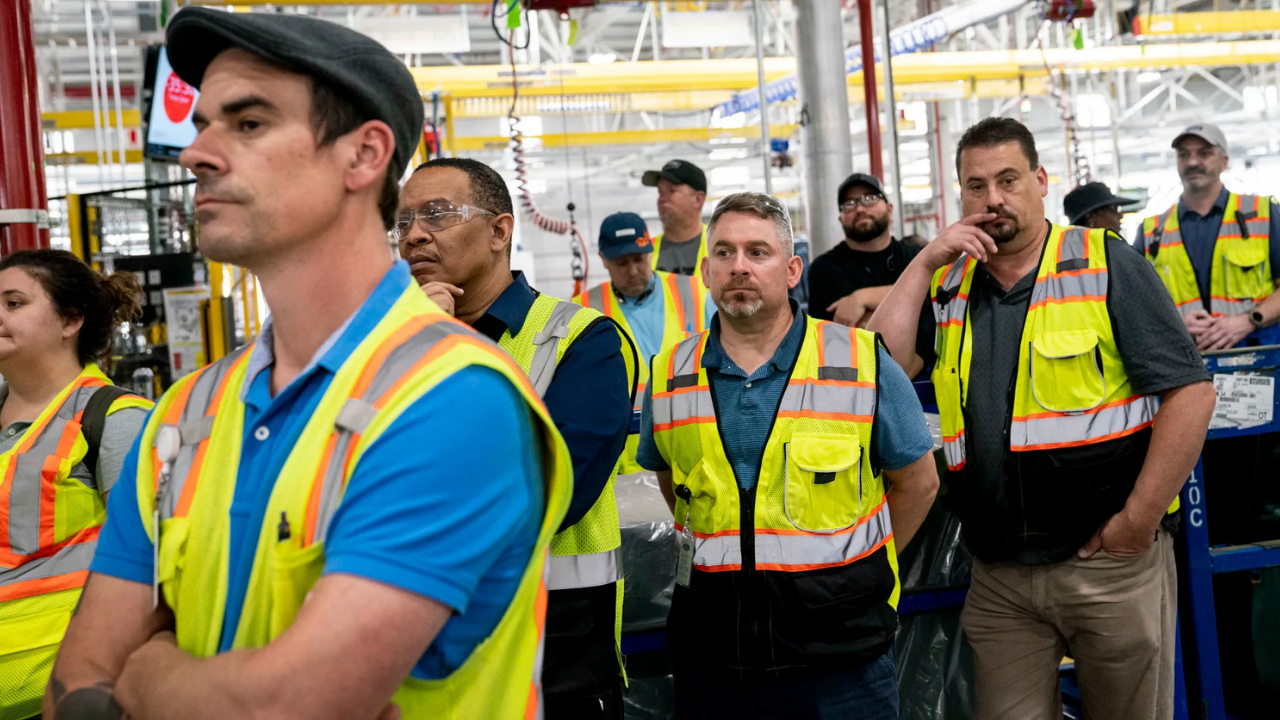
In a move that signals both ambition and uncertainty, Ford Motor Company will temporarily lay off 2,000 workers at its Louisville Assembly Plant in Kentucky starting December 2025, with workers expected to return after the facility is retooled for electric vehicle production. The nearly year-long shutdown is part of a sweeping overhaul to convert the facility, which opened in 1955, for electric vehicle (EV) production, adopting advanced manufacturing methods inspired by Tesla. While Ford touts the project as a leap into the future, the transition leaves thousands of workers facing months without steady pay and the region bracing for economic ripple effects.
Reinventing the Assembly Line
Ford’s Louisville plant is set to become a proving ground for the company’s most radical manufacturing experiment in decades. Central to the overhaul is the adoption of Gigapress technology—massive die-casting machines capable of stamping entire vehicle subassemblies from single sheets of aluminum. This approach, pioneered by Tesla, replaces the traditional process of welding together dozens of smaller parts, promising greater efficiency and fewer assembly errors.
The company has invested nearly $2 billion in the Louisville upgrade, part of a broader $5 billion commitment to modernize its U.S. manufacturing footprint. The plant will be equipped with state-of-the-art digital infrastructure, including WiFi-7 and private 5G networks, to support advanced automation and real-time data tracking. Ford CEO Jim Farley has described the project as a “high-stakes gamble,” acknowledging that the outcome is far from certain.
A New Blueprint for EV Production

Ford’s transformation goes beyond new machinery. The company is introducing a Universal EV Production System that replaces the classic linear assembly line with an “assembly tree” layout. In this system, three separate lines simultaneously build the front, rear, and battery sections of a vehicle before joining them together. This parallel approach is expected to reduce the number of workstations by 40% and could accelerate assembly times by a similar margin, with the potential to reinvest those gains into quality improvements.
Engineering changes are equally significant. The new EV platform will use 20% fewer parts and 25% fewer fasteners than previous models. Wiring harnesses will be shorter and lighter, and large unicastings will simplify the construction of front and rear sub-assemblies. The battery pack itself will serve as the vehicle’s structural floor, further streamlining production.
Affordable EVs and the Return of a Classic Name
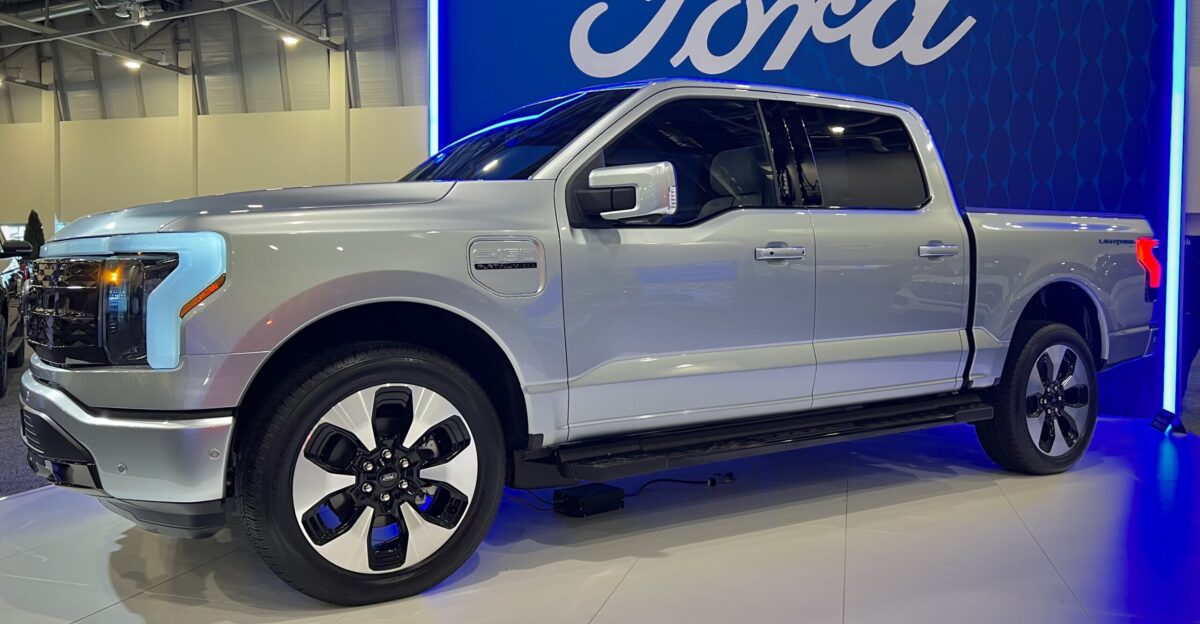
Ford’s ambitions extend to the showroom. The company plans to launch a compact, four-door electric pickup truck in 2027, targeting a starting price of $30,000. The goal is to make the five-year cost of ownership lower than that of a used Tesla Model Y, positioning the new truck as Ford’s most affordable EV. The vehicle will slot between the Maverick and Ranger in size, and speculation is mounting that Ford may revive the historic “Ranchero” nameplate for the model. While CEO Farley has hinted at a “new silhouette” rather than a traditional pickup, the move taps into nostalgia for the original Ranchero, a car-based utility vehicle produced from 1957 to 1979.
Worker Uncertainty and Community Impact
For the 2,000 Louisville workers facing temporary layoffs, the transition is fraught with anxiety. Enhanced unemployment benefits will cover the first four months of the approximately ten-month shutdown, leaving six months with minimal income as the plant is retooled. Union leaders have urged members to seek temporary work in the community, but Kentucky’s job market offers limited opportunities for specialized auto workers. Unlike Detroit, where laid-off employees can often transfer to nearby plants, Louisville’s workforce faces stiffer competition and greater uncertainty.
The United Auto Workers (UAW) Local 862, representing about 12,000 Ford employees in Louisville, has a complicated relationship with the company. Production workers at the plant voted against Ford’s 2023 national labor agreement, while skilled trades workers supported it. In 2024, the union threatened strikes over health, safety, and skilled trades issues before reaching a tentative deal.
A Model T Moment or a Risky Gamble?

Ford’s leadership frames the Louisville overhaul as a pivotal moment in the company’s history. CEO Farley has likened it to the launch of the Model T in 1908, which revolutionized car ownership by making vehicles affordable for the average worker. The hope is that the new $30,000 electric truck will do the same for EVs, democratizing access and reshaping the market.
The plant will feature the highest level of automation in Ford’s global network, with the fastest and most connected digital infrastructure. Tesla’s Gigapress technology, now adopted by Ford, can produce over 900 vehicle frames per hour and complete a car body in under four seconds. Ford has also established a California-based team to compete directly with Chinese EV manufacturers, aiming to match their affordability and quality without moving production overseas.
As the Louisville Assembly Plant prepares for its transformation, workers and industry observers alike are watching closely. The project’s success or failure will not only determine the fate of thousands of employees but also shape Ford’s ability to compete in a rapidly evolving global EV market. The stakes are high, and the outcome remains uncertain.