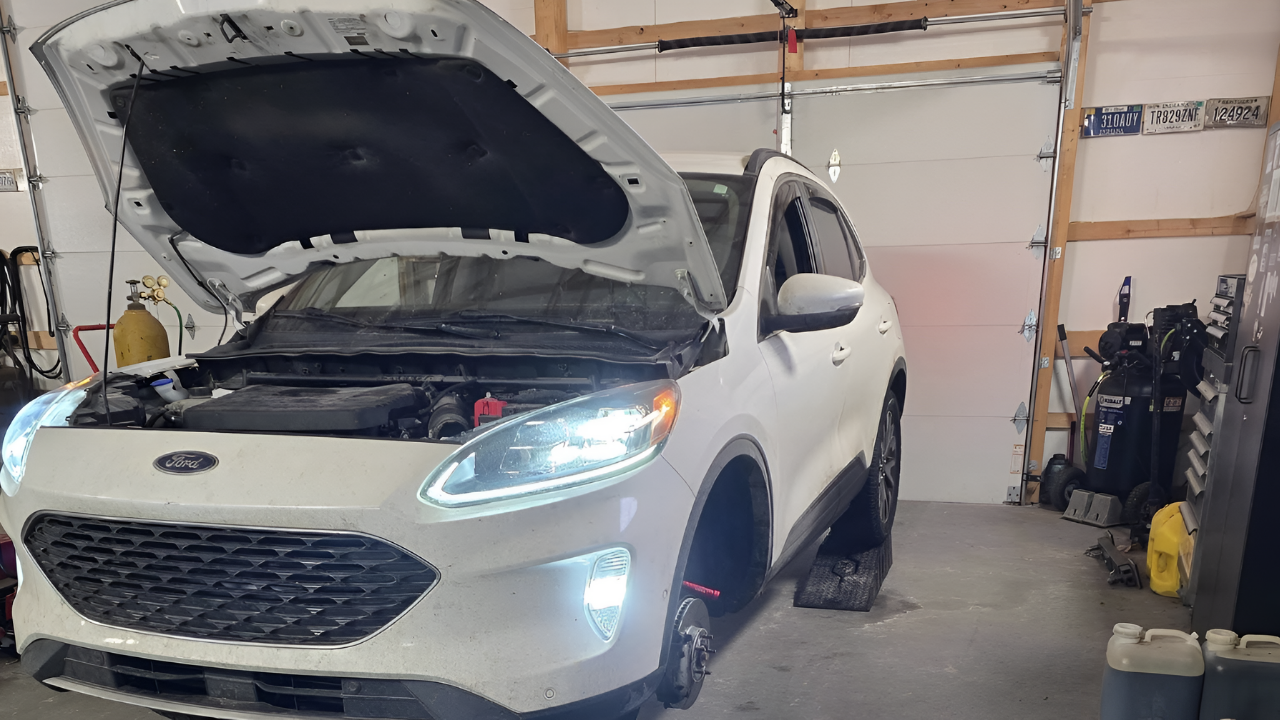
The dashboard warning appears without warning: “Stop Safely Now.” A Ford Escape Plug‑In Hybrid suddenly loses power in traffic, leaving the driver to coast toward the shoulder. Behind that message is a deeper mechanical threat. Damaged high‑voltage battery cells can overheat in about 20,558 Ford Escape and Lincoln Corsair plug‑in hybrids built between the 2020 and 2024 model years, prompting a second safety campaign after an earlier software remedy failed to fully mitigate a fire risk. Seven thermal events occurred even after Ford tried to manage the defect through updated code alone, exposing the limits of software‑only fixes for hardware flaws in electrified vehicles.
Hidden Cell Defect, Visible Safety Risk
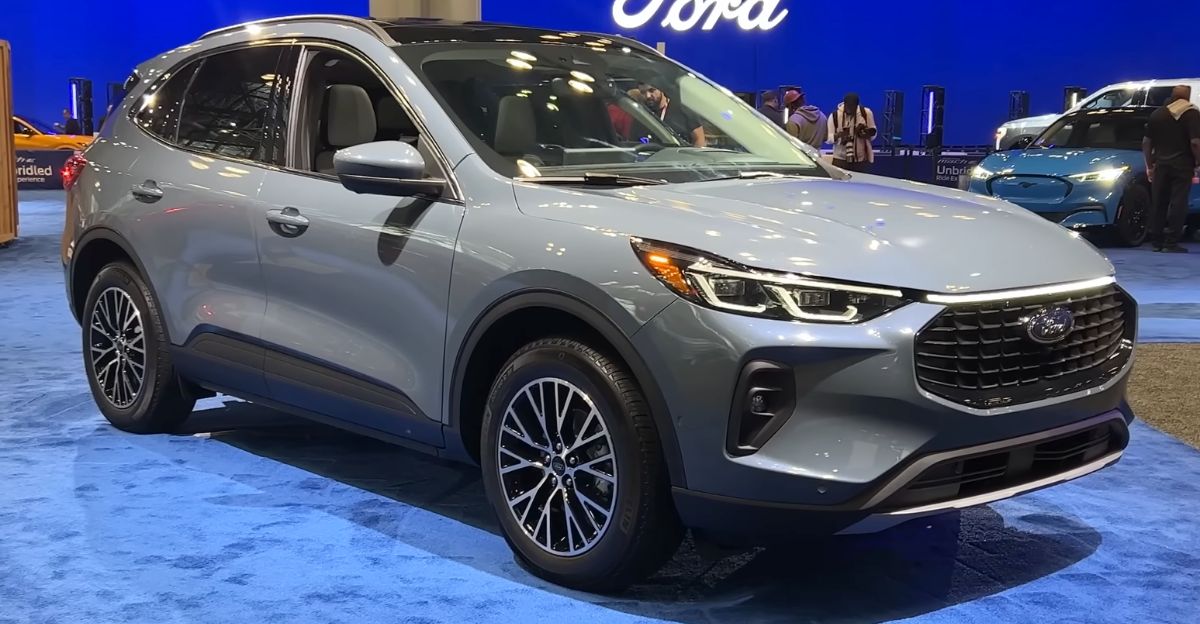
At the center of the problem is a Samsung SDI battery cell produced in Hungary with microscopic defects in the separator layer, the barrier meant to keep internal components from touching. Those flaws can trigger internal short circuits and overheating. Ford’s 2024 update was designed to monitor for irregular battery behavior and halt charging before temperatures spiked. Yet seven vehicles experienced thermal venting afterward, indicating that the detection thresholds and controls could not fully contain the risk.
Ford executives had publicly linked many quality problems to “build issues during the Covid pandemic,” but these defective cells span several model years beyond the early pandemic period. Dealers report being inundated with safety campaigns, while regulators question whether early software‑only approaches adequately protected owners. The repeated failures have now forced Ford to pursue more invasive hardware‑based measures.
Owners Face Fire Hazards, Delays and Higher Costs
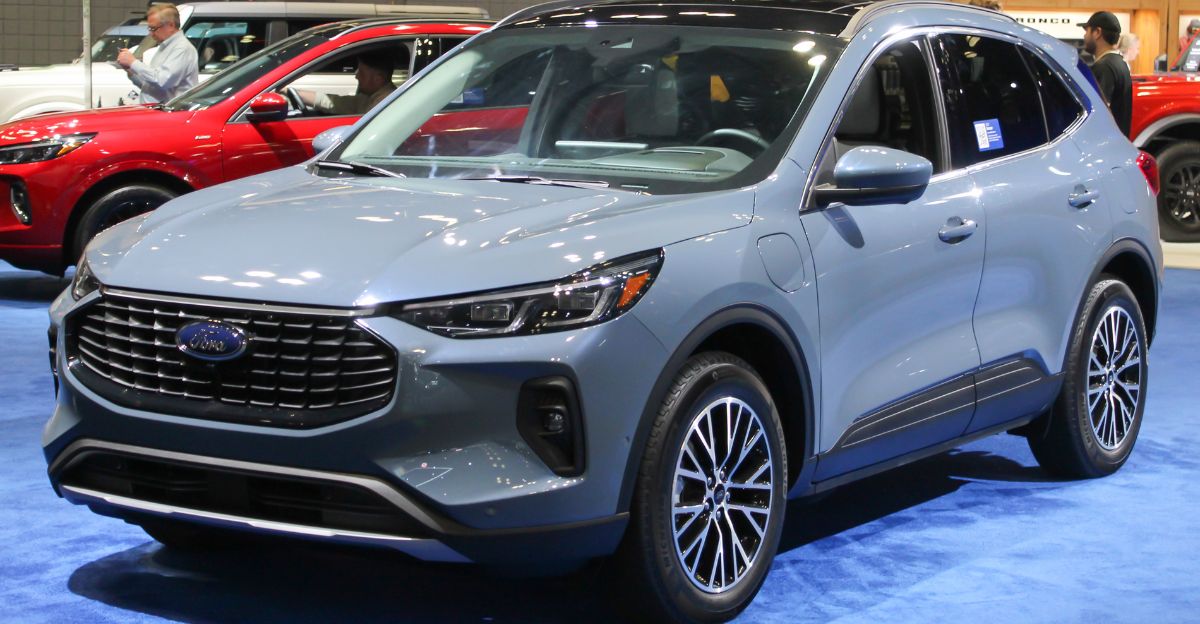
In the meantime, Ford has instructed owners of affected Escape and Corsair plug‑in hybrids to restrict use. Drivers are told to cap the maximum state of charge and operate only in Auto EV mode until permanent repairs are available. Even with those limits, vehicles can still display the “Stop Safely Now” message and shut down abruptly, creating potential hazards if propulsion is lost in dense traffic or at highway speeds.
Another concern involves vehicles parked in garages, driveways, or public structures. Overheating and thermal venting can occur while the vehicle is stationary, turning routine parking spaces into potential fire zones. The uncertainty has left owners managing a reduced‑function vehicle that cannot safely or reliably use its full electric capability. Ford has not yet given a firm schedule for providing durable repairs, leaving many drivers in an extended holding pattern.
The financial ripple effects are mounting. Some insurers are starting to treat plug‑in hybrids as higher‑risk assets, reflecting claims associated with battery fires and repeated safety interventions. When a specific model is recalled twice for the same underlying hazard, the perceived likelihood of serious failure increases. Owners of the affected Ford and Lincoln models now face a quantifiable safety concern attached to a documented supplier defect, and insurers may respond with higher premiums or tighter coverage terms.
Resale values are also under pressure. Escape plug‑in hybrids have already depreciated more quickly than competitors such as the Toyota RAV4 Prime, and the second recall deepens buyer hesitation. Electrified vehicles often see faster depreciation due to potential battery replacement costs; vehicles marked by multiple campaigns for the same defect can lose value even more quickly. For the 20,558 units involved, this safety issue becomes a permanent part of the vehicle history, complicating future sales and eroding owner equity.
Strain on Ford, Suppliers and Regulators
The battery defect is not confined to Ford. Samsung SDI’s Hungarian plant supplied problematic cells for vehicles built by Ford, Stellantis, Volkswagen, and Audi, affecting more than 180,000 battery packs produced between 2020 and 2023. The company has acknowledged that a software‑based remedy for its cells “may not be effective” in some conditions. Separately, Hungarian authorities and courts have ordered production at the Göd facility to be suspended at times over environmental permitting and violations, adding regulatory and public‑relations challenges to existing quality concerns.
For Ford, the Escape plug‑in hybrid recall feeds into a broader reliability crisis. The company has issued more than 100 campaigns in 2025 alone, straining service departments that were designed primarily for routine maintenance rather than large volumes of complex safety work. Many current campaigns require physical inspection, high‑voltage battery handling, and scarce specialized parts, leaving vehicles sidelined for extended periods. Dealers can only offer interim software settings and usage restrictions while they wait for replacement components and detailed repair instructions.
Regulators have responded by tightening oversight. Under a consent order, the National Highway Traffic Safety Administration required Ford to re‑evaluate campaigns issued over the previous three years. That review highlighted instances where code changes were not enough to conclusively close safety defects, contributing to the surge in new and amended recalls in 2025. The Escape plug‑in hybrid sequence — software update, continued thermal events, then a second, deeper recall — has become a leading example of why those requirements were strengthened.
The financial consequences are substantial. In 2023, Ford spent about 4.8 billion dollars on warranty repairs, reserving roughly 1,203 dollars per vehicle sold. Executives have said that improving quality should lower warranty outlays and reduce safety campaigns, and the company reported a temporary 450 million dollar drop in such expenses in the third quarter of 2024. However, a wave of new campaigns, including the possibility of high‑voltage battery replacements on thousands of plug‑in hybrids, threatens to reverse those gains. Analysts and company leaders have previously suggested that quality issues and related inefficiencies can amount to roughly 2 billion dollars in foregone earnings before interest and taxes in some years.
A Shrinking Niche and Growing Trust Gap
The Escape and Corsair recalls are unfolding as the plug‑in hybrid market loses ground in some regions. Recent data show plug‑in hybrid sales slipping as buyers gravitate toward either fully electric models or conventional hybrids that do not rely on external charging. Leading manufacturer BYD reported a 22.4 percent year‑over‑year drop in plug‑in hybrid sales in November 2025, even as its overall new‑energy vehicle volumes remained high. In the United States, plug‑in hybrid volumes in early 2025 were estimated at about 2 percent of the light‑vehicle market, with share under pressure as hybrid sales rise faster. Safety campaigns from Ford, Stellantis, and Volkswagen involving nearly 180,000 vehicles have added to doubts about the segment’s promise of dependable dual‑power flexibility.
Competitors are already benefiting. Toyota, Honda, and Hyundai are drawing customers to conventional hybrids that carry strong reliability reputations and avoid high‑voltage charging hardware. In the first part of 2025, electrified models accounted for roughly half or more of Toyota’s U.S. sales, while plug‑in hybrid volumes fell as a share of the market. The repeated campaigns involving Ford’s newest model years make it difficult for the company to sustain public claims about sharply improved launch quality, even as rivals emphasize their own track records.
Long‑term research into safety campaigns has also raised questions about Ford’s approach. A multidecade analysis of recall patterns found that fewer than 30 percent of the company’s campaigns were initiated proactively; most were triggered by complaints, regulatory inquiries, or supplier disclosures. The Escape plug‑in hybrid case follows that pattern: field failures, warranty data, and incidents in Europe contributed to the identification of the defect, and the initial code‑only solution was not validated under all real‑world conditions.
For owners, the result is a widening trust gap. They must live with restricted vehicle capability, potential fire hazards, and uncertain resale prospects while they wait for a permanent remedy. For the industry, the episode raises broader questions about whether electrification can scale while maintaining rigorous safety and quality standards. With a key supplier facing a global reputation challenge and a major automaker dealing with record safety campaigns and rising warranty costs, the next phase of electrification will likely be measured not only in adoption rates but in the ability of manufacturers and regulators to restore confidence in complex battery systems.
Sources
NHTSA Part 573 Safety Recall Report 25V789 (November 2025)
NHTSA Consent Order and Civil Penalty Press Release (November 2024)
Samsung SDI Battery Recall Notice (February 2025)
Ford Motor Company Form 10-K Annual Report (2023)