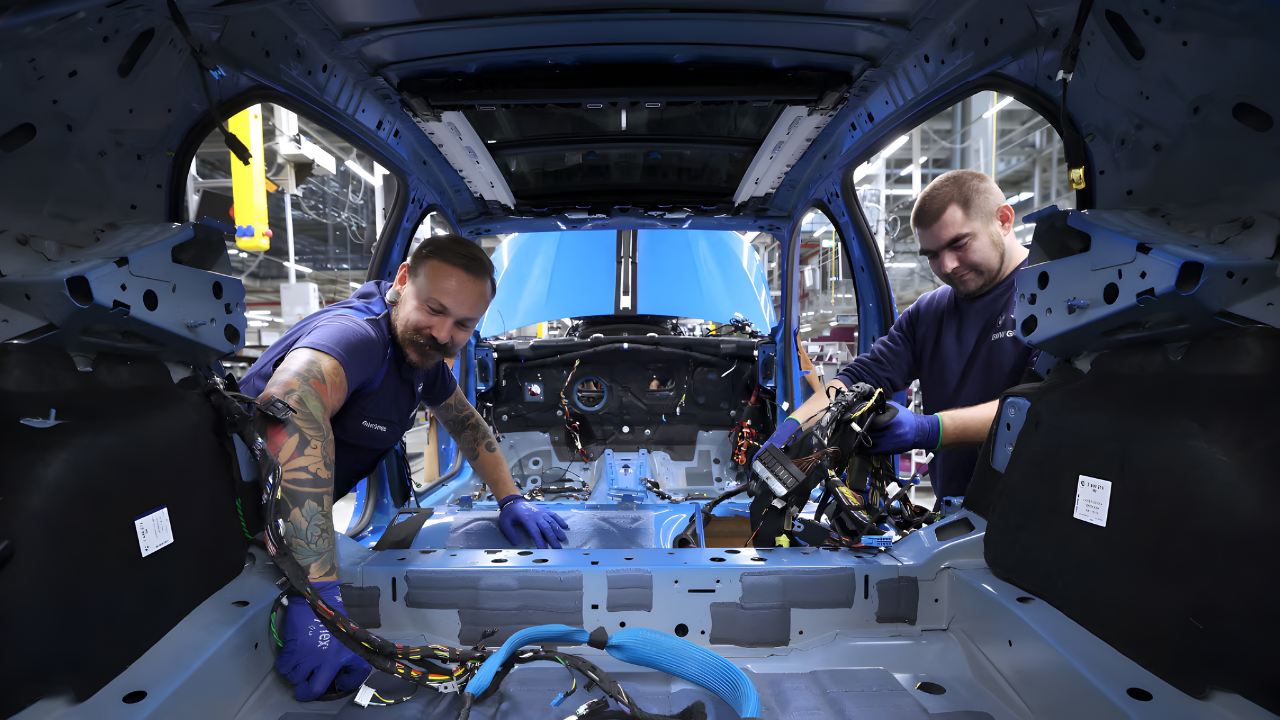
On September 15th, 2023, 16,600 Ford workers walked out demanding more than a raise—they were demanding survival. Entry-level employees earning $17 per hour were juggling multiple jobs, some working Amazon shifts before seven-hour Ford evenings, leaving barely enough time to sleep. Forty-six days later, Ford agreed to historic wage increases, including a 150 percent boost for temporary workers. The strike didn’t just reset pay; it shook the foundations of American manufacturing.
The Breaking Point on Factory Floors
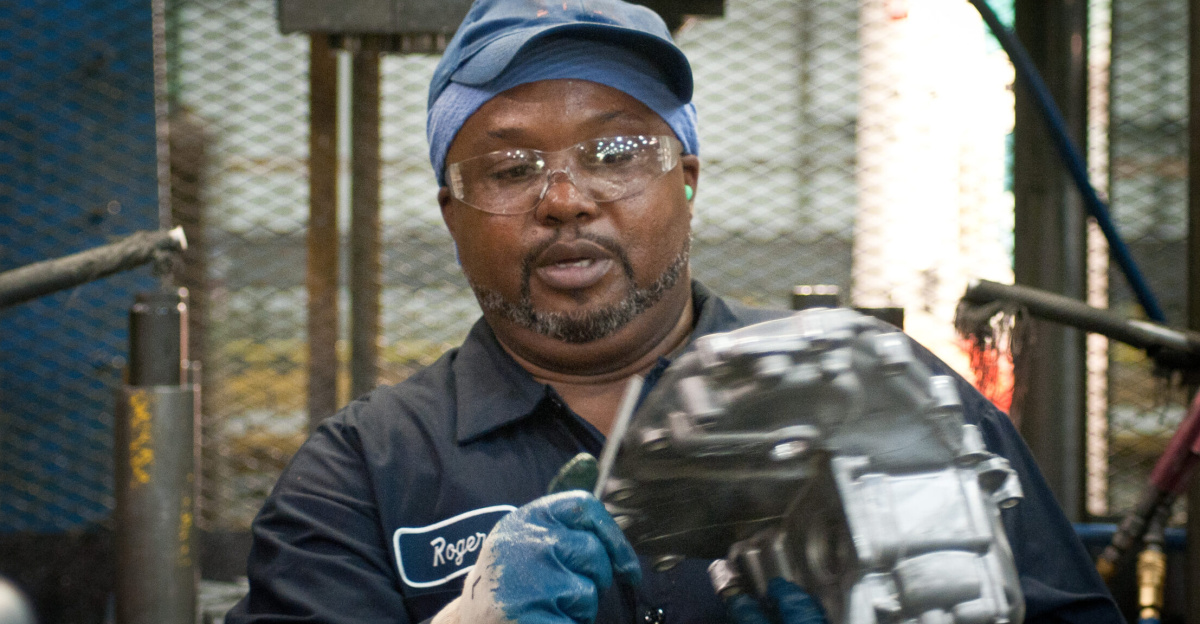
Two distinct groups existed at Ford: full-time employees and temporary workers earning $16.67 per hour with no path to permanent status for eight years. On September 15th, UAW President Shawn Fain announced a “Stand Up Strike” targeting Ford, General Motors, and Stellantis—the first trilateral strike in UAW history—beginning at three select plants. Fain’s phased strategy maximized pressure while remaining unpredictable, stunning management with surgical precision.
CEO Jim Farley later revealed the human crisis driving the walkout. Entry-level workers told him: “None of the young people want to work here. Jim, you pay $17 an hour, and they are so stressed.” Some employees juggled three jobs, including eight-hour shifts elsewhere, leaving only three to four hours for sleep.
The wage math told an even darker story. Full-time workers at $17 per hour earned roughly $35,360 annually—$31,240 below the average U.S. salary of $66,600. Compared to the manufacturing average of $25 per hour, Ford pay lagged roughly $16,640 annually. Workers had to find additional income or face poverty. Ford’s 2023 adjusted earnings were $10.42 billion. Despite profitability, wages remained stagnant.
Escalation and Strategic Pressure
By September 29th, two weeks in, the UAW expanded the strike beyond three plants. Chicago Assembly’s 4,600 workers joined. On October 11th, all 8,700 Kentucky Truck Plant employees walked out, halting roughly 30 percent of Detroit Three production. The strike disrupted the most profitable facility, cutting weekly production by approximately 43,000 vehicles by mid-October.
Ford’s initial offer was clearly insufficient. The company offered roughly 20 percent general wage increases—less than half of the UAW’s 40 percent demand. Fain called it “Coke Zero COLA,” referencing the absence of cost-of-living adjustments. The union also sought temporary-to-full-time conversion, wage progression, and restored inflation protection lost since 2009. Management claimed demands were unsustainable due to electric vehicle transitions and global competition. Negotiations appeared stalemated.
Then Ford blinked.
The Agreement That Shocked Analysts

On October 25th, 46 days into the strike, Ford agreed to a tentative deal. The contract delivered 25 percent base wage increases through April 2028: 11 percent immediately, then 3, 3, 3, and 5 percent in subsequent years. All workers received $5,000 ratification bonuses within two weeks.
Temporary workers saw dramatic gains. Entry-level temps rose from $16.67 per hour to $24.91 per hour upon full-time conversion—a 49 percent jump. The three-year progression path would bring them to approximately $35.58 per hour, representing roughly a 113 percent increase from their starting wage. With cost-of-living adjustments, wages could reach approximately $40.82 per hour by contract end, a total gain of nearly 145 percent. Temporary workers’ path to top rate previously took eight years; now they reach the top tier in just three years.
For the first time in over 40 years, temporary workers were included in Ford Profit Sharing retroactively to 2023. Average profit-sharing payouts rose by $1,200. Temporary employees finally shared directly in corporate success, correcting decades of exclusion.
The Henry Ford Echo

CEO Farley invoked Henry Ford’s 1914 philosophy: “I’m doing this because I want my factory worker to buy my cars. If they make enough money, they’ll buy my own product.” In 1914, Ford doubled wages and reduced hours. Model T sales surged from 308,162 vehicles in 1915 to 501,462 vehicles in 1916.
In 1914, $5 per day equaled approximately $162 in 2024 dollars. Today, Ford’s top hourly rate is $42.60 per hour. Modern manufacturing faces a different challenge: Generation Z largely rejects factory work. A 2023 Soter Analytics study found only 14 percent of Gen Z considered manufacturing viable. Ford alone had 5,000 open mechanic positions paying up to $120,000 annually. Compensation alone could not attract the next generation of skilled workers.
Broader Economic Ripples
By mid-October, Detroit Three output fell approximately 30 percent, losing roughly 43,000 vehicles weekly. According to strike analysis, the 2023 UAW strike reduced vehicle production by hundreds of thousands of units across September and October. Over one-third of production vanished in a single month.
Critics feared 25 percent wage increases would spike prices. According to labor cost analysis, wage increases represented a small fraction of overall vehicle costs, with price increases primarily driven by supply disruptions and a shift toward premium vehicles rather than labor costs alone.
Targeting all Big Three proved strategic. Stellantis reached a tentative agreement on October 28th; General Motors followed on October 30th. All matched Ford’s key terms, affecting 145,000 UAW members and raising the labor floor across the United States.
The Victory and Its Limits
Ford’s 25 percent general wage increase and 150 percent gains for temporary workers mark the biggest modern manufacturing victory. Entry-level wages rising from $16.67 per hour to approximately $40.82 per hour with cost-of-living adjustments gave workers a real middle-class path. Collective action remains the key to equitable negotiation.
Yet the strike revealed a deeper truth: wage increases alone cannot solve manufacturing’s generational crisis. In June 2025, CEO Farley stated: “Governments have to get serious about investing in trade schools and skilled trades. In Germany, every factory worker has an apprentice starting in junior high school.” The Ford wage victory was transformational—but it exposed how structural challenges extend far beyond compensation.
Sources:
United Auto Workers (UAW) Official Statement – October 25, 2023
UAW Contract Highlights and Wage Progression Details – November 2023
Federal Reserve Economic Analysis: 2023 UAW Strike Impact – April 2024
Manufacturing Institute & Deloitte Report: 3.8 Million Manufacturing Jobs Projection – September 2021
S&P Global Market Intelligence: Labor Cost Impact on Vehicle Pricing – September 2023