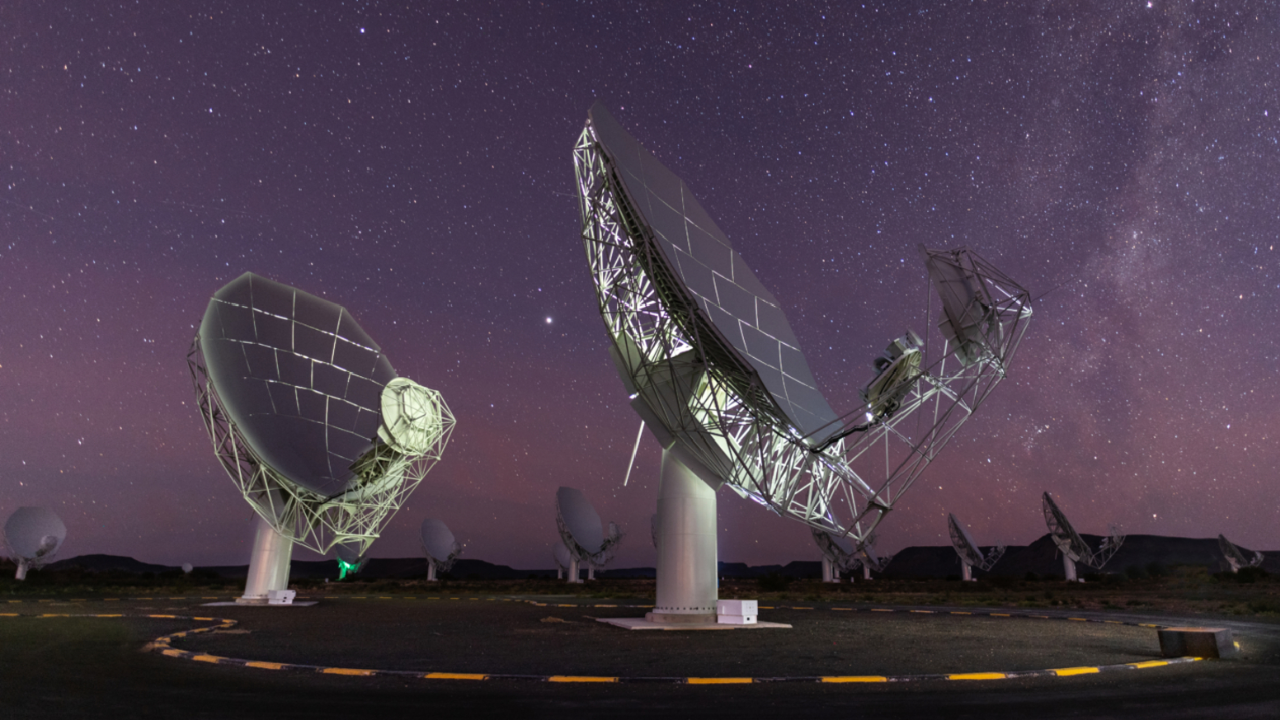
Scientists discovered 3I/ATLAS on July 1, 2025, making it the third interstellar object ever detected passing through our solar system. This massive comet, several miles wide, travels at an incredible 61 miles per second—fast enough to escape the Sun’s gravity forever.
Unlike comets born in our solar system that orbit the Sun repeatedly, 3I/ATLAS follows a hyperbolic path that will take it back into deep space after just one pass. The comet originated from another star system, carrying water and ice that formed billions of miles away.
Harvard scientist Avi Loeb initially raised questions about whether this mysterious visitor could have artificial origins, which made studying it even more urgent. Scientists needed to detect signals from the object to understand its true nature and confirm whether it behaved like a natural comet or something more unusual.
MeerKAT Telescope Captures the First Radio Signal
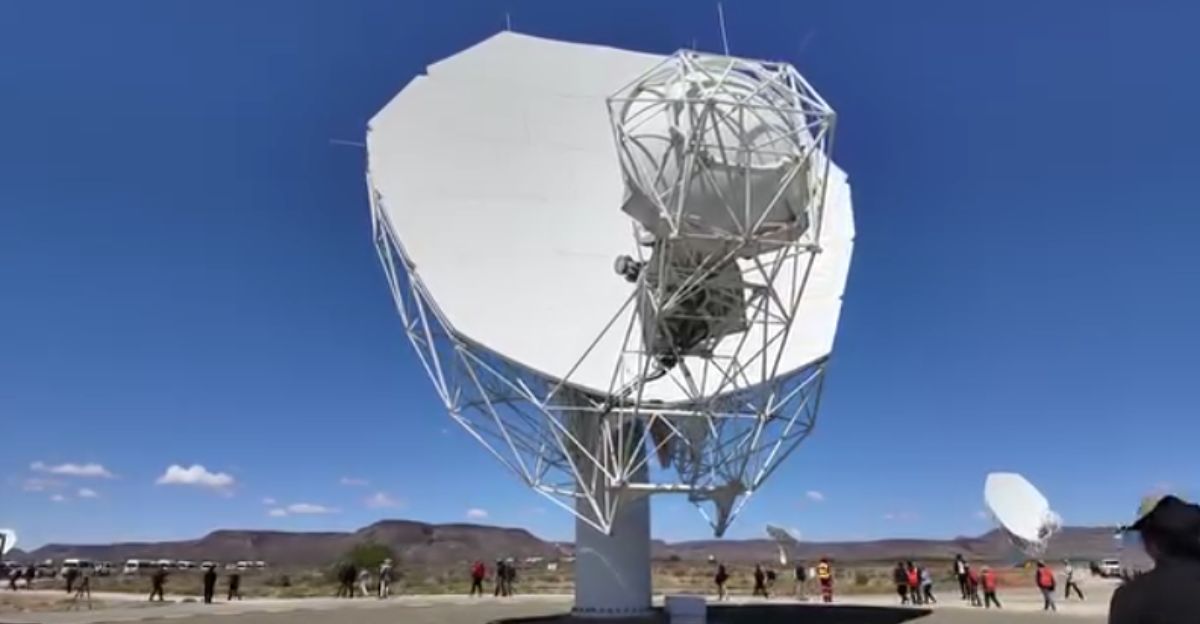
South Africa’s MeerKAT telescope made history on October 24, 2025, when it captured the first radio signal ever detected from an interstellar comet. The telescope’s 64 linked antennas picked up faint absorption lines at specific frequencies—1.665 and 1.667 GHz—which scientists recognized as the signature of hydroxyl molecules. Professor D.J. Pisano from the University of Cape Town led the team that timed their observations perfectly, watching as 3I/ATLAS moved closer to the Sun.
The team had tried twice before on September 20 and 28 but detected nothing, raising concerns that the comet might be dry or inactive. However, by late October, solar radiation finally heated the comet’s surface enough to melt water ice, which then split into hydroxyl radicals that MeerKAT could detect. The signal revealed something remarkable: water from another star system was evaporating into space. Scientists measured the Doppler shift and found gas moving toward Earth at 9.7 miles per second, confirming the signal came directly from 3I/ATLAS itself.
Dennis Bodewits from Auburn University called it “a note from another planetary system,” revealing conditions in the comet’s distant birth zone. NASA’s Swift Observatory had already spotted ultraviolet glows from hydroxyl in July and August 2025, and MeerKAT’s radio detection confirmed that 3I/ATLAS was actively shedding water—about 88 pounds every second, even though it sat 230 million miles from the Sun, three times Earth’s distance. This early outgassing surprised scientists because most comets don’t become this active until they get much closer to the Sun.
What Scientists Learned and What Comes Next
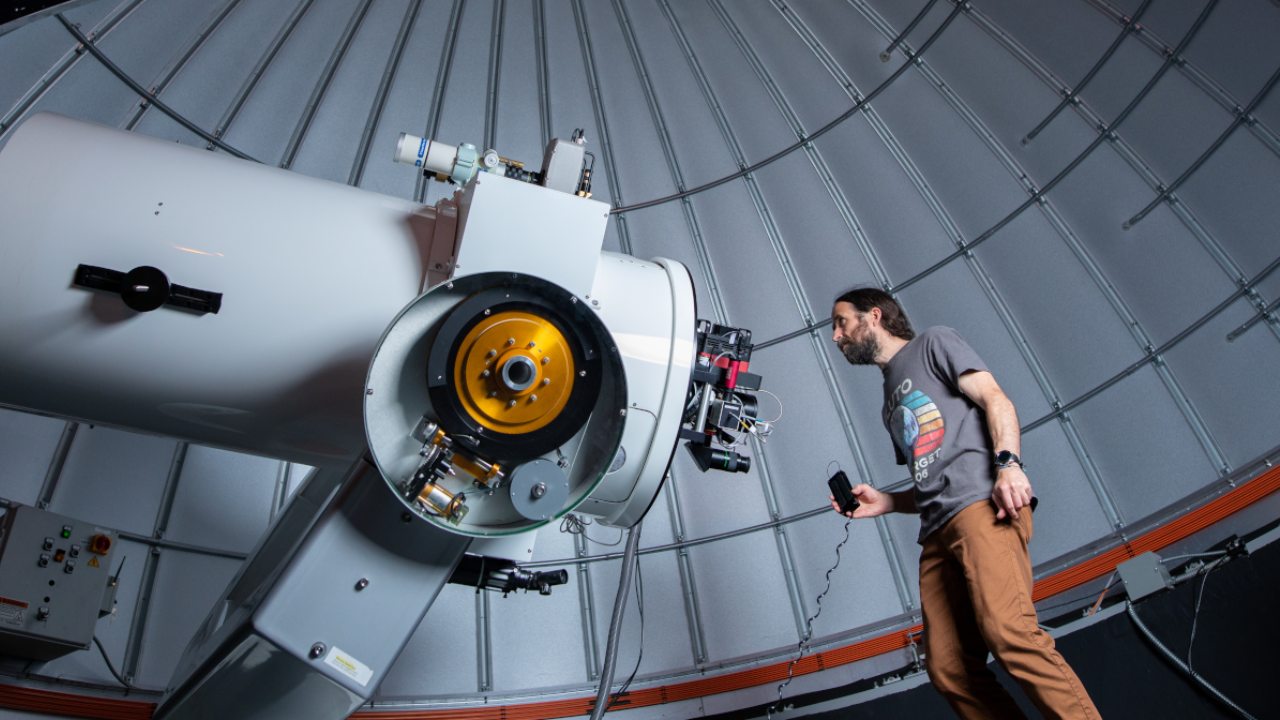
The MeerKAT observations answered a crucial question: 3I/ATLAS behaves like a natural comet, not an alien probe. The team used Breakthrough Listen equipment to scan for narrow-band radio signals that might indicate technology, but they found nothing artificial.
Fernando Camilo, SARAO’s Chief Scientist, confirmed that all observations point to natural cometary activity. The mysterious non-gravitational acceleration that puzzled early observers turned out to be simple outgassing—jets of water vapor pushing the comet slightly off course. Unlike ‘Oumuamua, which appeared dry and rocky, 3I/ATLAS retained its water ice during millions of years traveling through the frozen void between stars.
This discovery excites scientists because it shows that water-rich objects regularly travel between star systems, possibly spreading the ingredients for life across the galaxy. NASA’s Juno spacecraft will get humanity’s final close look at 3I/ATLAS when the comet passes within 33 million miles of Jupiter on March 16, 2026.
Juno’s Waves instrument will monitor radio frequencies from 50 Hz to 40 MHz, gathering data that scientists will use to refine models of interstellar visitors and improve planetary defense systems. This historic radio detection establishes a template for studying future interstellar objects and understanding how water cycles through the galaxy.
Sources:
The Star, 20 Nov 2025
Astronomy.com, 15 Oct 2025
Sci.News, 07 Oct 2025
Futurism, 30 Oct 2025
NY Post, 29 Sep 2025
YouTube (Universal Moments), 08 Nov 2025