
In the far North Atlantic, a rapid and little‑noticed rise in sea level is sending signals that reach all the way to American shorelines. Between 2017 and 2025, the Labrador Sea — a deep, cold basin between Greenland and Canada — has seen sea levels climb at a record pace. Scientists say this surge reflects a fundamental shift in how the Atlantic Ocean circulates and stores heat, with growing consequences for coastal communities from New England to the Gulf of Mexico.
Coasts in the Crosshairs
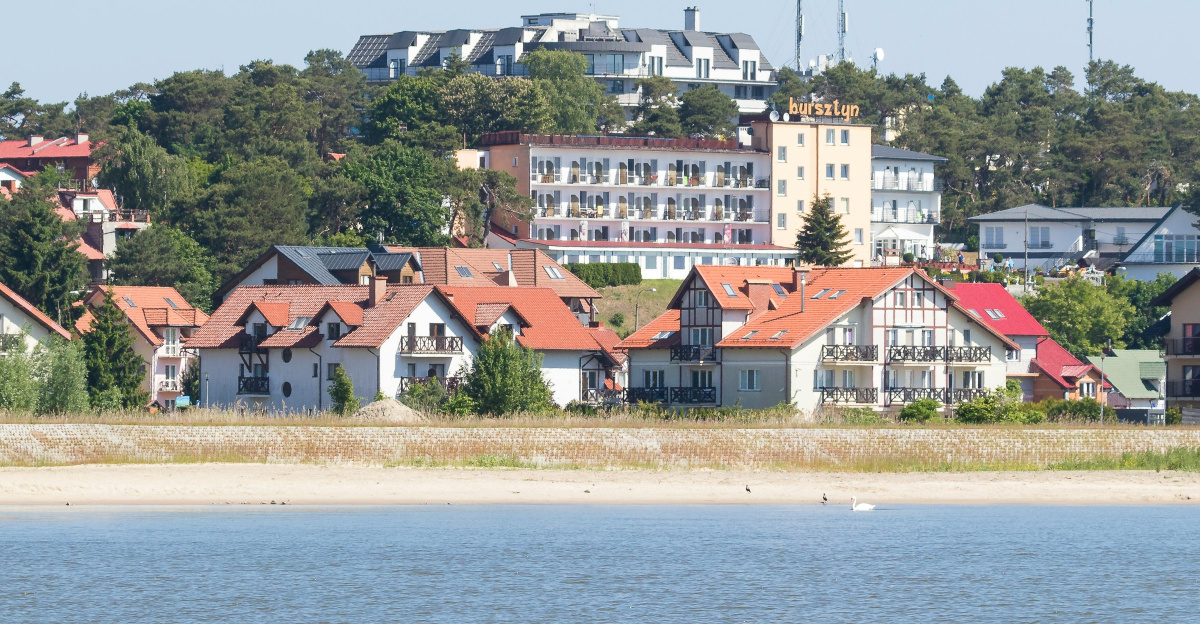
Roughly 129 million people, about 40% of the U.S. population, live in coastal counties exposed to higher seas, stronger storm surges, and more frequent flooding. Roads, ports, homes, and businesses worth trillions of dollars sit only a few feet above today’s high‑tide lines. As background sea level creeps upward, “nuisance” floods that once appeared with unusual tides or storms are turning into routine disruptions. The latest changes traced back to the Labrador Sea suggest that these trends may accelerate, forcing cities to rethink timelines for updating flood maps, drainage systems, and building standards.
Engine Room of the Atlantic
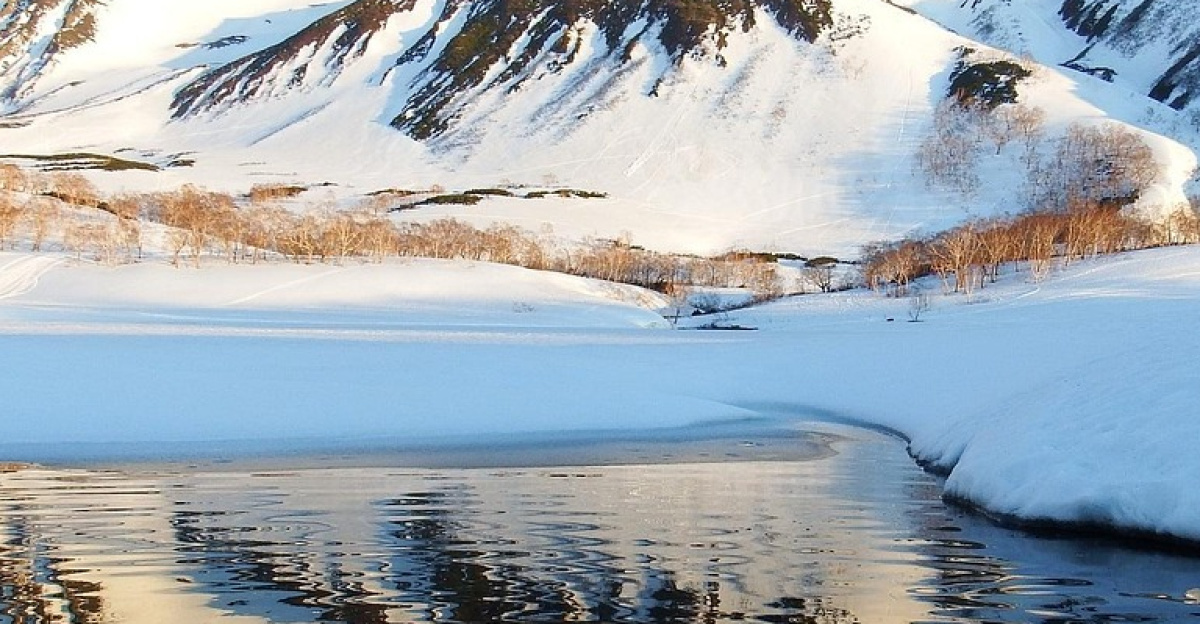
The Labrador Sea is a central hub of the Atlantic Meridional Overturning Circulation, or AMOC, the system of currents that transports warm surface water northward and returns cold, dense water at depth. In winter, especially cold and salty surface waters in this region sink, helping to power a global conveyor that influences weather patterns from North America to Europe and Africa. Over recent decades, human‑driven warming and meltwater from Greenland and Arctic sea ice have warmed and freshened this basin, putting additional strain on an already variable system. The concern is not just local change, but what happens when this key deep‑water “engine room” weakens or shifts position.
A Rapid, Unusual Sea-Level Jump
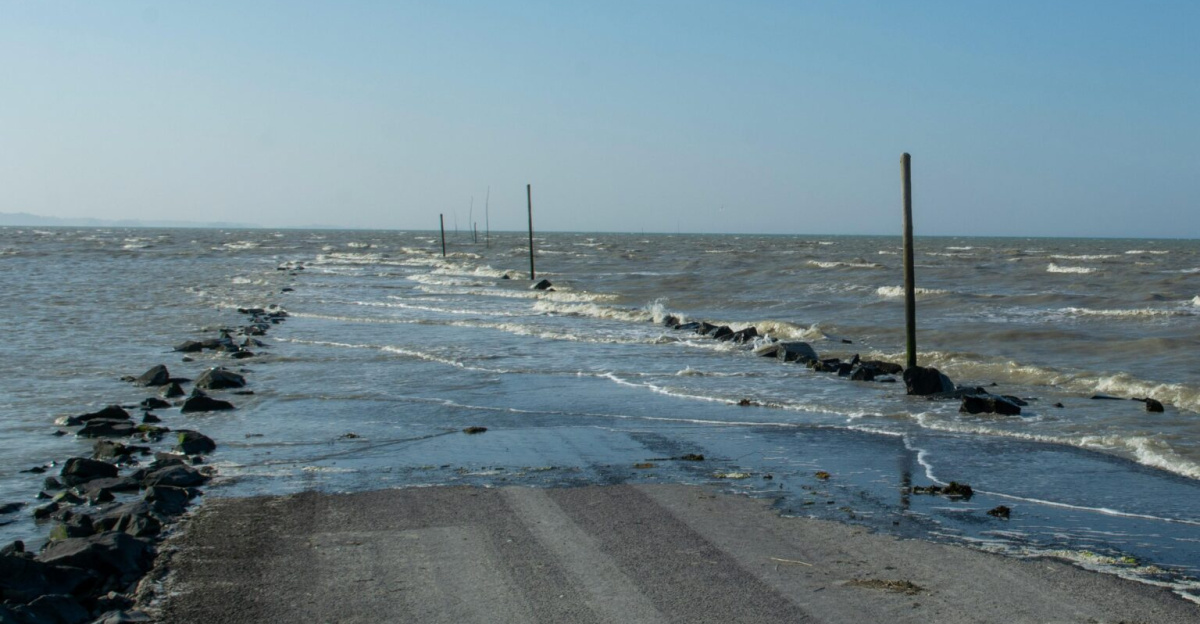
A recent study reports that from 2017 to 2025, sea level in the Labrador Sea has risen at an “exceptionally fast” rate, reaching record heights. Rather than following earlier natural cycles, the basin appears to have swung beyond its usual range. Measurements from satellites, robotic profiling floats, and research vessels point to warmer temperatures and fresher surface waters, along with a marked reduction — and possible cessation — of deep winter convection in parts of the sea. Researchers describe this as an overcompensation of the system, not a brief anomaly. It marks a turning point in the local balance of heat, salt, and currents that tie directly into the wider North Atlantic.
What happens in the Labrador Sea does not stay there. Changes in deep‑water formation can raise sea levels along the U.S. East and Gulf coasts by altering how water mass and pressure are distributed across the basin. Long‑term monitoring near 26.5°N latitude, east of the Bahamas, shows that variations in Labrador Sea deep water influence ocean circulation and, in turn, coastal sea level and storm behavior farther south. The recent surge in the north suggests that parts of the subtropical Atlantic could see related sea‑level shifts over the next two decades as anomalies propagate through the system.
Communities and Commerce on the Edge

The physical changes in the Labrador Sea are already lining up with observed sea‑level rise along American shores. Cities like Miami, New York, Boston, and Norfolk are reporting more frequent floods on otherwise clear days, when tides alone now push water onto streets and through drainage systems. In low‑lying states such as Florida and Louisiana, these so‑called nuisance events are disrupting traffic, damaging property, and straining infrastructure long before major storms appear. Ports, energy facilities, and coastal highways are becoming more vulnerable as the baseline water level rises.
These shifts also affect economic activities that depend on a stable ocean. Fisheries, shipping lanes, and offshore energy operations all rely on relatively predictable currents and sea states. As the AMOC weakens and redistributes heat, it could change where commercially important species thrive and alter storm tracks that affect shipping and coastal operations. Studies indicate that the AMOC has already slowed compared with its historical strength and could decline further by the end of the century, with knock‑on effects for sea level and regional climates around the Atlantic basin.
Adapting to a Moving Baseline
Scientists emphasize that the Labrador Sea’s recent behavior is part of a larger pattern, not an isolated event. Deep‑ocean changes that began there more than 20 years ago are now being detected in the subtropical North Atlantic, and models suggest those anomalies will continue to influence sea levels over the next couple of decades. To track these developments, agencies such as NOAA and research partners including the University of Miami maintain extensive observation lines that monitor currents, temperature, and salinity. These records help connect what is happening far offshore to the gradual rise on nearby coasts.
Local governments from Boston to Charleston are responding by planning for higher baselines: raising roads, strengthening seawalls, restoring wetlands, and tightening zoning rules in at‑risk areas. National‑level decisions on emissions, coastal development, and flood insurance will shape how quickly risks grow and who bears the cost of adaptation or retreat. Global modeling studies indicate that even if the AMOC does not collapse outright, a decline of 20–40% in its strength could significantly reshape sea levels and weather patterns, especially when combined with rapid regional changes like those now seen in the Labrador Sea.
For the 129 million Americans living by the ocean — and for communities worldwide that depend on a stable Atlantic for climate, food, and water security — the message from the north is clear. The ocean is shifting on human time scales. What happens over the next 10 to 20 years, in both policy and preparation, will determine how disruptive those shifts become for life along the water’s edge.
Sources:
Yashayaev, I., & Zhang, R. (2025). Concurrent warming, freshening and cessation of deep convection in the Labrador Sea raised its sea level to a record high. Nature Communications.
NOAA Office for Coastal Management. Economics and Demographics – Fast Facts.
NOAA Atlantic Oceanographic & Meteorological Laboratory (AOML). New Insights into Deep Ocean Cooling in the Atlantic.
Baker, J.A., et al. (2025). Continued Atlantic overturning circulation even under extreme forcing. Nature.
Potsdam Institute for Climate Impact Research (PIK). Possible North Atlantic overturning circulation shutdown after 2100 in high-emission scenarios.
McKinsey Global Institute. Advancing Adaptation to Climate Hazards (2025).