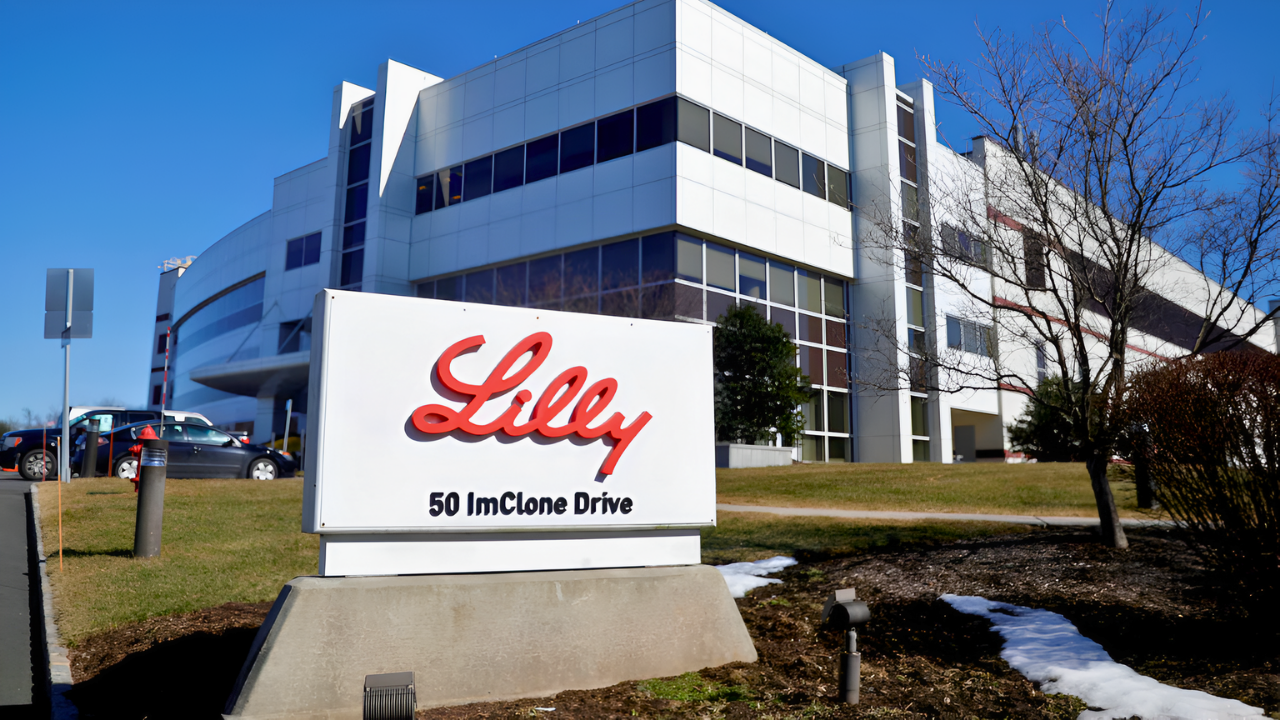
Eli Lilly’s decision to pour more than $6 billion into a new pharmaceutical ingredient plant in Huntsville, Alabama, caps a years-long shift in how and where modern medicines are made. The project, announced on December 9, 2025, ties together U.S. tariff policy, fragile global supply chains, and soaring demand for obesity and diabetes therapies, especially a new generation of GLP-1 drugs.
Tariffs, Supply Strains, and Obesity Drug Demand
The Huntsville site is part of Eli Lilly’s $27 billion U.S. manufacturing expansion, its third of four planned domestic facilities and the largest single investment in Alabama’s history. Spanning 260 acres near Interstate 565, the plant is scheduled to begin producing medicines in 2026, with full build-out targeted for 2032.
The move follows a sharp escalation in trade pressure. In 2025, President Donald Trump threatened tariffs of 200%—later raised to 250%—on pharmaceutical imports, backed by a Section 232 national security investigation launched by Commerce Secretary Howard Lutnick on April 14, 2025. Trump said companies had roughly “a year, year and a half” to shift production, prompting global manufacturers to reassess their reliance on overseas active pharmaceutical ingredient suppliers.
Those concerns landed on an industry already under strain. Production of active ingredients is heavily concentrated in the Asia-Pacific region, a model exposed by COVID-19 disruptions and rising geopolitical tensions. Eli Lilly and rival Novo Nordisk both struggled to keep up with demand for GLP-1 injectable weight-loss medicines in the mid-2020s, with shortages drawing attention to limited manufacturing capacity. By 2024, both companies reported early signs that expansion programs were beginning to ease supply constraints.
At the center of Lilly’s growth plans is orforglipron, its experimental oral GLP-1 medication for chronic weight management and Type 2 diabetes. In Phase 3 trials reported in August 2025, patients on the highest dose lost 10.5% to 12% of their body weight over 72 weeks, depending on patient group, compared with 2.2% for those on placebo. More than half of participants on the top dose lost at least 10% of their weight. Lilly submitted orforglipron for U.S. Food and Drug Administration (FDA) review that same month, seeking priority evaluation.
Alabama as Manufacturing and Research Hub
Under the plan unveiled in December 2025, the Huntsville facility will produce small-molecule and peptide medicines, including orforglipron if it secures FDA approval, which Lilly expects as early as 2026. Construction is projected to begin in 2026, with phased operations ramping up before final completion in 2032. The company describes the site as its largest U.S. manufacturing expansion to date, positioning Alabama as a key base for next-generation therapies.
The project is designed as more than a standalone factory. It is expected to create roughly 3,000 construction jobs over six years and 450 permanent roles for engineers, scientists, operations staff, and laboratory technicians. Lilly estimates the investment could drive up to $25 billion in additional local economic activity over time. Alabama’s bioscience sector already generates an estimated $7.3 billion annually, supports more than 1,800 enterprises, and employs over 15,000 people statewide.
Lilly selected Huntsville after evaluating more than 300 potential locations, citing the nearby HudsonAlpha Institute for Biotechnology as a critical factor. HudsonAlpha, a 152-acre nonprofit research campus founded in 2008, hosts 45 biotechnology companies and links commercial manufacturers with nonprofit researchers in fields such as drug discovery and diagnostics. Its workforce programs and clinical laboratory operations give Lilly access to specialized skills and infrastructure.
Statewide training efforts are being built around the project. Alabama Industrial Development Training, the state’s primary workforce agency, has committed to recruiting and preparing Lilly’s future employees. Its programs focus on engineers, chemists, laboratory technicians, and pharmaceutical quality specialists. HudsonAlpha’s education initiatives in genomics and clinical sciences, together with expanded chemistry, chemical engineering, and pharmaceutical curricula at North Alabama universities, are intended to feed the talent pipeline.
Technology, Sustainability, and Supplier Networks
Inside the Huntsville complex, Lilly plans to integrate artificial intelligence, machine learning, and digital monitoring across operations. The company’s plans include automated quality control, predictive maintenance driven by AI, and real-time process optimization. Digital twin systems—virtual replicas that combine engineering models with data analytics—are expected to support continuous improvement and supply chain visibility. These tools mirror a broader shift in pharmaceutical manufacturing toward AI-supported quality systems and efficiency gains.
The facility is also designed around a carbon-neutral objective. Lilly’s decarbonization goals align with a December 2024 call from the World Health Organization for drug manufacturers to adopt cleaner production methods and renewable energy, and to meet stricter environmental discharge standards. The plant will be subject to enhanced FDA oversight under the Inflation Reduction Act, including accelerated inspection timelines for U.S. facilities, as well as Environmental Protection Agency rules governing pharmaceutical wastewater. State-level environmental reviews in Alabama will determine permits and mitigation measures.
Beyond direct employment, Lilly’s presence is expected to pull in a wide circle of suppliers. Specialized equipment makers, raw material distributors, packaging firms, and logistics providers are likely to cluster near the site. Huntsville’s established aerospace and advanced manufacturing businesses already offer precision engineering and logistics capabilities that can support pharmaceutical production. Industry observers note parallels to earlier industrial shifts in the Southeast, notably Toyota’s decision in the 1980s to build a large plant in Georgetown, Kentucky, a move that helped draw automotive investment from BMW, Mercedes-Benz, and Hyundai across the region.
Policy Pressure and Industry Response

The Alabama announcement fits squarely within the Trump administration’s second-term economic nationalism agenda. Lutnick said Lilly’s decision was “exactly what [President Trump] was hoping would happen,” underscoring the role of tariff threats in steering investment toward domestic plants. Lilly CEO David Ricks had discussed tariff exposure at the JPMorgan Healthcare Conference in February 2025, and the company announced its $27 billion expansion plan later that month.
Other large pharmaceutical manufacturers have followed a similar path. Johnson & Johnson and AbbVie both disclosed expanded U.S. manufacturing commitments in 2025, moves widely viewed as responses to the same tariff signals. The GLP-1 category is seen as a major growth driver over the next five years, and Lilly’s push to build domestic capacity for oral formulations such as orforglipron reflects expectations of sustained demand. At the same time, the company is expanding existing sites and using contract manufacturers to support any early launch, given that the FDA granted orforglipron a priority review, shortening the typical 10‑month timeline to roughly six months.
Nationally, Lilly’s Alabama facility is viewed as a test case for reshoring active ingredient production under tariff protection. Analysts and policymakers are watching whether the plant can operate profitably while meeting higher regulatory and environmental standards. Social media reaction and industry surveys show mixed views: supporters highlight job creation, supply security, and domestic control over critical medicines, while critics point to tariff-driven cost risks and possible pricing effects. A KPMG survey in November 2025 found that 47% of healthcare executives were confident enough in tariff stability to make long-term plans, with many reporting increased domestic investment, expanded lobbying, and supply chain redesigns.
Industry analysts say the project’s performance will help shape future debate in Congress over import duties, incentives, and regulation of pharmaceutical manufacturing. If Lilly’s Huntsville operation proves both reliable and profitable, it could validate a broader regional hub for drug production in the Southeast, encourage copycat projects, and accelerate clustering of chemical and materials suppliers around the city. If costs or policy shifts undermine the plant’s economics, it could temper enthusiasm for large-scale reshoring efforts. For now, the Alabama project stands at the intersection of trade policy, public health demand, and regional economic strategy, offering an early glimpse of how the next era of medicine manufacturing may unfold.
Sources:
Reuters, “Eli Lilly to build $6 billion Alabama plant as part of US manufacturing push”, December 9, 2025
CNBC, “Eli Lilly to build $6 billion Alabama manufacturing plant”,December 9, 2025
Forbes, Pharmaceutical tariff articles, July 8, 2025
White & Case, “Trump Administration Initiates Section 232 Investigations”, April 15, 2025
BioPharma Dive,”Lilly to submit obesity pill after hitting goal in third late-stage trial”, August 25, 2025
FiercePharma, “Novo, Lilly poised to overcome GLP-1 supply constraints; positive signals emerge”, December 29, 2024