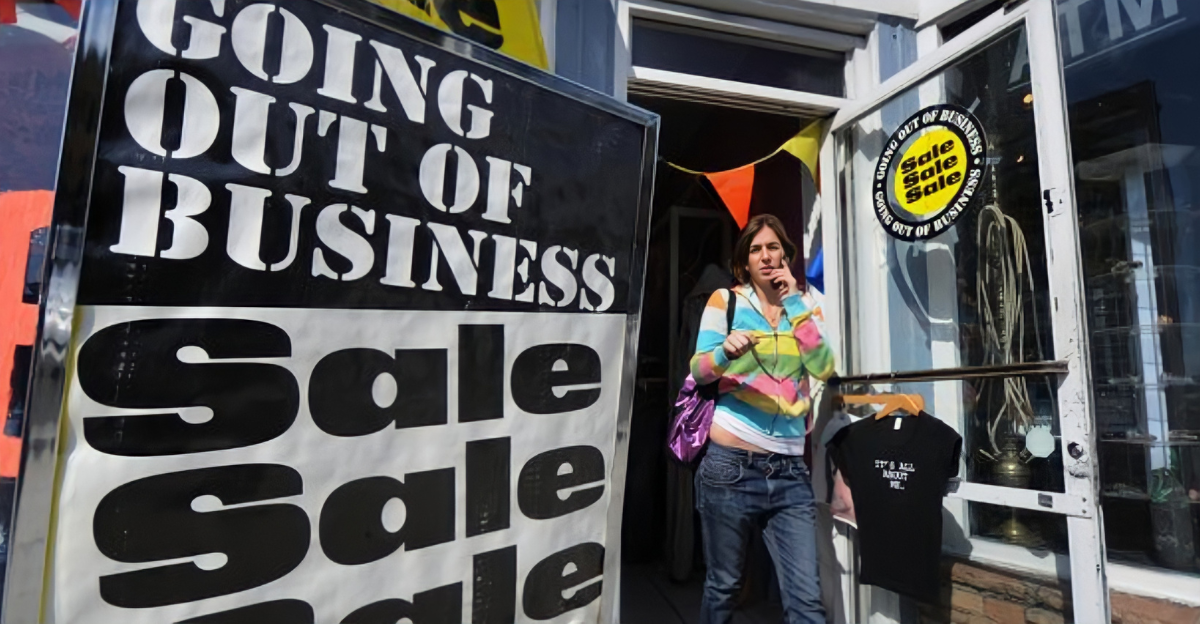
Mark Zandi, chief economist at Moody’s Analytics, warned that recent data leave the economy “on the precipice of recession.” He noted that household spending has nearly flatlined and that “construction and manufacturing are contracting,” signaling a sharp slowdown.
Those warnings come amid aggressive policy shifts: the new Department of Government Efficiency (DOGE) has already slashed thousands of federal jobs, and steep tariffs and immigration caps are squeezing business costs.
Together, these moves – aimed at cutting spending and protecting industries – have injected fresh uncertainty into the markets.
Spreading Trouble
Concrete damage is emerging across the country. The Federal Reserve reports that unemployment claims filed by federal workers in the Washington D.C. area spiked by 543% year-over-year, reflecting massive job losses there.
Beyond DC, manufacturing and construction have also shrunk: Zandi pointed out that both sectors “are contracting” nationwide, a classic recession signal.
Economists warn these troubles are multiplying. For example, one Maryland restaurateur noticed many laid-off government employees applying for service jobs.
The picture suggests the slowdown is no longer abstract – it’s spreading from a few sectors to broad regional markets.
Policy Context
Much of this strain traces back to recent federal policy shifts. Just after President Trump’s 2025 inauguration, he established a “Department of Government Efficiency” (DOGE) to aggressively downsize the federal workforce.
Simultaneously, the administration imposed new tariffs and stricter immigration rules.
While intended to protect American industries and reduce deficits, economists like Zandi say these moves have become powerful drags on growth.
Companies report higher input costs and labor shortages, and officials warn that these policies, combined with the sweeping job cuts, form the backdrop for the emerging slowdown.
Building Pressure

By mid-2025, multiple warning signs were flashing. Consumer spending gains stalled, and debt levels rose. Notably, delinquency rates on credit card loans climbed to about 12.3% in the latest quarter – the highest such rate since 2011.
That suggests many households are increasingly stretched.
On the jobs front, federal downsizing hit historic scales: over 279,000 federal positions were cut in the first five months of 2025 – far beyond any prior peacetime reduction.
In short, flattened spending, rising delinquency and massive layoffs all piled up concurrently.
Economists warn that each of these trends would dim the outlook on its own; all together, they created serious pressure on the recovery.
State Recession

In late August, Zandi made the threat unmistakable by mapping it onto a U.S. map. He reported that states representing nearly one-third of U.S. GDP are already in recession or on the brink.
In total, 22 states (plus D.C.) fell into Zandi’s “recession/high-risk” category.
For example, after the D.C. area, he identified West Virginia, Iowa, Maine, New Jersey and South Dakota among the hardest hit.
This state-by-state breakdown made an abstract warning painfully concrete – specific communities were named. Dan Doyle, a West Virginia labor leader, decried the cuts as “chaotic, disruptive… and frankly wasteful”, illustrating how residents in those states are feeling the impact firsthand.
Regional Impact
The nation’s capital region is under particular stress: from January through May 2025, the Washington, DC–Maryland–Virginia area lost about 22,100 federal jobs.
Local officials sounded the alarm. Fairfax County Chair Jeff McKay warned, “we haven’t seen the worst of it yet… I think it’s worse than COVID because we’re not going to get any help”, capturing the anxiety of those who relied on federal paychecks.
Behind the DMV region, Zandi also flagged traditionally diverse economies. For example, he ranked states like West Virginia, Iowa and Maine as facing especially high recession risk.
This shows the downturn is spreading across many kinds of economies – from coal-producing Appalachia to farm states – not confined to any one region.
Human Stories

Those economic shifts have deep personal repercussions. Federal employees and contractors face life-changing uncertainty. Many skilled workers say they are scrambling to find new jobs.
In Maryland, a restaurant owner named Andy Shallal reported a flood of former federal employees applying to restaurants. He said, “All of a sudden the restaurant business seems to be the most stable… the most ironic thing I could possibly say,” as dozens of government workers have shown up looking for work.
At the same time, people worry about service gaps: for example, scientists and inspectors warn that losing experienced staff at NOAA or FDA could slow weather forecasts or food-safety checks.
Experts like Zandi stress that “government workers have important jobs… critical to providing services” – meaning these cuts ripple through daily life beyond the raw job numbers.
Industrial Fallout

Business and farm leaders are feeling the squeeze too. Zandi’s sector analysis indicates manufacturing, construction and agriculture are now contracting – essentially in recession themselves.
These industries face a one-two punch: trade restrictions that raise input costs, and weak demand from consumers pulling back.
Farm equipment makers, for instance, are already warning of steep declines in sales.
In a recent earnings call, John Deere’s management noted that crop price weakness and tariff uncertainty have farmers delaying purchases, potentially shrinking global machinery sales by double digits. Likewise, home builders report fewer starts and orders.
Macro Trends

Even broad economic indicators have soured. The Atlanta Fed’s real-time GDP tracker (the “GDPNow” model) slashed its growth forecast for Q3 2025 – down to around 2.2% from roughly 3.0% earlier in the summer.
That matches a general pattern: growth estimates are slipping as new data roll in.
In markets, stocks and bond yields have become volatile amid the uncertainty. Global uncertainties (from other countries’ slowdowns and trade fights) are also contributing.
Most importantly, traditional growth drivers are flagging: consumer spending shows signs of peaking, and investment is weakening. The aggregate picture is one of deceleration, consistent with the state- and sector-level worries already noted.
Outliers

Not all regions are equally vulnerable. Two economic powerhouses — California and New York — continue to weather the storm, at least for now. Together, they produce over one-fifth of U.S. GDP.
Zandi’s analysis actually places both states in his “treading water” category, meaning growth there has slowed but not yet turned negative.
This relative stability is politically and economically important, since these states help hold up national growth. In California, tech, entertainment and agriculture are still generating jobs, and in New York, finance and real estate remain strong.
Yet local leaders are nervous too. As one Silicon Valley entrepreneur observed recently, business still looks better than elsewhere, but “you can feel the slowdown” – a reminder that if these giants falter, the national picture would darken quickly.
Internal Tensions
Inside Washington, experts and officials are increasingly uneasy. Some Fed economists warn that a shrunken workforce at statistical agencies could degrade key economic data, making crisis signals harder to track.
On the private side, career analysts are raising questions too. For example, Andrew Challenger of Challenger, Gray & Christmas noted that the unprecedented federal cuts have so far “dominated” layoff announcements, saying that March 2025 “would have otherwise been a fairly quiet month” without them.
His point: in normal times, few companies were cutting jobs, but the DOGE-driven purge dwarfs everything else. Such remarks illustrate growing skepticism.
Even allies of these policies concede the pace may need adjusting to avoid causing a broader collapse.
Leadership Responses
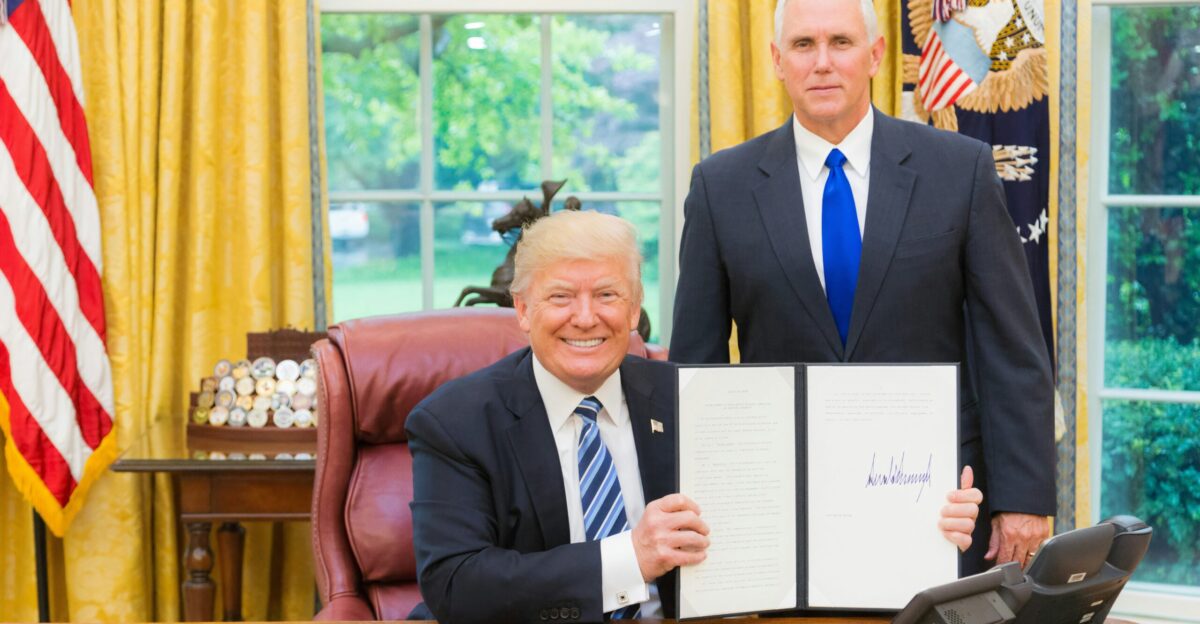
President Trump has largely stood by the moves. He openly warned that tariffs and cuts would cause short-term pain, tweeting in August, “Will there be some pain? Yes… but we will make america great again, and it will all be worth the price that must be paid.”
White House officials insist these steps will yield long-term gains by shrinking the deficit and boosting American firms.
In public appearances, the President emphasized patriotism and self-reliance, effectively telling critics that domestic priorities justify the disruption. Yet his claims face pushback.
Critics point out that, unlike planned reforms of past decades, these cuts are compressed in time.
Recovery Attempts
Facing these shocks, many state and local governments are scrambling to pick up the pieces. For instance, Montgomery County in Maryland announced a Federal Workforce Career Center to help laid-off federal workers retool for new jobs.
Virginia and Pennsylvania have set up dedicated websites listing thousands of open state and local positions for the suddenly unemployed.
Hawaii even launched “Operation Hire Hawaiʻi” to fast-track ex-federal staff into state roles.
Pennsylvania’s governor, Josh Shapiro, called hiring these displaced workers “an act of self-interest”, noting their experience is valuable. Despite such efforts, however, private employers remain hesitant.
Expert Skepticism

Economists are increasingly warning that continuing on this path risks triggering the very recession the reforms sought to prevent. Zandi’s own models now put roughly a 49% chance of a U.S. downturn within the next year.
Others agree. Most forecasters surveyed by Bloomberg in recent weeks expect growth to slow markedly in the coming quarters.
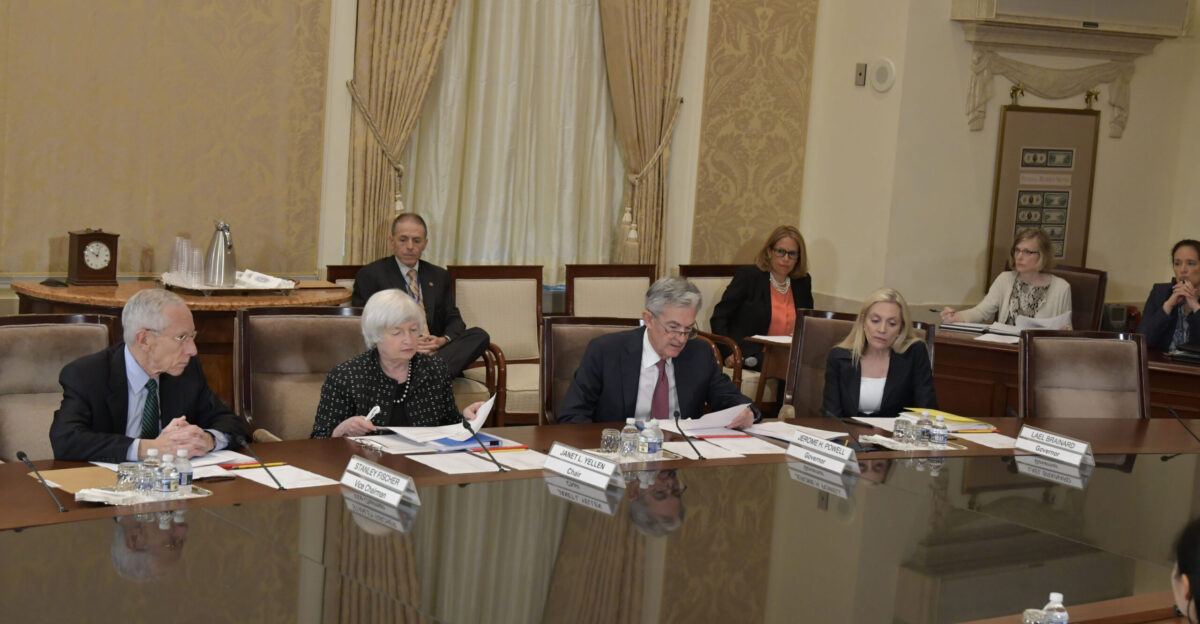
The Fed itself is sounding alarms: in June, Chair Jerome Powell warned that Trump’s tariffs could push consumer inflation higher, meaning the Fed may have to keep rates elevated even as growth weakens.
The combination of policy and markets appears to have tilted the balance toward higher prices and slower output. Many experts fear this inflation-growth tug-of-war will leave monetary policy with little room to ease if a recession begins.
Critical Timeline

The timing of these effects is key. Zandi notes that late 2025 into early 2026 will be the most dangerous period. By then, the full inflationary impact of higher tariffs – which hits household bills with a lag – is peaking, even as one-time stimulus (like expiring tax cuts or pandemic relief) vanishes.
Government spending cuts will have rippled through local budgets by that point, too.
If consumer purchasing power drops sharply when the holiday season begins, spending could collapse. In practice, the last quarter of 2025 may determine the downturn’s fate: if consumer demand holds, a recession might be avoided, but a big spending pullback could doom the vulnerable states identified by Zandi.
Observers say this moment will be a make-or-break test of whether the economy can adapt to the policy overhaul.
Political Implications
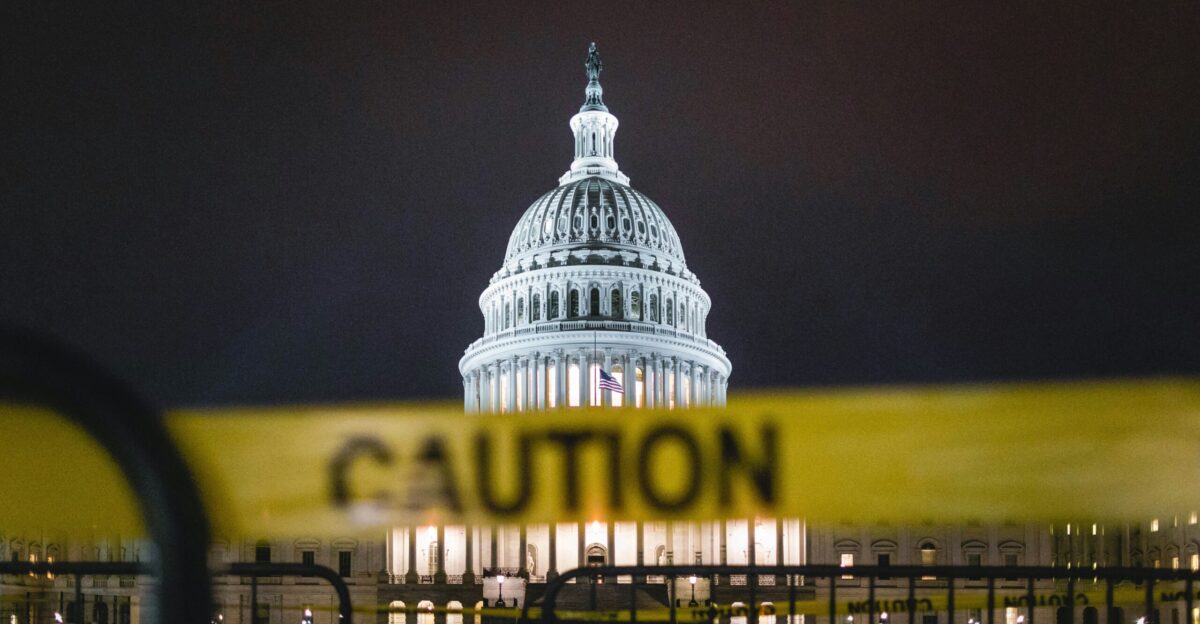
These economic forecasts carry big political stakes. Republican leaders are scrambling to defend the slowdown as a short-term necessary shock, but they face tests in states at risk.
In swing regions like Wisconsin or North Carolina, where local unemployment is rising, GOP incumbents could suffer if voters blame their party’s agenda.
Meanwhile, Democratic governors in hard-hit states like Pennsylvania and Michigan are already rolling out emergency relief plans and publicly attributing job losses to federal policy choices.
Analysts warn that the optics of a recession in “purple” areas could reshape the 2026 midterm landscape. In practical terms, we could see budget battles and campaign narratives centered on these recession indicators long before the vote.
International Ripples

U.S. policy changes are reverberating worldwide. China has responded strongly: in 2025 it placed up to 15% tariffs on $21 billion of U.S. farm exports. As a result, U.S. agricultural exports to China plunged (soybean sales are down over 50% year-on-year).
Chinese officials have publicly warned that American farmers should not “pay the price of a trade war”.
In Europe, leaders are keeping a close eye on U.S. protectionism. EU trade officials recently vowed to expedite the removal of most tariffs on U.S. goods, seeking to dampen a widening conflict.
America’s disputes with China, the EU and others threaten to reduce foreign demand for U.S. goods and feed back into domestic pain – a classic example of how trade fights can cut both ways.
Legal Challenges

The race to cut federal jobs has sparked numerous lawsuits. Federal employee unions quickly sued to block mass firings, arguing that Congress – not the President – must authorize such deep cuts. Courts have so far been divided.
In July 2025 the Supreme Court ruled that the Trump administration could proceed with its workforce reductions, with Justice Jackson warning it could “dismantle much of the Federal Government” if unchecked.
Earlier, a federal judge in California had enjoined many of the proposed cuts, citing potential disruptions to food safety and veterans’ health services.
Cities like Baltimore, Chicago and San Francisco have joined the fight, fearing vital programs will suffer.
Cultural Shifts

Behind the economic debate lies a changing public mood. Polls and social media suggest a generational divide: younger adults (often facing student debt and housing costs) tend to worry more about recession risk, whereas many older voters who prioritize fiscal conservatism are more willing to absorb spending cuts.
Across the country, personal stories of abrupt job loss are circulating on social media – for instance, young families posting about losing second incomes when a parent’s federal contractor position vanishes.
These narratives amplify anxiety.
In online forums and news comments, people are actively debating whether a slimmed-down government really means efficiency or if it means lost opportunity.
Broader Reflection

Zandi’s state-by-state recession forecast lays bare just how uneven U.S. vulnerability has become. It shows that aggressive change in Washington unbalances different regions and sectors in unexpected ways.
Perhaps the biggest question raised is whether the government can deliver sweeping fiscal and trade reforms without the collateral damage of a downturn.
As one academic expert puts it, “We have to be humble about policy lags and unintended consequences.” Over the next months, the data will tell the tale: if growth stabilizes, reform advocates will hail the result; if not, this episode will become a cautionary lesson about pushing too far too fast.