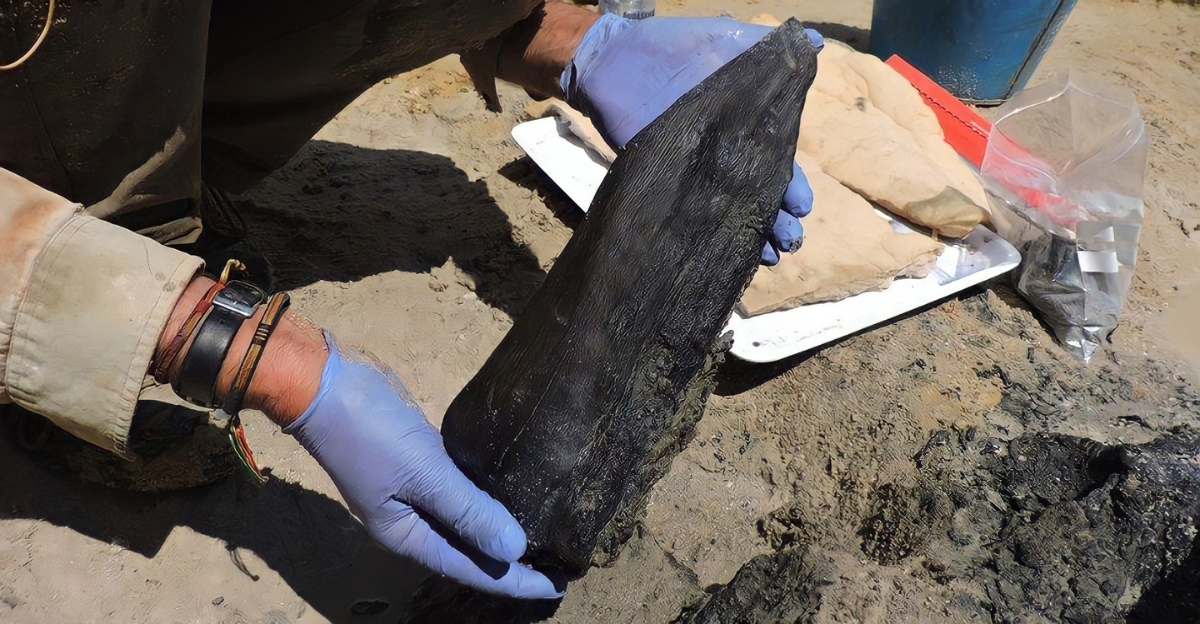
The long-held misconception that early humans only used basic, primitive technology is disproved by the recent discovery of rare wooden tools in southwest China that date back about 300,000 years. The idea that Paleolithic technology was “primitive” is called into question by these artifacts, which demonstrate highly developed woodworking and specialized toolmaking abilities.
These wooden tools, which were made mainly for digging and processing plants, demonstrate how early humans were able to make a variety of tools that were suited to their environment and food requirements. This broadens our perspective from one that was centered on stone tools to one that includes organic materials. This disproves the bias based on the limitations of the archaeological record, where stone tools are more common due to preservation considerations rather than true technological primitivism.
Stone Age Technology in Historical Context

Early humans were portrayed as primitive toolmakers limited to simple implements during the Stone Age, which has been associated for decades with chipped flint and grinding stone tools. This view has been distorted by archaeology’s strong reliance on long-lasting stone artifacts because wood and other organic materials decompose quickly and hardly ever last for millennia.
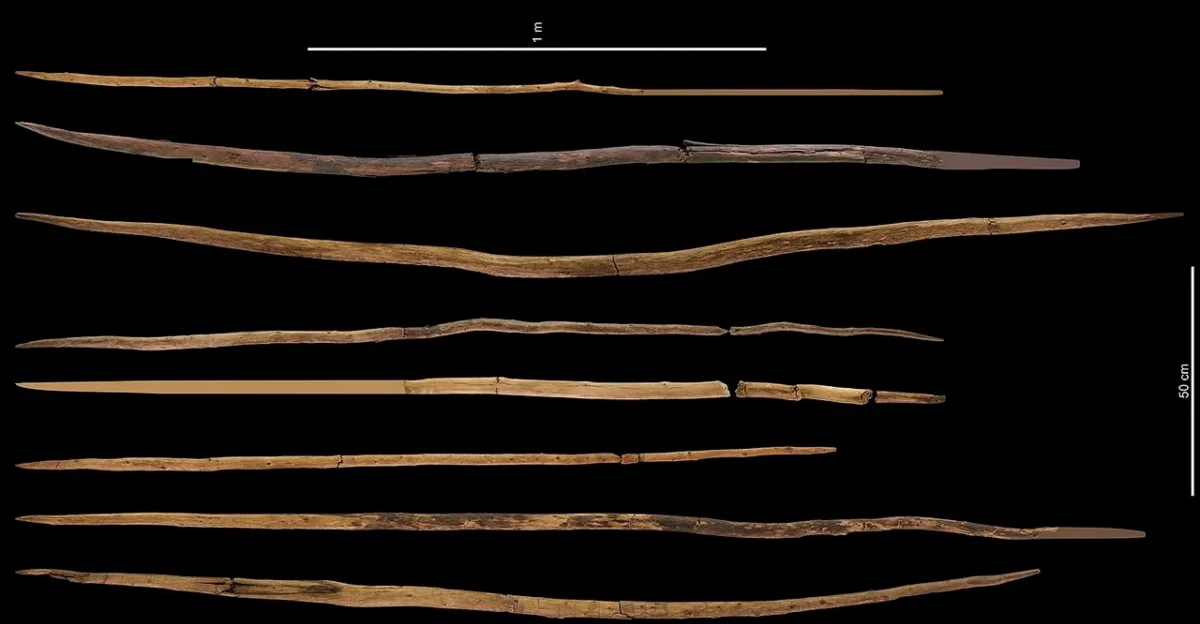
Wooden hunting spears from 300,000 to 400,000 years ago were found at classic sites like Schöningen in Germany, but these finds were rare exceptions. In terms of historiography, this promoted a one-dimensional account of early technology that prioritized hunting weapons over other means of subsistence. Newer discoveries, particularly from East Asia, indicate that early humans went beyond the stone paradigm and developed a variety of tools for particular uses, such as fishing, plant processing, and digging.
The Difficulty of Preserving Wooden Tools and Their Scarcity

Due to the biological and chemical decomposition processes that quickly break down organic materials unless they are preserved in oxygen-poor, anaerobic environments or arid climates, Paleolithic wooden tools are scarce. The majority of known wooden tools only survive when they are charred or submerged in sediment with little oxygen, which is rarely the case in open archaeological settings.
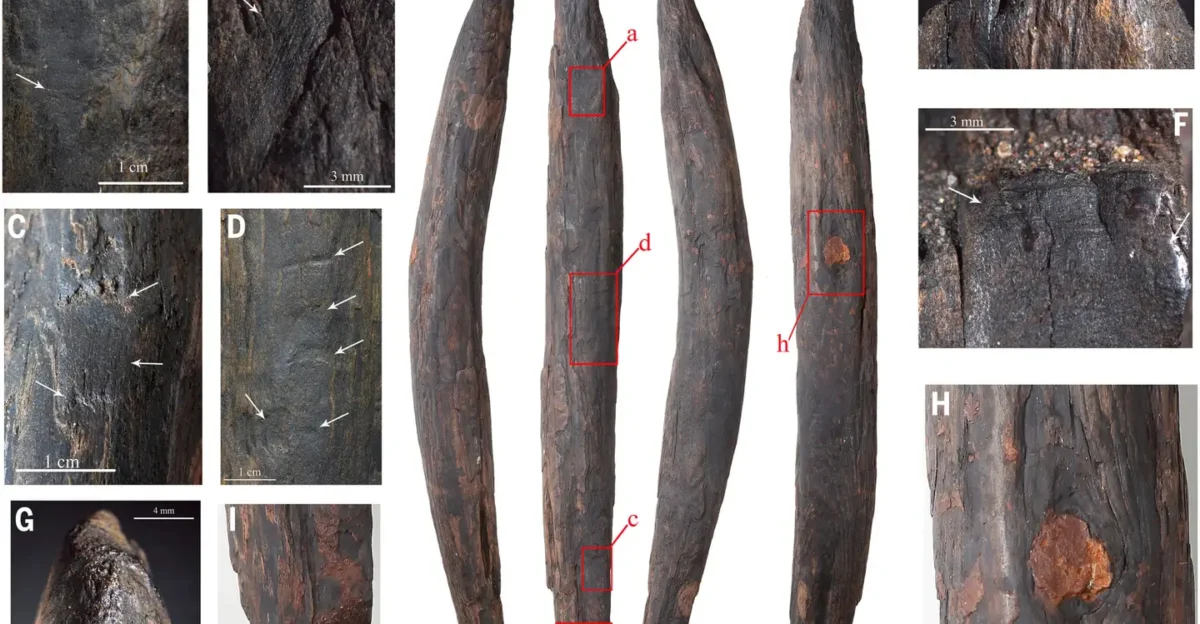
Because the tools were discovered in clay-heavy, low-oxygen shoreline sediments that preserved organic residues and delicate woodworking marks, the recent Chinese discovery is remarkable. Stone predominates in the fossil record as a result of this unintentional preservation bias, deceiving scientists about the true diversity of early human technology. The existence of these wooden artifacts clearly emphasizes the necessity of reevaluating archaeological interpretations.
Wooden Tool Crafting’s Effects on Cognitive Function
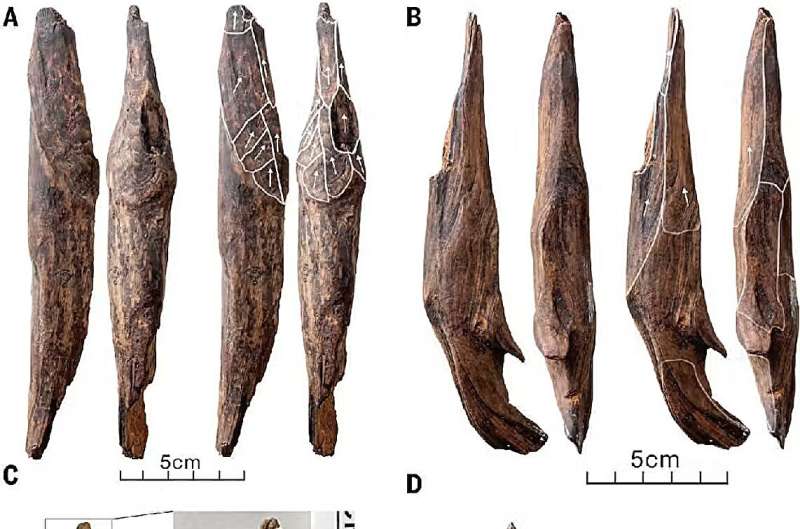
The newly found wooden tools’ craftsmanship demonstrates early humans’ advanced cognitive abilities in addition to their manual dexterity. Planned design elements like polishing, scraping, and shaping are present in the tools to carry out particular tasks like extracting plants or digging roots.
This suggests a level of foresight, problem-solving abilities, and material property knowledge uncommon for such an ancient era. In addition to evidence of a plant-based diet, the development of specialized foraging tools shows an understanding of the local ecology and sustainable resource use. This disproves the antiquated theory that early hominins were mainly hunters and scavengers who relied more on physical prowess than on sophisticated environmental planning and manipulation.
Rethinking the Diets and Subsistence of Early Humans
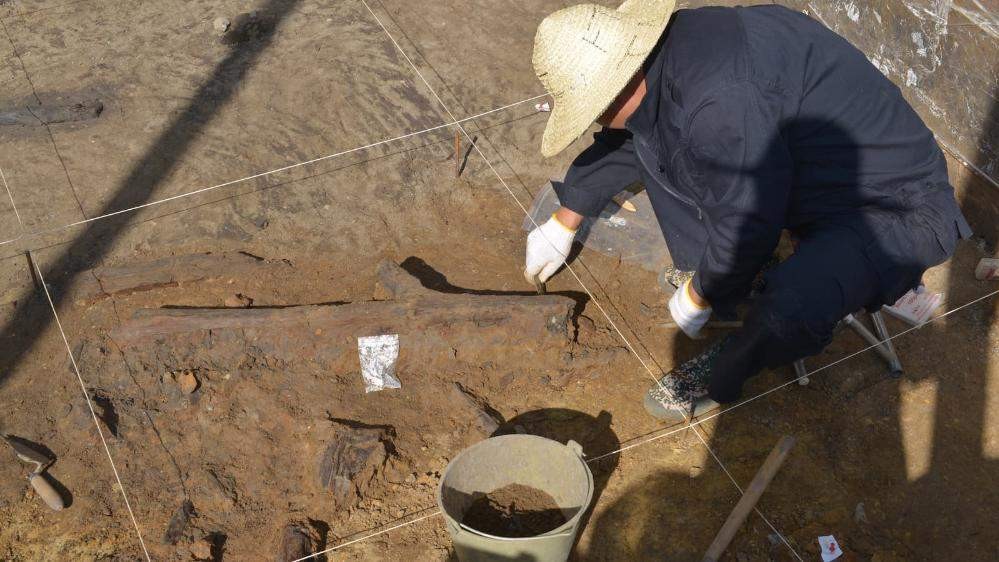
Hunting and eating meat have frequently been highlighted in traditional narratives as being essential to early human survival, occasionally downplaying the significance of plant-based diets. It appears that early humans used a variety of food sources, including underground plants, as evidenced by the finding of wooden digging sticks and small tools for extracting roots and tubers.
In stable, lakeside environments like Gantangqing, where such resources were plentiful, this adaptive strategy would have been essential. It is consistent with ethnographic research on hunter-gatherer societies, where the use of sophisticated tools and plant foraging constitutes a substantial dietary component. Rather than being strictly carnivorous and opportunistic, this evidence supports a more nuanced understanding of prehistoric diets as strategically optimized and sourced from a variety of sources.
The Evolutionary Story of “Primitive” Tools Is Under Attack
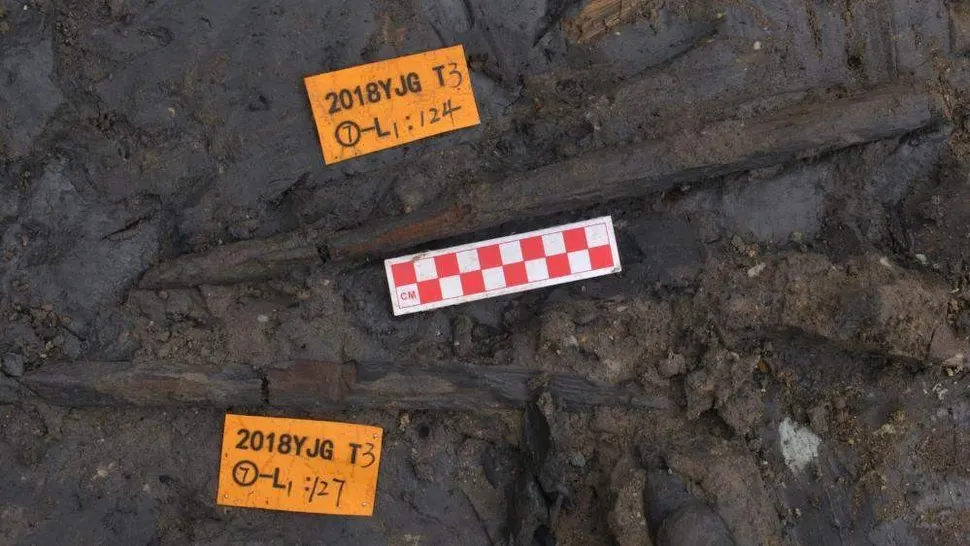
Traditional evolutionary frameworks, which are based on a skewed perception of “primitive” as inferior or unsophisticated, frequently portray human technological advancement as a straight line from simple to complex tools. By demonstrating that complexity existed earlier and in different forms than previously believed, the wooden tools upend this narrative. This disproves evolutionary and ethnocentric biases that portray premodern humans as less intelligent.
It emphasizes how important it is to view “primitive” technology in its proper context, as adaptive strategies influenced by the environment and survival needs rather than as stepping stones to modernity. This more pluralistic perspective acknowledges the various technological intelligences that have existed throughout our history and aids in the dismantling of hierarchical interpretations of human culture.
The Advanced Technology of Early Humans in East Asia
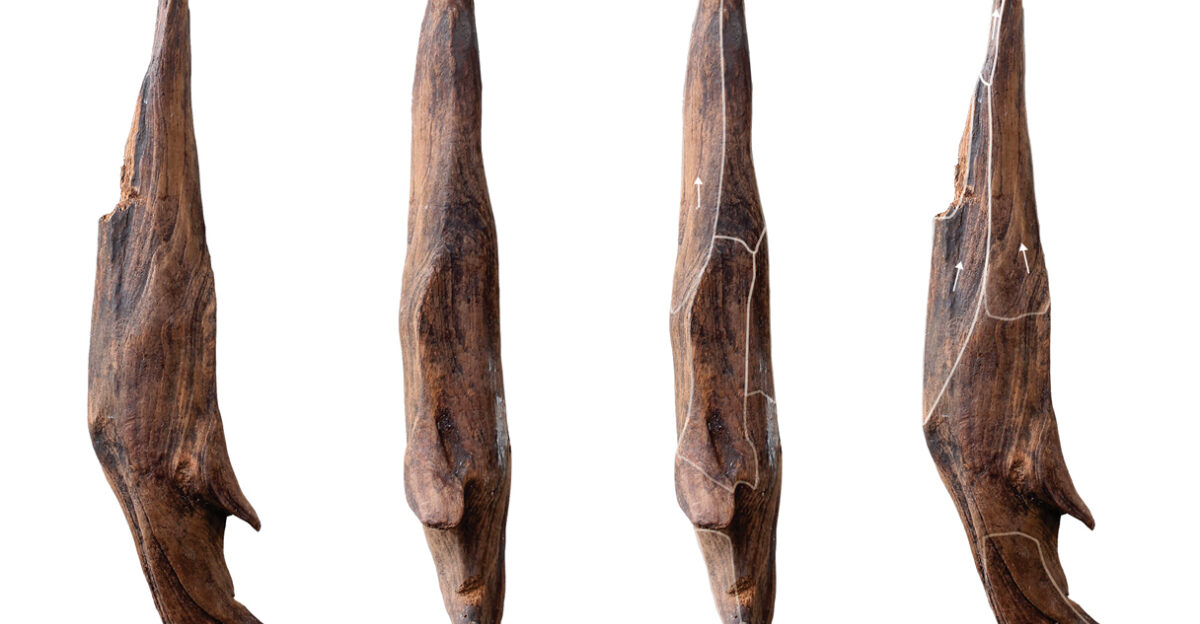
The discovery of the Chinese wooden tool shows that advanced woodworking abilities were possessed by early East Asian hominins much earlier than previously thought. Because of eco-cultural biases like the “Bamboo Hypothesis,” which proposed bamboo as the primary organic tool material, East Asian toolmaking was previously understudied, leaving a gap in tangible archaeobotanical artifacts.
By providing concrete proof of intricate tool production and application outside of stone, these wooden implements close that gap and demonstrate local technological innovation. This highlights regional diversity in early technological evolutions and points to parallel, culturally specific technological trajectories that complicate oversimplified “Out of Africa” models.
Additional Archaeological Consequences

This finding forces archaeologists to reconsider their methodological strategies and highlights the significance of investigating sediment contexts that support organic preservation. It promotes combining multidisciplinary methods, such as residue analysis and microbotanical methods, which can identify tool use even in cases where objects do not survive.
The results urge more excavations in comparable depositional settings around the world and a reexamination of current locations where wooden tools may have been overlooked. As a result, it is necessary to acknowledge that the archaeological record is uneven and incomplete, and to base interpretations on holistic methods rather than artifacts that favor stone remains.
Strategic and Psychological Adjustments

Early examples of psychological adaptation and strategic planning can be seen in the development of specialized wooden tools for plant foraging. This indicates the ability to foresee future requirements and actively influence the environment.
It demonstrates that early humans possessed cognitive frameworks for task specialization, division of labor, and resource management in addition to manual skills, qualities essential to the evolution of human society. Instead of being simplistic or reactive, these behaviors help us understand early human intelligence as highly adaptive, socially embedded, and environmentally attuned.
The Term “Primitive Technology” is Misleading.

Because it is based on an antiquated, linear conception of human development, the term “primitive” used to describe early human technology is essentially incorrect. The sophistication of wooden tools reveals this to be an inaccurate term that ignores organic, environment-specific technologies while elevating only specific types of technology, mainly hunting weapons made of stone.
These tools reflect sophisticated cultural intelligence and nuance rather than being archaic. This unconventional perspective challenges the norm that complexity must resemble contemporary industrial toolmaking in order to be legitimate or advanced, encouraging humility and a deeper investigation into the variety of early human adaptations.
Interdisciplinary Relationships

The finding has implications for anthropology, environmental science, and even engineering biomimicry. Gaining knowledge of traditional woodworking methods can help modern industries adopt low-impact toolmaking and sustainable resource use.
It pushes modern society to reevaluate unsustainable technological dependencies and promotes the exchange of ideas regarding cyclical resource management and ecosystem integration. Innovative, eco-friendly tactics based on human evolutionary practices may be inspired by the fusion of traditional knowledge and contemporary creativity.
Model Hypothesis: Early Ecosystems of Human Technology

Early human technology can be thought of as a “tech ecosystem” in which inorganic and organic tools coexisted and were each tailored for a particular task within a specific environmental niche. By portraying early technologies as integrated ecological systems, this model departs from the sterile, linear evolution metaphor and instead captures a dynamic, context-sensitive relationship between humans and nature.
A key component of this ecosystem is the wooden tools, which demonstrate the sophistication of early adaptive strategies by showcasing the variety of materials and methods chosen for their availability and functionality.
The Parallel of Schöningen Spears

Similar to the Chinese wooden tools, the German Schöningen wooden spears, which date from between 300,000 and 400,000 years ago, show that advanced wooden technology was not unique to any one area.
These spears demonstrate that long before Homo sapiens appeared, early humans were skilled hunters and woodworkers. In addition to the Gantangqing discoveries, they show that hominin populations worldwide exhibited sophisticated woodworking abilities. This suggests a distributed intelligence across time and space, challenging any idea of linear progress based only on stone.
Unexpected Tool Diversity Data
Digging sticks, hooks, and pointed instruments are examples of Chinese wooden tools that serve a range of purposes. The common perception of Paleolithic tools as being uniform and primitive stands in stark contrast to this diversity.
It shows that task specialization and customized tool design, two essential components of advanced culture, were practiced by early hominins. It suggests a rich technological repertoire beyond what stone tools alone demonstrate, as the ability to customize tools for plant extraction specifically demonstrates a refined understanding of the materials and targeted use-cases.
Transmission of Culture in Early Humans
These wooden tools’ intricacy and diversity suggest that knowledge is passed down through the generations, calling for social learning and instructional strategies.
This challenges presumptions that symbolic communication only developed later and supports theories of early culture that involve imitation, communication, and possibly primitive language. The expenditure on making specialized wooden tools points to accumulated knowledge and shared cultural norms, which are characteristics of human social evolution and the foundation for more intricate societal structures.
Interaction of Industry and Environment

Gantangqing’s early residents’ toolmaking technology was probably influenced by the subtropical lakeside environment. Rather than relying solely on hunting, the abundance of plant resources required harvesting tools that were suitable for foraging and processing.
This causal relationship emphasizes adaptive intelligence rather than static primitiveness, confirming how the environment shapes technology and lifestyle. By closely tying technological advancement to ecological context, an understanding of these interactions deepens interpretations of archaeological sites.
Human Evolutionary Psychology Consequences

These findings contribute to human evolutionary psychology by illustrating early problem-solving, foresight, and environmental manipulation abilities.
They imply that sophisticated psychological characteristics associated with forethought, creativity, and potentially social cooperation existed much earlier than is conventionally believed. By highlighting the extreme adaptability of early hominins and updating timelines for cognitive evolution, this suggests that intellectual sophistication is not exclusive to Homo sapiens but rather a trait shared with close ancestors.
Misconceptions in the Public and Media

Early human technology is portrayed as simple and static due to the perpetuation of the “primitive” stereotype in popular culture and education. Such stories reinforce ethnocentric prejudices and diminish the public’s appreciation of early human ingenuity.
Emphasizing findings like the wooden tools made by the Gantangqing can change the way stories are told and encourage a more truthful, reverent, and awe-inspiring view of our ancestors. This can then affect how people today view cultural diversity and human heritage.
Prospective Research Paths
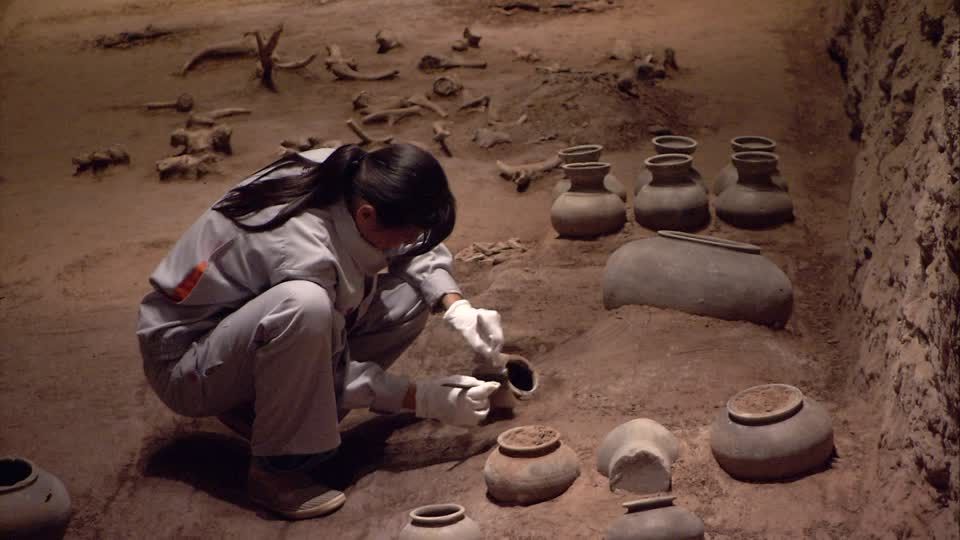
The finding creates fascinating opportunities for further study in the fields of ancient technology, human cognitive evolution, and archaeological methodology. It promotes the use of emerging technologies such as residue analysis, micro-CT scans, and experimental archaeology with an emphasis on organic tools.
Richer insights into the origins of human technology are anticipated through interdisciplinary collaborations between geologists, archaeologists, paleoanthropologists, and cognitive scientists. Furthermore, reexamining older sites from new angles may uncover previously unnoticed evidence of wooden and other organic tools.
In Conclusion

Our understanding of early human technology is drastically altered by the discovery of rare, ancient wooden tools, which definitively dispels the notions of primitivism associated with a stone-centric archaeology. It demonstrates an advanced, ecologically integrated, and cognitively sophisticated early human adaptive strategy that included a variety of toolkits intended for environmental exploitation and plant foraging.
This emphasizes how non-linear, context-driven, and culturally rich technological advancement was throughout human evolution. In the end, it calls for anthropological narratives to be revised in order to recognize early humans as clever innovators, fostering respect and further research into the entire range of human technological heritage.