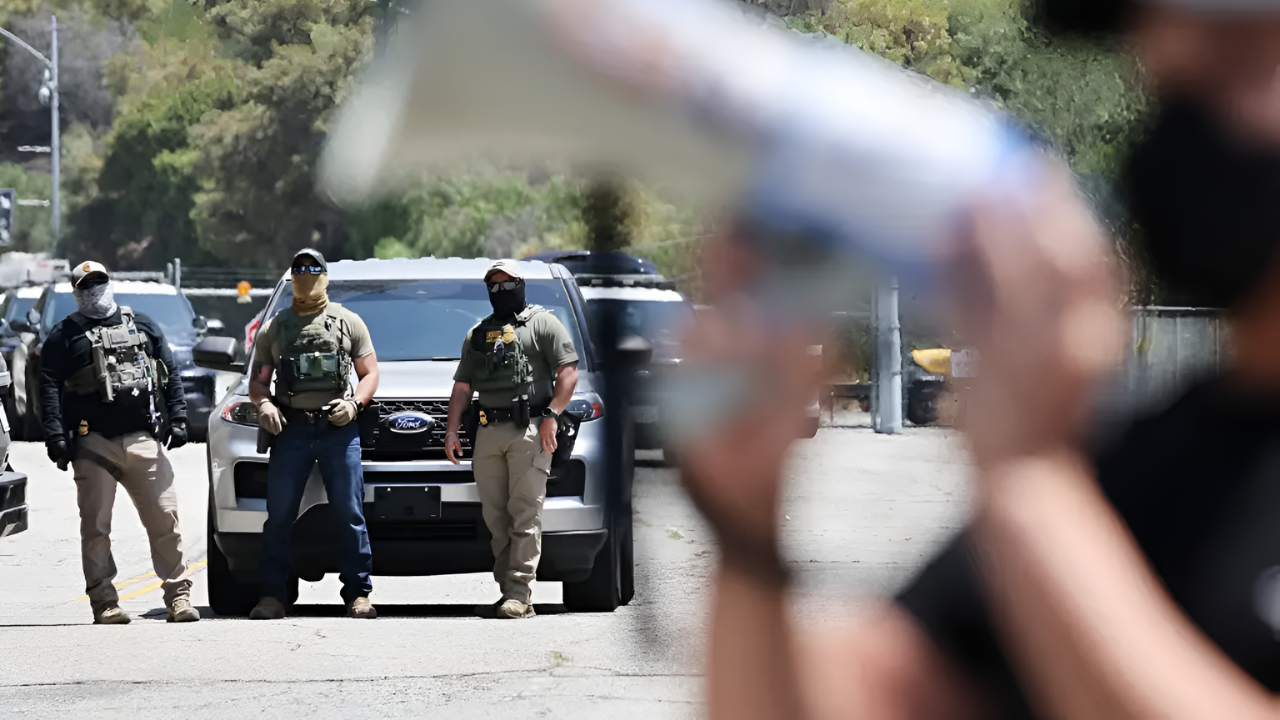
Federal agents descended on a container freight warehouse in Avenel, New Jersey, on October 29, 2025, arresting 46 undocumented workers—about 22% of the facility’s estimated 209 employees. The operation, led by the Department of Homeland Security (DHS), marked one of the largest workplace immigration raids in nearly two decades.
Detainees were taken into federal custody, awaiting immigration proceedings, as surveillance footage captured officers escorting workers into vans. Despite the scale of the raid, authorities have not disclosed the employer’s identity or announced any penalties against the company. The event follows a similar, larger DHS operation at the Hyundai-LG battery factory in Georgia approximately two months earlier, where 475 workers were detained.
Historical Patterns and Renewed Enforcement

This recent surge in workplace raids recalls earlier periods of aggressive enforcement, such as the 2008 Postville, Iowa, meatpacking raid that led to 389 arrests. The September 2025 Georgia Hyundai-LG operation stands as the largest single-site workplace immigration action since then.
DHS’s renewed focus on supply chain security and legal employment at federally authorized facilities signals a strategic shift, prioritizing national security and compliance in critical infrastructure sectors. The Avenel raid’s scale and timing suggest a broader campaign, with enforcement targeting industries integral to commerce and logistics.
Undocumented Labor in the Supply Chain
The discovery that nearly a quarter of the Avenel warehouse workforce lacked legal status is striking, given the facility’s federal authorization and expected use of employment verification systems like E-Verify.
Extrapolated across the estimated 3,500 freight and warehouse facilities in the New York, New Jersey, and Connecticut region, this proportion suggests over 160,000 undocumented workers may be embedded in the regional supply chain. These workers play essential roles in logistics operations that underpin the American economy, raising concerns about systemic flaws in employment verification and enforcement. The prevalence of undocumented labor in federally regulated hubs highlights vulnerabilities in the mechanisms designed to ensure workforce legality.
National Security and Supply Chain Risks

Federal freight hubs such as the Avenel warehouse handle sensitive cargo, including commercial goods, defense materials, and cross-border shipments. The presence of undocumented workers in these facilities introduces risks to national security, including potential criminal activity, theft, or sabotage.
The integrity of cargo and transparency of supply chain operations may be compromised, prompting serious questions about the intersection of immigration enforcement and infrastructure security standards. As supply chains become more critical to economic and defense interests, the need for robust verification and oversight grows increasingly urgent.
Employer Accountability and Legal Ambiguity

Despite the significant number of undocumented workers uncovered, the employer’s identity remains undisclosed, and no sanctions have been announced.
This approach places the enforcement burden on workers, while companies may continue to benefit from lower labor costs without facing repercussions. The lack of employer accountability raises ethical and policy concerns, potentially perpetuating cycles of labor exploitation and undermining deterrence. Critics argue that focusing solely on worker arrests fails to address the root causes of illegal employment and may allow employer complicity to persist unchecked.
Political Timing and Community Impact
The timing of the Avenel raid—just days before Halloween—adds emotional weight to the enforcement action. Immigration raids often resurface as contentious issues, serving as demonstrations of government commitment to border security and law enforcement.
While some view these operations as decisive actions to protect American workers, others see them as calculated political actions designed to influence public sentiment. The arrests have immediate consequences for immigrant communities, disrupting livelihoods and separating families just before the holiday season. The psychological impact extends to remaining employees, who may experience heightened anxiety and mistrust, while supply chain operations risk labor shortages in industries already facing retention challenges.
Looking Ahead: Balancing Security, Enforcement, and Human Costs
The Avenel warehouse raid underscores the complex interplay between immigration policy, national security, and economic realities. As DHS intensifies workplace enforcement, potentially scaling up to thousands of arrests annually, the stakes for employers, workers, and supply chain reliability rise.
Persistent flaws in verification systems like E-Verify, coupled with ambiguous employer accountability, suggest that comprehensive solutions are needed to ensure compliance without compromising supply chain integrity or human dignity. The evolving landscape of immigration enforcement will continue to shape public debate, industry standards, and legislative efforts, demanding careful strategies that balance security, economic needs, and the human impact of enforcement actions.